. 2014 Dec 12:48:3.12.1-3.12.50.
doi: 10.1002/0471250953.bi0312s48.

Using EMBL-EBI Services via Web Interface and Programmatically via Web Services

Affiliations

Using EMBL-EBI Services via Web Interface and Programmatically via Web Services

Rodrigo Lopez et al. Curr Protoc Bioinformatics. .

Abstract

The European Bioinformatics Institute (EMBL-EBI) provides access to a wide range of databases and analysis tools that are of key importance in bioinformatics. As well as providing Web interfaces to these resources, Web Services are available using SOAP and REST protocols that enable programmatic access to our resources and allow their integration into other applications and analytical workflows. This unit describes the various options available to a typical researcher or bioinformatician who wishes to use our resources via Web interface or programmatically via a range of programming languages.

Keywords: Programmatic access; REST; SOAP; Web Services; analytical pipelines; workflows.


Figures

Figure 1
Figure 1
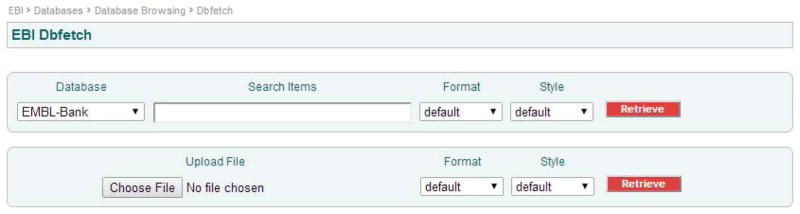
Web interface of dbfetch
Figure 2
Figure 2
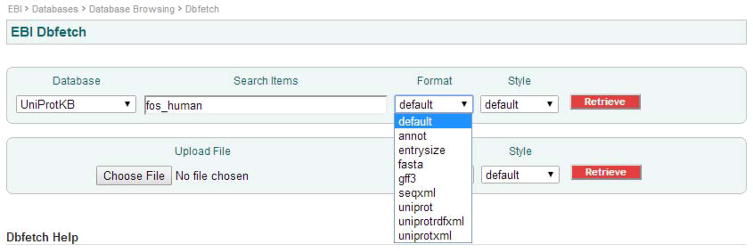
Dbfetch - format pull down menu choices for the UniProt Knowledgebase
Figure 3
Figure 3
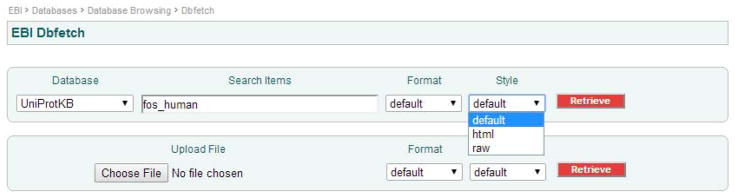
Dbfetch - style pull down menu choices for the UniProt Knowledgebase.
Figure 4
Figure 4
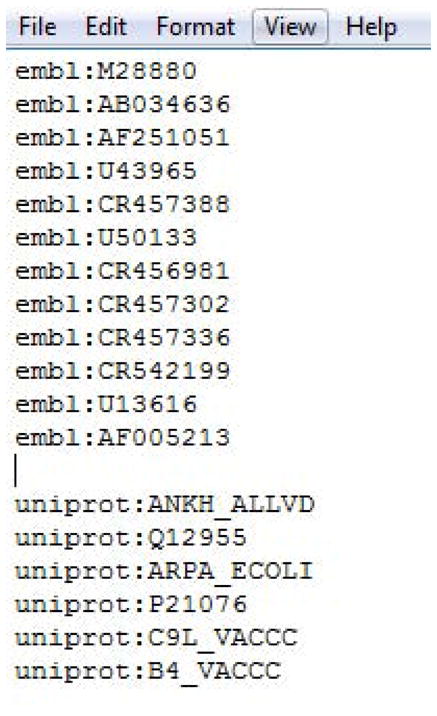
Examples of the format required to download data in bulk from dbfetch.
Figure 5
Figure 5
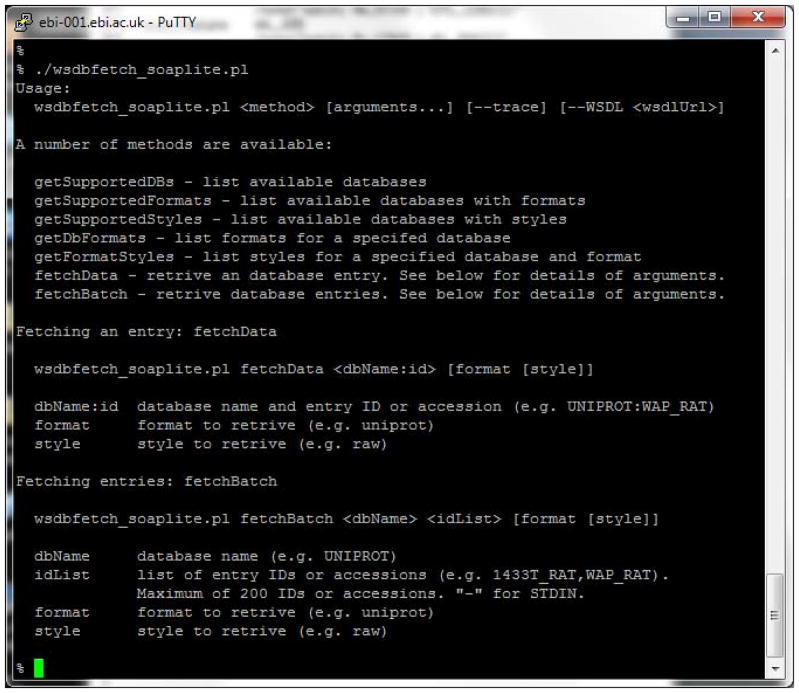
Wsdbfetch soaplite client displaying help text
Figure 6
Figure 6
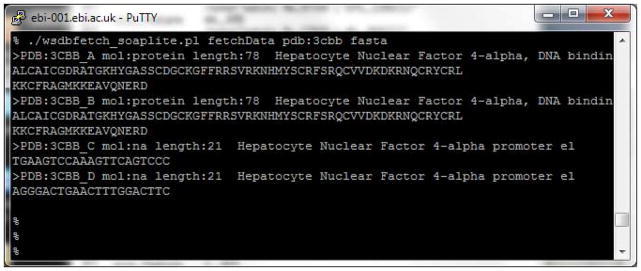
Wsdbfetch command line for retrieving amino acid sequences that correspond to chain identifiers from a 3D structure.
Figure 7
Figure 7
Screenshot of SSS categories web page
Figure 8
Figure 8
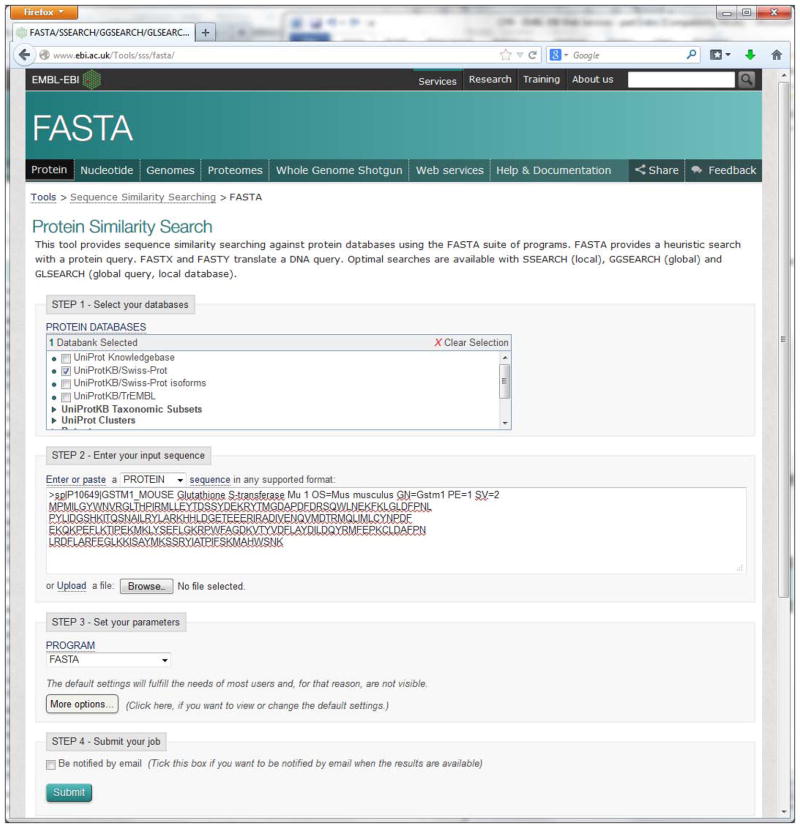
FASTA input form
Figure 9
Figure 9
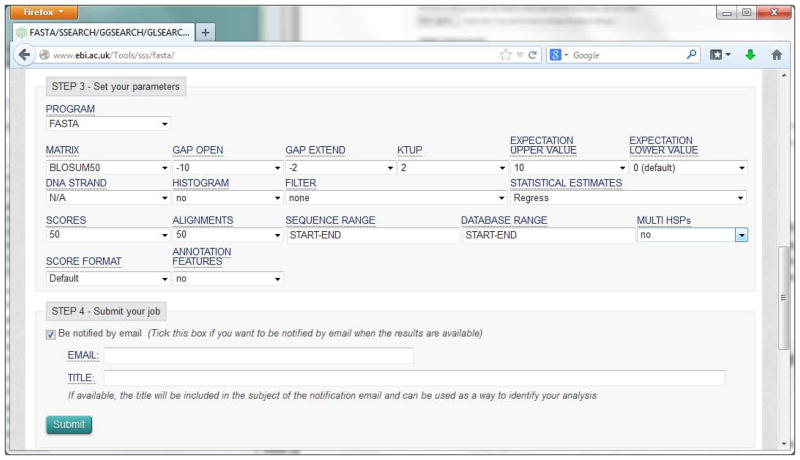
Advanced parameters for FASTA search
Figure 10
Figure 10
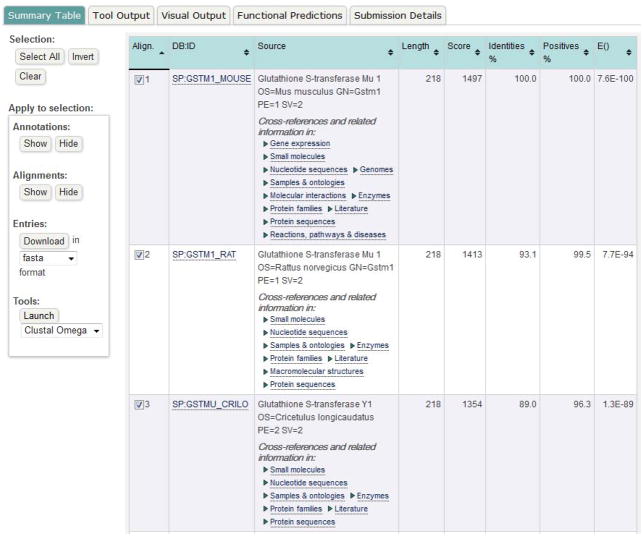
FASTA Results Summary Table
Figure 11
Figure 11
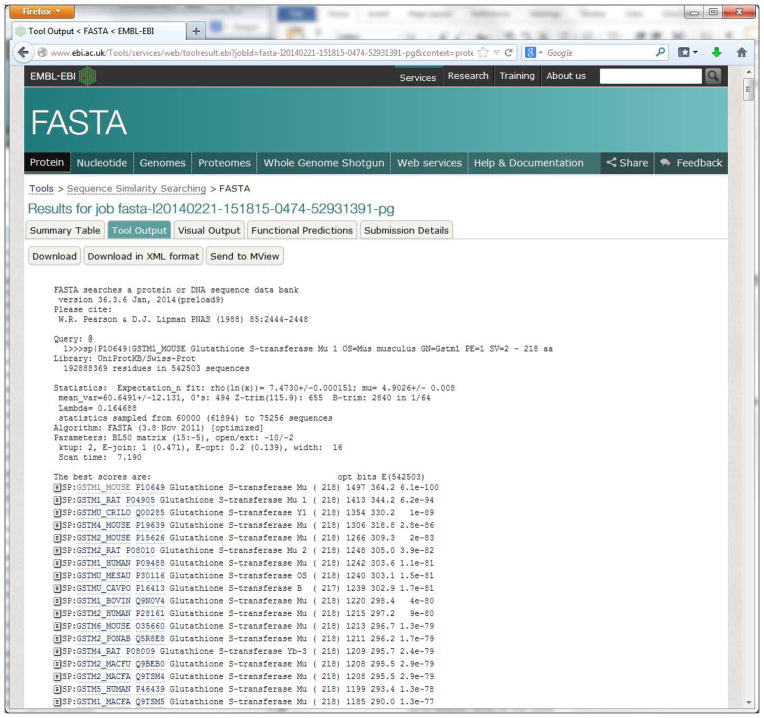
FASTA Tool Output tab
Figure 12
Figure 12
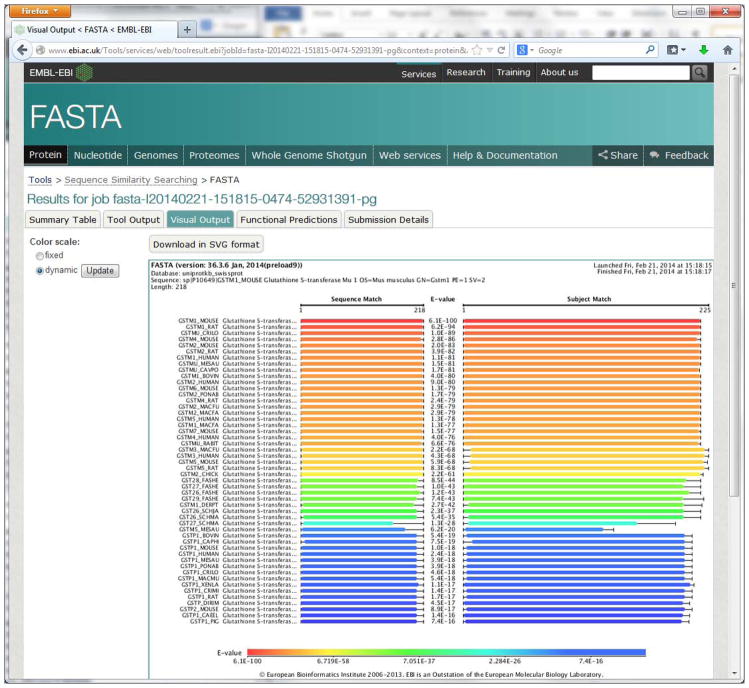
Visual output from FASTA search.
Figure 13
Figure 13
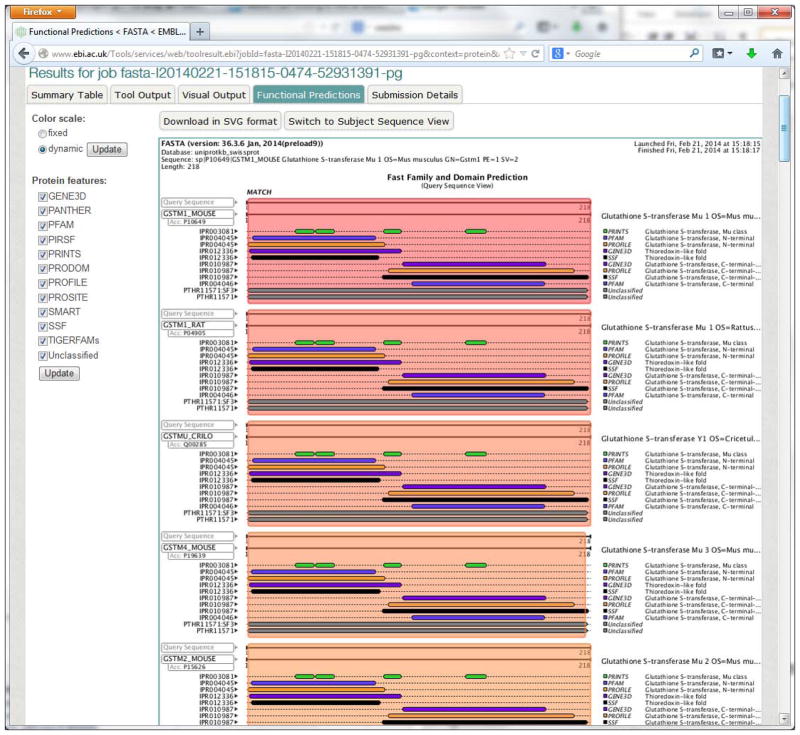
Functional Predictions tab from FASTA search
Figure 14
Figure 14
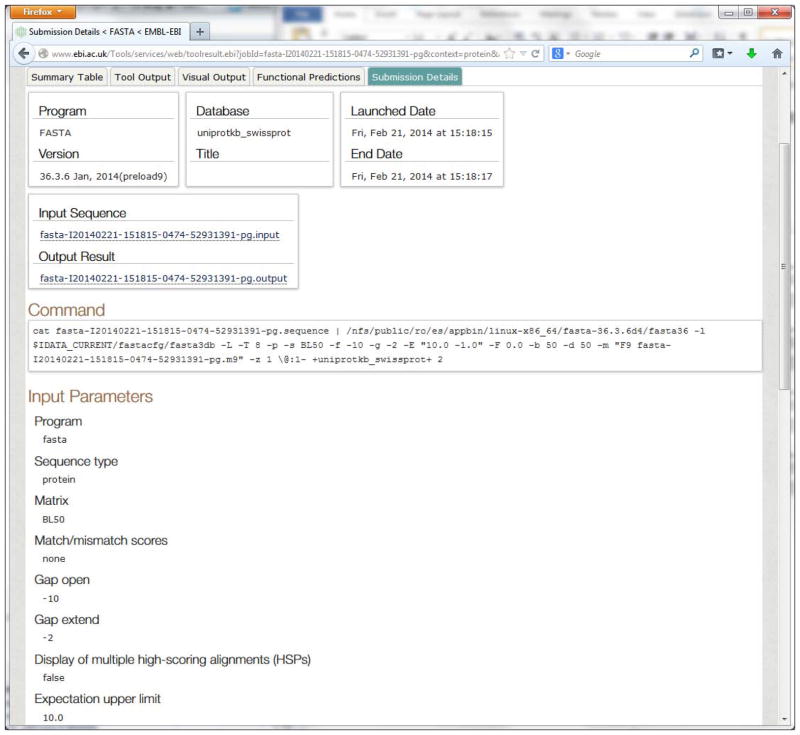
Submission Details tab
Figure 15
Figure 15
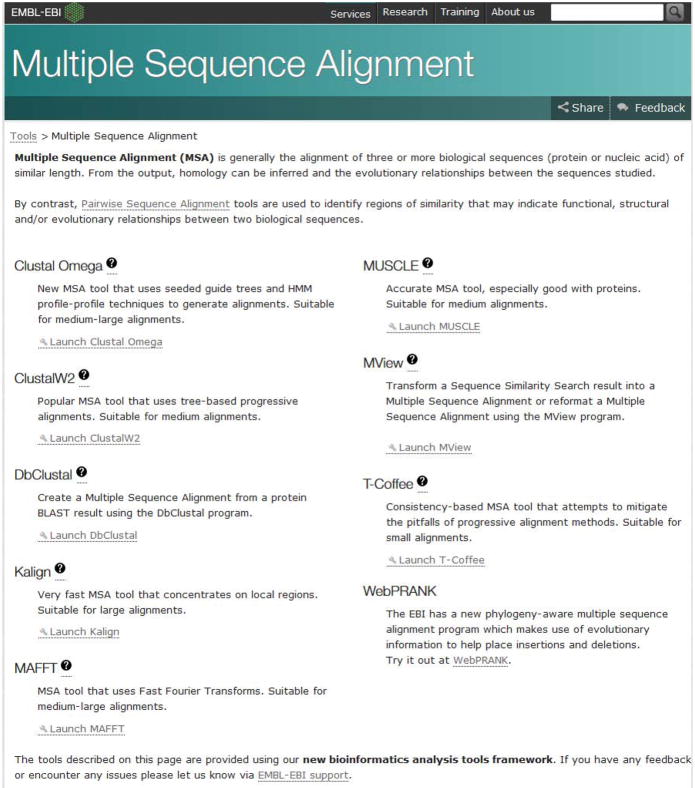
Multiple Sequence Alignment tools page
Figure 16
Figure 16
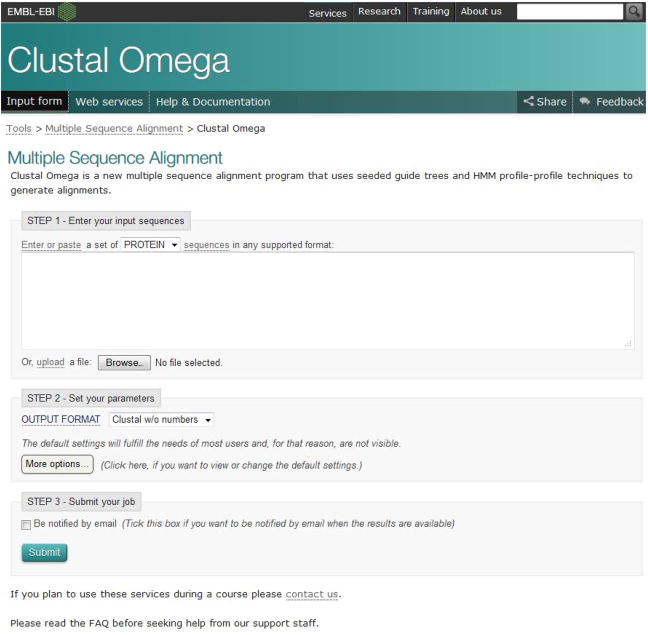
Clustal Omega input form
Figure 17
Figure 17
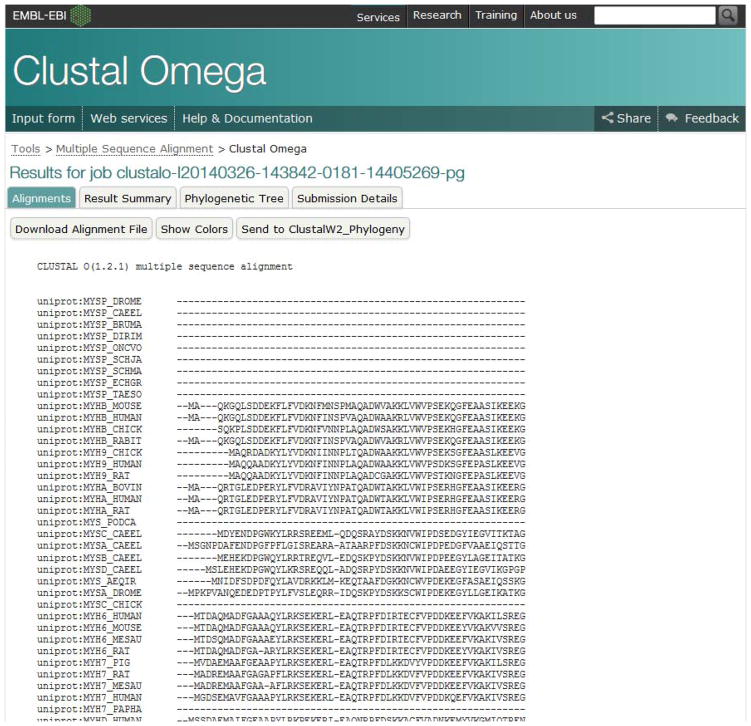
The Alignments tab from Clustal Omega results.
Figure 18
Figure 18
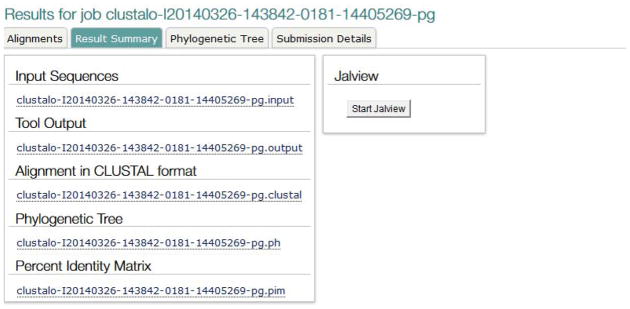
Result Summary tab from Clustal Omega
Figure 19
Figure 19
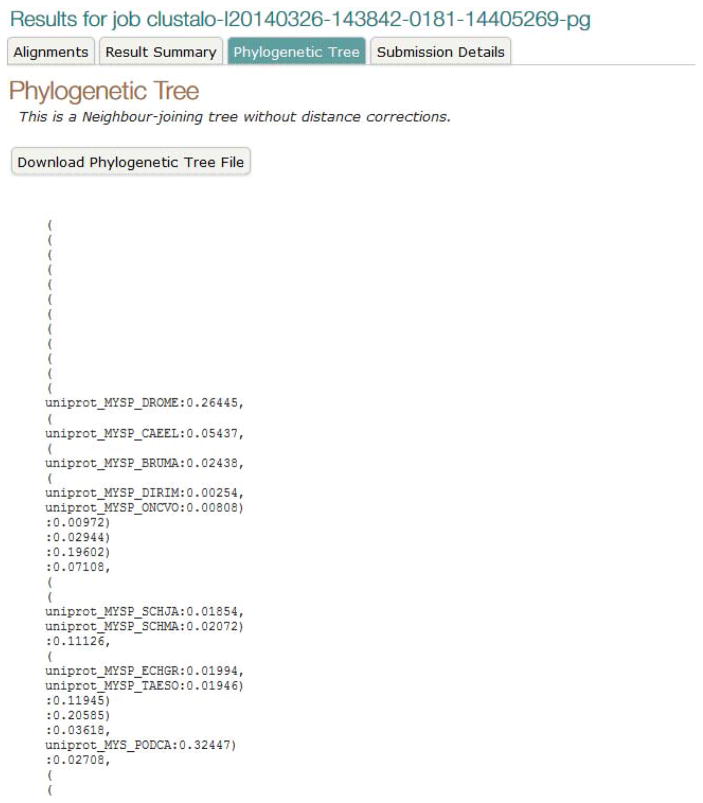
Phylogenetic tree data.
Figure 20
Figure 20
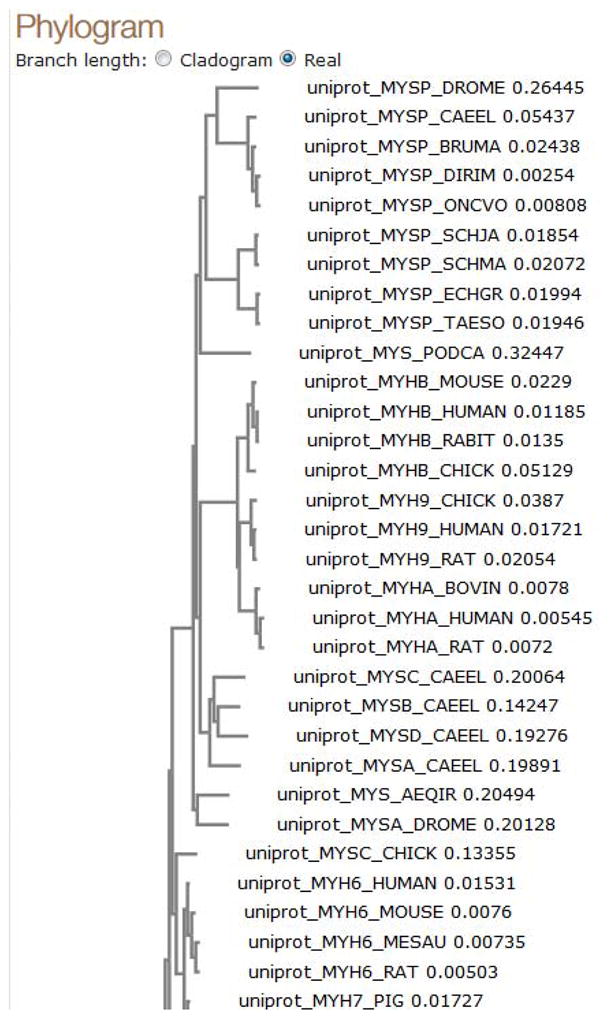
Phyogenetic tree vizualisation
Figure 21
Figure 21
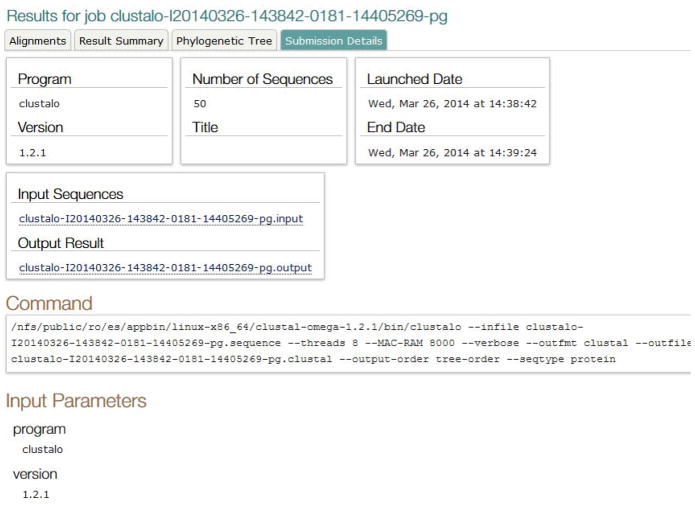
Submission Details tab for Clustal Omega
Figure 22
Figure 22
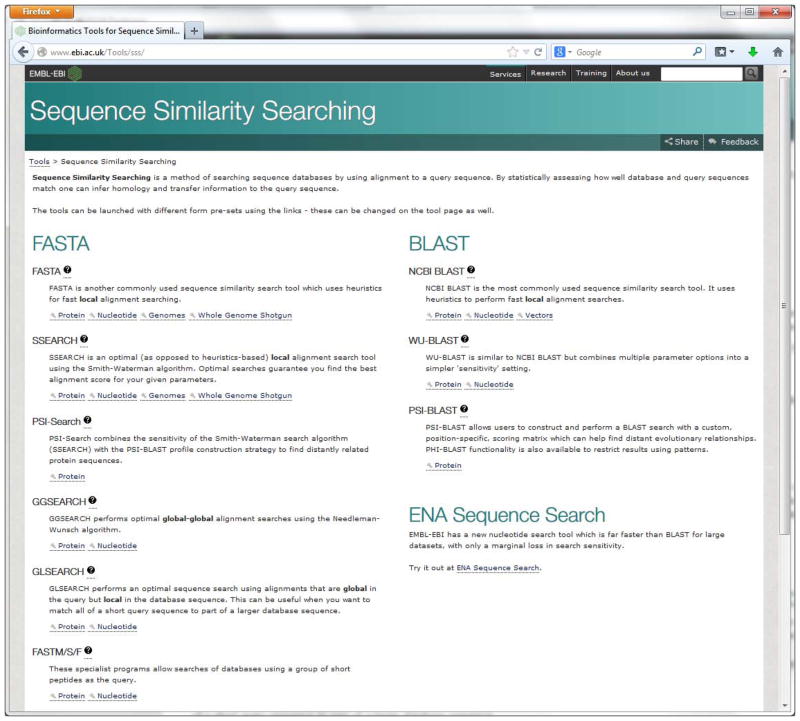
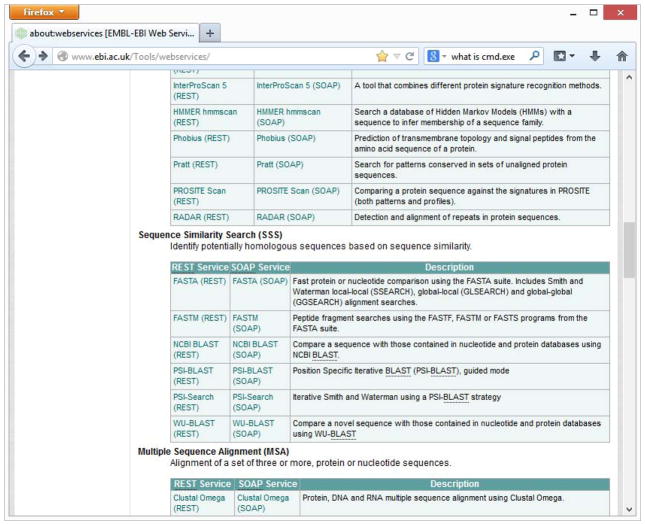
Sequence Similarity Search section of Web Services page
Figure 23
Figure 23
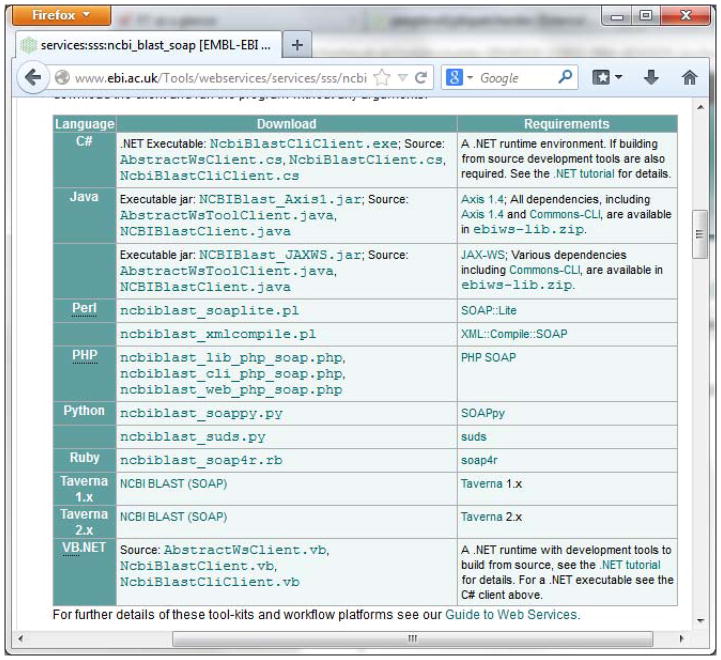
Available NCBI BLAST SOAP clients
Figure 24
Figure 24
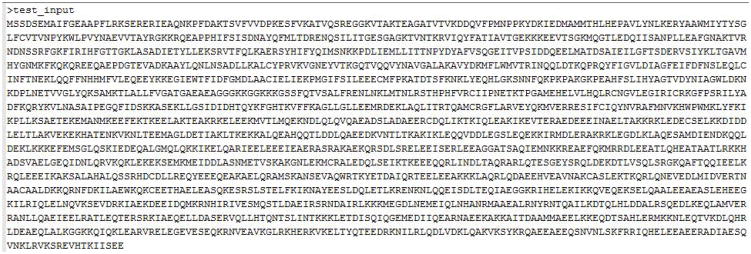
The file input.fasta, used as an example query.
Figure 25
Figure 25
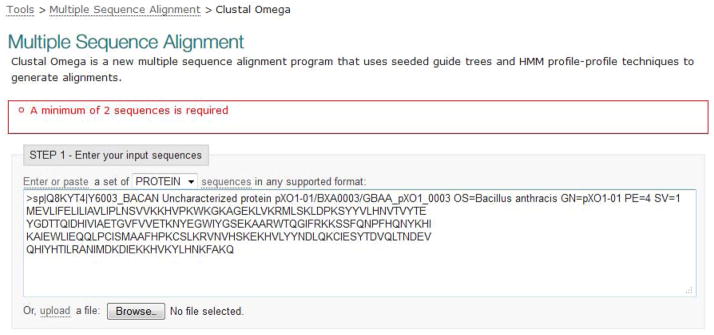
Clustal Omega input page showing error message from failed input validation.
Figure 26
Figure 26
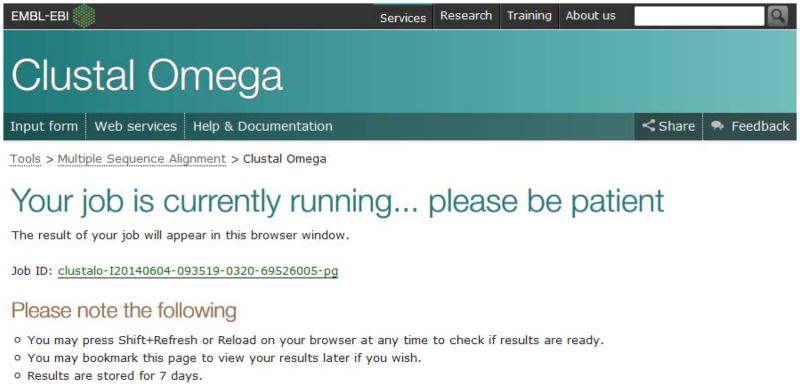
Clustal Omega successful submission/job running page.
Figure 27
Figure 27
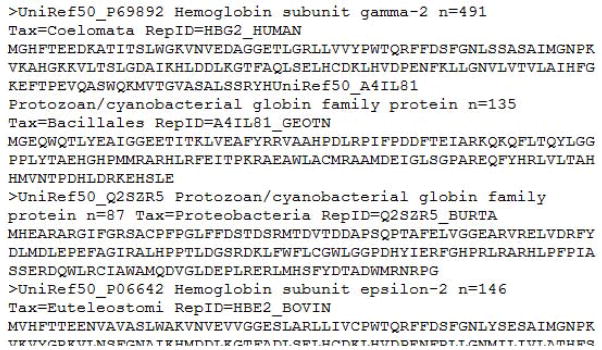
Example input mistake for a multiple sequence alignment. Note how the first two sequences have been merged so that the header information for the second sequence (UniRef50_A4IL81) appears as part of the sequence data for the first sequence.
Figure 28
Figure 28
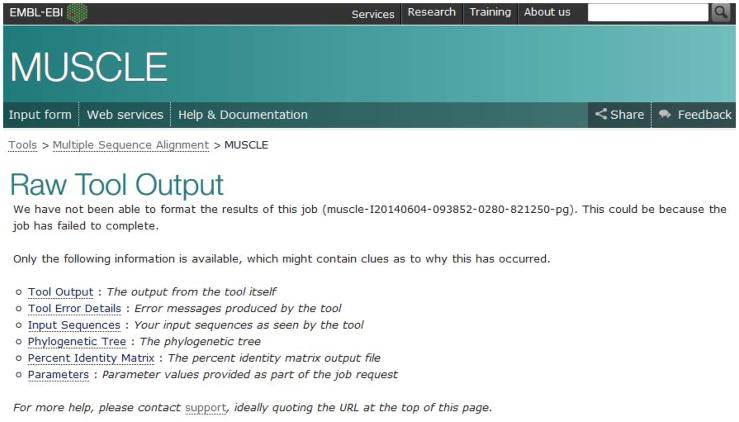
MUSCLE results page following input mistake.
Figure 29
Figure 29
Tool Error Details page.
Figure 30
Figure 30
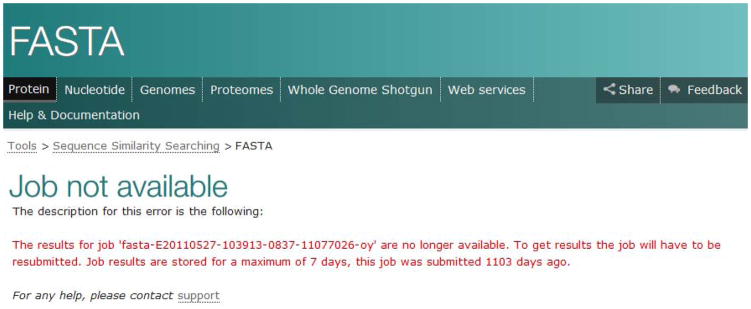
Job not available page for an expired job.
Figure 31
Figure 31
Error message returned when attempting to retrieve an invalid job ID via Web Services.
Figure 32
Figure 32
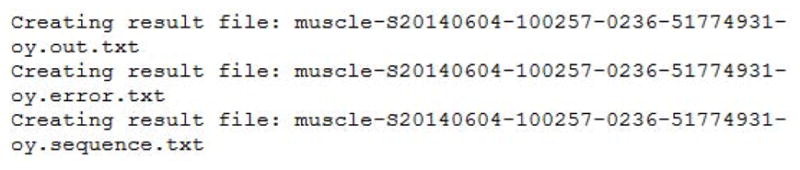
Files created from MUSCLE Web Services job using the bad input file from figure 27. The .error.txt file contains the tool error details. The .out.txt file contains the standard output from the tool. The .sequence.txt file contains the input that was submitted for the job.

References

    1. Altschul SF, Madden TL, Schäffer AA, Zhang J, Zhang Z, Miller W, Lipman DJ. Gapped BLAST and PSI-BLAST: a new generation of protein database search programs. Nucleic Acids Res. 1997;25:3389–3402. - PMC - PubMed
    1. Benson D, Karsch-Mizrachi I, Lipman DJ, Ostell J, Wheeler DL. GenBank. Nucleic Acids Res. 2008;36:D25–D30. - PMC - PubMed
    1. Boeckmann B, Bairoch A, Apweiler R, Blatter MC, Estreicher A, Gasteiger E, Martin MJ, Michoud K, O’Donovan C, Phan I, Pilbout S, Schneider M. The SWISS-PROT protein knowledgebase and its supplement TrEMBL in 2003. Nucleic Acids Res. 2003;31:365–370. - PMC - PubMed
    1. Camacho C, Coulouris G, Avagyan V, Ma N, Papadopoulos J, Bealer K, Madden TL. BLAST+: architecture and applications. BMC Bioinformatics. 2009;10:421. - PMC - PubMed
    1. Cochrane G, Akhtar R, Aldebert P, Althorpe N, Baldwin A, Bates K, Bhattacharyya S, Bonfield J, Bower L. Priorities for nucleotide trace, sequence and annotation data capture at the Ensembl Trace Archive and the EMBL Nucleotide Sequence Database. Nucleic Acids Res. 2007;36:D5–D12. - PMC - PubMed

LinkOut - more resources