. 2015 May;32(5):364-72.
doi: 10.1002/da.22336. Epub 2014 Dec 12.

A prospective study of severe irritability in youths: 2- and 4-year follow-up

Affiliations

A prospective study of severe irritability in youths: 2- and 4-year follow-up

Christen M Deveney et al. Depress Anxiety. 2015 May.

Abstract

Background: Severe, chronic irritability is receiving increased research attention, and is the cardinal symptom of a new diagnostic category, disruptive mood dysregulation disorder (DMDD). Although data from epidemiological community samples suggest that childhood chronic irritability predicts unipolar depression and anxiety in adulthood, whether these symptoms are stable and cause ongoing clinical impairment is unknown. The present study presents 4-year prospective and longitudinal diagnostic and impairment data on a clinical sample of children selected for symptoms of severe irritability (operationalized as severe mood dysregulation [SMD]).

Methods: Youth meeting criteria for SMD (n = 200) were evaluated at baseline using standard diagnostic methods. Two-year (n = 78) and 4-year (n = 46) follow-up diagnostic and clinical impairment ratings collected at 6-month intervals were completed with those youths enrolled in the study for a sufficient time.

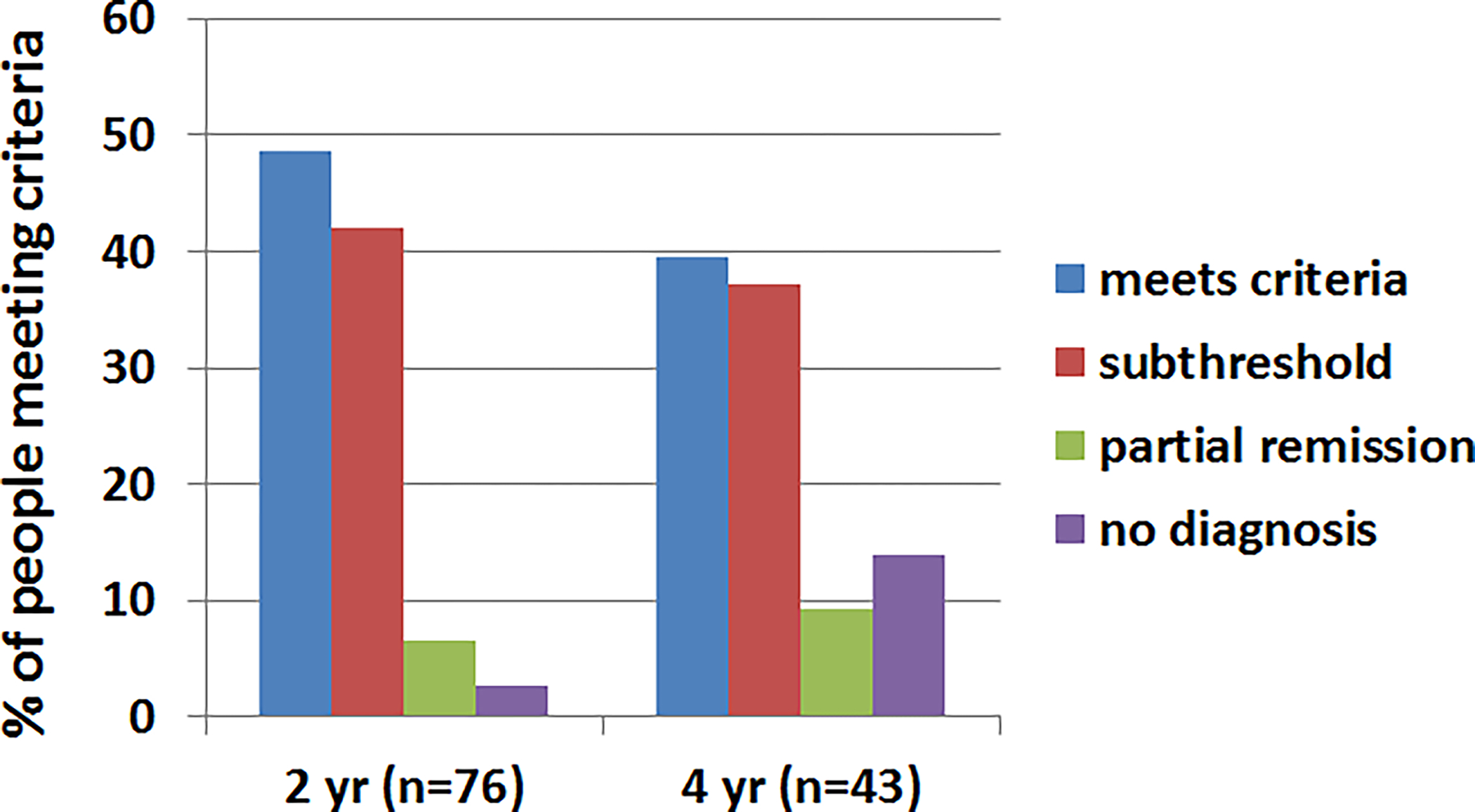
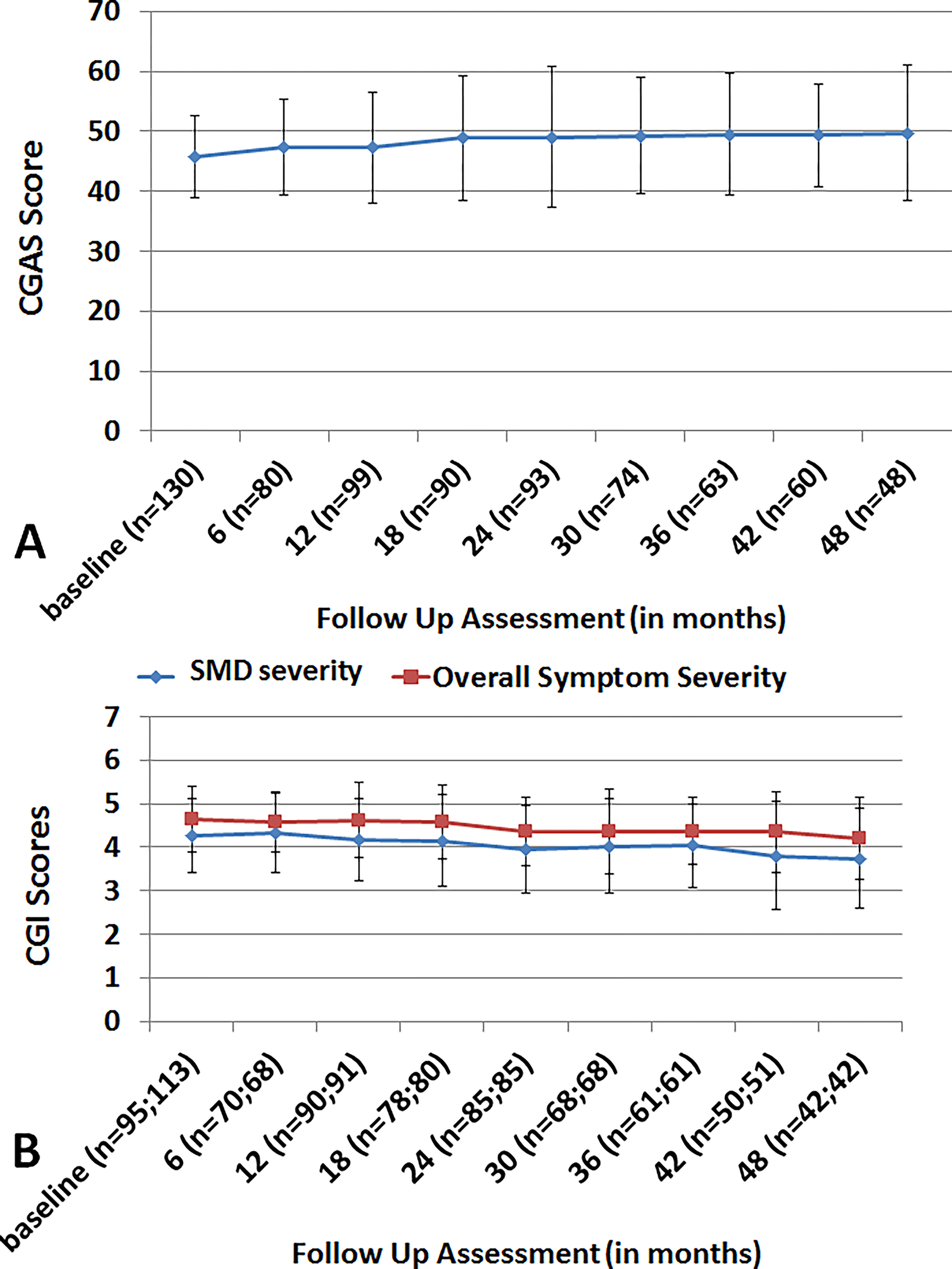
Results: Although the number of youth meeting strict categorical SMD criteria declined over time (49 and 40% at 2 and 4 years, respectively), many individuals not meeting full criteria continued to display clinically significant irritability symptoms (2 years: 42%; 4 years: 37%). Impairment due to these irritability symptoms remained consistently in the moderate range on the Clinical Global Impressions Scale.

Conclusions: By the 4-year follow-up, only 40% of youths meet strict SMD criteria; however, most continue to display clinically impairing symptoms and significant impairment warranting psychiatric treatment. These findings provide evidence for the course of irritability, with implications for DMDD. Future research with populations meeting DMDD criteria and followed through the ages of high risk for psychiatric diagnoses is necessary.

Trial registration: ClinicalTrials.gov NCT00025935.

Keywords: DMDD; irritability; longitudinal; severe mood dysregulation.


Figures

Figure 1.
Figure 1.
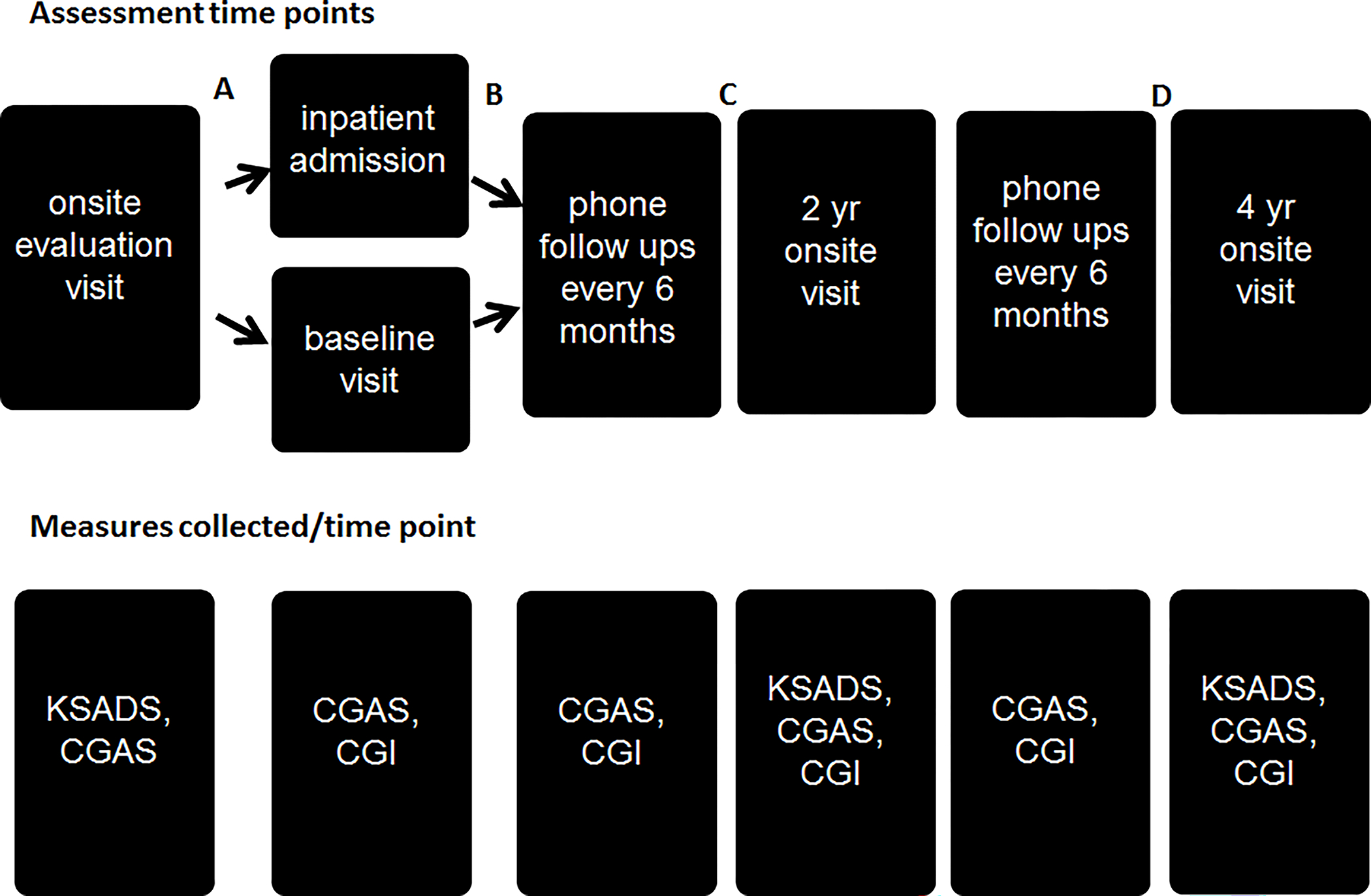
Overall schema of the study protocol. The first line of information describes the terms used for each of the assessment points throughout the study and the number of individuals with data at each time point. The second line includes the diagnostic and clinical measures collected at each time point. Briefly, participants were evaluated for the study at the onsite evaluation and returned shortly thereafter to enroll in the longitudinal protocol and establish baseline clinical severity ratings. After this, they were contacted by phone at 6 month intervals to determine symptom severity and impairment. Participants returned for an onsite evaluation at 2 years and 4 years following study enrollment; diagnostic interviews, assessing psychiatric diagnoses present during the interval since the last onsite assessment were repeated at these visits. Note: letters A-D reflect the time points where retention analyses comparing youths who remained in the study versus those who did not were completed (see supplemental information for details).
Figure 2.
Figure 2.
SMD stability over time. Values represent the percent of individuals meeting criteria for each subcategory of SMD within the past 6 months at 2 and 4 year follow-up visits. Values represent the percent of individuals meeting criteria at each time point. Note: 100% of youth (n=200) met criteria for SMD at baseline. N’s at the 2 and 4 year follow-ups reflect the number of individuals with data available to categorize as subthreshold or partial remission.
Figure 3:
Figure 3:
Clinical severity over time. Panel A: Children’s Global Assessment Scale scores at each of the 6 month follow up assessments. Scores between 40 and 50 represent moderate impairment. Panel B: Clinical Global Impressions Scores at each of the 6 month follow up assessments. 1=normal functioning; 7= severe impairment. Overall SMD = impairment due to severe mood dysregulation symptoms. Overall Symptom Severity = impairment due to all psychiatric symptoms. Note: n’s in parentheses refer to the number of available data points at each follow up. For the CGI scores, the first value is the n for SMD severity and the second is the n for Overall Symptom Severity.
Figure 4.
Figure 4.
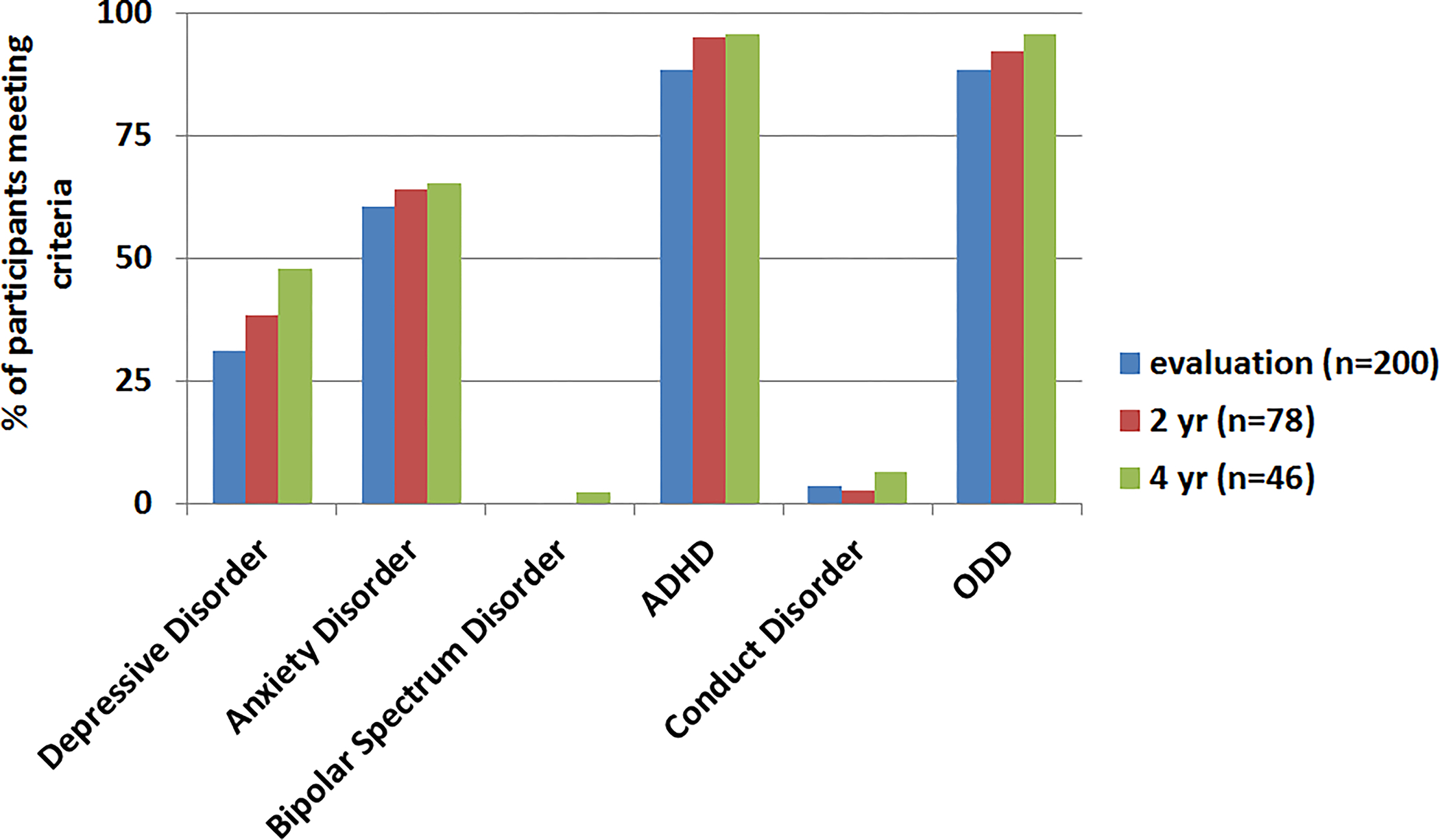
Cumulative lifetime prevalence of Axis I Psychiatric Diagnoses at Each Time Point. The percentage of individuals meeting lifetime criteria for each illness or illness category at each time point. Depressive disorder = MDD, Dysthymia, Depression NOS; Anxiety = Social Phobia, GAD, PTSD, Separation Anxiety Disorder, OCD & Panic Disorder (not specific). Note: At evaluation, 1 person was missing data for Conduct Disorder, ODD and ADHD; therefore the percentage of people meeting criteria was calculated out of 199 patients.
Figure 5.
Figure 5.
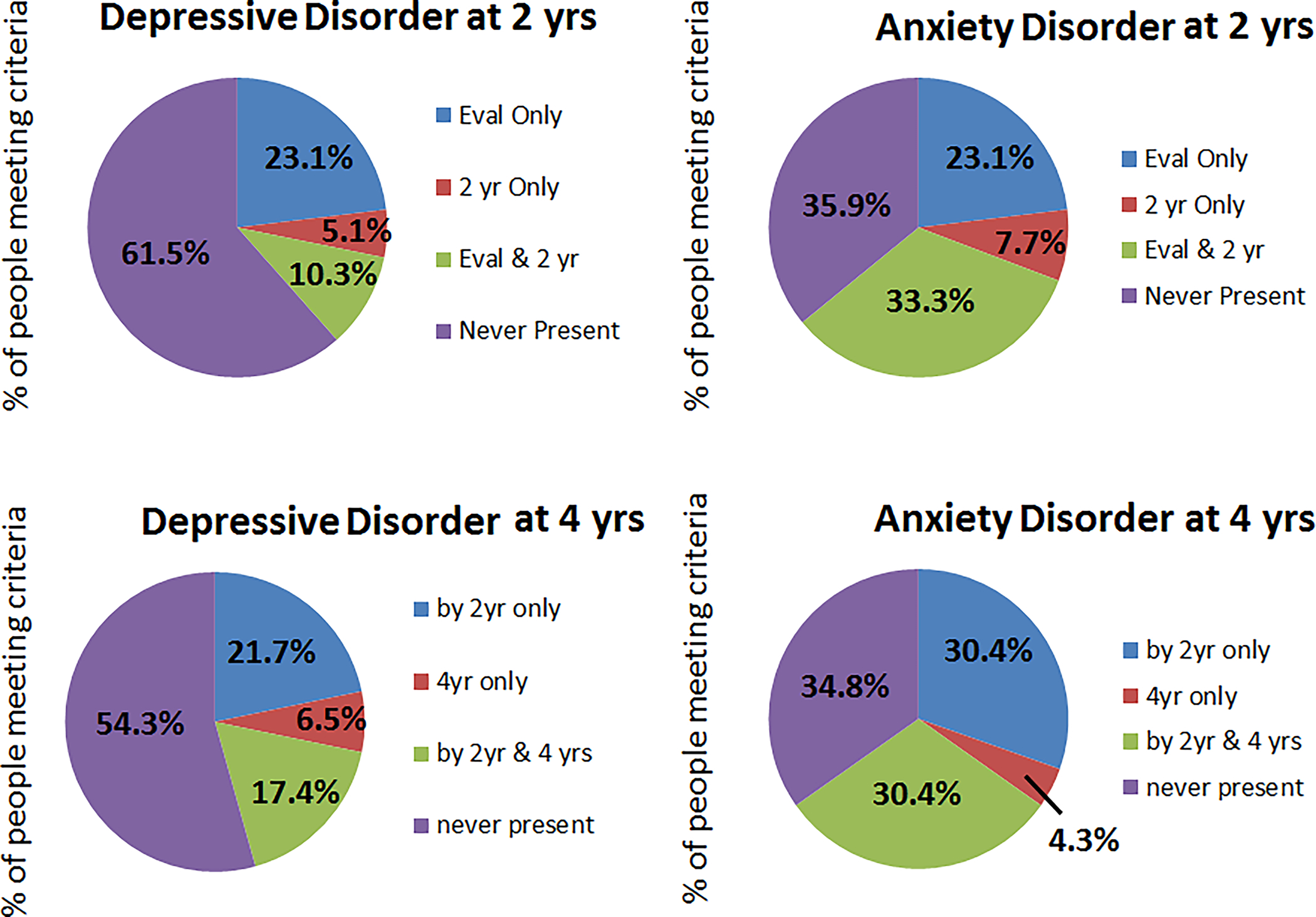
Rates of depressive and anxiety disorders over time. Eval only = diagnosis was only present at the evaluation but criteria were not met during the time period between evaluation and the 2 year follow-up assessment. 2 yr only = diagnosis was not present at the time of the evaluation, but criteria were met between evaluation and the 2 year follow-up assessment. Eval & 2 yr = diagnosis was present at evaluation and criteria continued to be met during the 2 year follow-up period. By 2 yr only = the diagnosis was present by the 2 year assessment (note this percentage could reflect the “eval only”, “2 yr only” and “eval and 2 yr” categories above). 4 yr only = the diagnosis was not present at the initial evaluation or the 2 year follow up, but were met between the 2 and 4 year follow-up assessments. By 2 yr and 4 yrs = criteria were present by the 2 year evaluation and continued to be present during the period between the 2 and 4 year follow-up assessments. Never present = diagnostic criteria were never met.

References

    1. Brotman MA, Schmajuk M, Rich BA, Dickstein DP, Guyer AE, Costello EJ, et al. Prevalence, clinical correlates, and longitudinal course of severe mood dysregulation in children. Biol Psychiatry. 2006;60(9):991–7. - PubMed
    1. Althoff RR, Verhulst FC, Rettew DC, Hudziak JJ, van der Ende J. Adult outcomes of childhood dysregulation: a 14-year follow-up study. Journal of the American Academy of Child and Adolescent Psychiatry. 2010;49(11):1105–16. - PMC - PubMed
    1. Copeland WE, Angold A, Costello EJ, Egger H. Prevalence, comorbidity, and correlates of DSM-5 proposed disruptive mood dysregulation disorder. Am J Psychiatry. 2013;170(2):173–9. - PMC - PubMed
    1. Pickles A, Aglan A, Collishaw S, Messer J, Rutter M, Maughan B. Predictors of suicidality across the life span: the Isle of Wight study. Psychological medicine. 2010;40(9):1453–66. - PubMed
    1. Andreassi JL. Psychophysiology: Human behavior and psychophysiological response. 3rd ed. Hillsdale, N.J.: Erlbaum; 1995.

Publication types

Associated data