


Psychological distress and coping amongst higher education students: a mixed method enquiry
- PMID: 25506825
- PMCID: PMC4266678
- DOI: 10.1371/journal.pone.0115193
Psychological distress and coping amongst higher education students: a mixed method enquiry
Abstract
Background: Psychological distress among higher education students is of global concern. Students on programmes with practicum components such as nursing and teacher education are exposed to additional stressors which may further increase their risk for psychological distress. The ways in which these students cope with distress has potential consequences for their health and academic performance. An in-depth understanding of how nursing/midwifery and teacher education students experience psychological distress and coping is necessary to enable higher education providers to adequately support these students.
Methods: This mixed method study was employed to establish self-reported psychological distress (General Health Questionnaire), coping processes (Ways of Coping Questionnaire) and lifestyle behaviour (Lifestyle Behaviour Questionnaire) of a total sample (n = 1557) of undergraduate nursing/midwifery and teacher education students in one university in Ireland. Individual interviews (n = 59) provided an in-depth understanding of students experiences of psychological distress and coping.
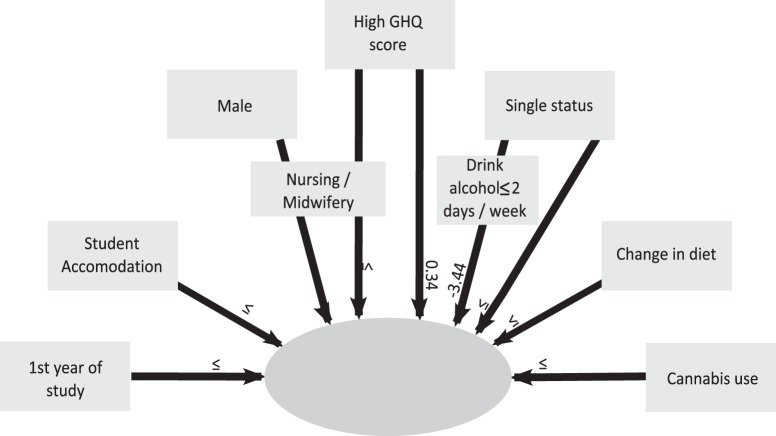
Results: A significant percentage (41.9%) of respondents was psychologically distressed. The factors which contributed to their distress, included study, financial, living and social pressures. Students used varied coping strategies including seeking social support, problem solving and escape avoidance. The positive relationship between elevated psychological distress and escape avoidance behaviours including substance use (alcohol, tobacco and cannabis) and unhealthy diet is of particular concern. Statistically significant relationships were identified between "escape-avoidance" and gender, age, marital status, place of residence, programme/year of study and lifestyle behaviours such as diet, substance use and physical inactivity.
Conclusion: The paper adds to existing research by illuminating the psychological distress experienced by undergraduate nursing/midwifery and teacher education students. It also identifies their distress, maladaptive coping and the relationship to their lifestyle behaviours. The findings can inform strategies to minimise student distress and maladaptive coping during college and in future professional years.
Conflict of interest statement
Figures
References
-
- Gore F, Bloem PJN, Patton GC, Ferguson J, Joseph V, et al. (2011) Global burden of disease in young people aged 10–24 years: a systematic analysis. Lancet 377:2093–2102. - PubMed
-
- Dooley B, Fitzgerald A (2012) My world survey: National study of youth mental health in Ireland. Dublin: Headstrong and University College Dublin School of Psychology.
-
- Vàzquez F, Otero P, Diàz O (2012) Psychological distress and related factors in female college students. J Am Coll Heal 60:219–225. - PubMed
-
- Stallman HM (2010) Psychological distress in university students: a comparison with general population data. Aust Psychol 45:249–257.
MeSH terms
LinkOut - more resources
Full Text Sources
Other Literature Sources
Medical
