


Novel role for endogenous hepatocyte growth factor in the pathogenesis of intracranial aneurysms
- PMID: 25510828
- PMCID: PMC4326566
- DOI: 10.1161/HYPERTENSIONAHA.114.04681
Novel role for endogenous hepatocyte growth factor in the pathogenesis of intracranial aneurysms
Abstract
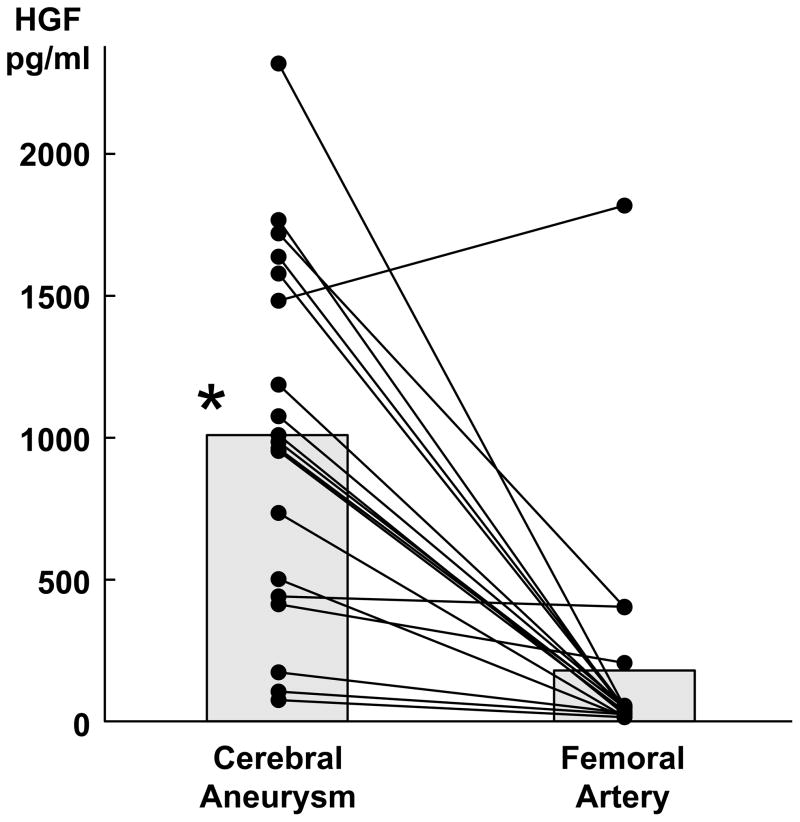
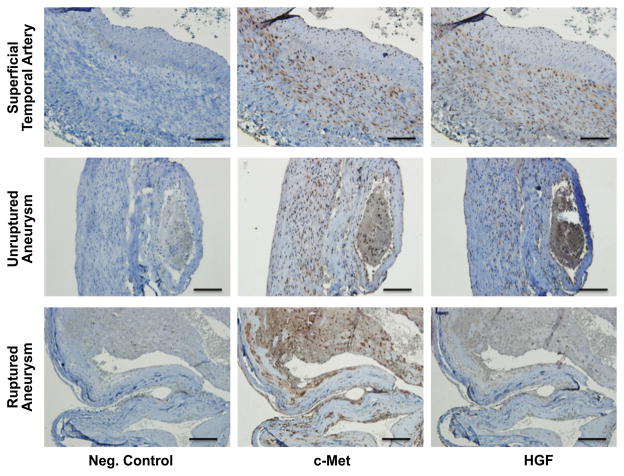
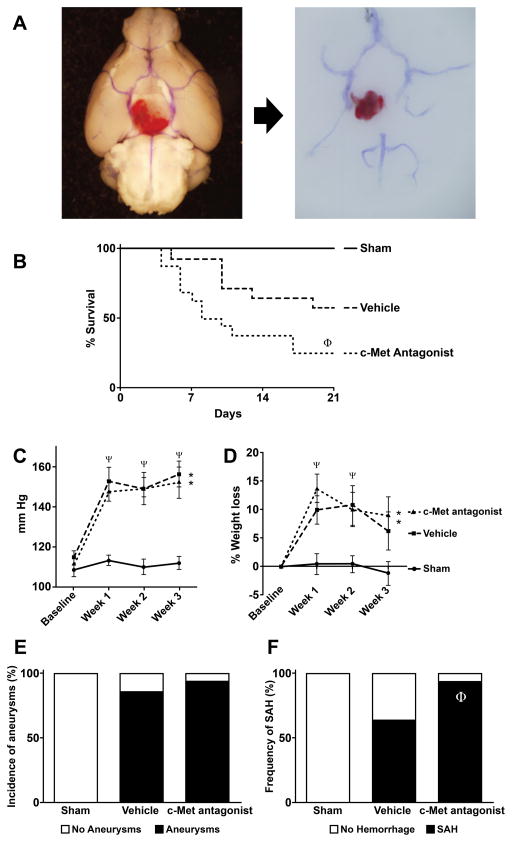
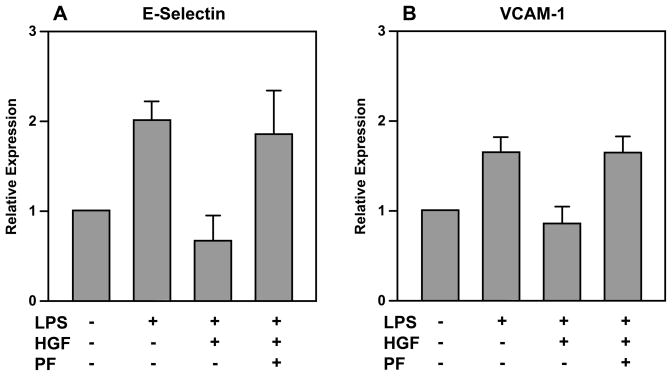
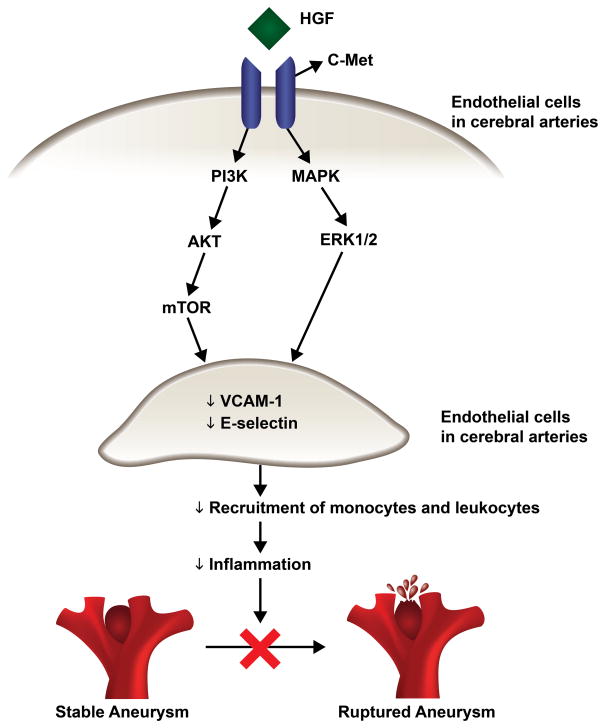
Inflammation plays a key role in formation and rupture of intracranial aneurysms. Because hepatocyte growth factor (HGF) protects against vascular inflammation, we sought to assess the role of endogenous HGF in the pathogenesis of intracranial aneurysms. Circulating HGF concentrations in blood samples drawn from the lumen of human intracranial aneurysms or femoral arteries were compared in 16 patients. Tissue from superficial temporal arteries and ruptured or unruptured intracranial aneurysms collected from patients undergoing clipping (n=10) were immunostained with antibodies to HGF and its receptor c-Met. Intracranial aneurysms were induced in mice treated with PF-04217903 (a c-Met antagonist) or vehicle. Expression of inflammatory molecules was also measured in cultured human endothelial, smooth muscle cells and monocytes treated with lipopolysaccharides in presence or absence of HGF and PF-04217903. We found that HGF concentrations were significantly higher in blood collected from human intracranial aneurysms (1076±656 pg/mL) than in femoral arteries (196±436 pg/mL; P<0.001). HGF and c-Met were detected by immunostaining in superficial temporal arteries and in both ruptured and unruptured human intracranial aneurysms. A c-Met antagonist did not alter the formation of intracranial aneurysms (P>0.05), but significantly increased the prevalence of subarachnoid hemorrhage and decreased survival in mice (P<0.05). HGF attenuated expression of vascular cell adhesion molecule-1 (P<0.05) and E-Selectin (P<0.05) in human aortic endothelial cells. In conclusion, plasma HGF concentrations are elevated in intracranial aneurysms. HGF and c-Met are expressed in superficial temporal arteries and in intracranial aneurysms. HGF signaling through c-Met may decrease inflammation in endothelial cells and protect against intracranial aneurysm rupture.
Keywords: C-met; E-selectin; VCAM-1; hepatocyte growth factor; inflammation; intracranial aneurysm; subarachnoid hemorrhage.
© 2014 American Heart Association, Inc.
Figures
References
-
- Chalouhi N, Hoh BL, Hasan D. Review of cerebral aneurysm formation, growth, and rupture. Stroke. 2013;44:3613–3622. - PubMed
Publication types
MeSH terms
Substances
Grants and funding
LinkOut - more resources
Full Text Sources
Other Literature Sources
Medical
Miscellaneous
