


High nuclear/cytoplasmic ratio of Cdk1 expression predicts poor prognosis in colorectal cancer patients
- PMID: 25511643
- PMCID: PMC4302138
- DOI: 10.1186/1471-2407-14-951
High nuclear/cytoplasmic ratio of Cdk1 expression predicts poor prognosis in colorectal cancer patients
Abstract
Background: Cdk1 (cyclin-dependent kinase 1) is critical regulator of the G2-M checkpoint. Cyclin-dependent kinase pathways are considered possible targets for cancer treatment; however, the prognostic role of Cdk1 in colorectal cancer is still controversial. Therefore, we attempted to determine the impact of Cdk1 on the clinical outcome of colorectal cancer patients to further identify its role in colorectal cancer.
Methods: Cdk1 immunoreactivity was analyzed by immunohistochemistry (IHC) in 164 cancer specimens from primary colorectal cancer patients. The medium follow-up time after surgery was 3.7 years (range: 0.01 to 13.10 years). The prognostic value of Cdk1 on overall survival was determined by Kaplan-Meier analysis and Cox proportional hazard models.
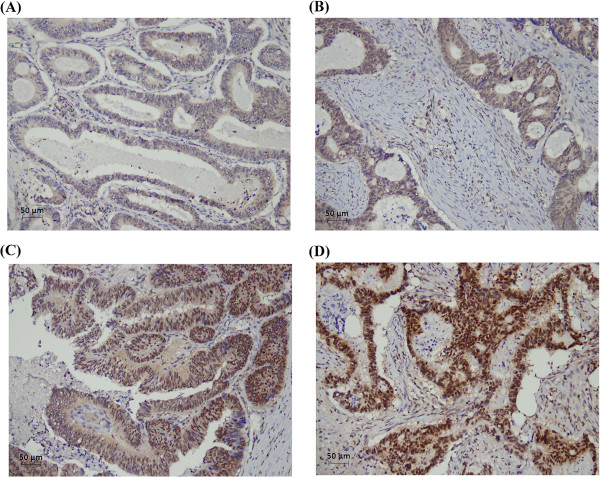
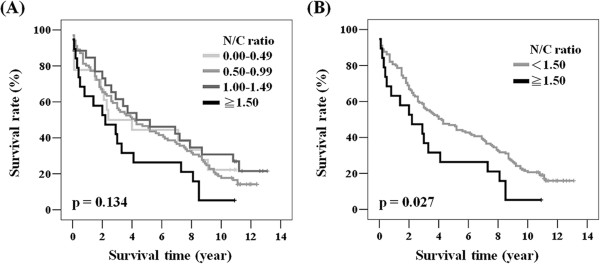
Results: All samples displayed detectable Cdk1 expression with predominant location in the cytoplasm and nucleus. A high Cdk1 nuclear/cytoplasmic (N/C) expression ratio was correlated with poor overall survival (5-year survival rate: 26.3% vs 46.9%, N/C ratio ≥1.5 vs N/C ratio <1.5, log-rank p = 0.027). Accordingly, a Cdk1 N/C expression ratio ≥1.5 was identified as an independent risk factor by multivariate analysis (hazard ratio = 1.712, P = 0.039).
Conclusions: We suggest that Cdk1 N/C expression ratio determined by IHC staining could be an independent prognostic marker for colorectal cancer.
Figures
References
Pre-publication history
-
- The pre-publication history for this paper can be accessed here:http://www.biomedcentral.com/1471-2407/14/951/prepub
Publication types
MeSH terms
Substances
LinkOut - more resources
Full Text Sources
Other Literature Sources
Medical
Miscellaneous
