


Review
doi: 10.1039/c4np00109e.
Syntheses and biological studies of marine terpenoids derived from inorganic cyanide
Affiliations
- PMID: 25514696
- PMCID: PMC4414506
- DOI: 10.1039/c4np00109e
Item in Clipboard
Review
Syntheses and biological studies of marine terpenoids derived from inorganic cyanide
Nat Prod Rep.
2015 Apr.
Abstract
Isocyanoterpenes (ICTs) are marine natural products biosynthesized through an unusual pathway that adorns terpene scaffolds with nitrogenous functionality derived from cyanide. The appendage of nitrogen functional groups - isonitriles in particular - onto stereochemically-rich carbocyclic ring systems provides enigmatic, bioactive molecules that have required innovative chemical syntheses. This review discusses the challenges inherent to the synthesis of this diverse family and details the development of the field. We also present recent progress in isolation and discuss key aspects of the remarkable biological activity of these compounds.
Figures
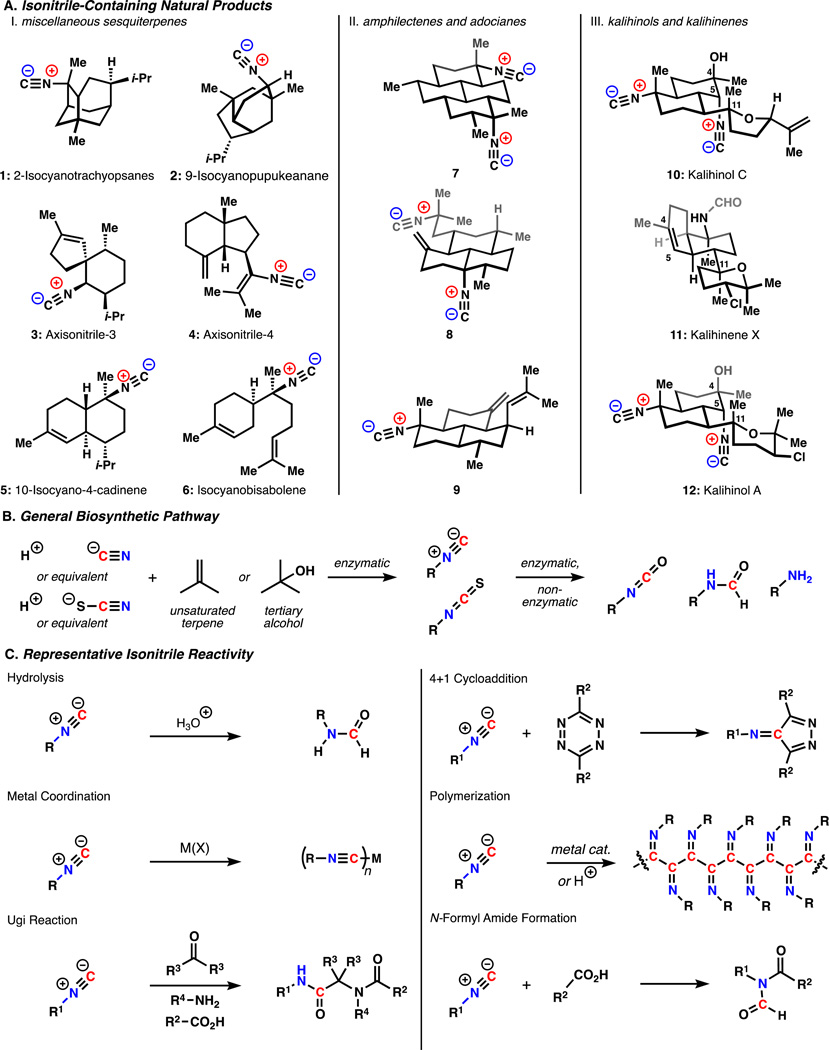
(A) Isonitrile-Containing Natural Products (B) General Biosynthetic Scheme (C) Representative Isonitrile Reactivity.
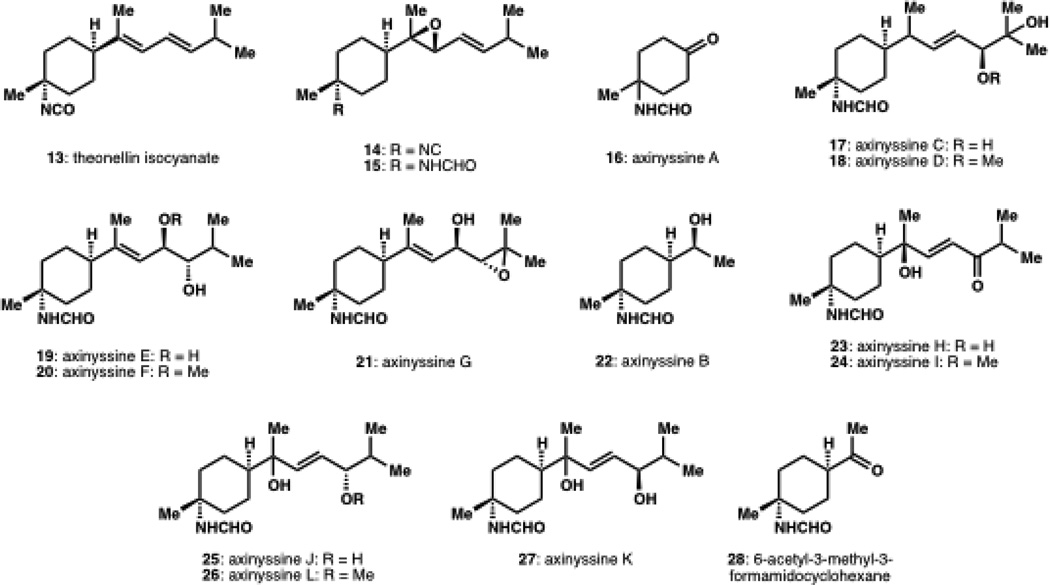
Bisabolene sesquiterpenes isolated from 2004–2014.
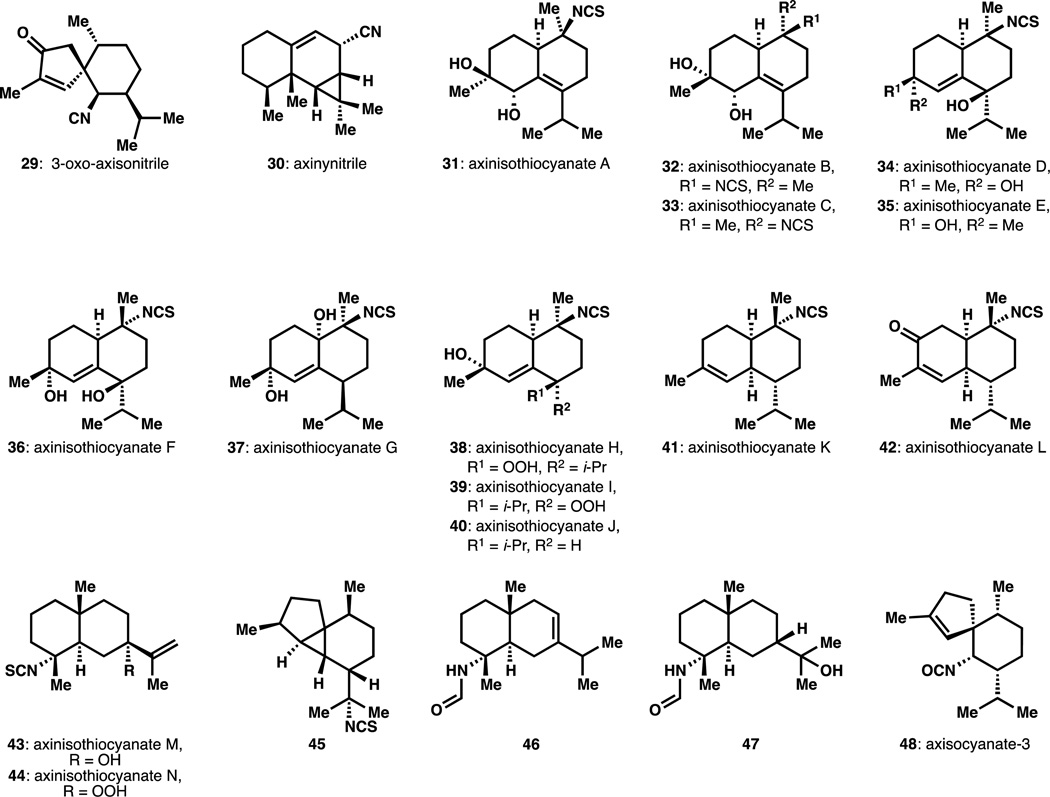
Sesquiterpenes isolated from 2004–2014.
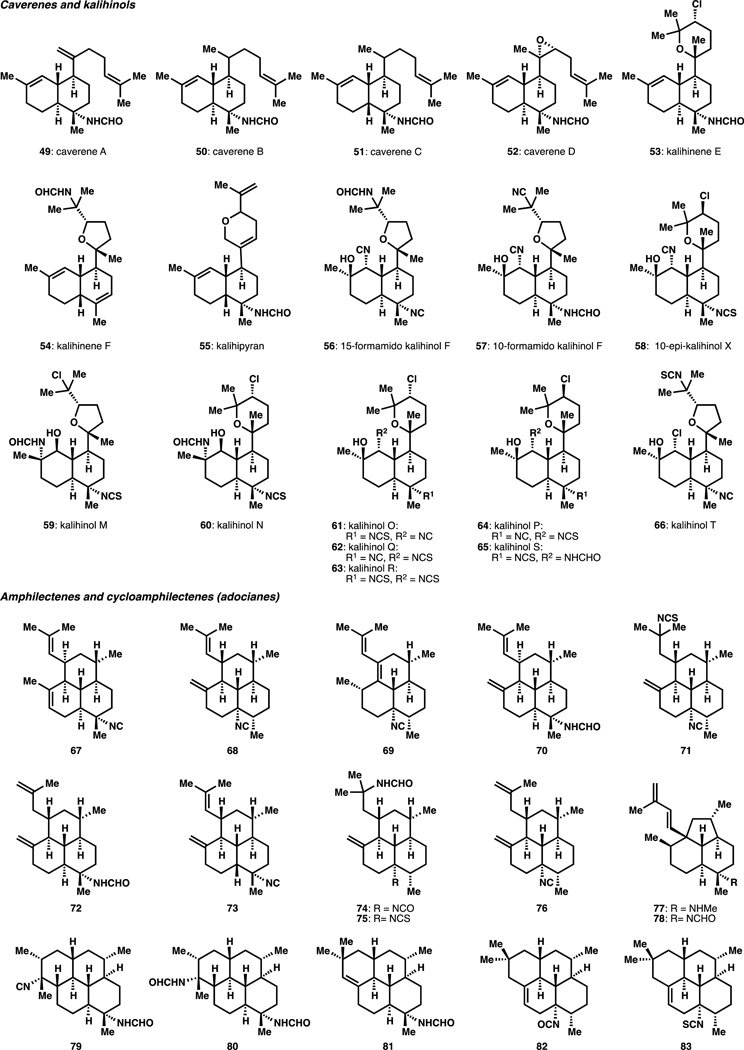
Diterpene natural products isolated from 2004–2014.
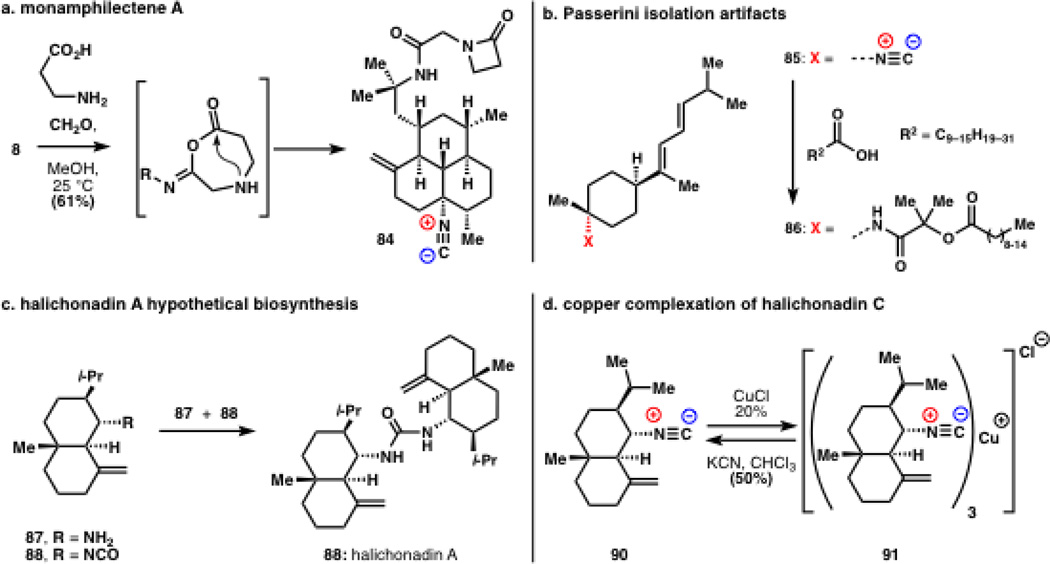
a. Semisynthesis of monamphilectine A. b. Passerini isolation artifacts. c. Proposed biosynthesis of urea-linked sesquiterpenes. d. Copper complexation and decomplexation of isocyanoterpenes.
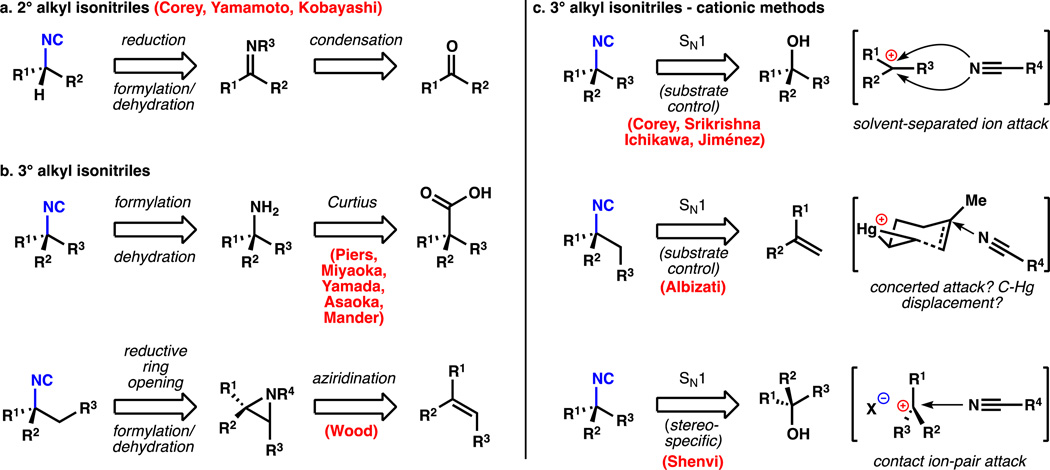
Retrosynthetic strategies to generate stereogenic sec- and tert-alkyl isonitriles.
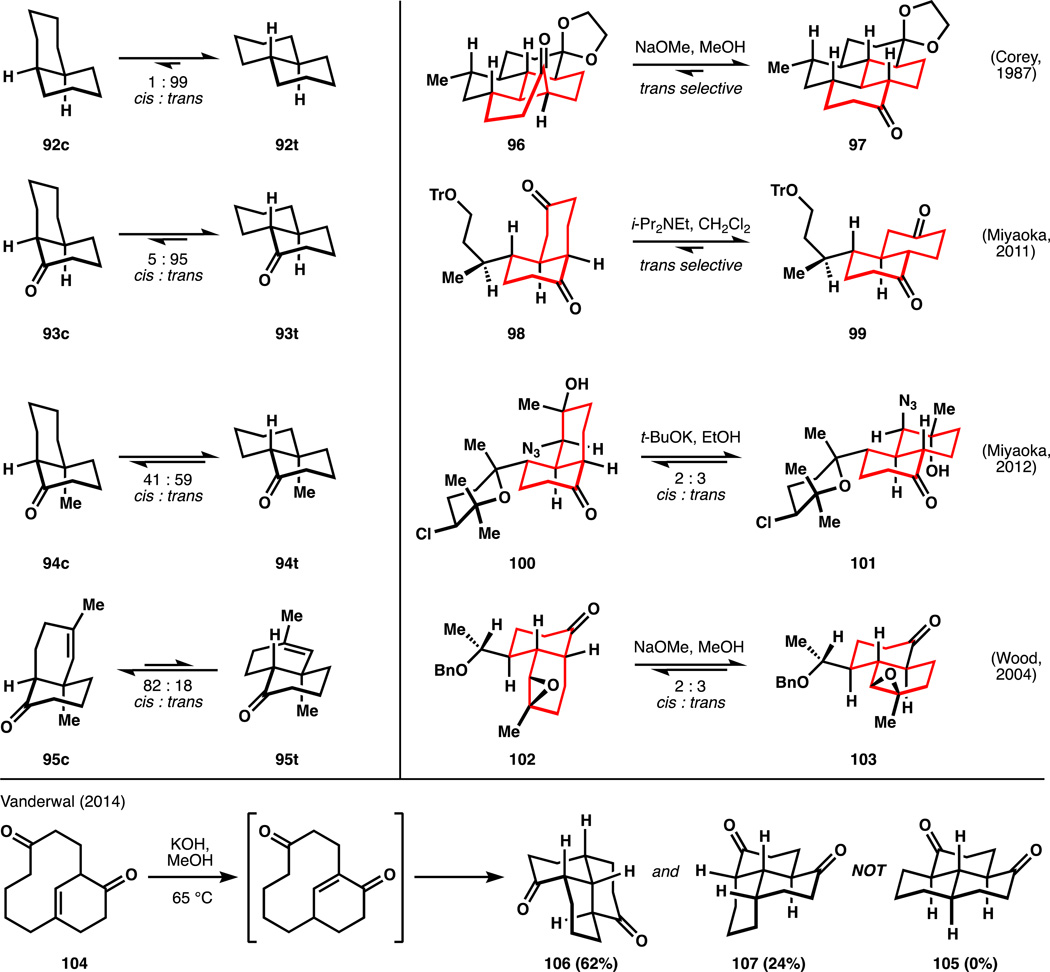
Cis-/trans-isomerism of substituted decalins.

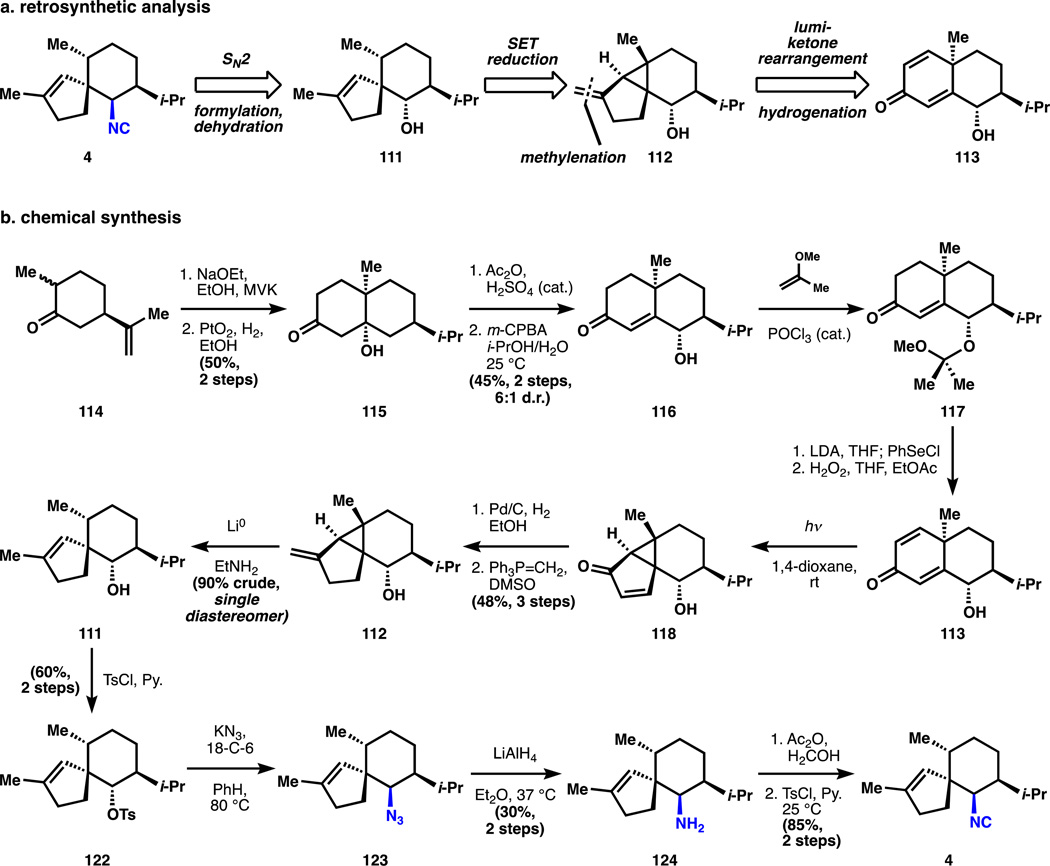
A hypothetical biosynthesis of 4 based on related terpene relationships.
Caine’s synthesis of (–)-axisonitrile-3.
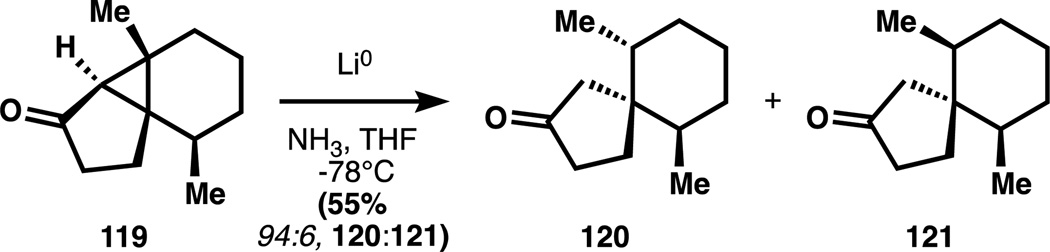
Piers’ studies on the stereochemistry of cyclopropyl ketone reductive cleavage.

Hypothesized biosynthesis of 2.
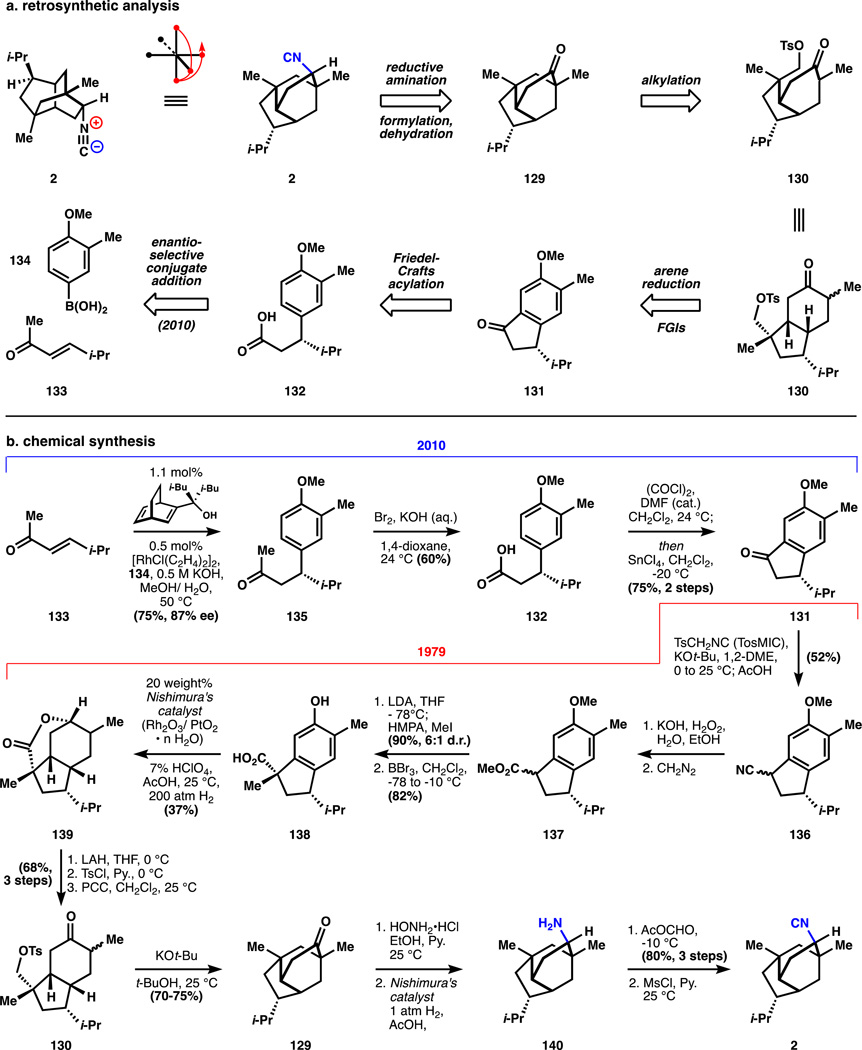
a. Corey’s analysis of 2; b. Corey’s chemical synthesis of 2.
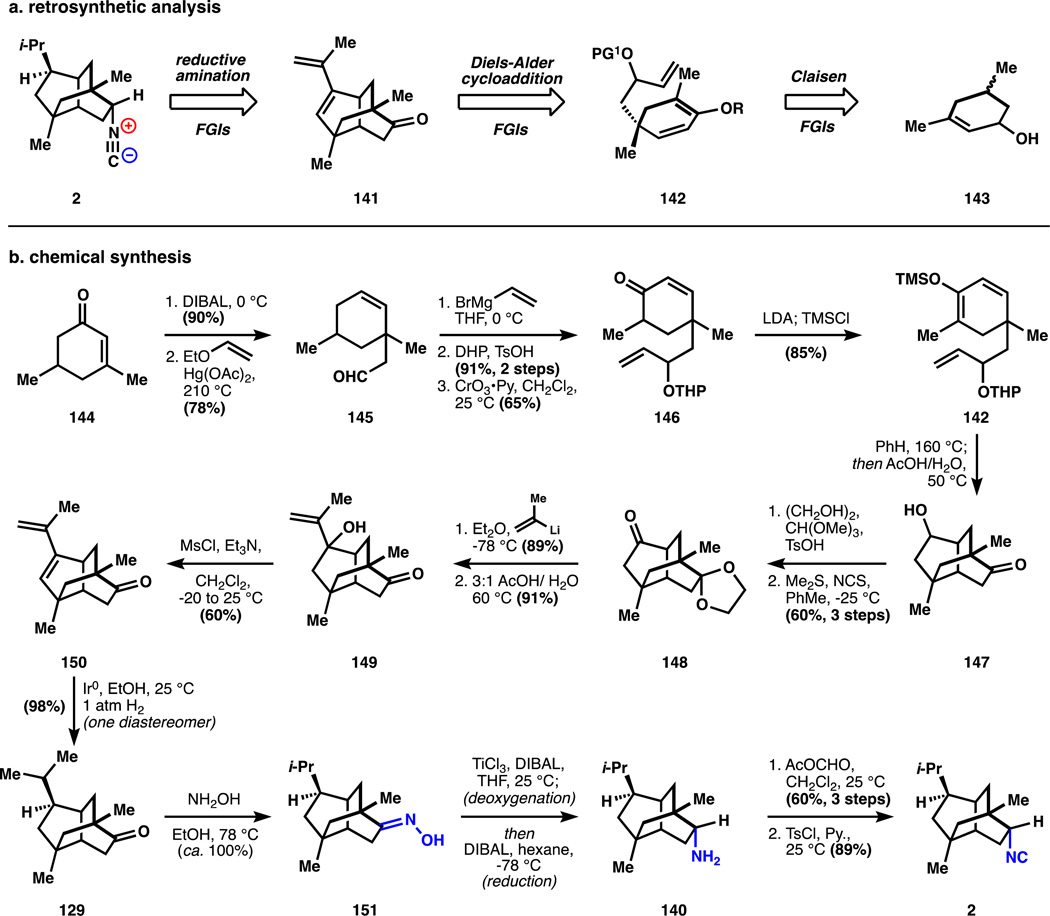
a. Yamamoto’s analysis of 2. b. Yamamoto’s chemical synthesis of 2.
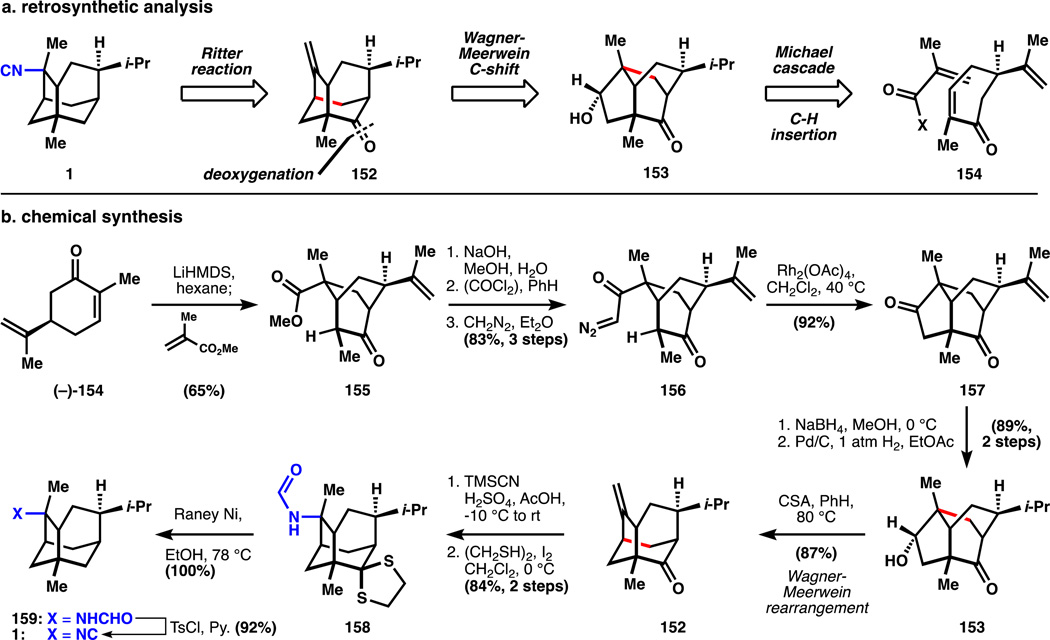
a. Srikrishna’s analysis of 1; b. Srikrishna’s chemical synthesis of 1.
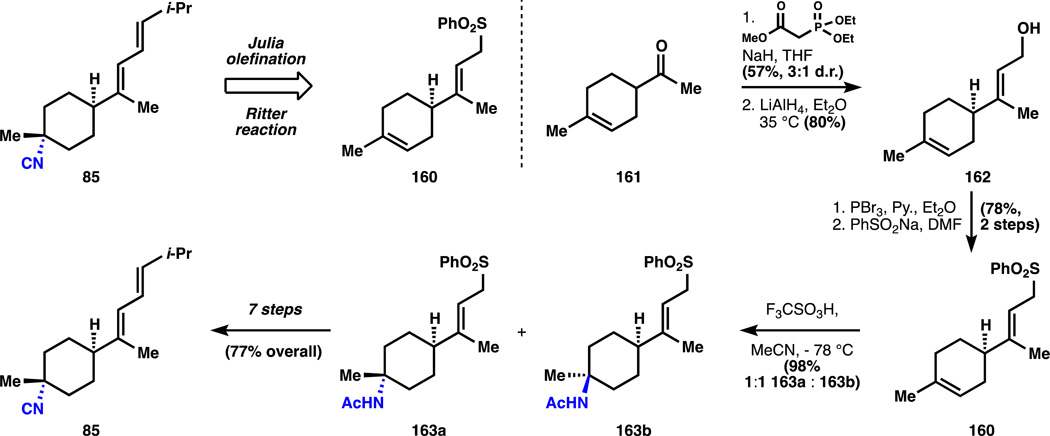
Ichikawa’s analysis and synthesis of 85 using a Ritter reaction.

Ichikawa’s polycyclization of nerolidol en route to bisabolyl amine 164.

Albizati’s mercury-mediated polyene cyclization and nitrile capture.
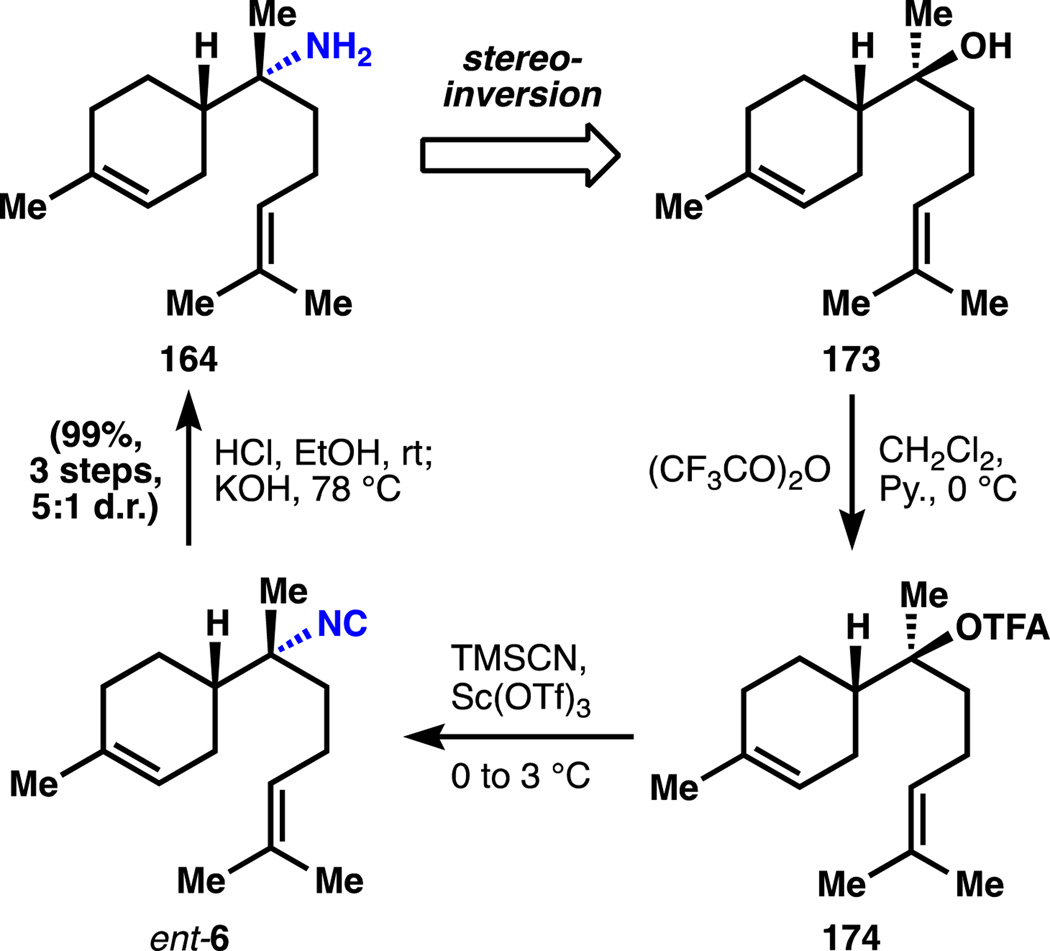
Shenvi's route to (−)-164 via stereoinversion of 173.
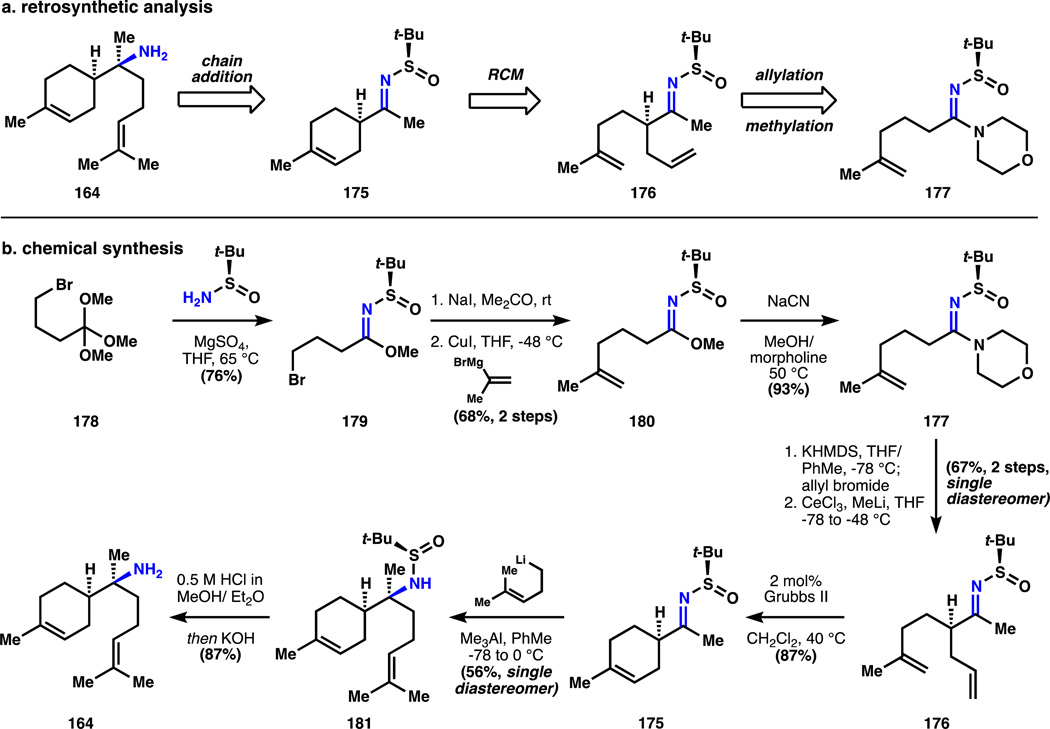
a. Ellman’s analysis and b. synthesis of (+)-164 using his auxiliary.
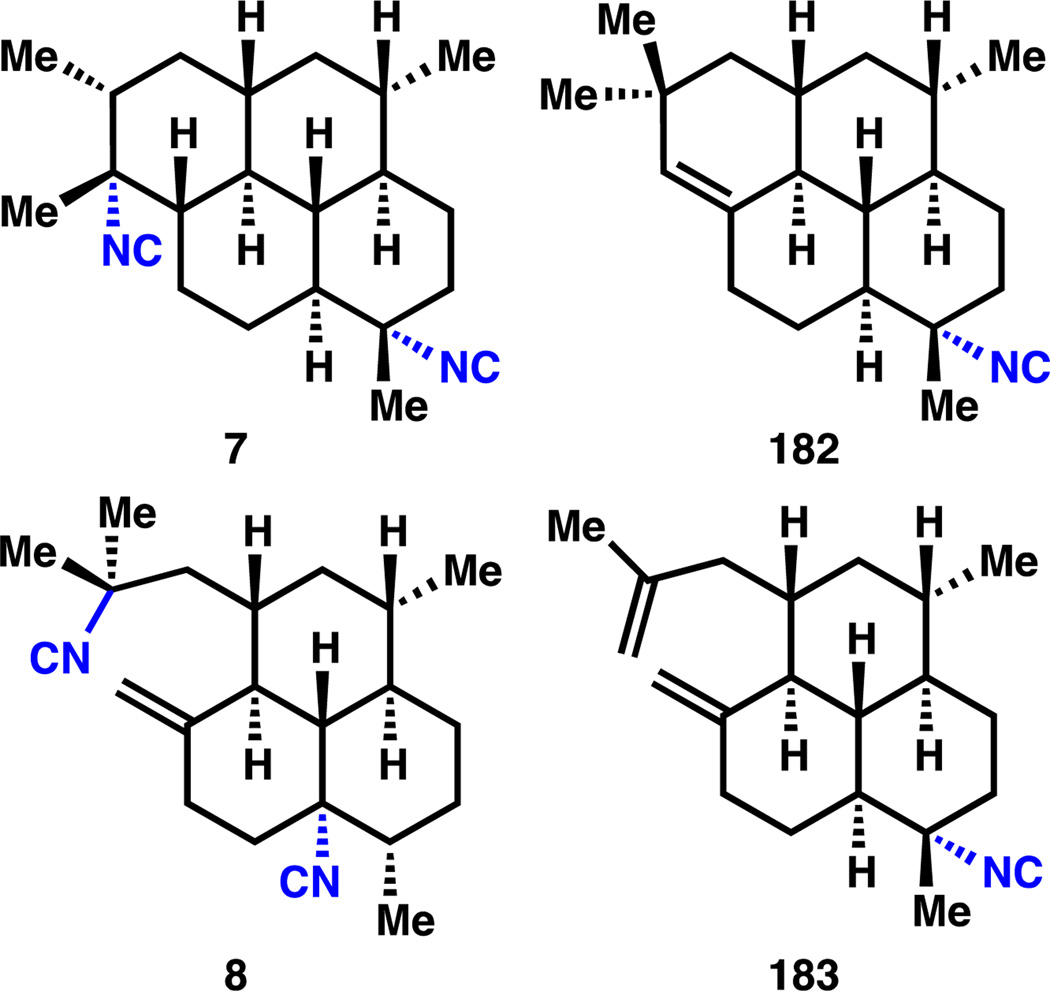
Amphilectenes and adocianes.
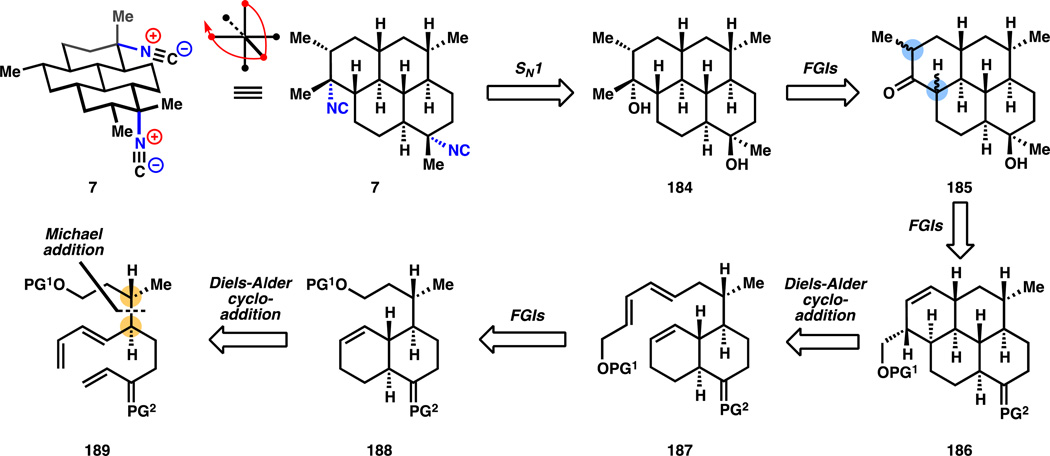
Corey’s retrosynthetic analysis of (+)-7,20-diisocyanoadociane (7).
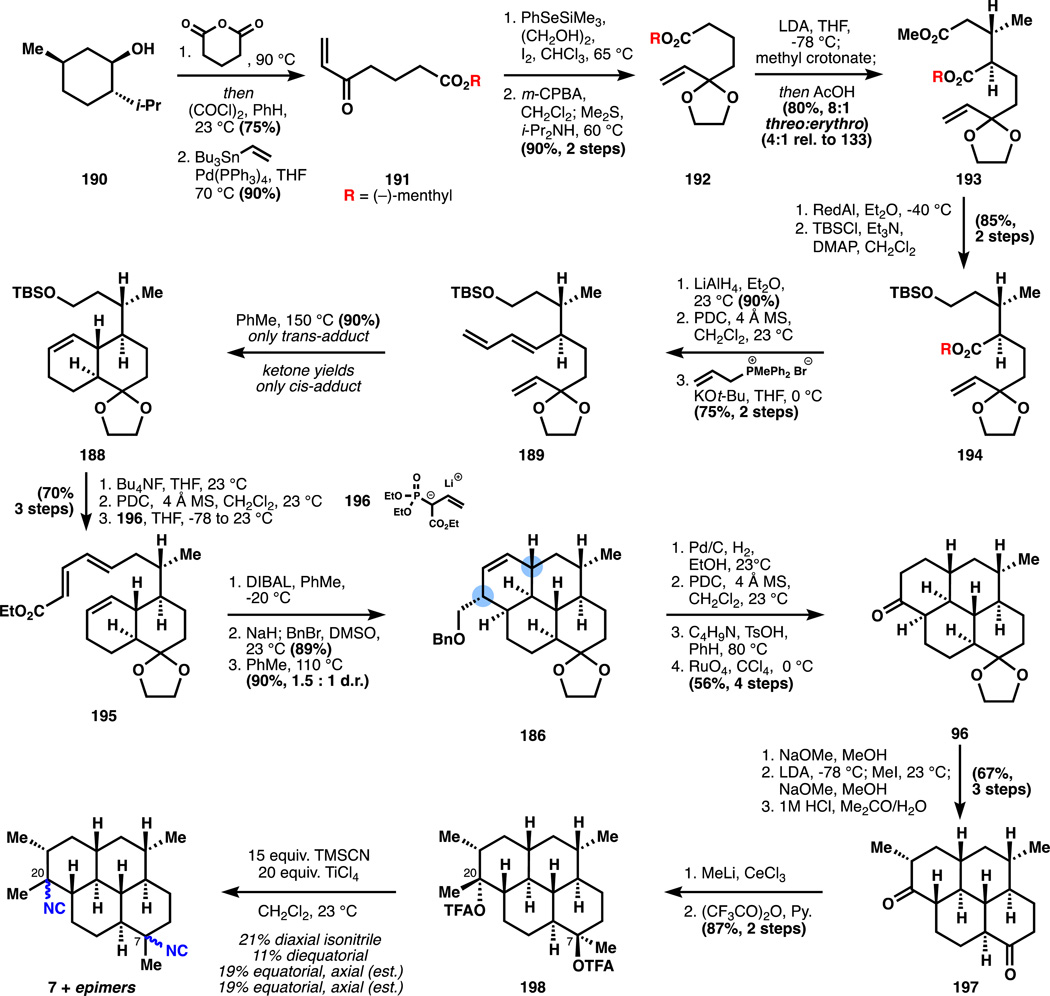
Corey’s chemical synthesis of 7.
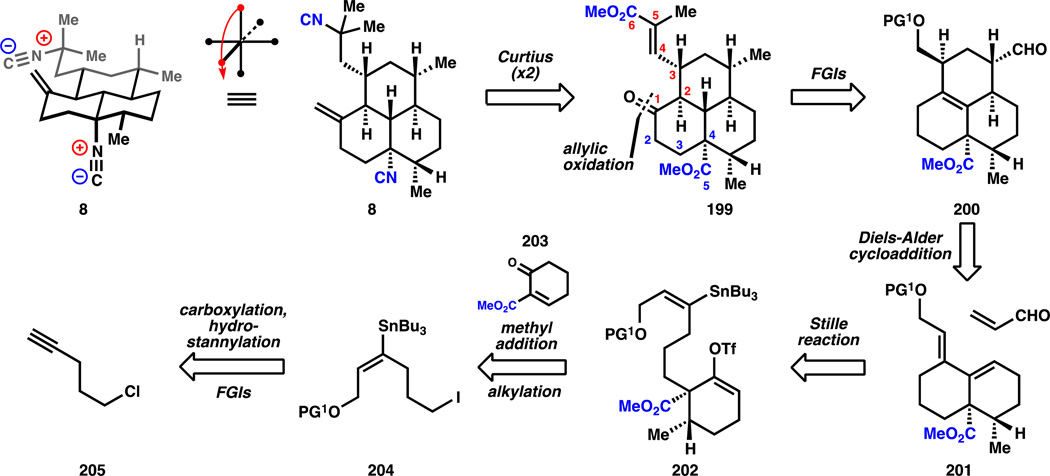
Piers’ analysis of 8 using difunctional reagent 204 as precursor to diene 201.
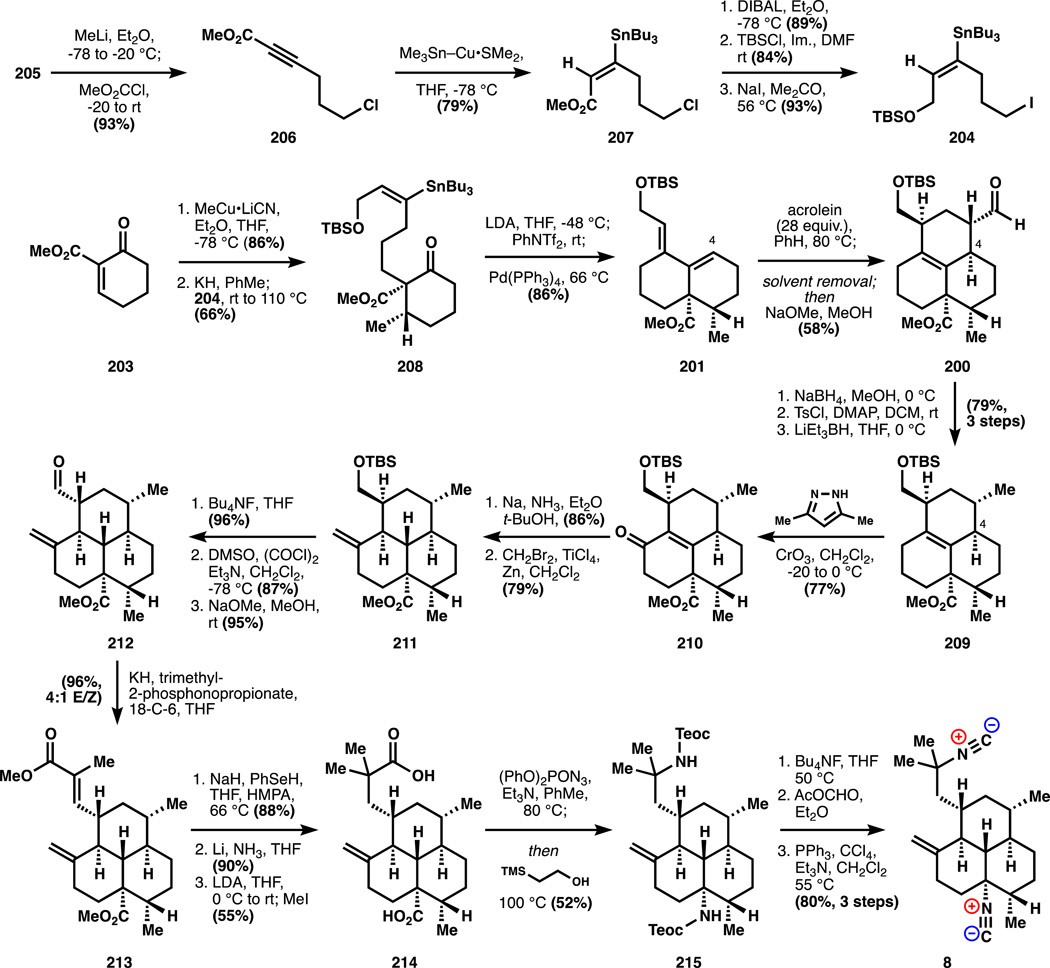
Piers’ synthesis of 8.
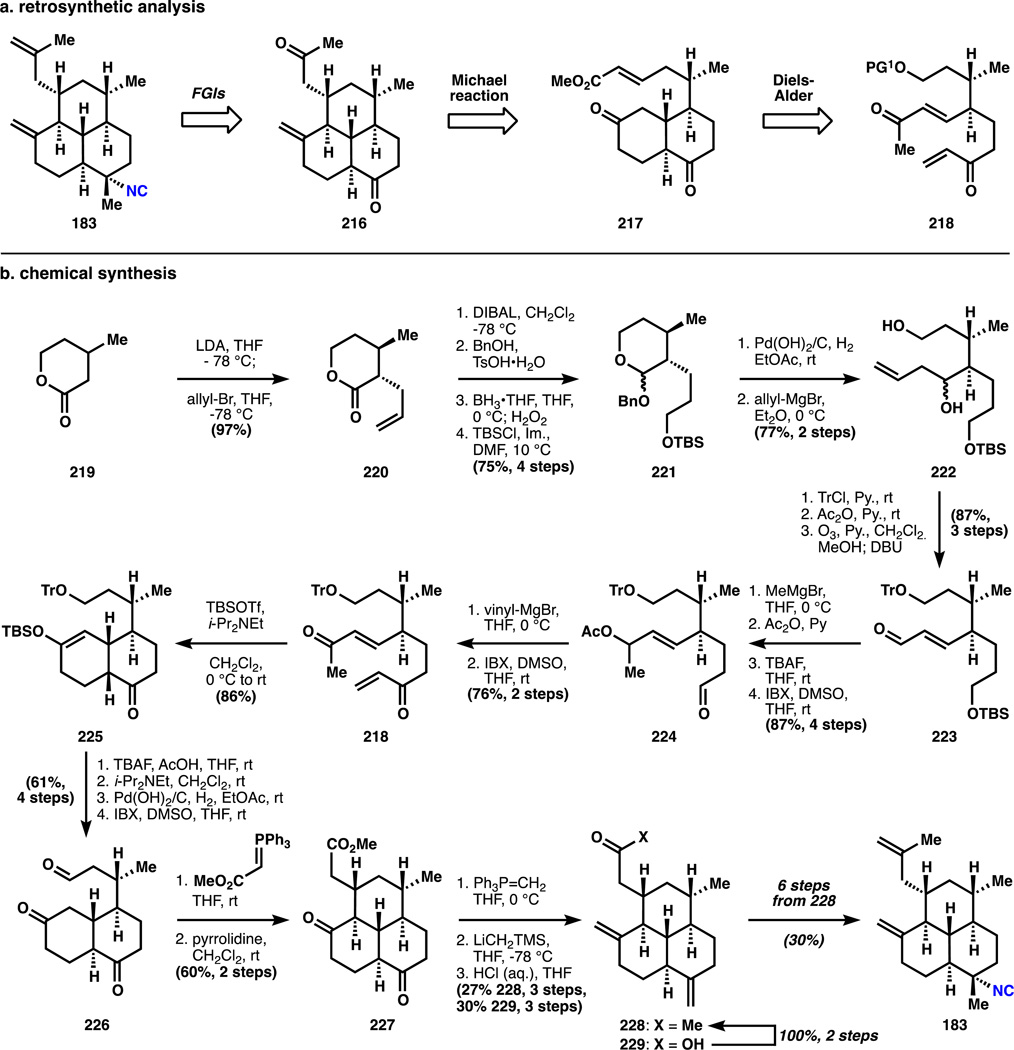
a. Miyaoka’s analysis and b. synthesis of amphilectene 183.
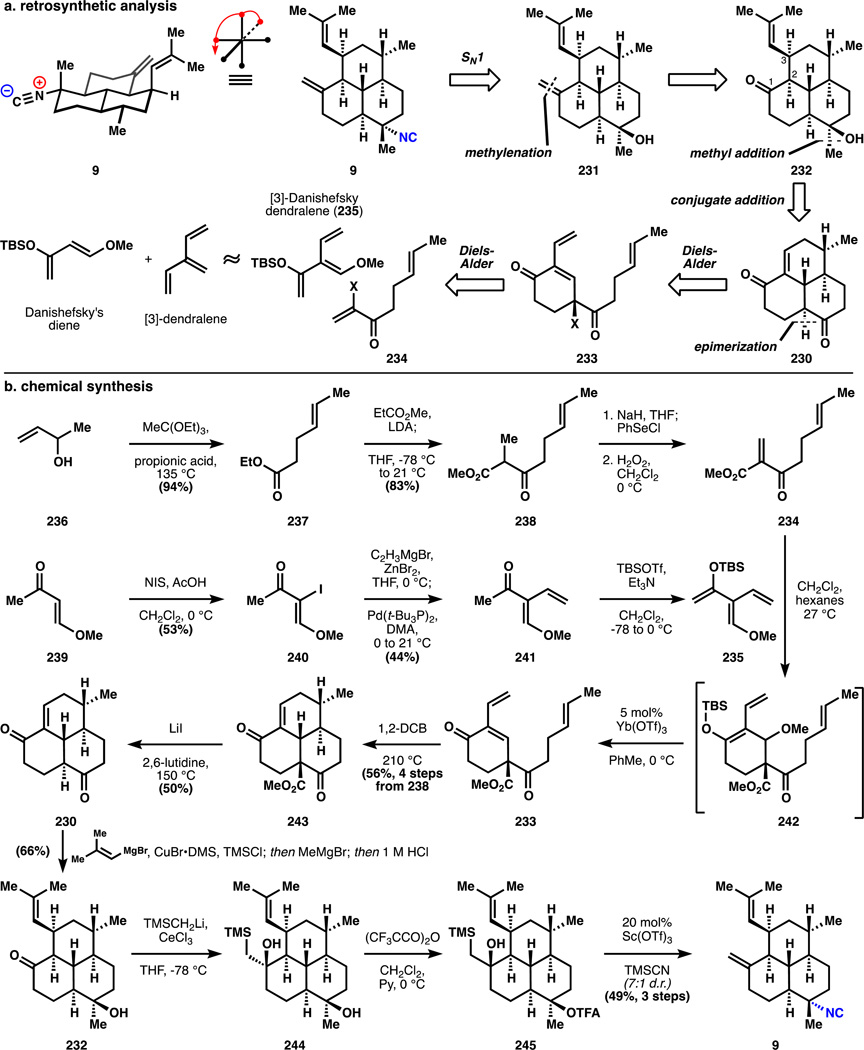
a. Shenvi’s analysis and b. synthesis of amphilectene 9 using [3]-Danishefsky dendralene 235 and a stereospecific SN1 reaction.
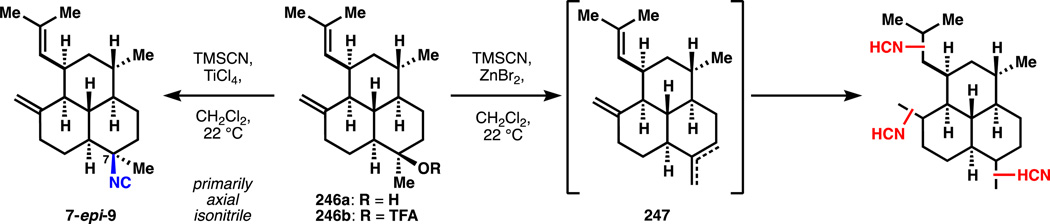
Pitfalls of other methods for isocyanation in the synthesis of 7.
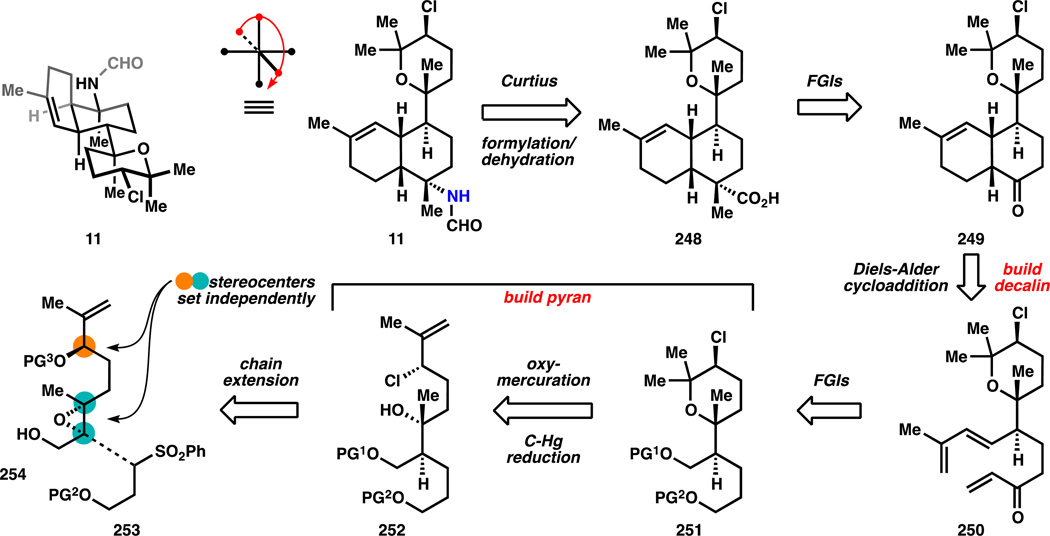
Retrosynthetic analysis of 11 according to Miyaoka and Yamada’s synthesis.
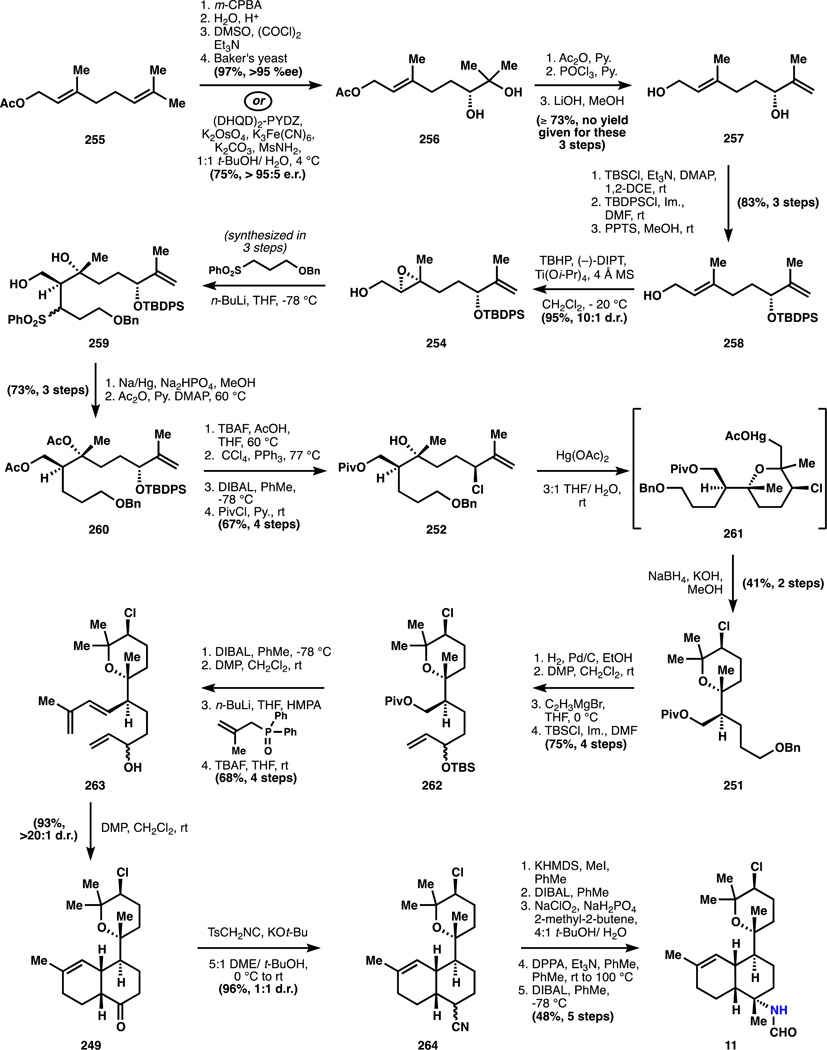
Miyaoka’s and Yamada’s synthesis of 11.
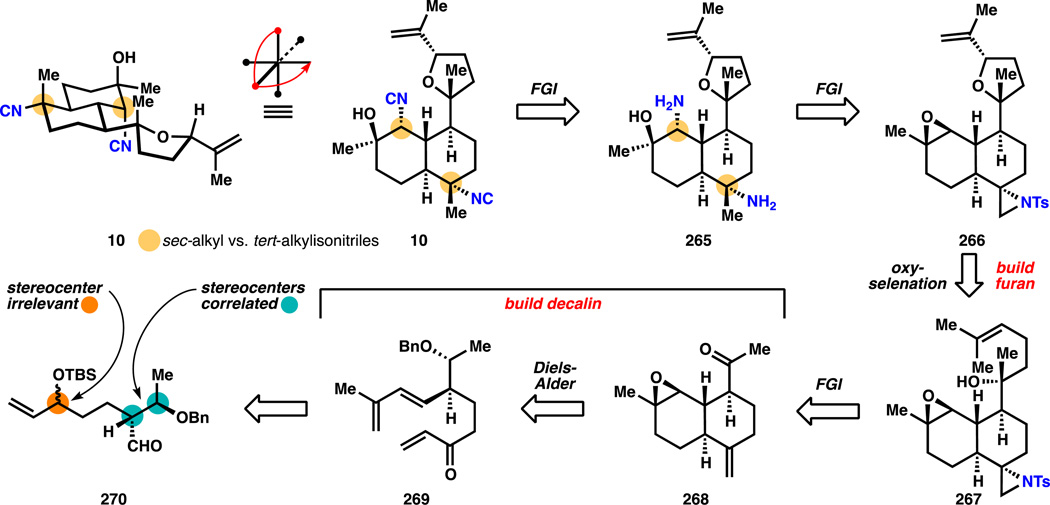
Wood’s analysis of 10 uses substrate control of most stereochemistry.
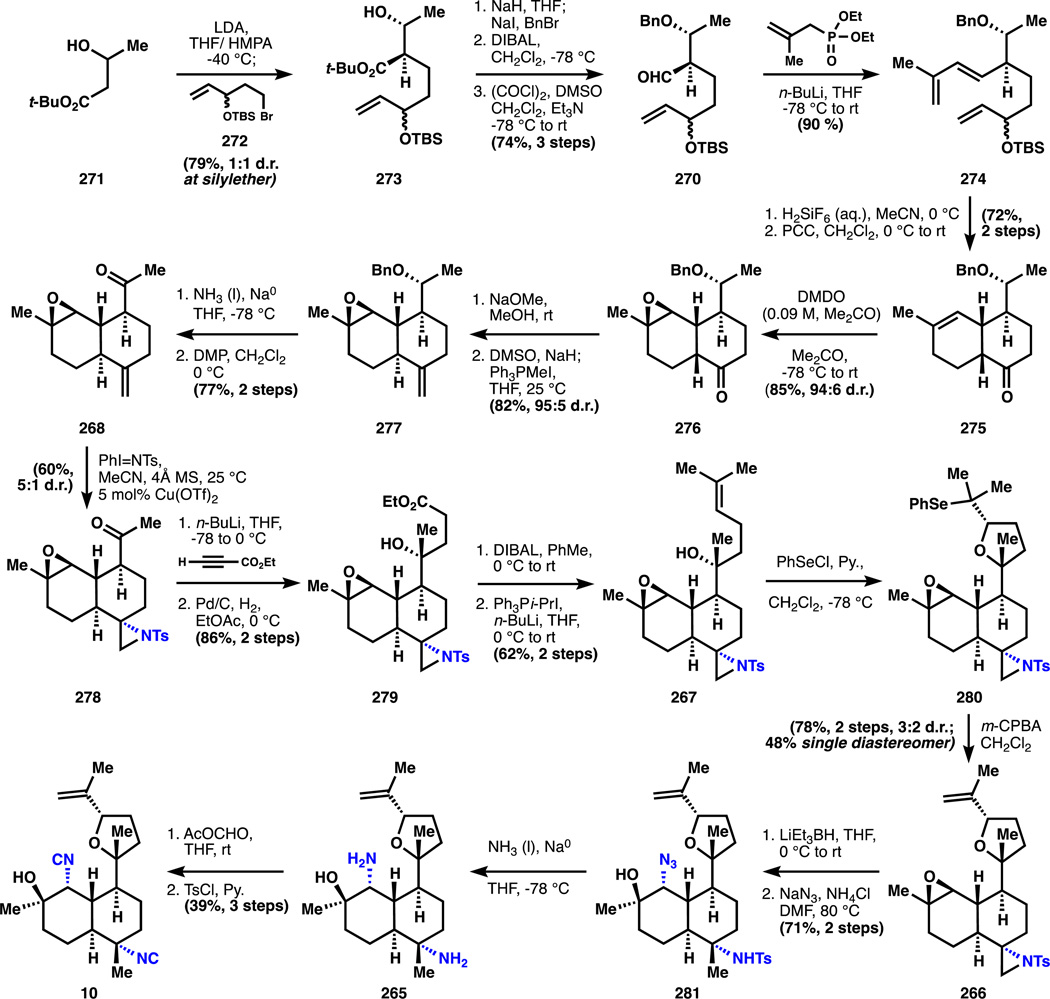
Wood’s synthesis of kalihinol C (10).
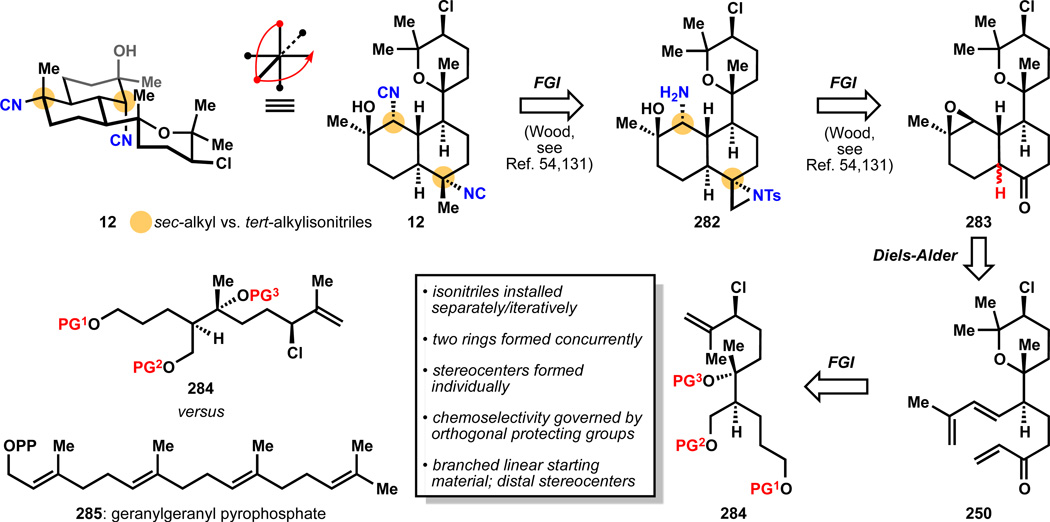
Miyaoka’s analysis of 12 relies on preinstalled stereocenters (e.g. 284) prior to ring building, in contrast to the hypothesized biosynthesis of 12 from 285.
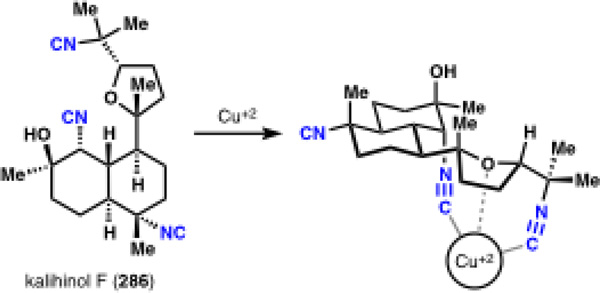
Kalihinol F copper chelation model.
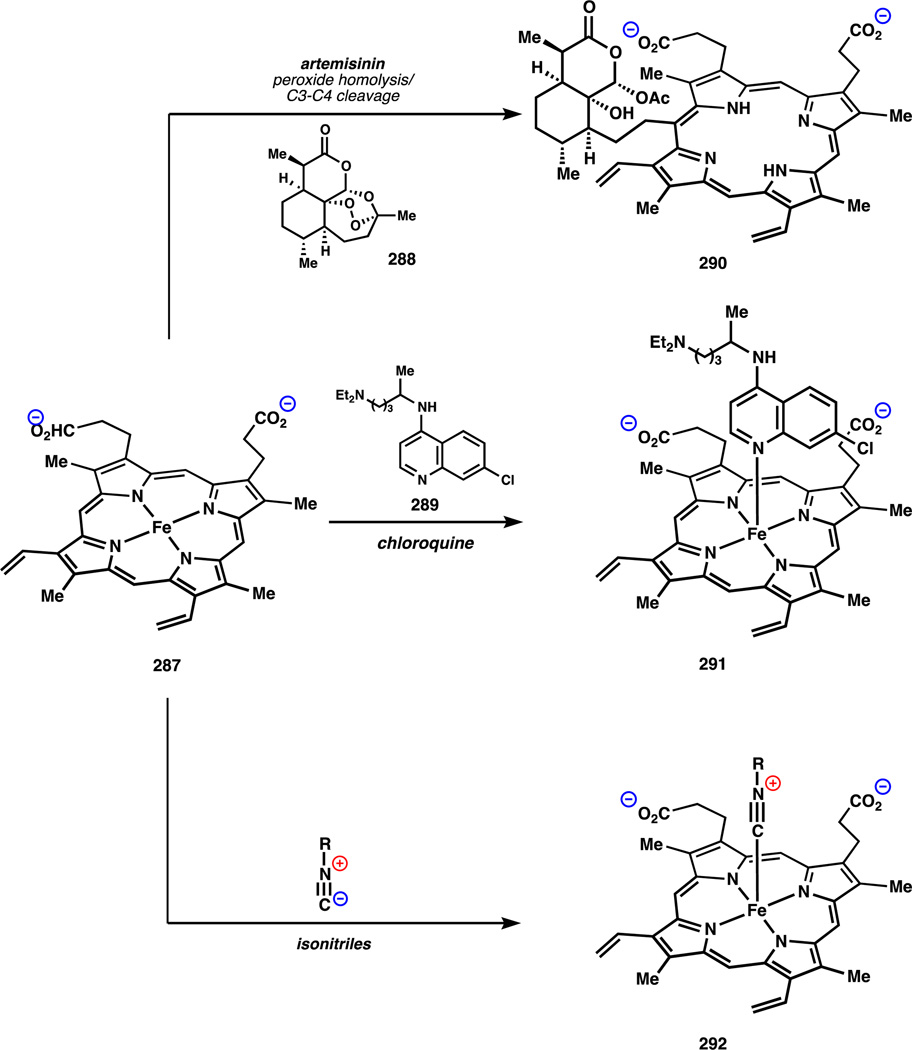
Small molecule/heme interactions.
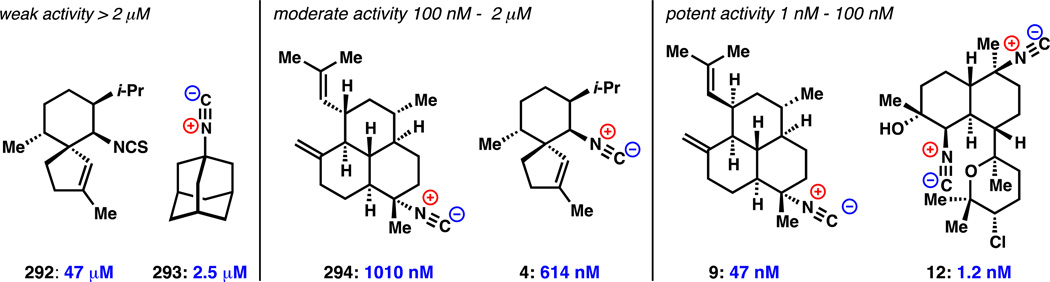
Representative anti-malarial (Plasmodium falciparum) activity.,,,.

Metal binding alone does not explain SAR.
References
Publication types
MeSH terms
Substances
Grants and funding
LinkOut - more resources
Full Text Sources
Other Literature Sources
