


Meta-analysis of drainage versus no drainage after laparoscopic cholecystectomy
- PMID: 25516708
- PMCID: PMC4266231
- DOI: 10.4293/JSLS.2014.00242
Meta-analysis of drainage versus no drainage after laparoscopic cholecystectomy
Abstract
Background and objectives: Routine drainage after laparoscopic cholecystectomy is still controversial. This meta-analysis was performed to assess the role of drains in reducing complications in laparoscopic cholecystectomy.
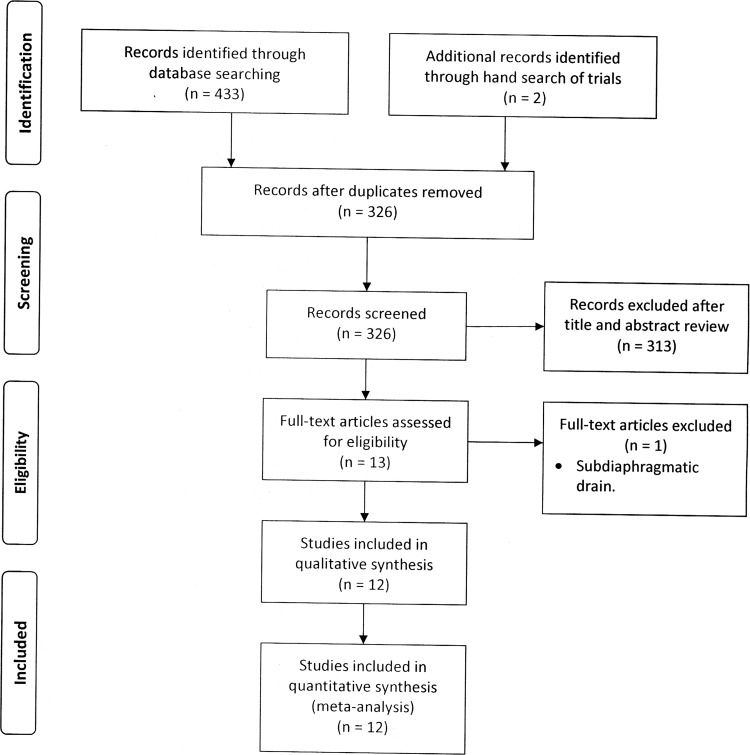
Methods: An electronic search of Medline, Science Citation Index Expanded, Scopus, and the Cochrane Library database from January 1990 to June 2013 was performed to identify randomized clinical trials that compare prophylactic drainage with no drainage in laparoscopic cholecystectomy. The odds ratio for qualitative variables and standardized mean difference for continuous variables were calculated.
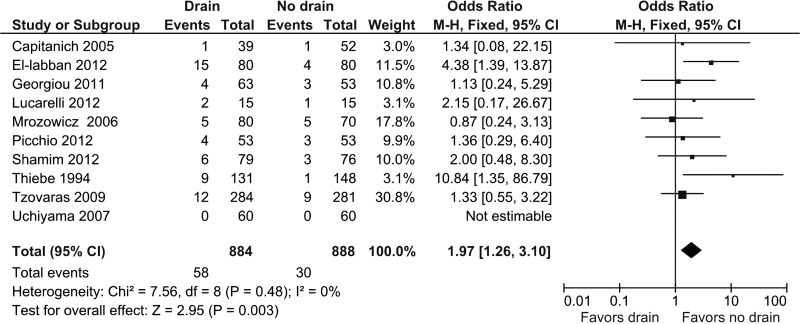
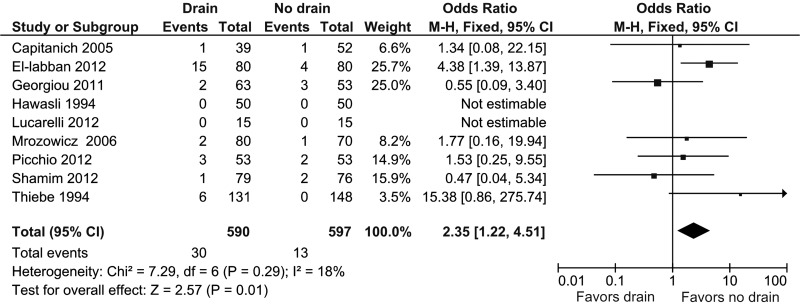
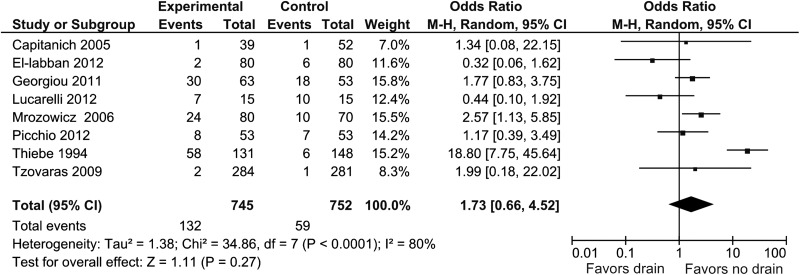
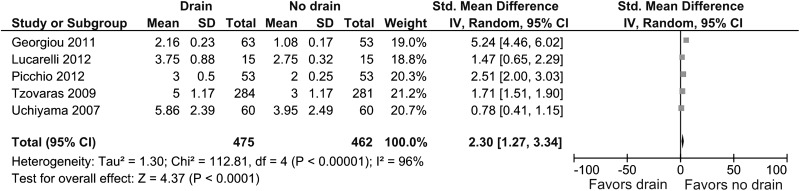
Results: Twelve randomized controlled trials were included in the meta-analysis, involving 1939 patients randomized to a drain (960) versus no drain (979). The morbidity rate was lower in the no drain group (odds ratio, 1.97; 95% confidence interval, 1.26 to 3.10; P = .003). The wound infection rate was lower in the no drain group (odds ratio, 2.35; 95% confidence interval, 1.22 to 4.51; P = .01). Abdominal pain 24 hours after surgery was less severe in the no drain group (standardized mean difference, 2.30; 95% confidence interval, 1.27 to 3.34; P < .0001). No significant difference was present with respect to the presence and quantity of subhepatic fluid collection, shoulder tip pain, parenteral ketorolac consumption, nausea, vomiting, and hospital stay.
Conclusion: This study was unable to prove that drains were useful in reducing complications in laparoscopic cholecystectomy.
Keywords: Cholecystectomy; Drainage; Laparoscopy.
Figures



References
-
- Launay-Savary MV, Slim K. Evidence-based analysis of prophylactic abdominal drainage. Ann Chir. 2006;131:302–305. - PubMed
-
- Gallstones and Laparoscopic Cholecystectomy. National Institutes of Health Consensus Development Conference Statement. September 14–16, 1992. Available at: http://consensus.nih.gov/1992/1992GallstonesLaparoscopy090html.htm Accessed July 24, 2013.
-
- Strasberg SM. Clinical practice. Acute calculous cholecystitis. N Engl J Med. 2008;358:2804–2811. - PubMed
Publication types
MeSH terms
LinkOut - more resources
Full Text Sources
Other Literature Sources
Medical