. 2015 Mar 5;519(7541):97-101.
doi: 10.1038/nature14021. Epub 2014 Dec 15.

Dauer-independent insulin/IGF-1-signalling implicates collagen remodelling in longevity

Affiliations

Dauer-independent insulin/IGF-1-signalling implicates collagen remodelling in longevity

Collin Y Ewald et al. Nature. .

Abstract

Interventions that delay ageing mobilize mechanisms that protect and repair cellular components, but it is unknown how these interventions might slow the functional decline of extracellular matrices, which are also damaged during ageing. Reduced insulin/IGF-1 signalling (rIIS) extends lifespan across the evolutionary spectrum, and in juvenile Caenorhabditis elegans also allows the transcription factor DAF-16/FOXO to induce development into dauer, a diapause that withstands harsh conditions. It has been suggested that rIIS delays C. elegans ageing through activation of dauer-related processes during adulthood, but some rIIS conditions confer robust lifespan extension unaccompanied by any dauer-like traits. Here we show that rIIS can promote C. elegans longevity through a program that is genetically distinct from the dauer pathway, and requires the Nrf (NF-E2-related factor) orthologue SKN-1 acting in parallel to DAF-16. SKN-1 is inhibited by IIS and has been broadly implicated in longevity, but is rendered dispensable for rIIS lifespan extension by even mild activity of dauer-related processes. When IIS is decreased under conditions that do not induce dauer traits, SKN-1 most prominently increases expression of collagens and other extracellular matrix genes. Diverse genetic, nutritional, and pharmacological pro-longevity interventions delay an age-related decline in collagen expression. These collagens mediate adulthood extracellular matrix remodelling, and are needed for ageing to be delayed by interventions that do not involve dauer traits. By genetically delineating a dauer-independent rIIS ageing pathway, our results show that IIS controls a broad set of protective mechanisms during C. elegans adulthood, and may facilitate elucidation of processes of general importance for longevity. The importance of collagen production in diverse anti-ageing interventions implies that extracellular matrix remodelling is a generally essential signature of longevity assurance, and that agents promoting extracellular matrix youthfulness may have systemic benefit.


Figures
Extended Data Figure 1
Extended Data Figure 1. Analyses of rIIS under dauer-independent and dauer-predisposed conditions
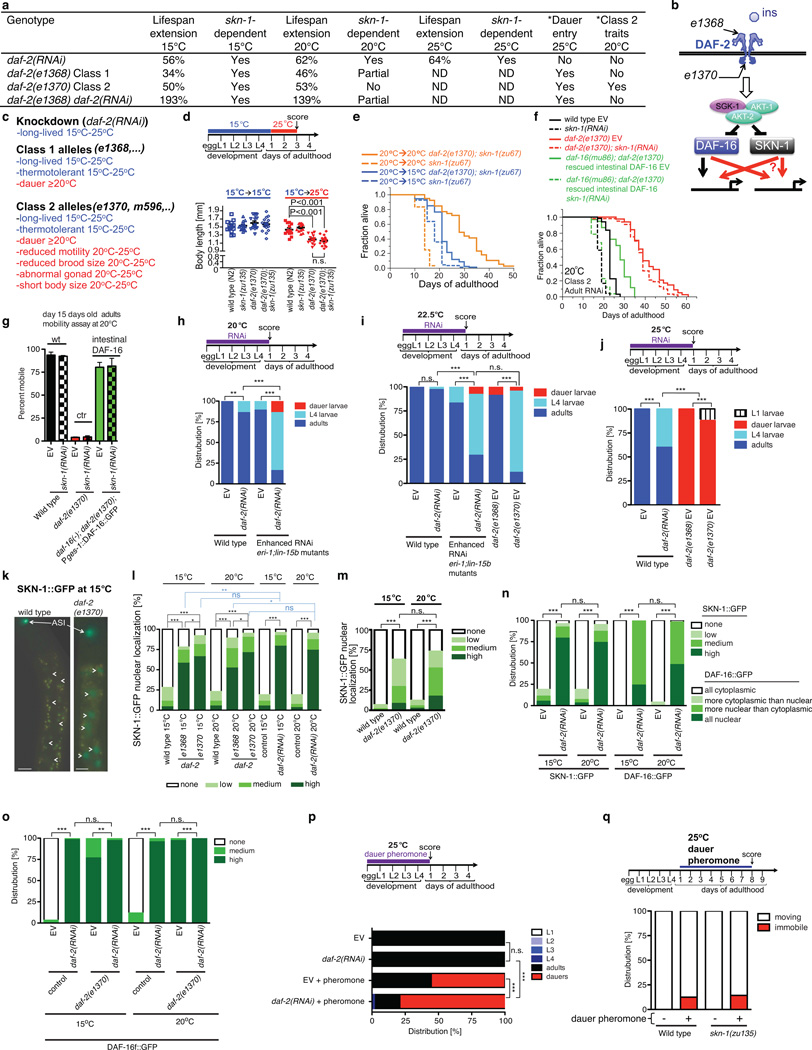
a, Data from this study illustrating that rIIS longevity dependence upon skn-1 correlates with low dauer pathway activity, not temperature or percent increase in mean lifespan extension. b, Partial schematic of the IIS pathway in C. elegans. Insulin-like peptides (ins) bind to DAF-2, leading to activation of the AKT-1/2 and possibly SGK-1 kinases,,, which phosphorylate DAF-16 and SKN-1. Class 1 daf-2 mutations are typically located on the extracellular portion of DAF-2, whereas most Class 2 mutations affect its intracellular domains. c, daf-2 mutant phenotypes. Red indicates penetrance specifically at higher temperatures (Supplementary Discussion). d, The Class 2 (dauer-related) daf-2 trait of reduced body length is skn-1-independent. Each dot represents an animal, with P values determined by one-way ANOVA with post hoc Tukey. e, Dependence of dauer-independent daf-2 longevity on adulthood skn-1. daf-2(e1370) lifespan extension requires skn-1 when the temperature is downshifted to 15°C specifically during adulthood (blue). For additional information see Supplementary Table 2. f, skn-1-dependence of daf-2(e1370) longevity at 20°C when DAF-16 is expressed specifically in the intestine (strain description in Extended Data Table 1). g, Intestine-specific DAF-16 expression fails to rescue a Class 2 dauer-like trait (immobility) in daf-2(e1370). h-j, Condition-specific induction of dauer by daf-2 RNAi. daf-2 RNAi fails to induce dauer entry even at 25°C (j), although some dauers are seen under more extreme conditions (27°C). The activity of IIS and DAF-16 in neurons is critical for dauer regulation,,, and in the wild-type RNAi is comparatively ineffective in neurons, suggesting that the extremely weak dauer propensity of daf-2 RNAi might derive from a failure to reduce IIS sufficiently in neurons. Supporting this idea, daf-2 RNAi induced dauer entry even at 20°C in eri-1(mg366); lin-15B(n744) mutants, in which neuronal RNAi is robust (h). N>100 for each condition, 2 merged trials. k-n, Robust SKN-1 and DAF-16 nuclear localization under conditions of dauer inactivity. SKN-1 nuclear accumulation is inhibited comparably by IIS at 15°C and 20°C. SKN-1 is constitutively localized to ASI neuron nuclei in wild type animals, and accumulates in intestinal nuclei in daf-2(e1370). k, Extent of IIS reduction from daf-2(e1370) at 15°C, indicated by nuclear SKN-1::GFP. Chevrons indicate intestinal nuclei, Scale bar = 20 µm. SKN-1::GFP (LD001) in intestinal nuclei is quantified in (l, m). N> 60 for each condition and trial, 3 merged trials with P values determined by chi2 test. Nuclear accumulation was scored as in Methods. n, daf-2 RNAi comparably induces SKN-1::GFP (LD001) and DAF-16::GFP (TJ356) intestinal nuclear localization at 15°C and 20°C. (N>60 for each condition, 1 trial with all experimental conditions done in parallel). o, Comparable nuclear accumulation of DAF-16f::GFP (lpIs14) induced by daf-2 RNAi and daf-2(e1370) at 15°C and 20°C (N>60 for each condition, 1 trial performed in parallel). p, q, Induction of dauer development (p) and dauer-like traits (skn-1-independent) (q) by the crude dauer pheromone preparation used in lifespan assays (Fig. 1e; Extended Data Table 1, Supplementary Table 2). In p; N>100 for each condition, 1 trial. In q; N=30 for each condition, 3 merged trials. For h-j, l-o: P values were determined by chi2 test. n.s.= not significant, *<0.05, **<0.001, ***<0.0001.
Extended Data Figure 2
Extended Data Figure 2. Identification of SKN-1-regulated daf-2(−) genes
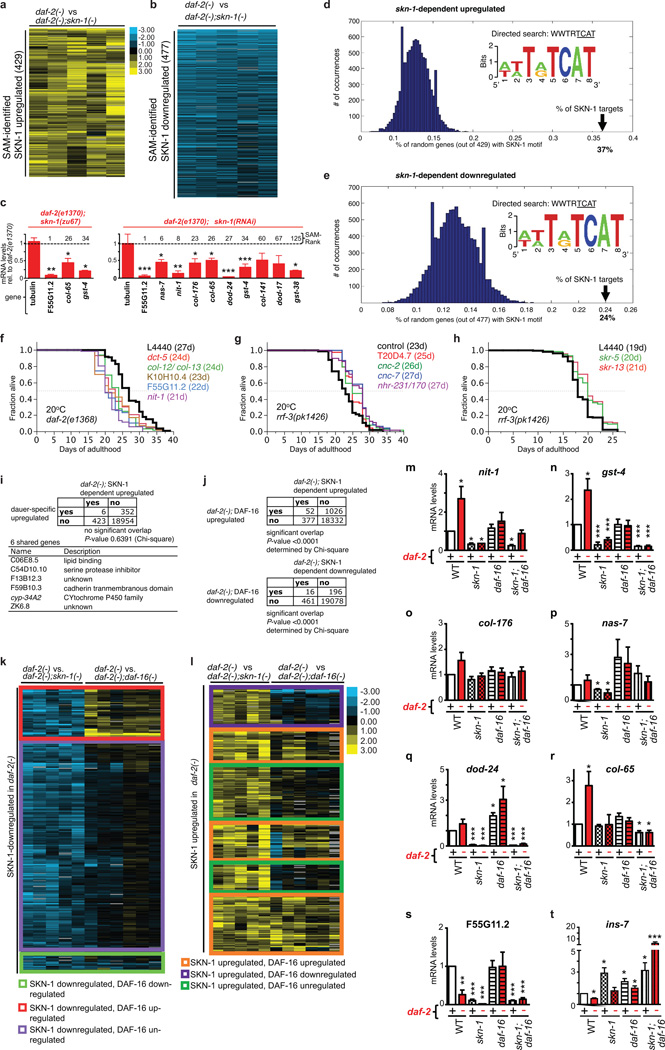
a, Heatmap of 429 genes identified by SAM as significantly upregulated by SKN-1 in daf-2 mutants. b, 477 genes identified by SAM as significantly downregulated by SKN-1 in daf-2 mutants (Supplementary Table 3). The SKN-1-downregulated daf-2(−) set was enriched for genes involved in ubiquitin-mediated proteolysis (E3 ligase/SCF, F-box; Supplementary Table 8). Columns represent biological samples. blue = down; black = unregulated. c, Confirmation of microarray data for SKN-1-upregulated daf-2(−) genes by qRT-PCR at 15°C. One and three biological replicates were analysed in the left and right panels, respectively. SAM scores are in Supplementary Table 3. Data are represented as mean ± s.e.m. P values *<0.05, **<0.001, ***<0.0001 relative to daf-2 were determined by one sample t-test, two-tailed, hypothetical mean of 1. d-e, Enrichment of SKN-1 binding sites upstream of SKN-1-regulated daf-2(−) genes. An unbiased search using the Weeder and FIRE algorithms did not detect any overrepresented form of the consensus SKN-1 binding motif (WWTRTCAT) (W=A/T, R=G/A). Given the degeneracy of this motif, we used RSA Tools to perform a directed search of 600 bp upstream of SKN-1 upregulated (d) and downregulated (e) genes. This search window was based upon the location of SKN-1 binding sites identified by genome-wide ChIP-seq using transgenically-expressed SKN-1. A SKN-1 motif was detected at only 13% of a random sample of 10,000 genes, but at 37% and 24% of the SKN-1-upregulated (out of 429 genes) and downregulated genes (out of 477 genes), respectively. f, Importance of SKN-1-upregulated daf-2(−) genes for daf-2(e1368) lifespan. The Class 1 daf-2 allele e1368 is partially dependent upon skn-1 for lifespan extension at 20°C (Extended Data Table 1). Adult RNAi against 5 of 12 genes tested reduced daf-2(e1368) lifespan at 20°C. g-h, Several SKN-1-downregulated daf-2(−) genes decrease lifespan. Knockdown was performed in the RNAi-sensitive strain rrf-3(pk1426). (g) Genes for which RNAi knockdown increased lifespan, from 12 that were analysed without regard to their function. (h) Analysis of 6 Skp1-related genes, an overrepresented category among SKN-1-downregulated daf-2(−) genes (Supplementary Table 8). Only genes that affected lifespan are shown. Other data and all statistics are in Supplementary Table 6. For 15 other SKN-1-downregulated daf-2(−) genes, it has been shown previously that RNAi increases lifespan (Supplementary Table 5). (f) and (g) each show a single trial, and a composite of 3 trials is shown in (h). In (g) the negative RNAi control is elpc-4(RNAi) instead of L4440. Mean lifespan (days) is indicated for each gene. i, Overlap between the daf-2(−); SKN-1-dependent upregulated gene set (429 genes, this study) and a set of genes preferentially upregulated in dauers (358 genes). The overlap of 6 genes was not significant (P-value 0.6391 by two-sided Chi-square). The number of genes that were present in neither set (no/no) was determined by subtracting the total number in both gene sets from the total number of genes encoded in C. elegans 19,735. j, Overlaps between SKN-1-regulated daf-2(−) and DAF-16-regulated daf-2(−) gene sets. For both up- and down-regulated daf-2(−) genes, overlaps between the SKN-1- and DAF-16-regulated sets were significant (P-value <0.0001 determined by two-sided Chi-square). Moreover, hierarchical clustering identified additional SKN-1-upregulated daf-2(−) genes that were also upregulated by DAF-16 even though they were not present in this list of highest-confidence DAF-16-regulated genes (l). The number of genes that were in neither set (no/no) was determined as (i). k, Hierarchical clustering of SKN-1-downregulated daf-2(−) gene sets with DAF-16-regulated genes. SKN-1-regulated genes identified here were queried as to how they were influenced by DAF-16 in a comparison of daf-2(e1370) vs daf-2(e1370);daf-16(mu86) animals raised at 20°C. 393 SKN-1-upregulated daf-2(−) genes that were present in this DAF-16-regulated dataset are shown. Most SKN-1-downregulated daf-2(−) genes did not appear to be regulated by DAF-16. l, Hierarchical clustering of SKN-1-upregulated daf-2(−) genes with DAF-16-regulated genes that were identified by comparing daf-2(e1370) vs daf-2(e1370);daf-16(mu86) at 20°C. 272 SKN-1-upregulated daf-2(−) genes that were present in this DAF-16-regulated dataset are shown, 46% of which were upregulated by both SKN-1 and DAF-16. yellow = up; blue = down; black = unregulated. m-t, Effects of SKN-1 and DAF-16 on individual genes in response to daf-2 RNAi at 20°C. A qRT-PCR analysis of skn-1(zu67) daf-16(mgDf47), and skn-1;daf-16 skn-1(zu67); daf-16(mgDf47) double mutants indicated that many genes are upregulated by daf-2(RNAi) (red) in a skn-1-dependent manner, but also that these genes vary in how they are affected by DAF-16. DAF-16 and SKN-1 increased activity of gst-4 col-65, and col-176, but DAF-16 seemed to downregulate dod-24 nas-7, and F55G11.2. All of these genes except ins-7 were identified in our daf-2;skn-1 data sets. For each condition, 3 biological samples of 200 worms each were analysed by qRT-PCR. All data are represented as mean ± s.e.m. P values of *<0.05, **<0.001, ***<0.0001 relative to wild type RNAi control were determined by one sample t-test, two-tailed, hypothetical mean of 1.
Extended Data Figure 3
Extended Data Figure 3. Analyses of SKN-1-regulated daf-2(−) genes
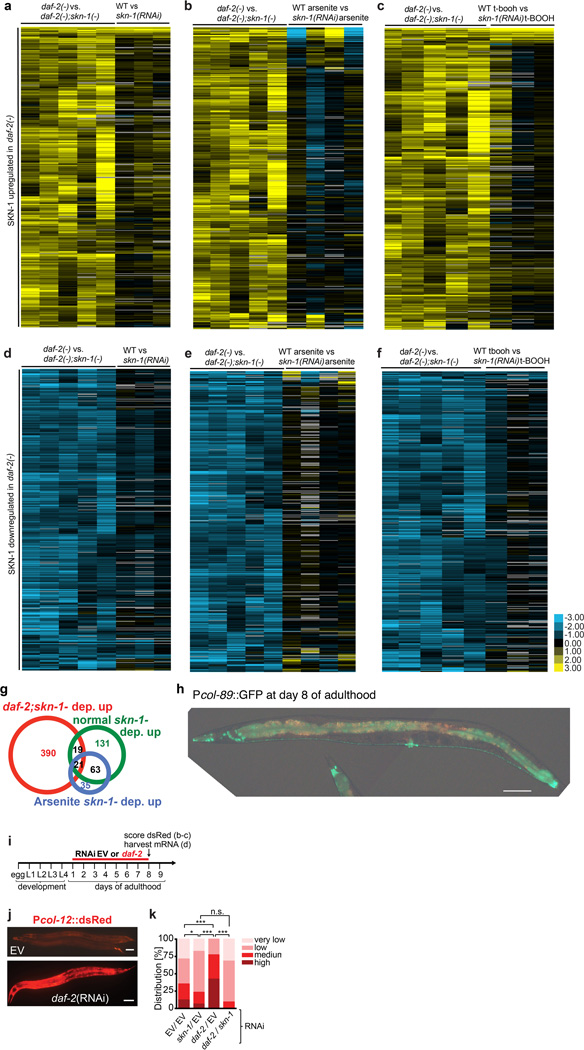
a–f, SKN-1-upregulated (a–c) and downregulated (d–f) daf-2(−) gene sets were examined by hierarchical clustering to determine how they were previously found to be affected by SKN-1 under unstressed or oxidative stress conditions. t-BOOH= tert-butyl hydroperoxide. g, Proportional Venn diagrams show comparisons of SKN-1-upregulated genes identified under daf-2(−), normal, or arsenite treatment conditions (Supplementary Tabel 7). In each case, L4 larvae were analysed to avoid embryogenesis effects. Heatmaps are shown in (a-f). h, The SKN-1-upregulated daf-2(−) collagen col-89 is expressed in neurons and the intestine, but not in hypodermis. Transgenic Pcol-89::GFP (BC12533) at day 8 of adulthood is shown. Anterior to the left, ventral side down, scale bar = 100 µm. i-k, SKN-1-mediated collagen gene activation in day 8 daf-2(RNAi) adults. Adulthood daf-2 knockdown (i) activated a Pcol-12::dsRED reporter (j; Scale bar = 100 µm). (k). skn-1-dependence of Pcol-12::dsRED expression. EV: empty RNAi vector. N> 60 for each condition, 3 merged trials, with P value by chi2 (*=P<0.05; ***=P<0.0001; n.s.= not significant).
Extended Data Figure 4
Extended Data Figure 4. rIIS delays age-associated decline in collagen expression
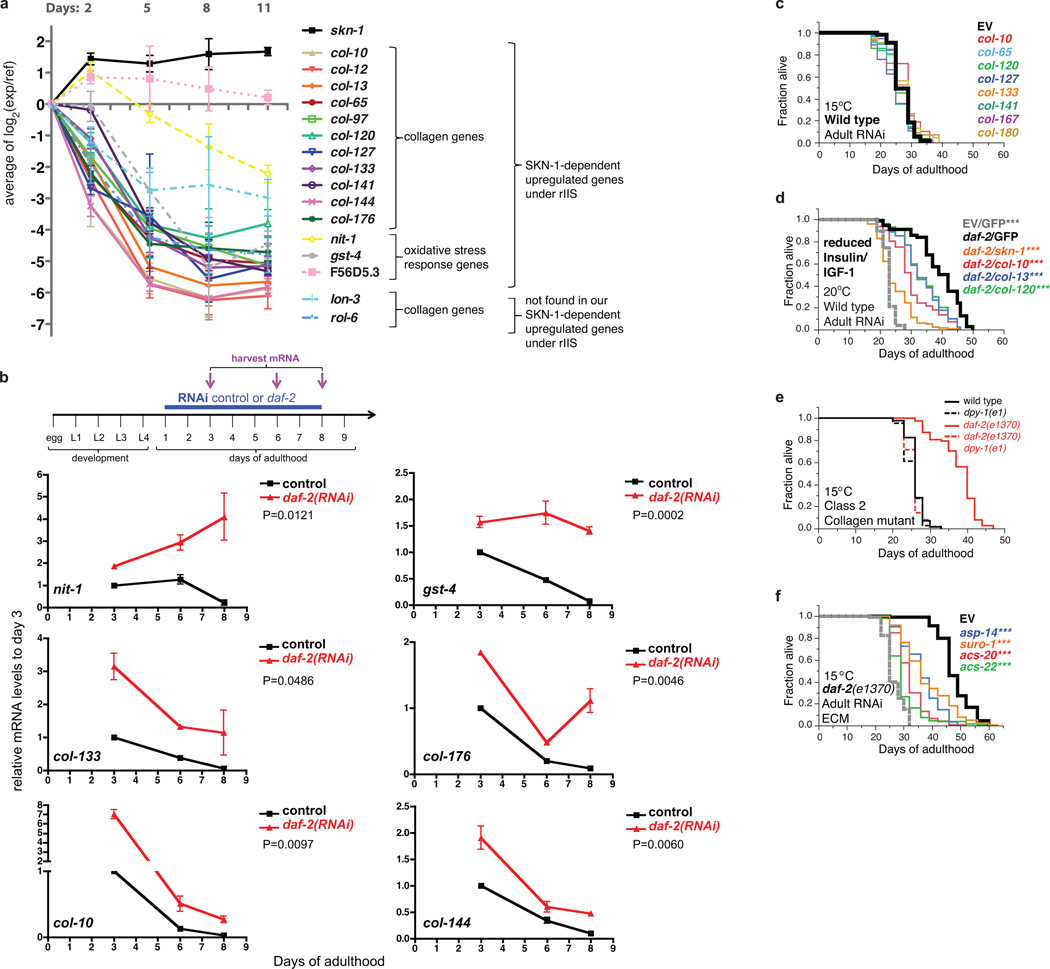
a, Age-associated decline in expression of selected collagen and SKN-1-dependent detoxification genes. 88 collagens are among many genes that decline in expression as C. elegans ages. Fifty of these age-downregulated genes were in our SKN-1 upregulated daf-2(−) gene set, including 27 collagen genes (Supplementary Table 10). These daf-2(−); SKN-1-dependent collagens were neither flanked by SKN-1 binding sites nor bound by SKN-1 in a genome-wide survey (Supplementary Table 9), suggesting that they are regulated by SKN-1 indirectly. The average Cy5-labeled cDNA values of day 2–11 adults (indicated as “exp”) are plotted in binary logarithm (log2) relative to cy3-labeled reference cDNA from mixed stage hermaphrodites (indicated as “ref”). Data are from. nit-1 gst-4, and F56D5.3 are predicted to encode a nitrilase, glutathione S-transferase, and NADPH oxidoreductase, respectively (WormBase). b, Expression of SKN-1-regulated collagen and oxidative stress response genes (nit-1 and gst-4) are maintained during ageing in daf-2(RNAi) animals. One-day old adult wild type (N2) animals were placed on either empty vector control (L4440)(black) or daf-2 RNAi (red) at 20°C. mRNA was harvested at days 3, 6 and 8. mRNA levels are shown relative to wild type (N2) day 3 adults on empty vector control (L4440) RNAi and are represented as mean ± s.e.m. For each condition, 2 biological samples of >100 worms each were analysed by qRT-PCR. For each gene, statistical difference of relative mRNA expression levels between L4440 and daf-2(RNAi) treatment over the time-course (day 3,6,8) is shown by two-way ANOVA (repeated measures). c, Adulthood knockdown of SKN-1-upregulated collagens did not affect wild-type lifespan (for statistics and additional trials: Extended Data Table 3 and Supplementary Table 13). d, Importance of SKN-1-upregulated collagens for daf-2(RNAi) longevity. Adulthood RNAi knockdown of daf-2 with combined with collagens or skn-1 at 20°C is shown. GFP was the RNAi control. (for statistics and additional data: Supplementary Table 13). e, Suppression of daf-2(e1370) but not wild-type longevity at 15°C by the collagen mutation dpy-1(e1), which affects the cuticle,, but was not present in our SKN-1-regulated gene set. For details and statistics see Supplementary Table 13. f, daf-2(e1370) longevity at 15°C requires the SKN-1-upregulated extracellular proteases asp-14 and suro-1, along with cuticle integrity genes acs-20 and acs-22, suggesting a general importance of ECM gene expression. For details and statistics see Supplementary Table 13.
Extended Data Figure 5
Extended Data Figure 5. Adulthood knockdown of collagens important for longevity does not affect morphology of cuticle-associated structures
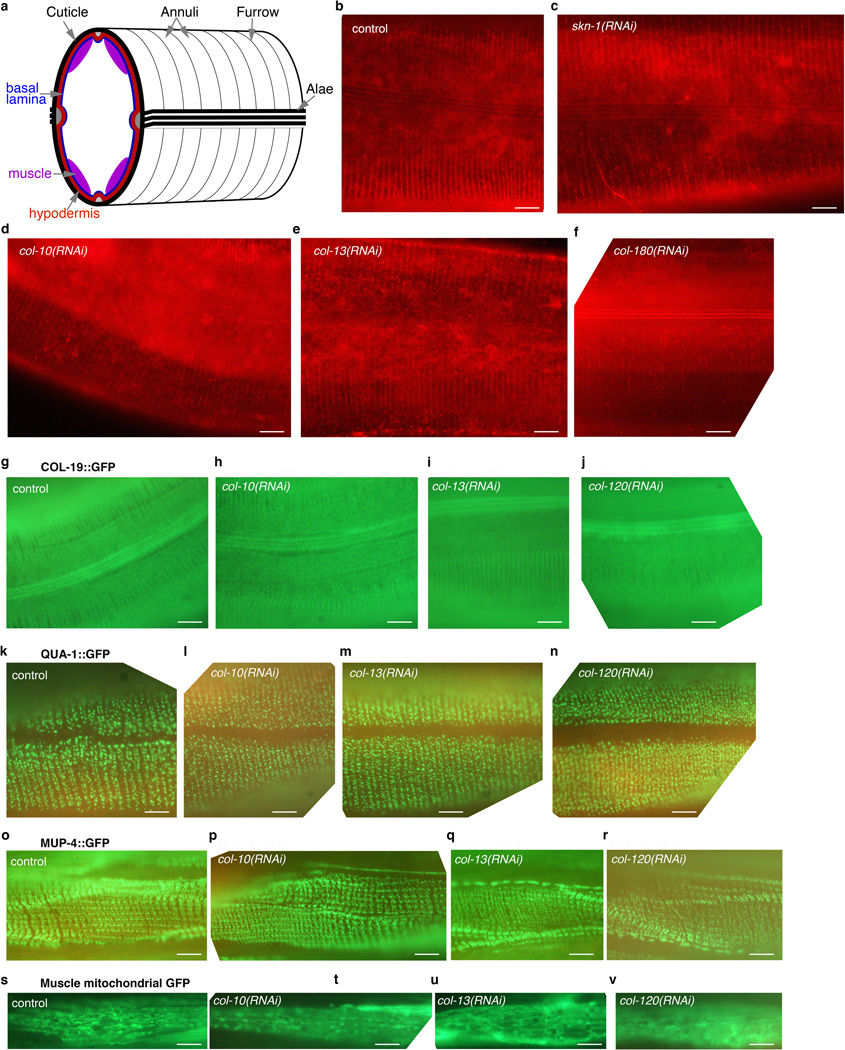
a, Schematic cross-section of C. elegans illustrating the proximity of the cuticle (black), hypodermis (red), basal lamina (blue), and bodywall muscles (purple). Annuli, Furrow, and Alae are characteristic cuticle structures. b-j, Adulthood RNAi against SKN-1-upregulated daf-2(−) collagens does not affect cuticle morphology. b-f, One-day old wild-type animals were exposed to either empty vector (control) or the indicated RNAi clone by feeding. 10 days later animals were incubated in DiI for 16 hours, the cuticle was imaged as described in. N>30 animals per condition scored, with typical images shown. Scale bar = 10 µm. g-j, Cuticle morphology revealed by the collagen COL-19, detected by a translational fusion protein (kaIs12 [COL-19::GFP]). We did not identify col-19 as being regulated by daf-2 and skn-1, and daf-2(RNAi) did not detectably alter COL-19::GFP levels (not shown). k-n, Adulthood knockdown of SKN-1-upregulated daf-2(−) collagens does not affect the pattern of chEx1682 QUA-1::GFP, a marker of cuticle adhesion. QUA-1 encodes a hedgehog related protein required for molting, cuticle adhesion, and alae formation. o-r, Adulthood RNAi against SKN-1-upregulated daf-2(−) collagens does not affect the pattern of muscle-hypodermis-cuticle adhesion, as indicated by upIs1 MUP-4::GFP. MUP-4 is a transmembrane protein that is part of a complex that attaches hypodermis and muscles to the cuticle. s-v, Adulthood collagen knockdown does not affect mitochondrial morphology in muscle. For g-v, animals where placed on RNAi at the first day of adulthood and scored and imaged at day 8 of adulthood. N>30 animals per condition scored, with typical images shown. Scale bar = 10 µm.
Extended Data Figure 6
Extended Data Figure 6. Phenotypic analyses of collagens important for longevity
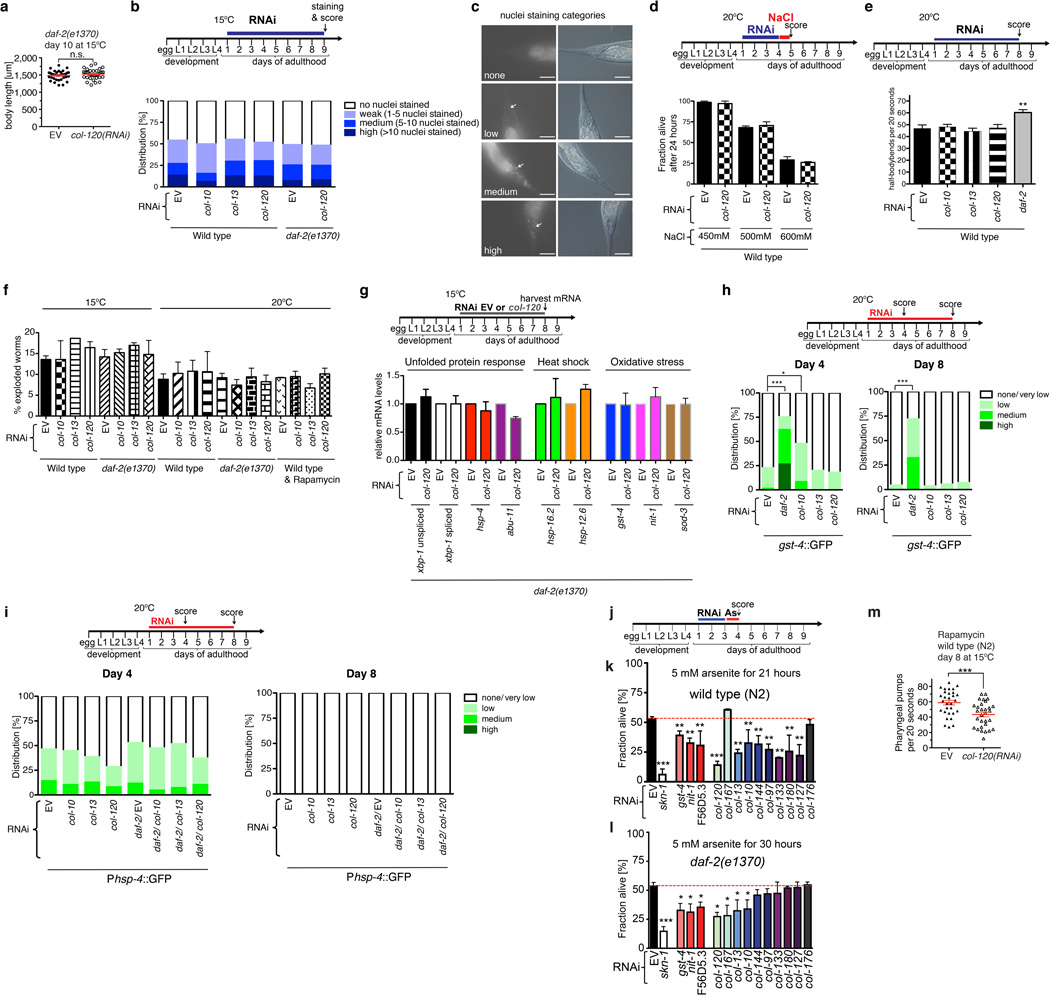
a, Adulthood col-120 knockdown does not affect daf-2(e1370) body size at 15°C. daf-2(e1370) animals were placed on RNAi food as day-one adults, and at day 10 body size, pharyngeal pumping and lipofuscin levels were scored in parallel in the same animals (N>30; 1 trial; see Fig. 4a, 4b). b, c, Adulthood knockdown of SKN-1-upregulated collagens does not alter barrier function. b, Upper panel: animals were placed on RNAi food on adulthood day one, and at day 9 were incubated in 1µg/ml Hoechst 33342, which is membrane-permeable but cuticle-impermeable. For details see full methods, adapted from. b, Lower panel: Barrier permeability was not affected by daf-2 mutation or collagen knockdown. Permeability was assessed by nuclear Hoechst staining in the tail (N>50 per condition; 1 trial). Approximately half of the animals in each group showed nuclear staining in the tail that is likely to have arisen through uptake in the intestine, as suggested by the high levels of intestinal Hoechst staining (c). Uptake through the cuticle would have resulted in a much wider distribution of stained nuclei. c, representative pictures of quantification categories. Arrow indicates Hoechst-stained tail nuclei. Scale bar = 50 µm. d, Adulthood knock-down of col-120 did not sensitize to hypertonic stress. Day-one adult wild-type animals were placed RNAi food for 3 days, and then on plates containing food and high concentrations of salt for 24 hours prior to assay (NaCl: 450 mM, 500 mM, 600 mM; N>60 per condition; 2 trials). e, Adulthood knockdown of SKN-1-upregulated collagens did not impair body movement. Neither the frequency nor morphology (not shown) of body movement was affected. In parallel, the daf-2 RNAi control increased movement frequency because these animals were chronologically younger. (**P-value < 0.001, One-way ANOVA post hoc Tukey compared to EV). f, Adulthood collagen RNAi did not increase vulval rupturing during ageing. The bar graph shows the mean ± s.e.m percentage of exploded worms that were censored during lifespan assays (Extended Data Table 3 and Supplementary Table 13). g-i, Adulthood col-120 knockdown did not induce unfolded protein, heat-shock stress, or oxidative stress responses. In (g), daf-2(e1370) mutants were placed on RNAi food as day-one adults, and assayed at day 8 (upper panel). Relative levels of these stress response gene mRNAs were determined by qRT-PCR (2 independent trials with each 200 worms per condition). h, Adulthood collagen RNAi does not activate the oxidative stress response marker Pgst-4::GFP, assayed after 4 and 8 days of RNAi. As a control, daf-2 RNAi induced SKN-1 to increase gst-4 expression (Fig. 2a). i, Adulthood collagen RNAi does not activate the unfolded protein response marker Phsp-4::GFP. j-l, Importance of collagens for oxidative stress resistance. Day-one adults were exposed to empty vector (EV) or RNAi food at 15°C, then at day three were placed in 5 mM arsenite (As) and scored for survival. Knockdown of collagens and other SKN-1 upregulated daf-2(−) genes sensitized to oxidative stress from arsenite. nit-1 (nitrilase), gst-4 (glutathione S-transferase), F56D5.3 (NADPH oxidoreductase). P value *<0.05, **<0.01, ***<0.001 relative to control (EV), determined by one-way ANOVA with post hoc Tukey. t-BOOH experiments are described in Supplementary Table 16. m, Adulthood collagen expression required for rapamycin to delay appearance of an ageing marker (pharyngeal pumping). N>30; each dot represents an animal; P value ***<0.0001 determined with unpaired t-test, two-tailed.
Extended Data Figure 7
Extended Data Figure 7. Cuticle remodelling in adults
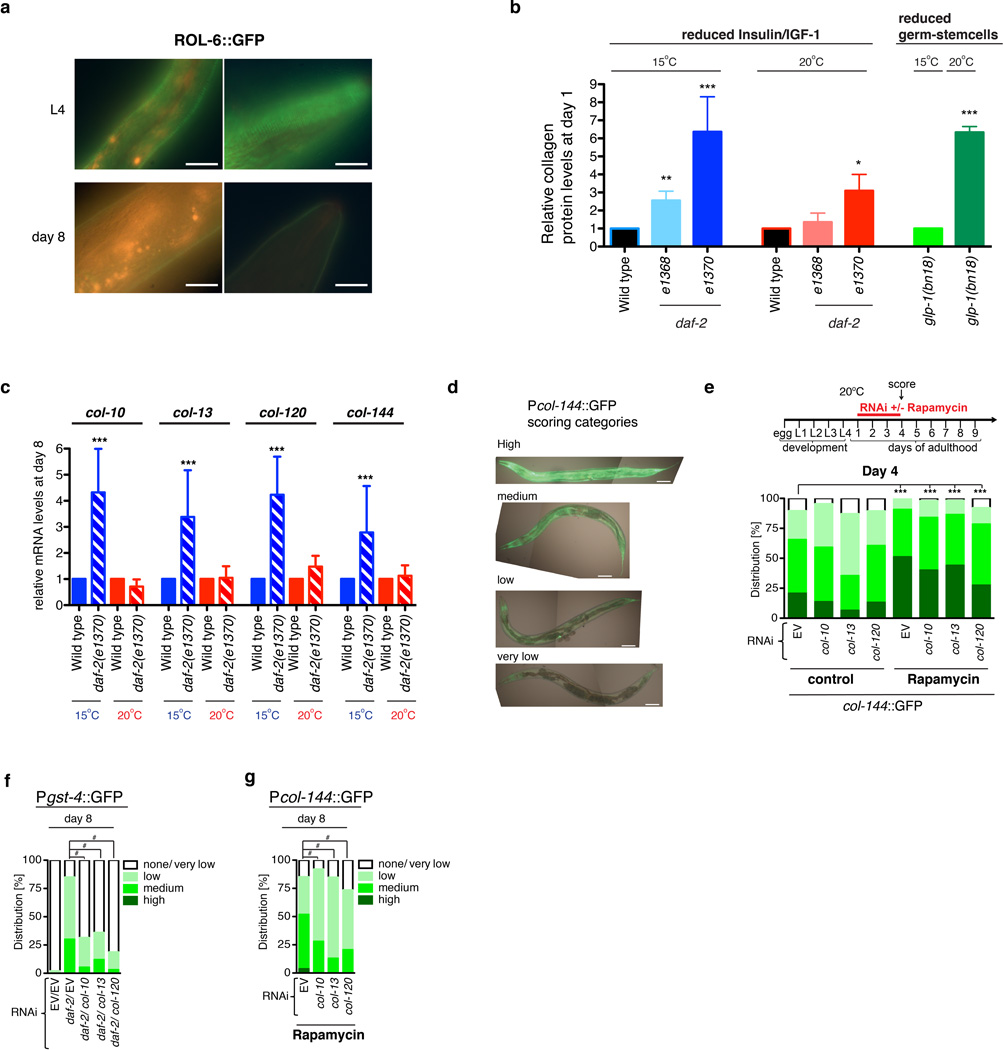
a, The collagen ROL-6 is present in the cuticle during development and early adulthood, then largely disappears during aging. The upper panels show the mid-body (left) and head (right) regions in an L4 animal. Day-one adults exhibited similar levels and patterns of jgIs5 ROL-6::GFP fluorescence (not shown). Lower panels show the corresponding regions in a day-8 adult, in which jgIs5 ROL-6::GFP levels are reduced. The orange signal corresponds to gut autofluorescence. Representative images are shown, with scale bar = 20 µm. N=30 for each sample set (L4, day 1, and day 8). b, Total collagen levels are elevated in long-lived animals at the first day of adulthood. Note that these long-lived animals also maintain higher collagen levels in later life despite an age-related decline (Fig. 4d). Relative collagen levels were estimated by a hydroxyproline assay. In daf-2 mutants total collagen levels were elevated at both temperatures but the increase was greater at 15°C, at which skn-1 and SKN-1-dependent collagens are required for lifespan extension (Fig. 3, Supplementary Table 13). Temperature-sensitive glp-1(bn18) mutants were maintained at 15°C (permissive temperature), or upshifted to 25°C (restrictive temperature) as L1 larvae until the L4 stage, then placed at 20°C. c, SKN-1-dependent collagen genes from the daf-2(−) set are not upregulated in 8 day-old daf-2(e1370) adults at 20°C. Expression of these collagens remains increased at this age in daf-2(e1370) at 15°C or after daf-2 RNAi at 20°C (Fig. 2a, Extended Data Fig. 2c, 4b), conditions in which the dauer pathway is inactive and lifespan extension is skn-1-dependent (see text). 200 day-8 adults were assayed in each sample, with 3 merged independent trials shown. d, Scoring categories for the Pcol-144::GFP reporter are shown in (e, g; Fig. 4f; scale bar = 100 µm). e, Adulthood rapamycin treatment increases col-144 promoter activity. Knockdown of col-10, col-13, or col-120 did not reduce Pcol-144::GFP levels at day 4, but significantly decreased Pcol-144::GFP levels by day 8 (g). N>60 for each condition, 2 merged trials, with P value by chi2 (#=P<0.0001 against untreated EV control animals). f, Dependence of the SKN-1 target gene gst-4 on adulthood SKN-1-upregulated collagen expression in daf-2(RNAi) animals. Collagen or empty vector (EV) control RNAi was initiated at day 1 of adulthood at 20°C, together with daf-2 knockdown. g, Adulthood collagen RNAi decreases col-144 promoter activity in rapamycin-treated animals. As is seen in daf-2 mutants at 15°C (Fig. 4f), activity of this rapamycin-activated promoter is unaffected by adulthood collagen RNAi at day 4 (e), but reduced at day 8. For f and g, N>60 for each condition, 2 merged trials, with P value by chi2 (#=P<0.0001).
Figure 1
Figure 1. Dauer-independent rIIS longevity requires SKN-1
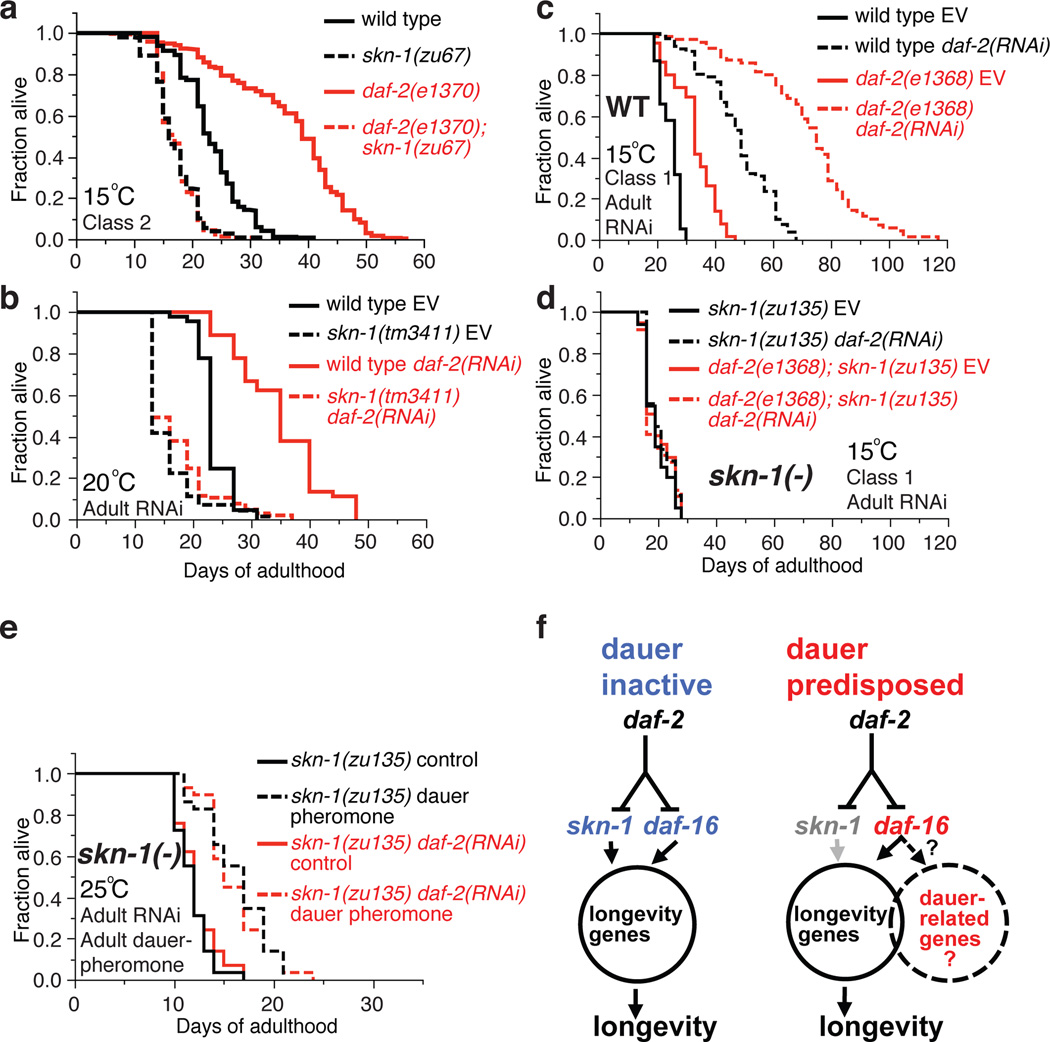
a, b, skn-1-dependent rIIS lifespan extension in the absence of dauer traits. c, d, skn-1-dependent extreme rIIS longevity. EV: empty RNAi vector. e, skn-1-independent longevity from adulthood dauer pheromone treatment but not daf-2(RNAi). f, Longevity assurance programs regulated by IIS. Under conditions that predispose to dauer traits (right panel) some SKN-1 functions may be assumed by DAF-16, possibly including ECM remodelling. Statistics and additional lifespan data are in Extended Data Table 1 and Supplementary Table 2.
Figure 2
Figure 2. Longevity-promoting interventions increase skn-1 dependent collagen expression in adults
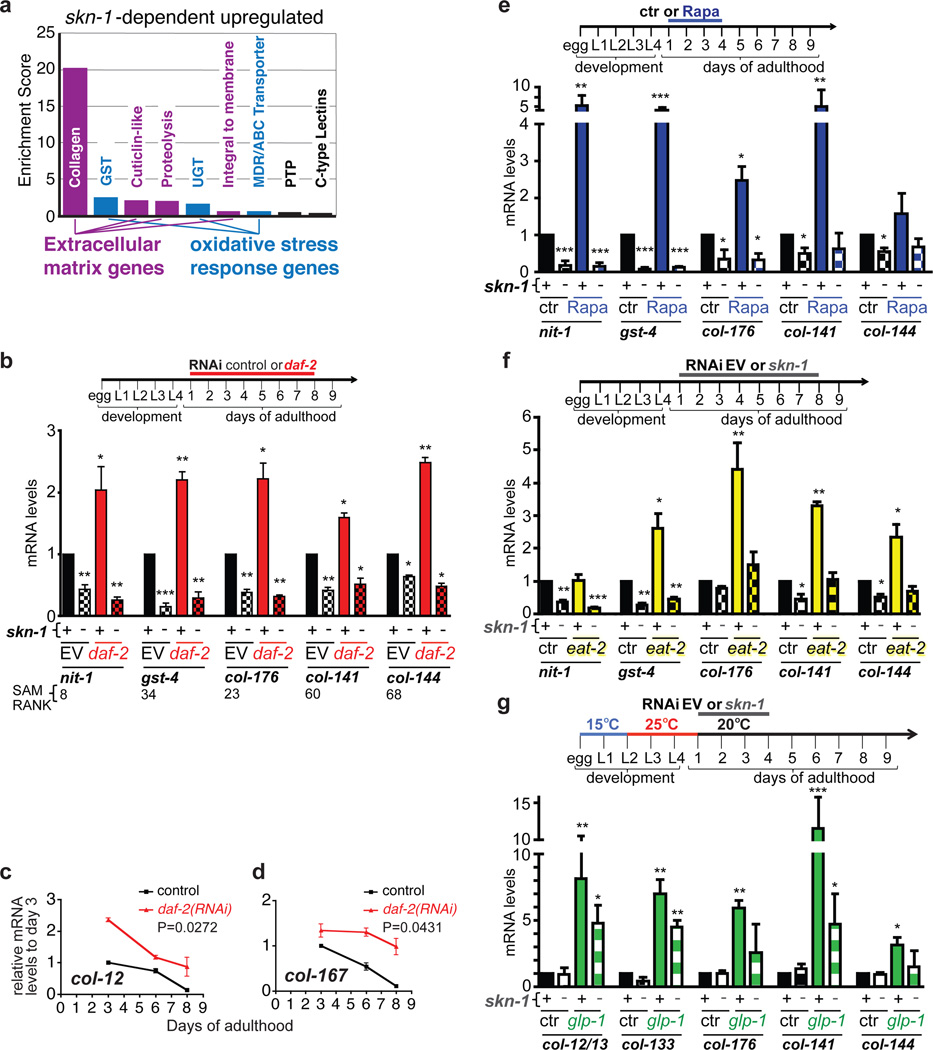
a, Functional categories enriched in SKN-1-upregulated daf-2(−) gene sets, identified by DAVID. Enrichment scores ≥ 1.3 are shown. b-d, Collagen upregulation by adulthood daf-2 RNAi. mRNA expression in wild type (+) or skn-1(zu135) (−) animals, assayed by qRT-PCR. nit-1 and gst-4 are canonical SKN-1 targets. SAM score ranks are in Supplementary Table 3. e, Rapamycin-treated (100 µM) wild type and skn-1(zu67) animals are compared. f. Expression in the DR model eat-2. RNAi-sensitized control (rrf-3(pk1426)) (ctr) or eat-2(ad1116); rrf-3(pk1426) (eat-2) adults were exposed to EV or skn-1 RNAi. g. Upregulation after germline stem cell proliferation block induced by glp-1(bn18) temperature shift. 3 replicates of 200 worms were analysed at the indicated days (c, d) or at the end of treatment. Data are represented as mean ± s.e.m. P value *<0.05, **<0.001, ***<0.0001 relative to wild type or control, by one sample t-test, two-tailed, hypothetical mean of 1.
Figure 3
Figure 3. Adulthood collagen expression promotes longevity
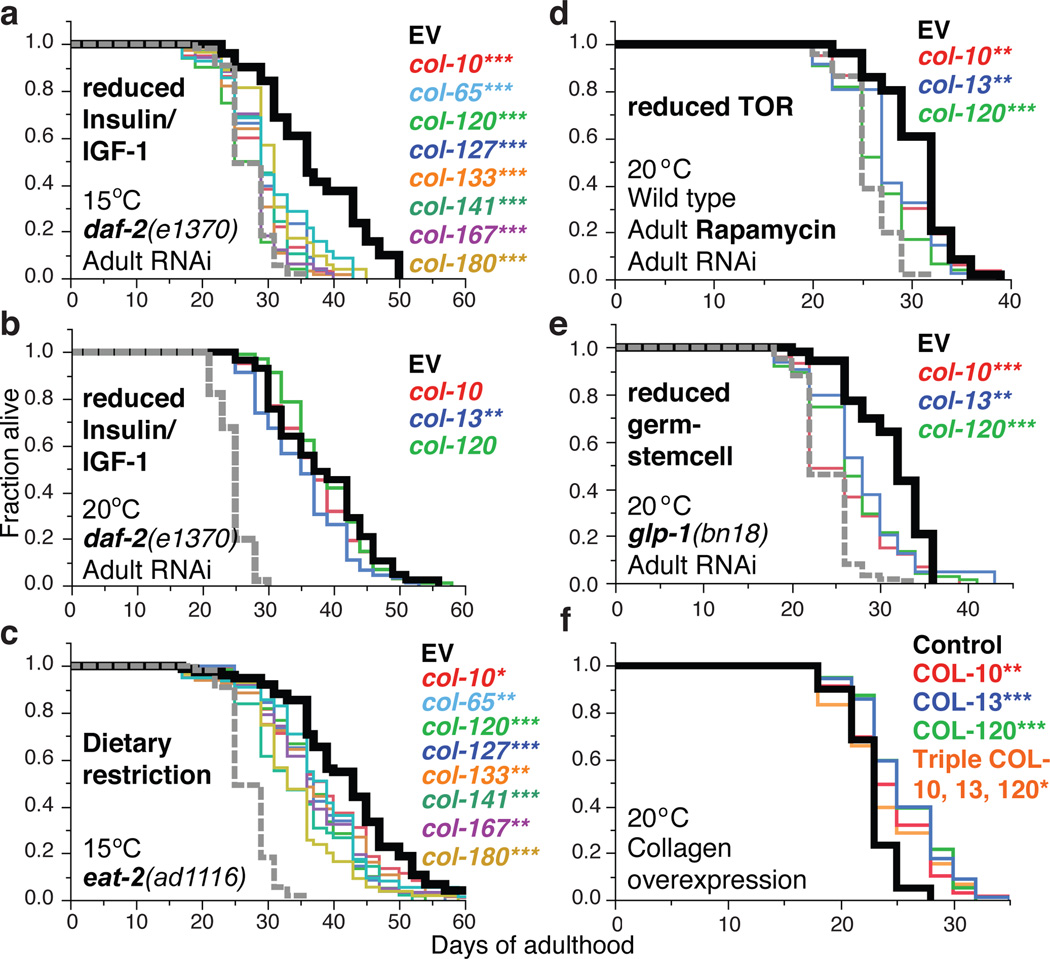
a, b, SKN-1-upregulated collagens are needed for daf-2(e1370) longevity at 15°C but not 20°C. c, Adulthood collagen knockdown reduced eat-2(ad1116) lifespan at 15°C. Trial run in parallel with (a, and Extended Data Fig. 4c). d, Adulthood collagen expression is required for rapamycin lifespan extension. Rapamycin treatment and RNAi were initiated at adulthood day one. e, Longevity from reduced germline stem cell number requires adult collagen expression. glp-1(bn18) was exposed to RNAi or EV control after downshift from the non-permissive temperature to 20°C. In (a-e), the grey dashed line shows the wild-type or control lifespan. f, Overexpression of collagens COL-10, COL-13, and COL-120 individually or in combination increased lifespan. P value *<0.05, **<0.001, ***<0.0001 by Log-Rank. Statistics and additional lifespan data are in Extended Data Table 3 and Supplementary Table 13.
Figure 4
Figure 4. Importance of ECM remodelling for longevity assurance
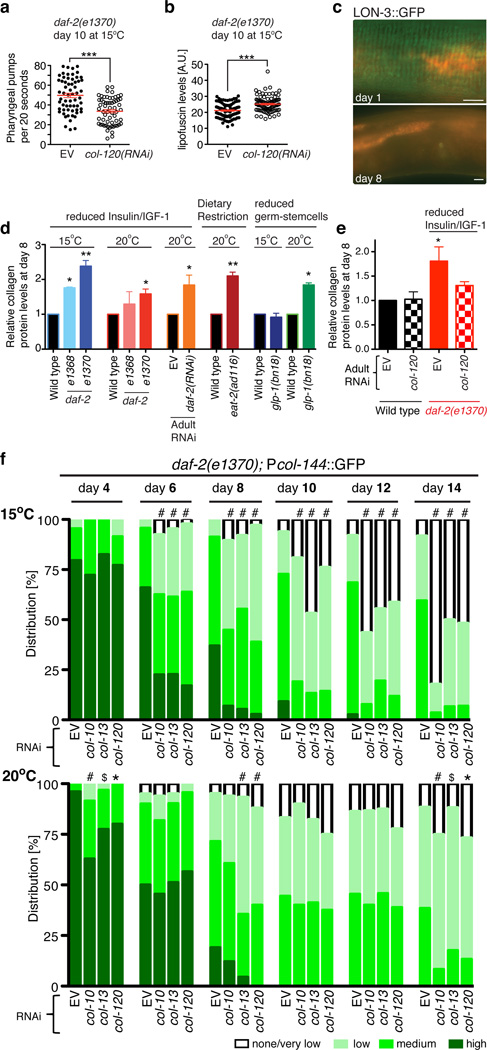
a, b, Adulthood collagen expression is required for rIIS to delay appearance of ageing markers. The same animals were scored in each panel, N>60. Each dot represents an animal; 2 merged trials; P value ***<0.0001 determined with unpaired t-test, two-tailed. c, Disappearance of the LON-3 collagen from the cuticle during ageing. Typical animals at the indicated days of adulthood are shown. Midsections from representative LON-3::GFP (green fluorescent protein) adults are shown, ventral side down, anterior to the left, scale bar = 10 µm. d, Interventions that increase longevity induce adulthood ECM deposition. Total collagen in day-8 adults is indicated by hydroxyproline content. daf-2 RNAi was initiated at day-one. glp-1(bn18) mutants were kept at the permissive temperature (15°C) or shifted to 25°C until day-one of adulthood then kept at 20°C. e, Loss of a single collagen interferes with rIIS-induced collagen deposition. In d, e, N>3000 per sample. Data are represented as mean ± s.e.m. P -value *<0.05 relative to control, by one sample t-test, two-tailed, hypothetical mean of 1. f, Dependence of a collagen promoter (col-144) on adulthood expression of other SKN-1-upregulated collagens in daf-2(e1370) under dauer-independent conditions. Scoring is described in Extended Data Fig. 7d RNAi initiated at day 1 of adulthood had a much more severe effect at 15°C (upper panel) than 20°C (lower panel), starting at day 6. N>60 for each condition, 1 representative trial is shown, with P value by chi2 (*=P<0.05; $=P<0.001; #=P<0.0001).

References

    1. Kenyon CJ. The genetics of ageing. Nature. 2010;464:504–512. doi:nature08980 [pii] 10.1038/nature08980. - PubMed
    1. Shore DE, Ruvkun GA. cytoprotective perspective on longevity regulation. Trends in cell biology. 2013;23:409–420. - PMC - PubMed
    1. Lopez-Otin C, Blasco MA, Partridge L, Serrano M, Kroemer G. The hallmarks of aging. Cell. 2013;153:1194–1217. - PMC - PubMed
    1. Flurkey K, Papaconstantinou J, Miller RA, Harrison DE. Lifespan extension and delayed immune and collagen aging in mutant mice with defects in growth hormone production. Proc Natl Acad Sci U S A. 2001;98:6736–6741. - PMC - PubMed
    1. Wilkinson JE, et al. Rapamycin slows aging in mice. Aging Cell. 2012;11:675–682. - PMC - PubMed

Publication types

MeSH terms