. 2015 Apr;21(7-8):1364-75.
doi: 10.1089/ten.TEA.2014.0535. Epub 2015 Mar 3.

Differential effects of culture senescence and mechanical stimulation on the proliferation and leiomyogenic differentiation of MSC from different sources: implications for engineering vascular grafts

Affiliations

Differential effects of culture senescence and mechanical stimulation on the proliferation and leiomyogenic differentiation of MSC from different sources: implications for engineering vascular grafts

Maxwell T Koobatian et al. Tissue Eng Part A. 2015 Apr.

Abstract

We examined the effects of senescence on the proliferation and leiomyogenic differentiation potential of mesenchymal stem cells (MSCs) isolated from bone marrow (BM-MSCs) or hair follicles (HF-MSCs). To this end, we compared ovine HF-MSCs and BM-MSCs in terms of their proliferation and differentiation potential to the smooth muscle cell lineage. We discovered that HF-MSCs are less susceptible to culture senescence compared with BM-MSCs. We hypothesized that application of mechanical forces may enhance the contractility and mechanical properties of vascular constructs prepared from senescent MSCs. Interestingly, HF-MSCs and BM-MSCs responded differently to changes in the mechanical microenvironment, suggesting that despite phenotypic similarities, MSCs from different anatomic locations may activate different pathways in response to the same microenvironmental factors. In turn, this may also suggest that cell-based tissue regeneration approaches may need to be tailored to the stem cell origin, donor age, and culture time for optimal results.


Figures
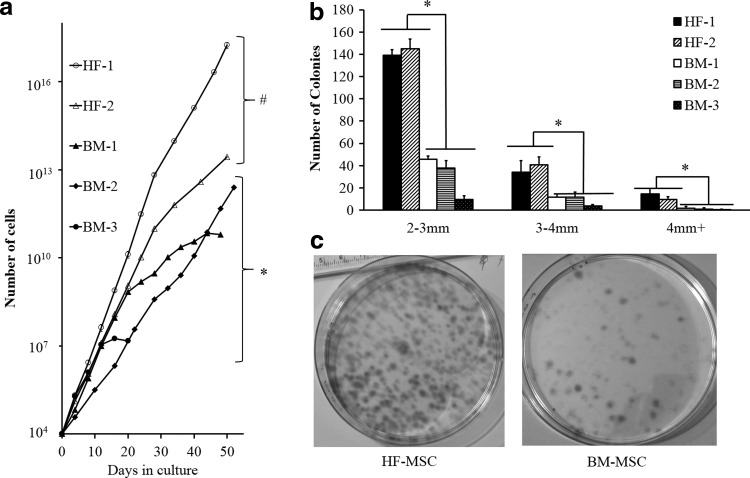
<b>FIG. 1.</b>
FIG. 1.
Proliferation and clonogenic potential of BM-MSCs and HF-MSCs. (a) Cells were seeded at 3000 cells per cm2. Once cells reached near confluence, they were trypsinized and counted at the indicated times. After day 4 and until the conclusion of the experiment, both HF-1 and HF-2 exhibited significantly higher proliferation when compared with all BM cells. The symbols (#) and (*) indicate statistical significance between each HF-MSC and all BM-MSC samples (p<0.05). (b) Colony size distribution of HF-MSCs and BM-MSCs. Statistical significance is denoted by bars between the indicated samples (*p<0.05). (c) HF and BM cells were plated onto 100-mm dishes at 10 cells per cm2 and cultured for 10 days. Photographs show colonies that originated from single cells. BM, bone marrow; HF, hair follicle; MSC, mesenchymal stem cell.
<b>FIG. 2.</b>
FIG. 2.
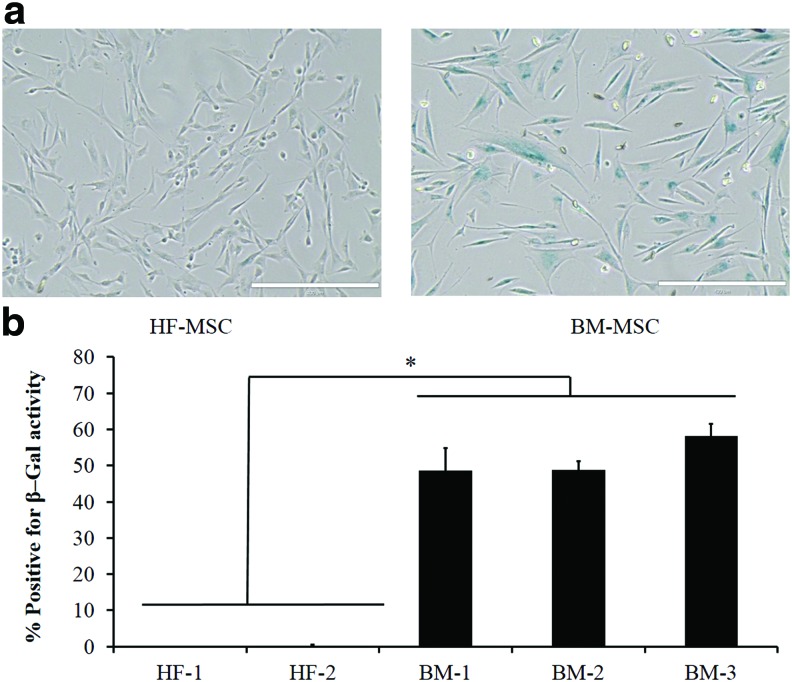
HF-MSCs displayed significant lower culture senescence propensity than BM-MSCs. (a) Representative pictures of BM-MSCs and HF-MSCs stained positive for SA-β-Gal activity. (b) Quantification of the percentage of SA-β-gal+ cells from (a). Statistical significance denoted by bars between indicated samples (*p<0.05). Color images available online at www.liebertpub.com/tea
<b>FIG. 3.</b>
FIG. 3.
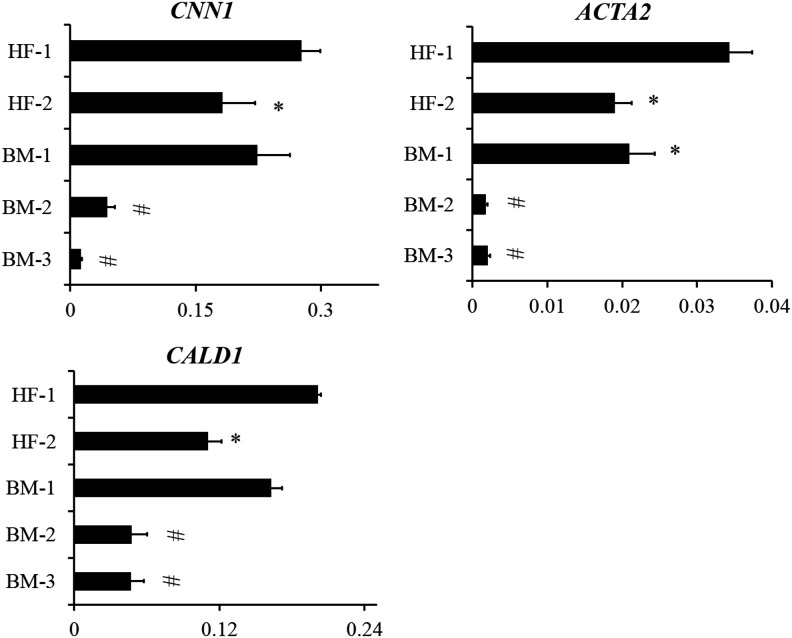
Expression of SMC-related genes. HF-MSCs and BM-MSCs cultured in the presence TGF-β1 (2 ng/mL) and ascorbic acid (300 μM) for 4 days. Total RNA was isolated, reverse transcribed to cDNA, and used for qRT-PCR to measure the levels of the indicated genes. The data were normalized to GAPDH. Each experiment was done in triplicates. (*) Denotes significance to HF-1 and (#) denotes significance to HF-1, HF-2, and BM-1. qRT-PCR, quantitative real-time PCR; SMC, smooth muscle cell; TGF-β1, transforming growth factor-β1.
<b>FIG. 4.</b>
FIG. 4.
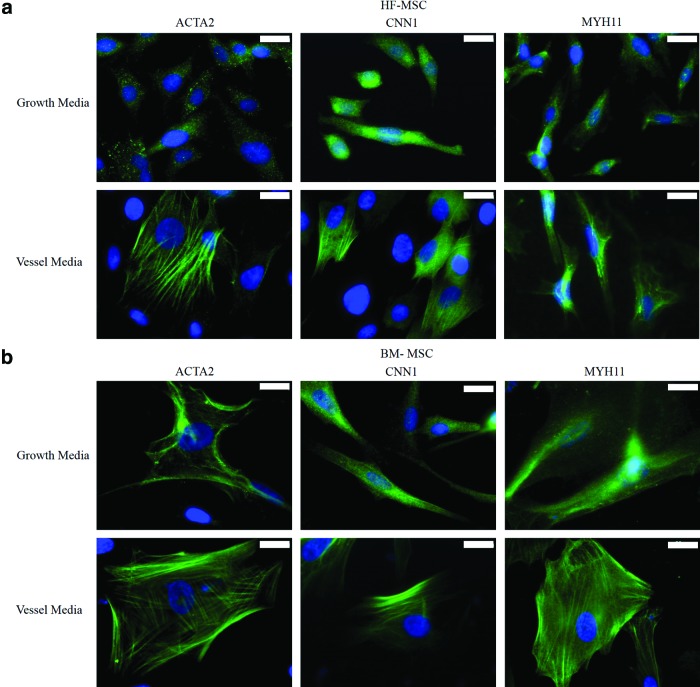
Expression of SMC-specific proteins. (a) HF-MSCs and (b) BM-MSCs were seeded at 3000 cells per cm2 and cultured for 4 days in differentiation or growth medium before immunostaining for smooth muscle-specific proteins α-SMA (ACTA), calponin (CNN1) and myosin heavy chain (MYH11) (green). Cell nuclei were counterstained with Hoechst (blue). Scale bar: 20 μm. α-SMA, alpha-smooth muscle actin. Color images available online at www.liebertpub.com/tea
<b>FIG. 5.</b>
FIG. 5.
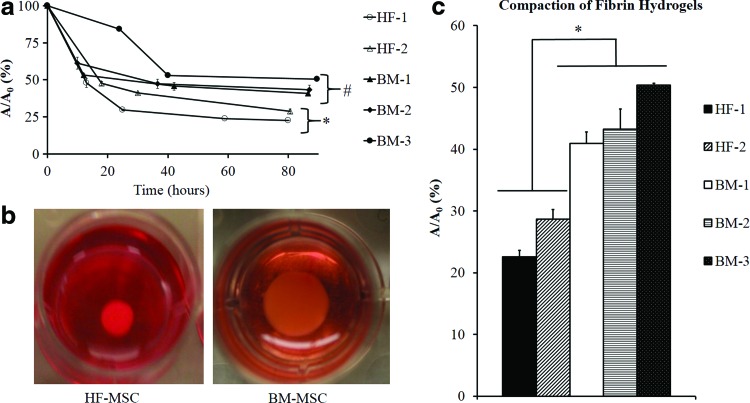
Hydrogel compaction. HF-MSC and BM-MSC isolations were embedded into fibrin hydrogels and allowed to polymerize in 24-well culture plates forming disks. Gels were detached from the walls of the 24-well plate and allowed to compact over the course of 3–4 days. At indicated times, the gels were photographed and their surface area was calculated using ImageJ software. The ratio of the area of the hydrogel (A) at time, t, over the initial area (A0) was plotted as a function of time. (a) Kinetics of fibrin hydrogel compaction for BM-MSCs and HF-MSCs. The symbols (*) and (#) indicate statistical significance between the indicated samples (p<0.05). (b) Representative pictures of HF-MSC and BM-MSC-containing hydrogels after 80 h of compaction. (c) Final hydrogel compaction at t=80 h. The bars denote statistical significance (*p<0.05) between the two groups. The samples within each group are not statistically significant. Color images available online at www.liebertpub.com/tea
<b>FIG. 6.</b>
FIG. 6.
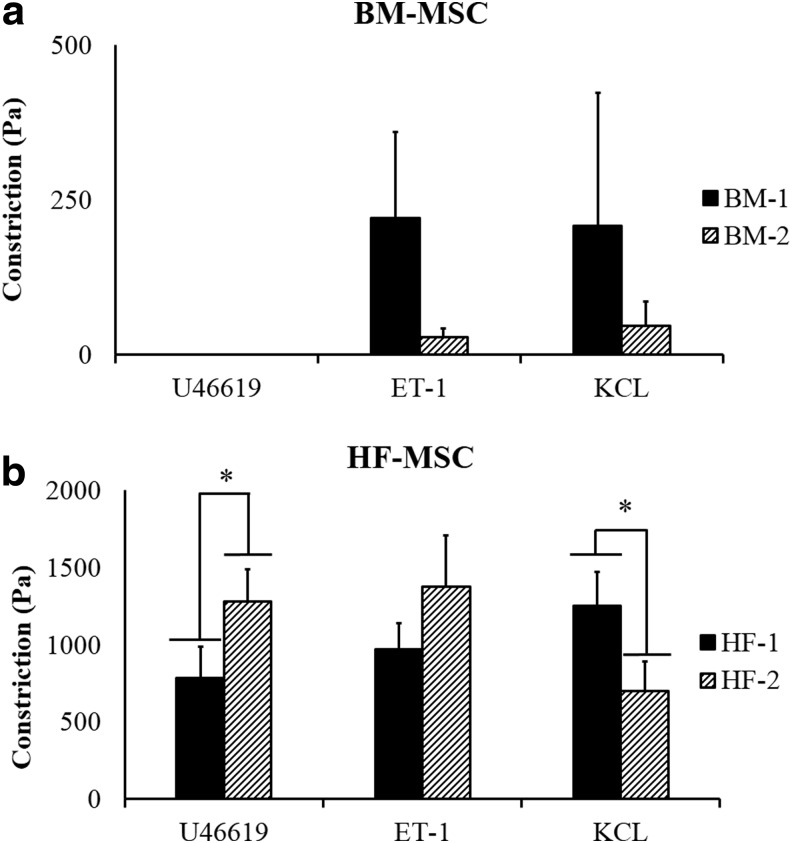
Vascular contractility of HF-MSC and BM-MSC-based vascular constructs. HF-MSCs and BM-MSCs were embedded in fibrin hydrogels and cultured around mandrels (4.75-mm diameter) for 2 weeks forming cylindrical rings. Vascular contractility (Pa) was measured in the presence of ET-1 (20 nM), U46619 (10−6M), and KCl (118 mM). (a) BM-MSC-based TEVs; (b) HF-MSC-based TEVs. Statistical significance (*p<0.05) is denoted by bars between indicated samples. ET-1, Endothelin-1; KCl, potassium chloride; TEV, tissue-engineered vessel.
<b>FIG. 7.</b>
FIG. 7.
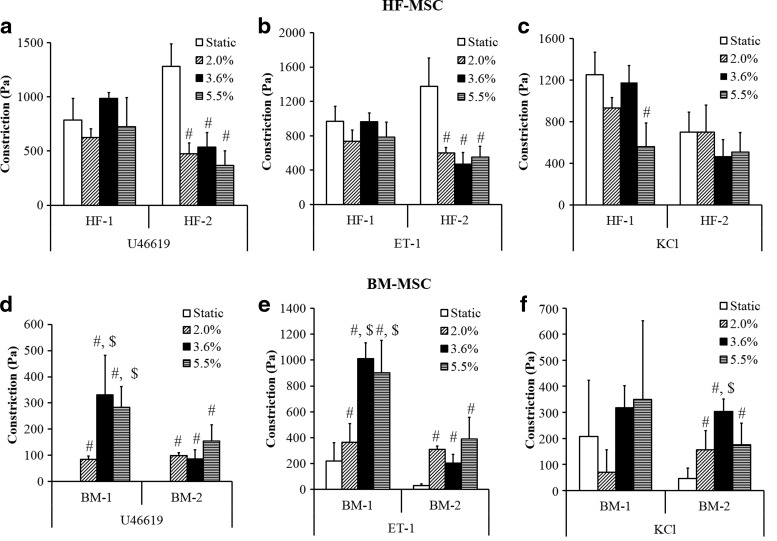
Effect of pulsation on vascular contractility HF-MSC and BM-MSC-based vascular constructs. HF-MSC and BM-MSC isolations were embedded in fibrin hydrogels and cultured around silastic tubing (4.75-mm diameter) for 2 weeks. Vascular contractility (Pa) was measured in the presence of U46619 (10−6) (a, d), Endothelin-1 (ET-1) (20 nM) (b, e) and KCl (118 mM) (c, f). (#) Illustrates significant difference with respect to static samples; ($) denotes significance compared with samples experiencing 2.0% distention (p<0.05).
<b>FIG. 8.</b>
FIG. 8.
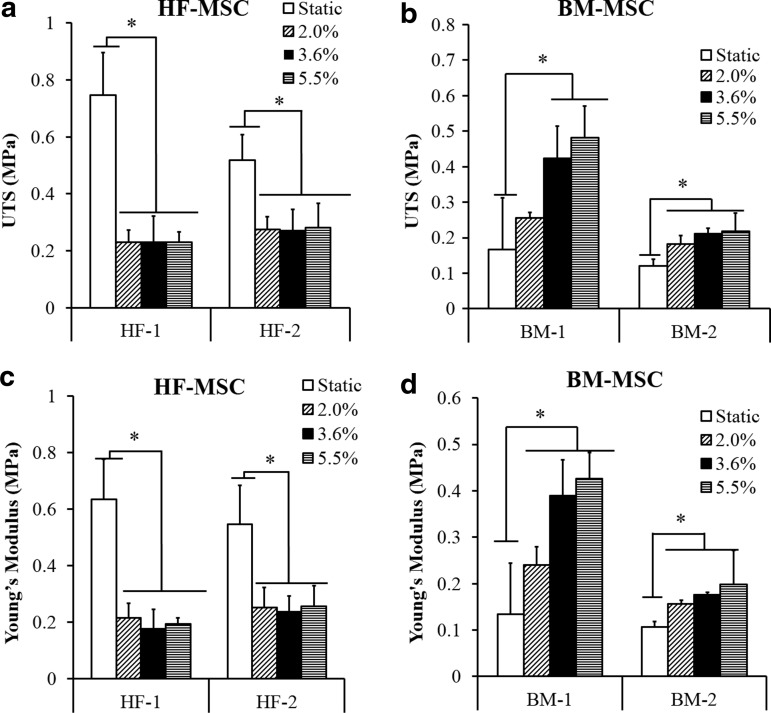
Effect of pulsation on mechanical properties of HF-MSC and BM TEVs. HF-MSCs or BM-MSCs were embedded in fibrin hydrogels and cultured around silastic tubing (4.75 mm diameter) for 2 weeks. (a, b) Ultimate tensile strength (MPa); (c, d) Young's Modulus (MPa). Statistical significance (*p<0.05) is denoted by bars between the indicated samples.
<b>FIG. 9.</b>
FIG. 9.
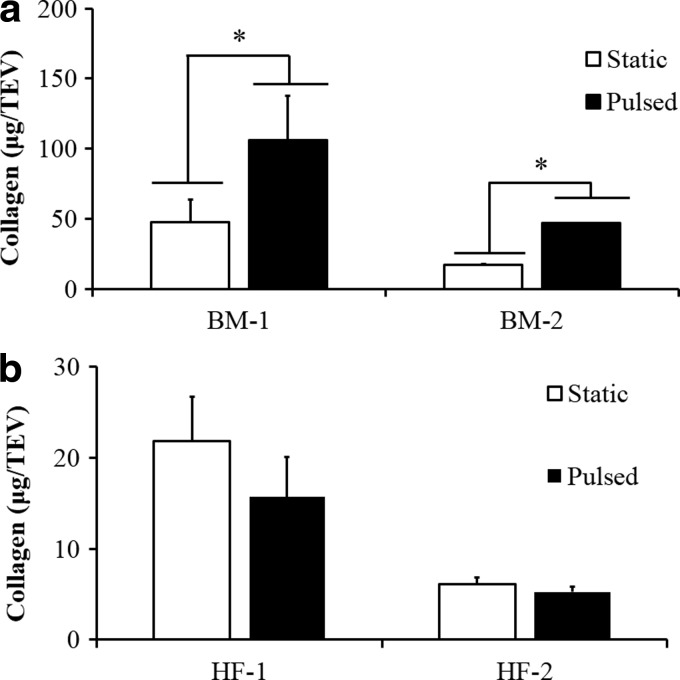
Effect of pulsation on collagen content. (b) HF-MSCs or (a) BM-MSCs were embedded in fibrin hydrogels and cultured around silastic tubing (4.75-mm diameter) for 2 weeks. Collagen was measured using the hydroxyproline assay. Statistical significance (*p<0.05) is denoted by bars between indicated samples.

References

    1. Alagesan S., and Griffin M.D.Autologous and allogeneic mesenchymal stem cells in organ transplantation: what do we know about their safety and efficacy? Curr Opin Organ Transplant 19,65, 2014 - PubMed
    1. Griffin M.D., Elliman S.J., Cahill E., English K., Ceredig R., and Ritter T.Concise review: adult mesenchymal stromal cell therapy for inflammatory diseases: how well are we joining the dots? Stem Cells 31,2033, 2013 - PubMed
    1. Malgieri A., Kantzari E., Patrizi M.P., and Gambardella S.Bone marrow and umbilical cord blood human mesenchymal stem cells: state of the art. Int J Clin Exp Med 3,248, 2010 - PMC - PubMed
    1. Meirelles Lda S., and Nardi N.B. Methodology, biology and clinical applications of mesenchymal stem cells. Front Biosci 14,4281, 2009 - PubMed
    1. Stenderup K., Justesen J., Clausen C., and Kassem M.Aging is associated with decreased maximal life span and accelerated senescence of bone marrow stromal cells. Bone 33,919, 2003 - PubMed

Publication types

MeSH terms

Substances

LinkOut - more resources