


Antiangiogenesis strategies revisited: from starving tumors to alleviating hypoxia
- PMID: 25517747
- PMCID: PMC4269830
- DOI: 10.1016/j.ccell.2014.10.006
Antiangiogenesis strategies revisited: from starving tumors to alleviating hypoxia
Abstract
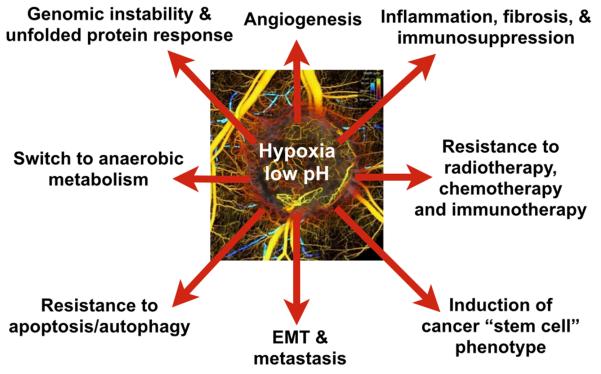
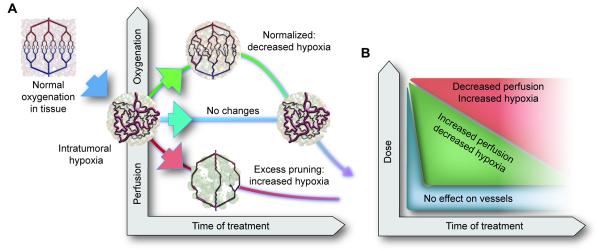
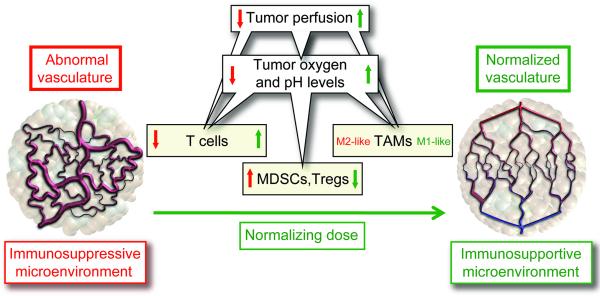
Ten antiangiogenic drugs targeting VEGF or its receptors are approved for cancer treatment. However, these agents, intended to block tumors' blood supply, may cause hypoxia, which may fuel tumor progression and treatment resistance. Emerging clinical data suggest that patients whose tumor perfusion or oxygenation increases in response to these agents may actually survive longer. Hence, strategies aimed at alleviating tumor hypoxia while improving perfusion may enhance the outcome of radiotherapy, chemotherapy, and immunotherapy. Here I summarize lessons learned from preclinical and clinical studies over the past decade and propose strategies for improving antiangiogenic therapy outcomes for malignant and nonmalignant diseases.
Copyright © 2014 Elsevier Inc. All rights reserved.
Figures
References
-
- Arjaans M, Oude Munnink TH, Oosting SF, Terwisscha van Scheltinga AG, Gietema JA, Garbacik ET, Timmer-Bosscha H, Lub-de Hooge MN, Schroder CP, de Vries EG. Bevacizumab-induced normalization of blood vessels in tumors hampers antibody uptake. Cancer Res. 2013;73:3347–3355. - PubMed
-
- Barsoum IB, Smallwood CA, Siemens DR, Graham CH. A Mechanism of Hypoxia-Mediated Escape from Adaptive Immunity in Cancer Cells. Cancer Res. 2014;74:665–674. - PubMed
Publication types
MeSH terms
Substances
Grants and funding
LinkOut - more resources
Full Text Sources
Other Literature Sources
Medical
Molecular Biology Databases
Miscellaneous
