. 2014 Dec 18:5:5658.
doi: 10.1038/ncomms6658.

Distinct aspects of frontal lobe structure mediate age-related differences in fluid intelligence and multitasking

Collaborators, Affiliations

Distinct aspects of frontal lobe structure mediate age-related differences in fluid intelligence and multitasking

Rogier A Kievit et al. Nat Commun. .

Abstract

Ageing is characterized by declines on a variety of cognitive measures. These declines are often attributed to a general, unitary underlying cause, such as a reduction in executive function owing to atrophy of the prefrontal cortex. However, age-related changes are likely multifactorial, and the relationship between neural changes and cognitive measures is not well-understood. Here we address this in a large (N=567), population-based sample drawn from the Cambridge Centre for Ageing and Neuroscience (Cam-CAN) data. We relate fluid intelligence and multitasking to multiple brain measures, including grey matter in various prefrontal regions and white matter integrity connecting those regions. We show that multitasking and fluid intelligence are separable cognitive abilities, with differential sensitivities to age, which are mediated by distinct neural subsystems that show different prediction in older versus younger individuals. These results suggest that prefrontal ageing is a manifold process demanding multifaceted models of neurocognitive ageing.


Figures
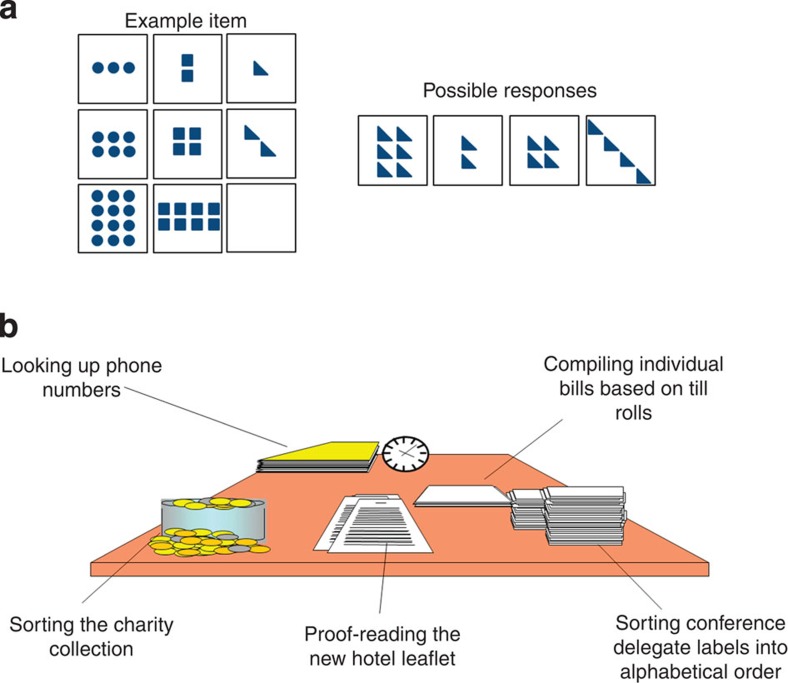
Figure 1
Figure 1. Fluid intelligence and multitasking tasks.
(a) Shows an example of a fluid reasoning item (trial). The Cattell test yields scores on four subtests used for further modelling. (b) Shows the multitasking task, which is a simulation of a hotel environment, in which participants were asked to perform each of the five tasks for equal amounts of time within a 10-min period. Variables-of-interest are the number of different tasks people performed and total time misallocated.
Figure 2
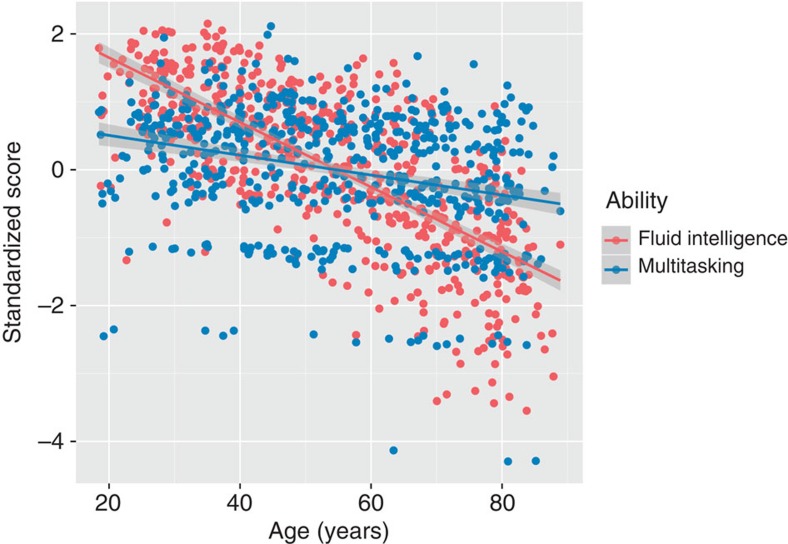
Figure 2. Linear fit of fluid intelligence and multitasking with age.
Fluid intelligence shows a significantly stronger age-related difference (r=−0.67) than multitasking (r=−0.29) (William’s test for dependent (r=0.38) correlations t(564)=10.66, P<0.00001).
Figure 3
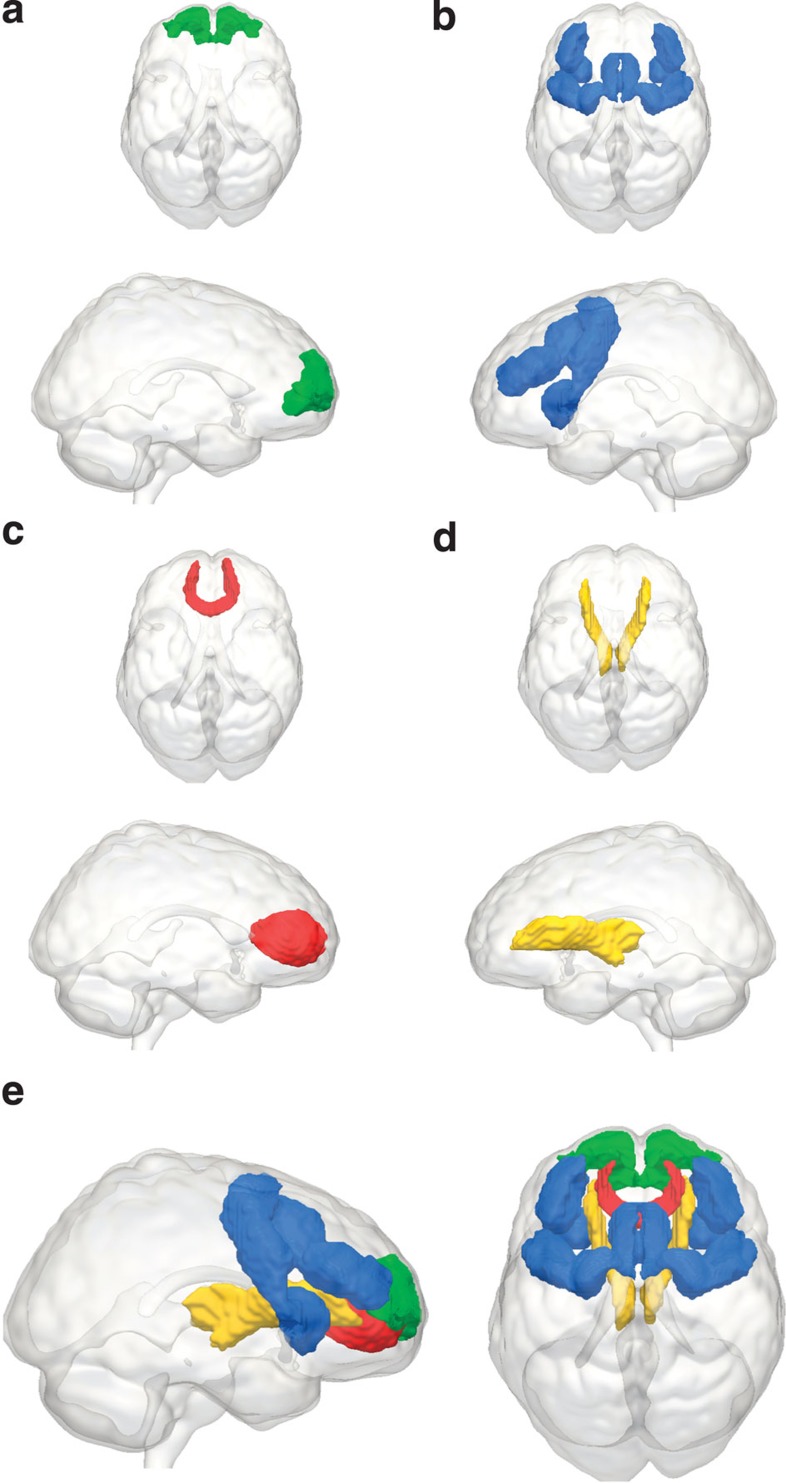
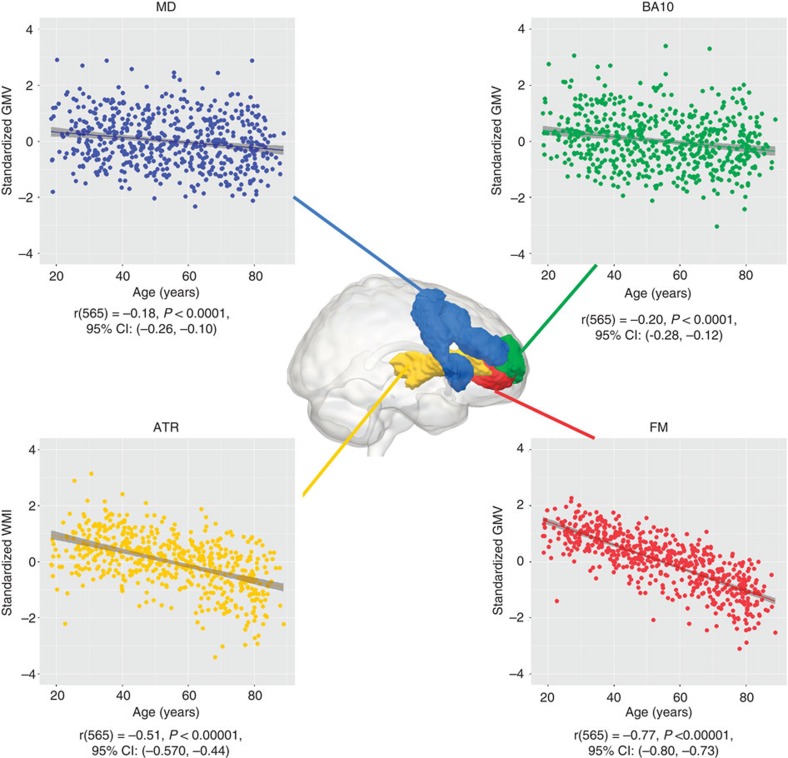
Figure 3. Four frontal regions-of-interest.
The four neural structures-of-interest: (a) Brodmann Area 10 (BA10), (b) the Multiple Demand (MD) system, (c) the Forceps Minor (FM), passing through the genu of the corpus callosum, (d) the Anterior Thalamic Radiations (ATR) and (e) all four structures superimposed.
Figure 4
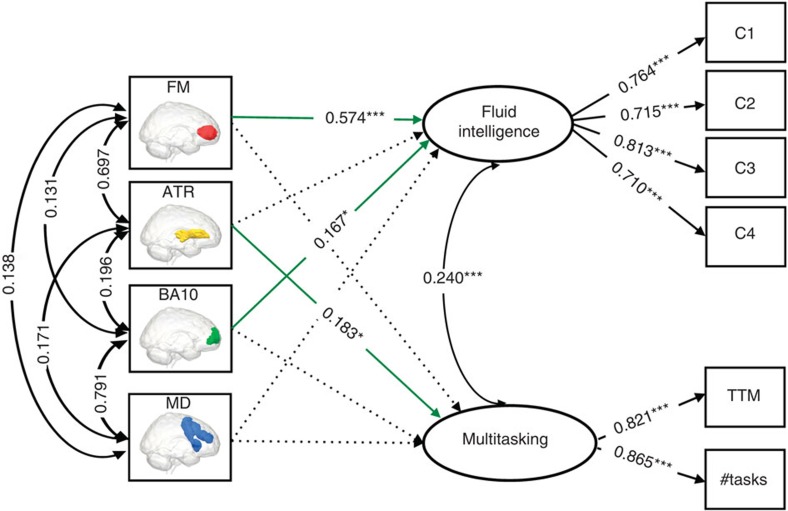
Figure 4. Full MIMIC model relating four frontal brain variables to fluid intelligence and multitasking.
Significant brain–behaviour parameters are shown in green solid lines. All parameter estimates shown are fully standardized. This model fits the data well, χ2=52.912, df=24, P=0.001, RMSEA=0.046 (0.029–0.063), CFI=0.979, SRMR=0.029, Satorra–Bentler scaling factor=1.028. C1–C4 refer to the four sub-scores on the Cattell test of fluid intelligence; TTM (total time misallocated) and #tasks (number of tasks attempted) are two indices of performance on Hotel test of multitasking. *P<0.05, ***P<0.001. These P-values are based on a z-test statistic derived from a Maximum Likelihood Structural Equation Model using robust standard errors and a Satorra–Bentler scaled test statistic. See ref. 67 for further details.
Figure 5
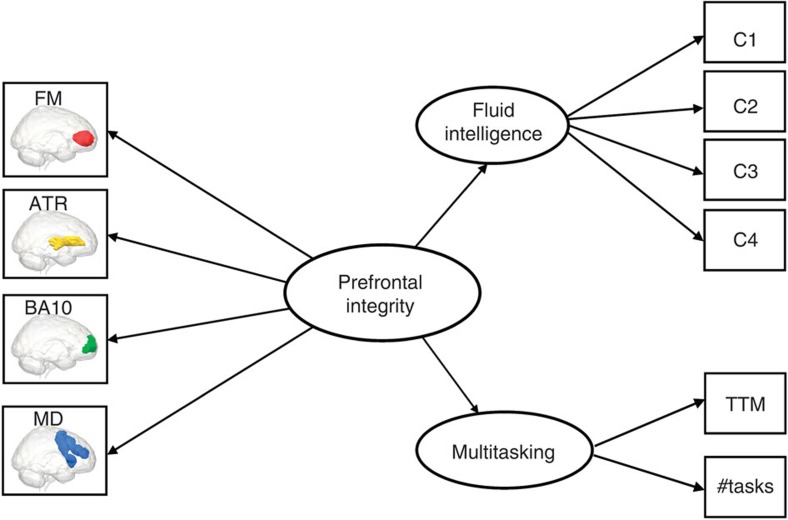
Figure 5. Frontal lobe model.
This model represents the hypothesis that age-related individual differences in frontal lobe structure can be captured by a single factor, representing overall PFC integrity. This model fits the data poorly, χ2=670.11, df=32, P<0.00001, RMSEA=0.188 (0.176–0.200), CFI=0.728, SRMR=0.158, Satorra–Bentler scaling factor=1.05).
Figure 6
Figure 6. Differential prefrontal ageing.
Plots show differential ageing patterns of the four PFC structures-of-interest. Forceps minor shows greatest age-related differences, followed by the anterior thalamic radiations. The two GMV regions-of-interest show equal age-related differences. This pattern further supports differentiation within the PFC.
Figure 7
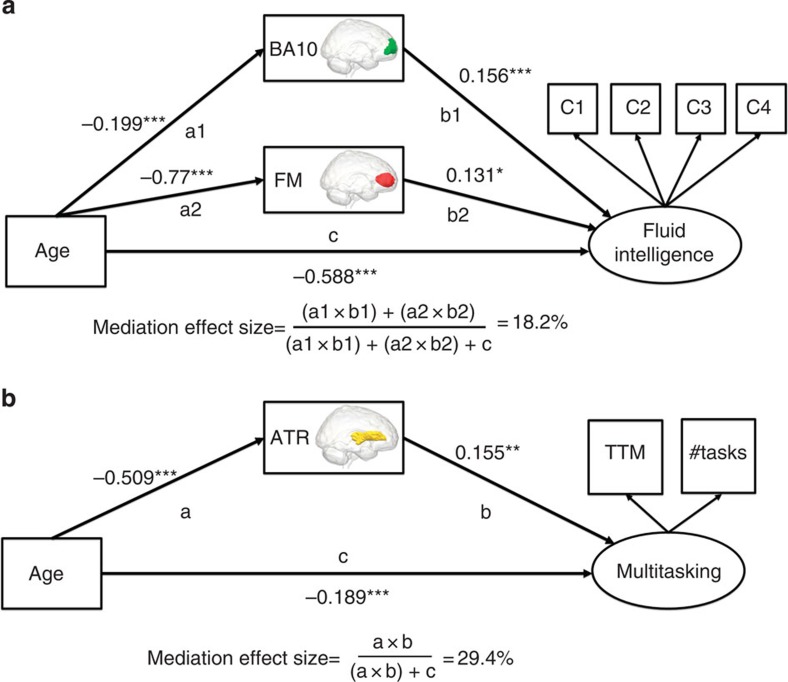
Figure 7. Mediation models.
(a) Mediation model for fluid intelligence. (b) Mediation model for multitasking. In both models, the brain structures-of-interest significantly mediate the age-related differences in cognitive abilities. *P<0.05, **P<0.01, ***P<0.001. These P-values are based on a z-test statistic derived from a Maximum Likelihood Structural Equation Model using robust standard errors and a Satorra–Bentler scaled test statistic. See ref. 67 for further details.

References

    1. Raz N. et al. Regional brain changes in aging healthy adults: general trends, individual differences and modifiers. Cereb. Cortex 15, 1676–1689 (2005). - PubMed
    1. Salthouse T. A., Atkinson T. M. & Berish D. E. Executive functioning as a potential mediator of age-related cognitive decline in normal adults. J. Exp. Psychol. Gen. 132, 566–594 (2003). - PubMed
    1. Salthouse T. A. Consequences of age-related cognitive declines. Annu. Rev. Psychol. 63, 201–226 (2012). - PMC - PubMed
    1. ONS. Population Ageing in the United Kingdom, its Constituent Countries and the European Union at <http://www.ons.gov.uk/ons/dcp171776_258607.pdf> 1–12 (2012).
    1. Buckner R. L. Memory and executive function review in aging and AD: multiple factors that cause decline and reserve factors that compensate. Neuron 44, 195–208 (2004). - PubMed

Publication types

MeSH terms