


TRPV4 as a therapeutic target for joint diseases
- PMID: 25519495
- PMCID: PMC4361386
- DOI: 10.1007/s00210-014-1078-x
TRPV4 as a therapeutic target for joint diseases
Abstract
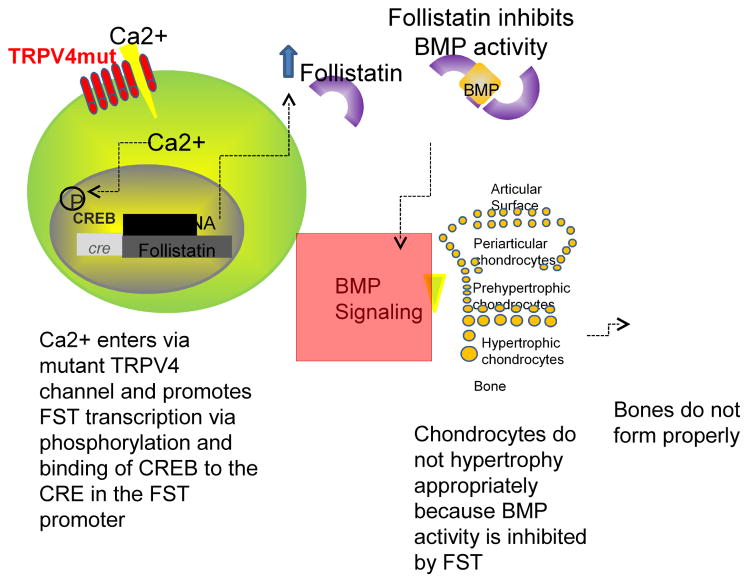
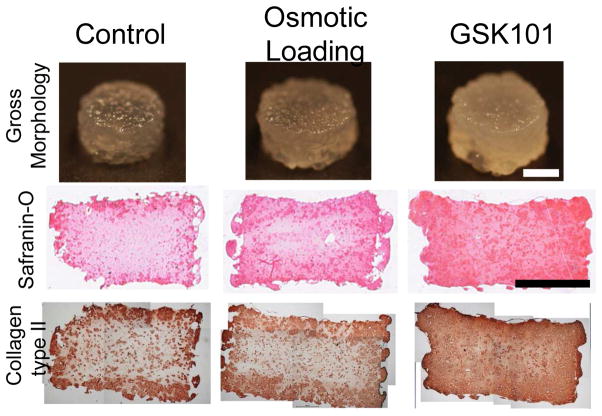
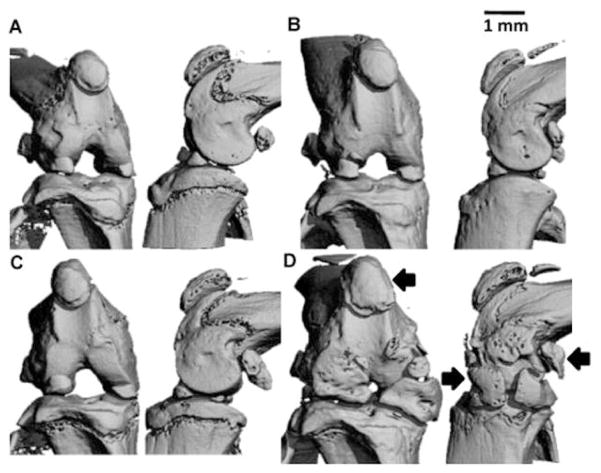
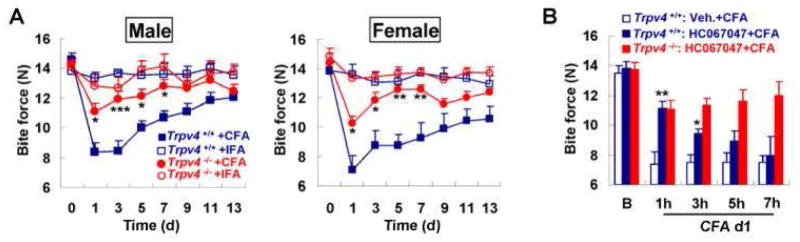
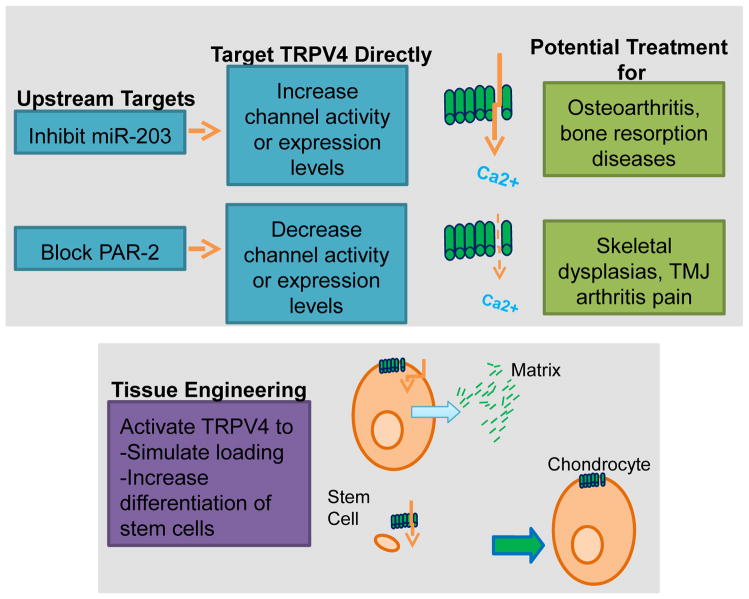
Biomechanical factors play a critical role in regulating the physiology as well as the pathology of multiple joint tissues and have been implicated in the pathogenesis of osteoarthritis. Therefore, the mechanisms by which cells sense and respond to mechanical signals may provide novel targets for the development of disease-modifying osteoarthritis drugs (DMOADs). Transient receptor potential vanilloid 4 (TRPV4) is a Ca(2+)-permeable cation channel that serves as a sensor of mechanical or osmotic signals in several musculoskeletal tissues, including cartilage, bone, and synovium. The importance of TRPV4 in joint homeostasis is apparent in patients harboring TRPV4 mutations, which result in the development of a spectrum of skeletal dysplasias and arthropathies. In addition, the genetic knockout of Trpv4 results in the development of osteoarthritis and decreased osteoclast function. In engineered cartilage replacements, chemical activation of TRPV4 can reproduce many of the anabolic effects of mechanical loading to accelerate tissue growth and regeneration. Overall, TRPV4 plays a key role in transducing mechanical, pain, and inflammatory signals within joint tissues and thus is an attractive therapeutic target to modulate the effects of joint diseases. In pathological conditions in the joint, when the delicate balance of TRPV4 activity is altered, a variety of different tools could be utilized to directly or indirectly target TRPV4 activity.
Conflict of interest statement
Drs. McNulty, Leddy, and Liedtke declare that they have no conflicts of interest. Dr. Guilak is a founder and employee of Cytex Therapeutics, Inc.
Figures
References
-
- Akagi R, Sasho T, Saito M, Endo J, Yamaguchi S, Muramatsu Y, Mukoyama S, Akatsu Y, Katsuragi J, Fukawa T, Takahashi K. Effective knock down of matrix metalloproteinase-13 by an intra-articular injection of small interfering RNA (siRNA) in a murine surgically-induced osteoarthritis model. Journal of orthopaedic research : official publication of the Orthopaedic Research Society. 2014;32:1175–1180. - PubMed
-
- Alenius GM, Jonsson S, Wallberg Jonsson S, Ny A, Rantapaa Dahlqvist S. Matrix metalloproteinase 9 (MMP-9) in patients with psoriatic arthritis and rheumatoid arthritis. Clinical and experimental rheumatology. 2001;19:760. - PubMed
-
- Alessandri-Haber N, Joseph E, Dina OA, Liedtke W, Levine JD. TRPV4 mediates pain-related behavior induced by mild hypertonic stimuli in the presence of inflammatory mediator. Pain. 2005;118:70–79. - PubMed
-
- Amadesi S, Nie J, Vergnolle N, Cottrell GS, Grady EF, Trevisani M, Manni C, Geppetti P, McRoberts JA, Ennes H, Davis JB, Mayer EA, Bunnett NW. Protease-activated receptor 2 sensitizes the capsaicin receptor transient receptor potential vanilloid receptor 1 to induce hyperalgesia. The Journal of neuroscience : the official journal of the Society for Neuroscience. 2004;24:4300–4312. - PMC - PubMed
-
- Barbour KE, Helmick CG, Theis KA, Murphy LB, Hootman JM, Brady TJ, Cheng YJ. Prevalence of Doctor-Diagnosed Arthritis and Arthritis-Attributable Activity Limitation — United States, 2010–2012. In: Moolenaar RL, editor. Morbidity and Mortality Weekly Report. Centers for Disease Control and Prevention; Washington, DC: 2013. pp. 869–873. - PubMed
Publication types
MeSH terms
Substances
Grants and funding
- F30 AG040868/AG/NIA NIH HHS/United States
- AG15768/AG/NIA NIH HHS/United States
- F33 DE024668/DE/NIDCR NIH HHS/United States
- R01 AR048852/AR/NIAMS NIH HHS/United States
- R01 AG046927/AG/NIA NIH HHS/United States
- AG46927/AG/NIA NIH HHS/United States
- AR48852/AR/NIAMS NIH HHS/United States
- R21 AR065653/AR/NIAMS NIH HHS/United States
- DE018549S1/DE/NIDCR NIH HHS/United States
- R41 AG047621/AG/NIA NIH HHS/United States
- AG047621/AG/NIA NIH HHS/United States
- R01 AR048182/AR/NIAMS NIH HHS/United States
- AR50245/AR/NIAMS NIH HHS/United States
- P01 AR050245/AR/NIAMS NIH HHS/United States
- R01 AG015768/AG/NIA NIH HHS/United States
- DE018549/DE/NIDCR NIH HHS/United States
- DE024668/DE/NIDCR NIH HHS/United States
- AR48182/AR/NIAMS NIH HHS/United States
- R01 DE018549/DE/NIDCR NIH HHS/United States
- AG40868/AG/NIA NIH HHS/United States
LinkOut - more resources
Full Text Sources
Other Literature Sources
Medical
Miscellaneous
