


Impact of nutrients on circadian rhythmicity
- PMID: 25519730
- PMCID: PMC4346762
- DOI: 10.1152/ajpregu.00322.2014
Impact of nutrients on circadian rhythmicity
Abstract
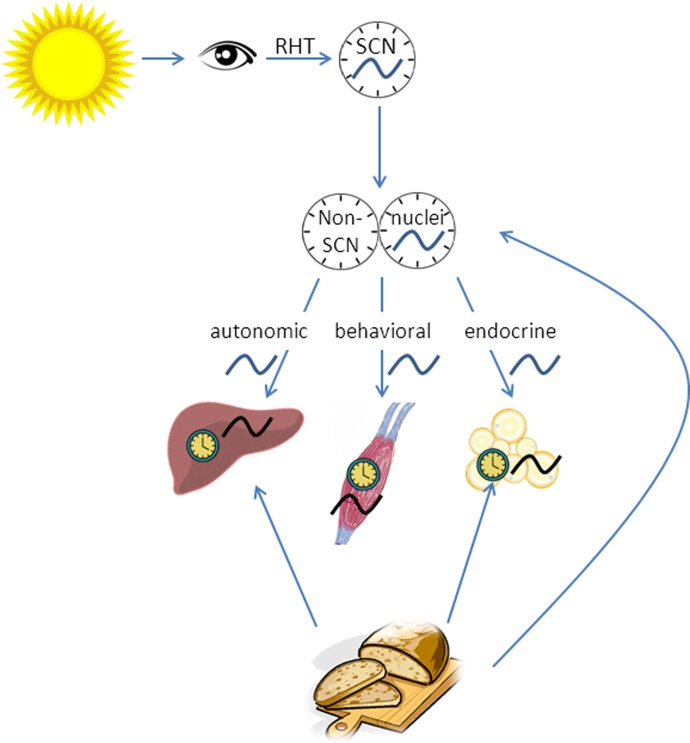
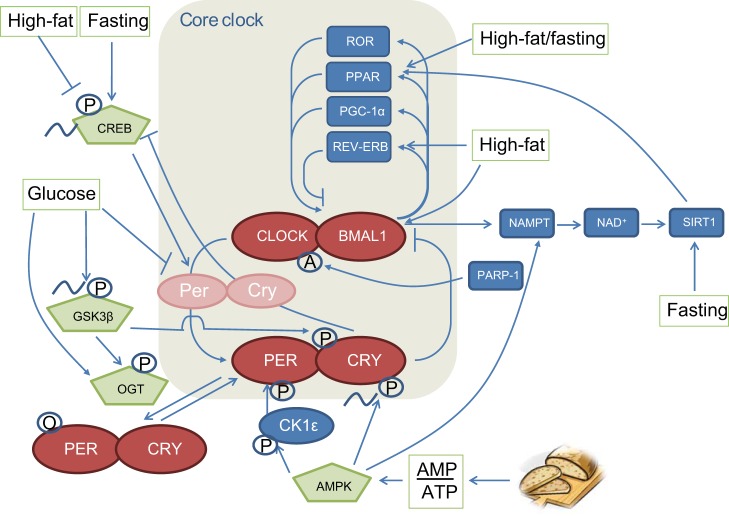
The suprachiasmatic nucleus (SCN) in the mammalian hypothalamus functions as an endogenous pacemaker that generates and maintains circadian rhythms throughout the body. Next to this central clock, peripheral oscillators exist in almost all mammalian tissues. Whereas the SCN is mainly entrained to the environment by light, peripheral clocks are entrained by various factors, of which feeding/fasting is the most important. Desynchronization between the central and peripheral clocks by, for instance, altered timing of food intake can lead to uncoupling of peripheral clocks from the central pacemaker and is, in humans, related to the development of metabolic disorders, including obesity and Type 2 diabetes. Diets high in fat or sugar have been shown to alter circadian clock function. This review discusses the recent findings concerning the influence of nutrients, in particular fatty acids and glucose, on behavioral and molecular circadian rhythms and will summarize critical studies describing putative mechanisms by which these nutrients are able to alter normal circadian rhythmicity, in the SCN, in non-SCN brain areas, as well as in peripheral organs. As the effects of fat and sugar on the clock could be through alterations in energy status, the role of specific nutrient sensors will be outlined, as well as the molecular studies linking these components to metabolism. Understanding the impact of specific macronutrients on the circadian clock will allow for guidance toward the composition and timing of meals optimal for physiological health, as well as putative therapeutic targets to regulate the molecular clock.
Keywords: clock genes; glucose; hypothalamus; metabolism; nutrient sensors; saturated fatty acid.
Copyright © 2015 the American Physiological Society.
Figures
References
-
- Abe M, Herzog ED, Block G. Lithium lengthens the circadian period 3261–3264 of individual suprachiasmatic nucleus neurons. Neuroreport 11: 3261–3264, 2000. - PubMed
-
- Akhtar RA, Reddy AB, Maywood ES, Clayton JD, King VM, Smith AG, Gant TW, Hastings MH, Kyriacou CP. Circadian cycling of the mouse liver transcriptome, as revealed by cDNA microarray is driven by the suprachiasmatic nucleus. Curr Biol 12: 540–550, 2002. - PubMed
-
- Aschoff J. Circadian timing. Ann NY Acad Sci 423: 442–68, 1984. - PubMed
Publication types
MeSH terms
Substances
LinkOut - more resources
Full Text Sources
Other Literature Sources
Medical
