. 2014 Dec 8;13(Suppl 1):133-43.
doi: 10.4137/CIN.S13895. eCollection 2014.

Semantically linking in silico cancer models

Affiliations

Semantically linking in silico cancer models

David Johnson et al. Cancer Inform. .

Abstract

Multiscale models are commonplace in cancer modeling, where individual models acting on different biological scales are combined within a single, cohesive modeling framework. However, model composition gives rise to challenges in understanding interfaces and interactions between them. Based on specific domain expertise, typically these computational models are developed by separate research groups using different methodologies, programming languages, and parameters. This paper introduces a graph-based model for semantically linking computational cancer models via domain graphs that can help us better understand and explore combinations of models spanning multiple biological scales. We take the data model encoded by TumorML, an XML-based markup language for storing cancer models in online repositories, and transpose its model description elements into a graph-based representation. By taking such an approach, we can link domain models, such as controlled vocabularies, taxonomic schemes, and ontologies, with cancer model descriptions to better understand and explore relationships between models. The union of these graphs creates a connected property graph that links cancer models by categorizations, by computational compatibility, and by semantic interoperability, yielding a framework in which opportunities for exploration and discovery of combinations of models become possible.

Keywords: in silico oncology; model exploration; neo4j; property graphs; tumor modeling.


Figures
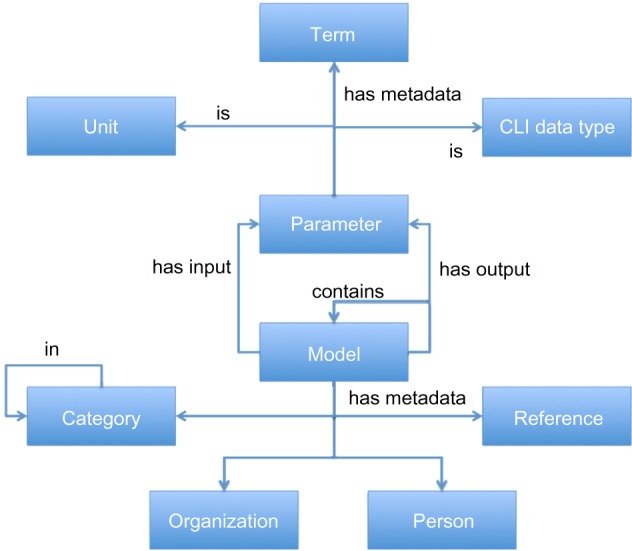
Figure 1
Figure 1
Entity-relationship diagram showing the TumorML data model. Here, we can see that a Model has input and output Parameters. Parameters are classified by Unit and Command Line Interface (CLI) data types, and also have metadata Terms attached to them. Other metadata includes bibliographic References, People, and Organizations, as well as Categories to classify the Model. Models can also be compositions and contain other models.
Figure 2
Figure 2
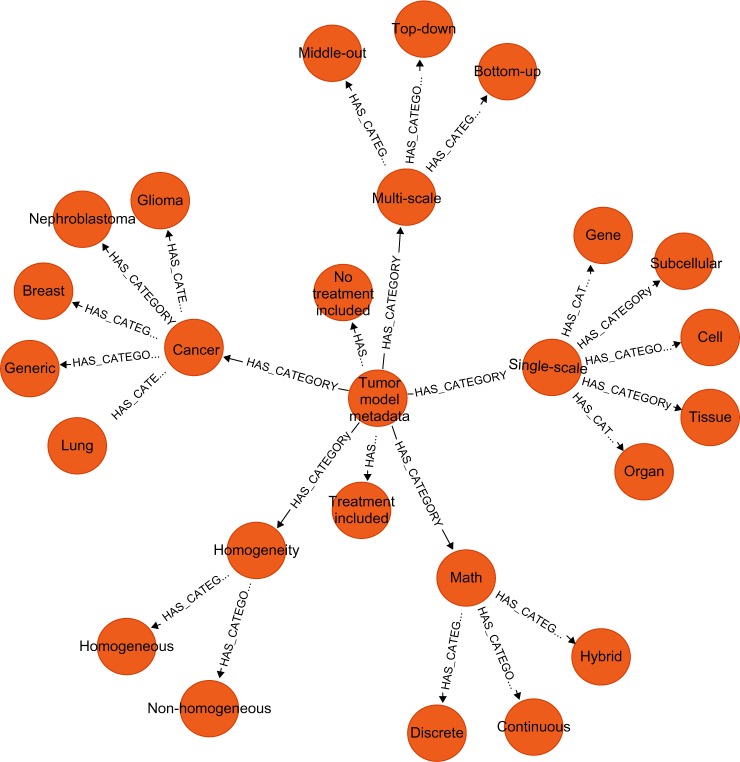
TUMOR Taxonomy transposed to a property graph model and visualized in the Neo4j browser application. In this graph, we can see a hierarchy of categorizations. For example, the node Cancer has subcategories corresponding to Glioma, Nephroblastoma, Breast, Lung, and Generic.
Figure 3
Figure 3
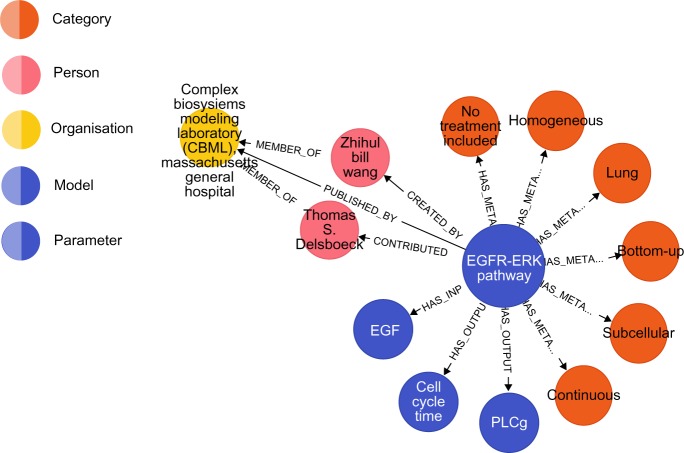
The EGFR-ERK pathway module as a property graph and visualized in the Neo4j browser application.
Figure 4
Figure 4
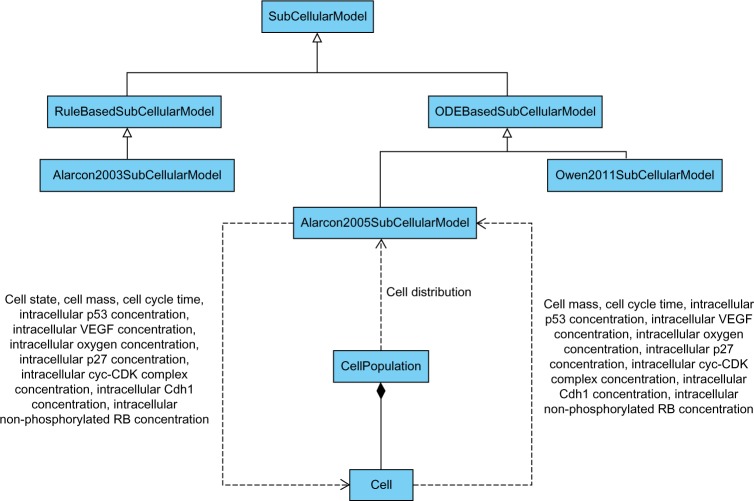
UML class diagram illustrating parameters passed between subcellular models and cell objects.
Figure 5
Figure 5
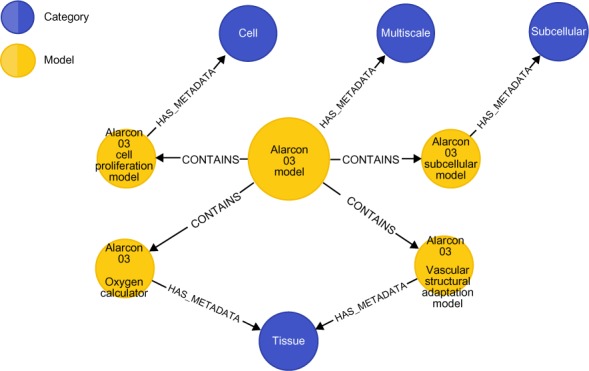
The Alarcón 2003 model and its component models and biological scale metadata, represented as a property graph and visualized in the Neo4j browser application.
Listing 1
Listing 1
An example Cypher query to find friends of Alice.
Listing 2
Listing 2
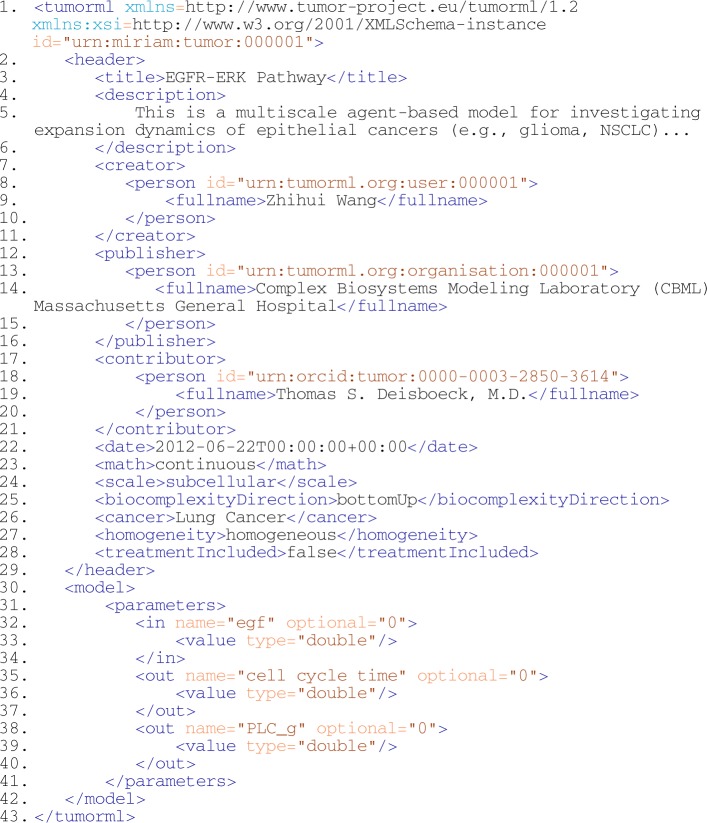
TumorML description of the EGFR-ERK pathway module.
Listing 3
Listing 3
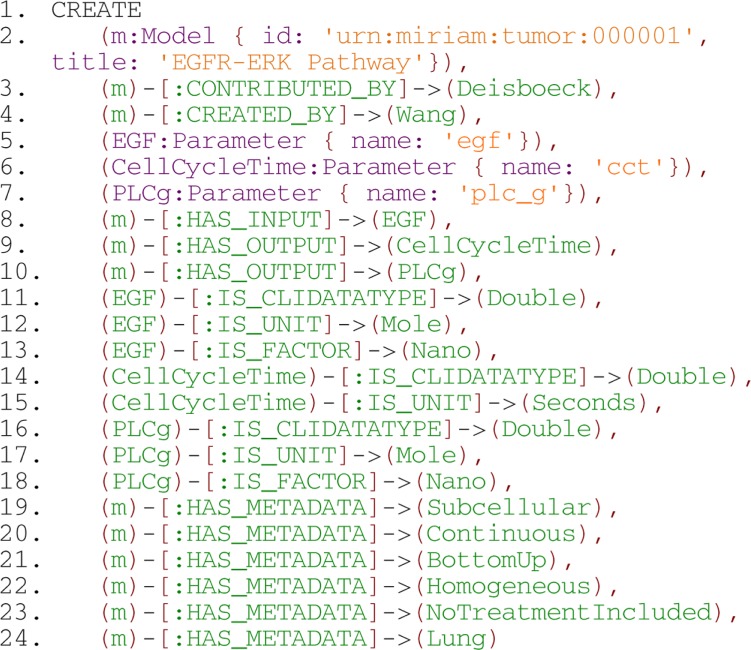
Create: a Cypher query for creating the EGFR-ERK pathway module in Neo4j.
Listing 4
Listing 4
Pattern matching: a Cypher query to find model nodes connected to both Imageable and continuous nodes.
Listing 5
Listing 5
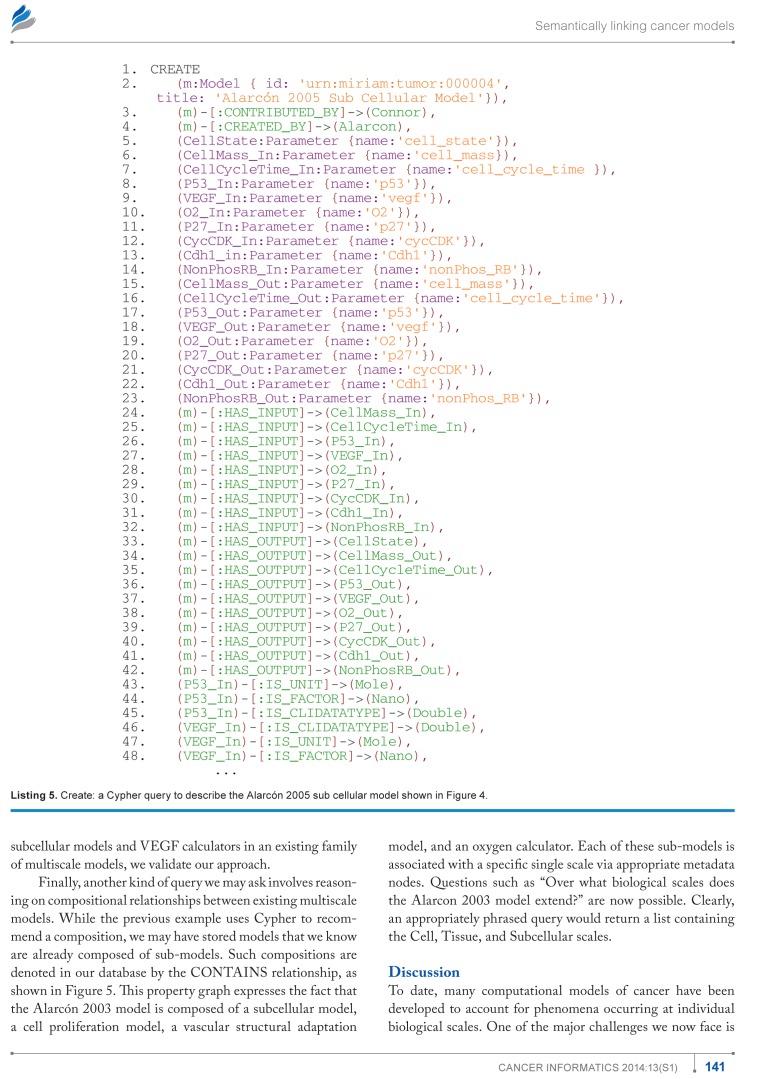
Create: a Cypher query to describe the Alarcón 2005 sub cellular model shown in Figure 4.
Listing 6
Listing 6
Recommend compatible models: a Cypher query to find model nodes that have parameters that are compatible using metadata terms.

References

    1. Deisboeck TS, Wang Z, Macklin P, Cristini V. Multiscale cancer modeling. Annu Rev Biomed Eng. 2011;13:127–55. - PMC - PubMed
    1. Southern J, Pitt-Francis J, Whiteley J, et al. Multi-scale computational modelling in biology and physiology. Prog Biophys Mol Biol. 2008;96:60–89. - PMC - PubMed
    1. Tracqui P. Biophysical models of tumour growth. Rep Prog Phys. 2009;72:56701.
    1. Walker DC, Southgate J. The virtual cell–a candidate co-ordinator for ‘middle-out’ modelling of biological systems. Brief Bioinform. 2009;10:450–61. - PubMed
    1. Wolkenhauer O, Auffray C, Brass O, et al. Enabling multiscale modeling in systems medicine. Genome Med. 2014;6:21–3. - PMC - PubMed