


Genetic susceptibility to idiopathic membranous nephropathy in high-prevalence Area, Taiwan
- PMID: 25520922
- PMCID: PMC4265015
- DOI: 10.7603/s40681-014-0009-y
Genetic susceptibility to idiopathic membranous nephropathy in high-prevalence Area, Taiwan
Abstract
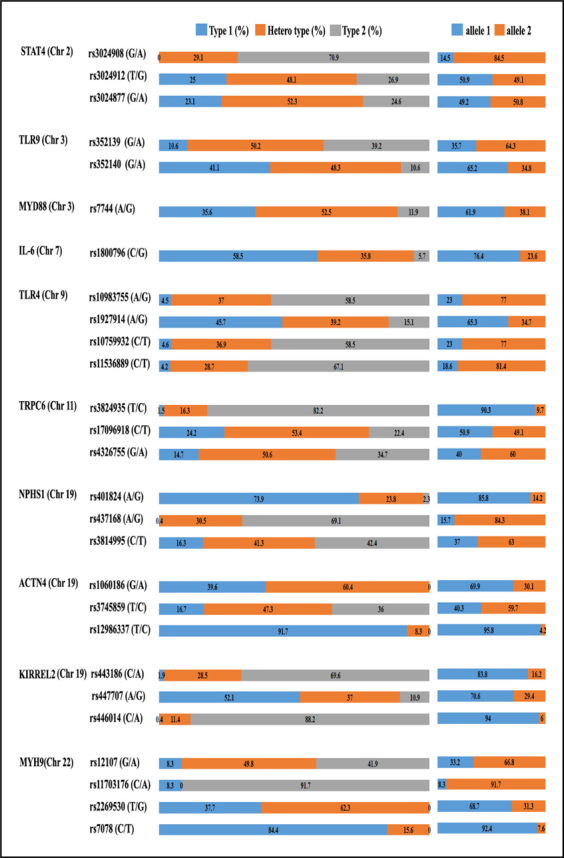
Idiopathic membranous nephropathy (MN) is one common cause of idiopathic nephrotic syndrome in adults; 25% of MN patients proceed to end-stage renal disease. In adults, membranous nephropathy is a lead cause of nephrotic syndrome, with about 75% of the cases idiopathic. Secondary causes include autoimmune disease, infection, drugs and malignancy. Three hypotheses about pathogenesis have surfaced: preformed immune complex, in situ immune complex formation, and auto-antibody against podocyte membrane antigen. Pathogenesis does involve immune complex formation with later deposition in sub-epithelial sites, but definite mechanism is still unknown. Several genes were recently proven associated with primary membranous nephropathy in Taiwan: IL-6, NPHS1, TLR-4, TLR-9, STAT4, and MYH9 . These may provide a useful tool for diagnosis and prognosis. This article reviews epidemiology and lends new information on KIRREL2 (rs443186 and rs447707) polymorphisms as underlying causes of MN; polymorphisms revealed by this study warrant further investigation.
Keywords: Haplotype; Membranous glomerulonephritis (MN); Single nucleotide polymorphisms (SNPs).
Figures
References
-
- Lewis EJ. Management of nephrotic syndrome in adults. In: Cameron JS, Glassock RJ, editors. The nephrotic syndrome. New York: Marcel Dekker. 1988; 461–521.
-
- Ponticelli C. Membranous nephropathy. J Nephrol. 2007;20:268–87. - PubMed
LinkOut - more resources
Full Text Sources
Other Literature Sources
Miscellaneous