


Absorption and chemopreventive targets of sulforaphane in humans following consumption of broccoli sprouts or a myrosinase-treated broccoli sprout extract
- PMID: 25522265
- PMCID: PMC4394840
- DOI: 10.1002/mnfr.201400674
Absorption and chemopreventive targets of sulforaphane in humans following consumption of broccoli sprouts or a myrosinase-treated broccoli sprout extract
Abstract
Scope: Sulforaphane (SFN), an isothiocyanate derived from crucifers, has numerous health benefits. SFN bioavailability from dietary sources is a critical determinant of its efficacy in humans. A key factor in SFN absorption is the release of SFN from its glucosinolate precursor, glucoraphanin, by myrosinase. Dietary supplements are used in clinical trials to deliver consistent SFN doses, but myrosinase is often inactivated in available supplements. We evaluated SFN absorption from a myrosinase-treated broccoli sprout extract (BSE) and are the first to report effects of twice daily, oral dosing on SFN exposure in healthy adults.
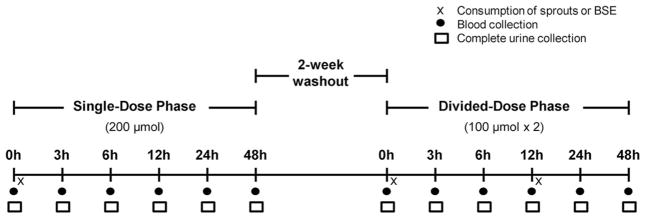
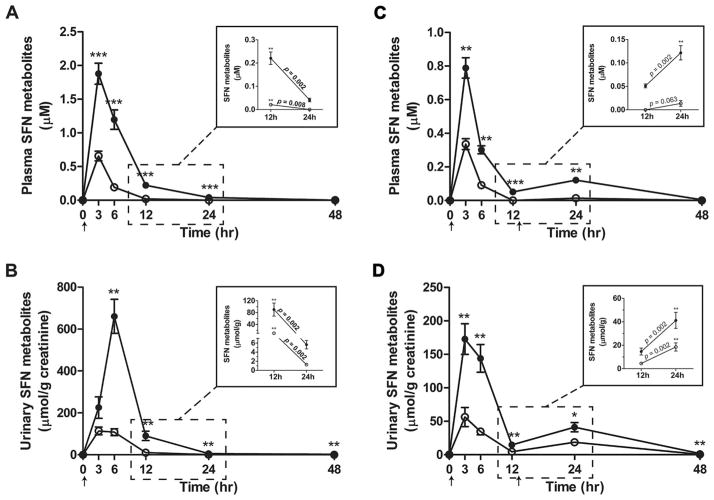
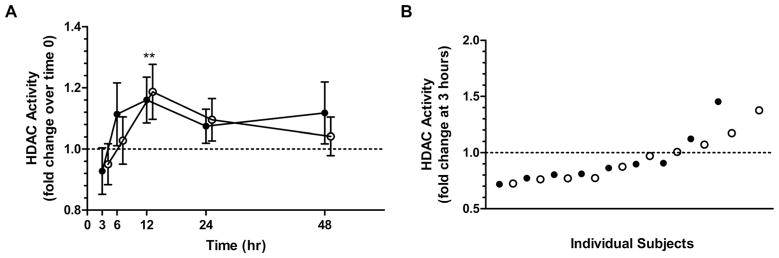
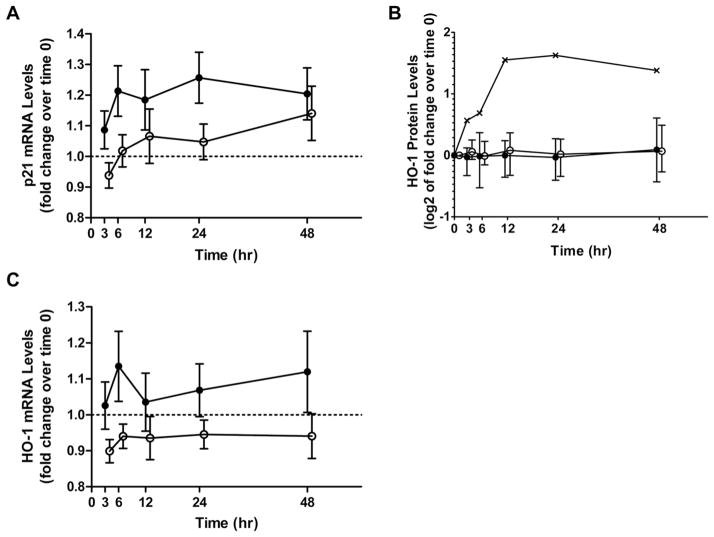
Methods and results: Subjects consumed fresh broccoli sprouts or the BSE, each providing 200 μmol SFN daily, as a single dose and as two 100-μmol doses taken 12 h apart. Using HPLC-MS/MS, we detected ∼3 x higher SFN metabolite levels in plasma and urine of sprout consumers, indicating enhanced SFN absorption from sprouts. Twelve-hour dosing retained higher plasma SFN metabolite levels at later time points than 24-hour dosing. No dose responses were observed for molecular targets of SFN (i.e. heme oxygenase-1, histone deacetylase activity, p21).
Conclusion: We conclude that the dietary form and dosing schedule of SFN may impact SFN absorption and efficacy in human trials.
Keywords: Absorption; Broccoli sprout; Chemoprevention; Excretion; Sulforaphane.
© 2014 WILEY-VCH Verlag GmbH & Co. KGaA, Weinheim.
Conflict of interest statement
The authors have declared no conflict of interest.
Figures
References
-
- Brooks JD, Paton VG, Vidanes G. Potent induction of phase 2 enzymes in human prostate cells by sulforaphane. Cancer Epidemiol Biomarkers Prev. 2001;10:949–954. - PubMed
-
- Petri N, Tannergren C, Holst B, Mellon FA, et al. Absorption/metabolism of sulforaphane and quercetin, and regulation of phase II enzymes, in human jejunum in vivo. Drug Metab Dispos. 2003;31:805–813. - PubMed
-
- Munday R, Munday CM. Induction of phase II detoxification enzymes in rats by plant-derived isothiocyanates: Comparison of allyl isothiocyanate with sulforaphane and related compounds. J Agric Food Chem. 2004;52:1867–1871. - PubMed
-
- Myzak MC, Karplus PA, Chung FL, Dashwood R. A novel mechanism of chemoprotection by sulforaphane. Cancer Res. 2004;64:5767–5774. - PubMed
Publication types
MeSH terms
Substances
Grants and funding
LinkOut - more resources
Full Text Sources
Other Literature Sources
Research Materials
Miscellaneous
