. 2014 Dec 18;10(12):e1004776.
doi: 10.1371/journal.pgen.1004776. eCollection 2014 Dec.

Dissemination of cephalosporin resistance genes between Escherichia coli strains from farm animals and humans by specific plasmid lineages

Affiliations

Dissemination of cephalosporin resistance genes between Escherichia coli strains from farm animals and humans by specific plasmid lineages

Mark de Been et al. PLoS Genet. .

Abstract

Third-generation cephalosporins are a class of β-lactam antibiotics that are often used for the treatment of human infections caused by Gram-negative bacteria, especially Escherichia coli. Worryingly, the incidence of human infections caused by third-generation cephalosporin-resistant E. coli is increasing worldwide. Recent studies have suggested that these E. coli strains, and their antibiotic resistance genes, can spread from food-producing animals, via the food-chain, to humans. However, these studies used traditional typing methods, which may not have provided sufficient resolution to reliably assess the relatedness of these strains. We therefore used whole-genome sequencing (WGS) to study the relatedness of cephalosporin-resistant E. coli from humans, chicken meat, poultry and pigs. One strain collection included pairs of human and poultry-associated strains that had previously been considered to be identical based on Multi-Locus Sequence Typing, plasmid typing and antibiotic resistance gene sequencing. The second collection included isolates from farmers and their pigs. WGS analysis revealed considerable heterogeneity between human and poultry-associated isolates. The most closely related pairs of strains from both sources carried 1263 Single-Nucleotide Polymorphisms (SNPs) per Mbp core genome. In contrast, epidemiologically linked strains from humans and pigs differed by only 1.8 SNPs per Mbp core genome. WGS-based plasmid reconstructions revealed three distinct plasmid lineages (IncI1- and IncK-type) that carried cephalosporin resistance genes of the Extended-Spectrum Beta-Lactamase (ESBL)- and AmpC-types. The plasmid backbones within each lineage were virtually identical and were shared by genetically unrelated human and animal isolates. Plasmid reconstructions from short-read sequencing data were validated by long-read DNA sequencing for two strains. Our findings failed to demonstrate evidence for recent clonal transmission of cephalosporin-resistant E. coli strains from poultry to humans, as has been suggested based on traditional, low-resolution typing methods. Instead, our data suggest that cephalosporin resistance genes are mainly disseminated in animals and humans via distinct plasmids.


Conflict of interest statement

The authors have declared that no competing interests exist.

Figures
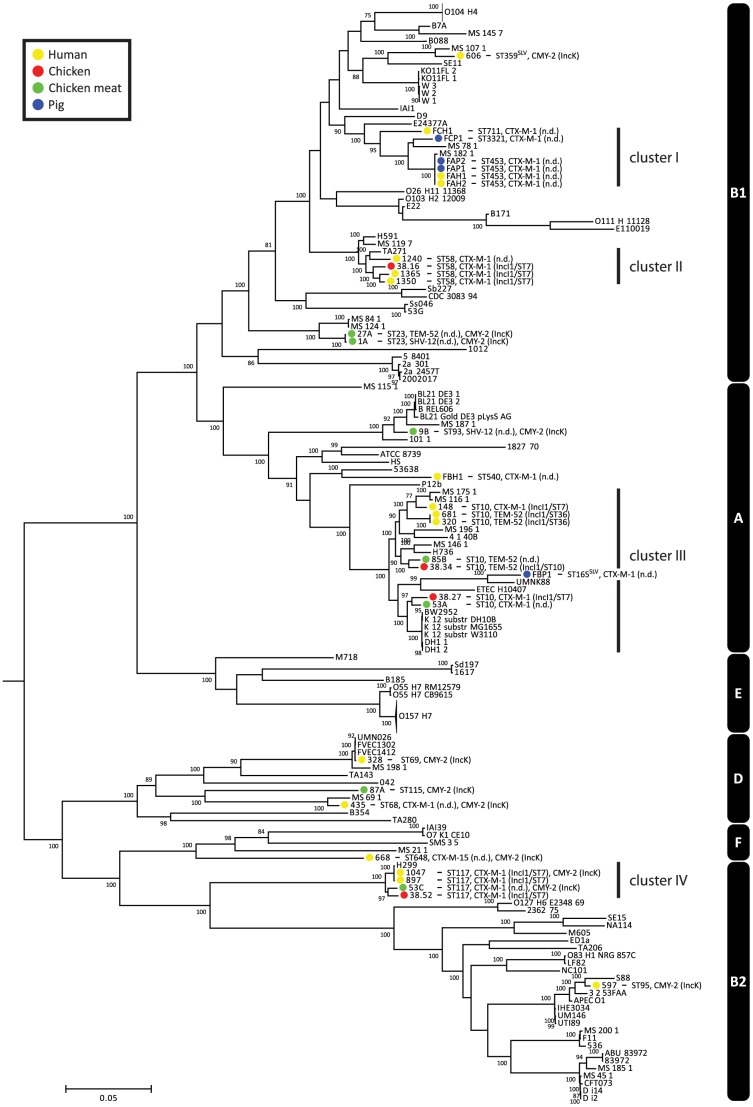
Figure 1
Figure 1. Phylogeny of Escherichia and Shigella species, including ESBL- and AmpC-positive strains sequenced for the purpose of this study.
The tree was built using 18169 variable positions present in 215 core genes. The strains sequenced in this study are indicated in coloured bullets according to isolation source. Typing characteristics (Table 1) are given behind strain names. In case the MLST had not been determined before, it was determined using MLST v1.6 . Clusters I–IV (see main text) are indicated behind the tree. Phylogroups are also indicated behind the tree (white text on black bars). The O104:H4 and O157:H7 branches are collapsed and represent 11 and 20 strains, respectively. Bootstrap support was implemented by running 100 bootstrap replicates. Values <75% are not displayed. SLV indicates Single Locus Variants of corresponding MLSTs.
Figure 2
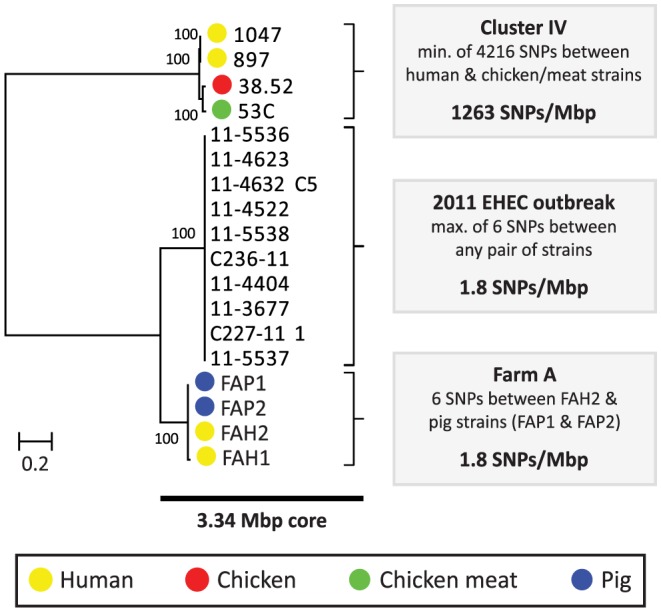
Figure 2. Phylogeny and SNP analysis of closely related ESBL-producing E. coli strains from human and poultry.
A high resolution core genome analysis was performed for a subset of strains which, based on an initial phylogenetic analysis (Cluster IV, Fig. 1), included the most closely related pairs of human and poultry-associated ESBL-producing strains within our dataset. Strains within Cluster IV had previously been found to be identical with respect to MLST, ESBL gene and ESBL-carrying plasmid (Table 1). For comparative purposes, clonally related E. coli strains from the 2011 German EHEC outbreak and four potentially clonally related strains isolated from a single pig farm (Farm A) were included in this analysis. A phylogenetic tree, built from the 107919 variable positions present in the resulting 3.34 Mbp core genome alignment is shown to the left. Bootstrap support was implemented by running 1000 bootstrap replicates. Coloured bullets refer to the isolation source. The number of SNPs found in each of the three clusters (Cluster IV, EHEC outbreak, Farm A) is shown to the right.
Figure 3
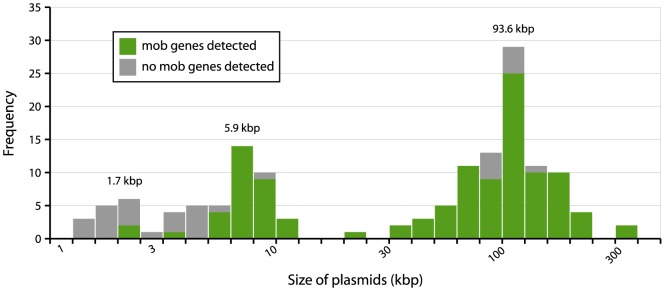
Figure 3. Distribution of plasmid sizes in the collection of 32 sequenced E. coli strains.
The histogram shows the total number of reconstructed plasmids corresponding to each size class (in a logarithmic scale). The plasmid size distribution shows a trimodal abundance curve. Numbers above the three peaks refer to the median size for each class. Plasmids in which a relaxase gene was detected are shown in green and those in which it was not detected are shown in grey.
Figure 4
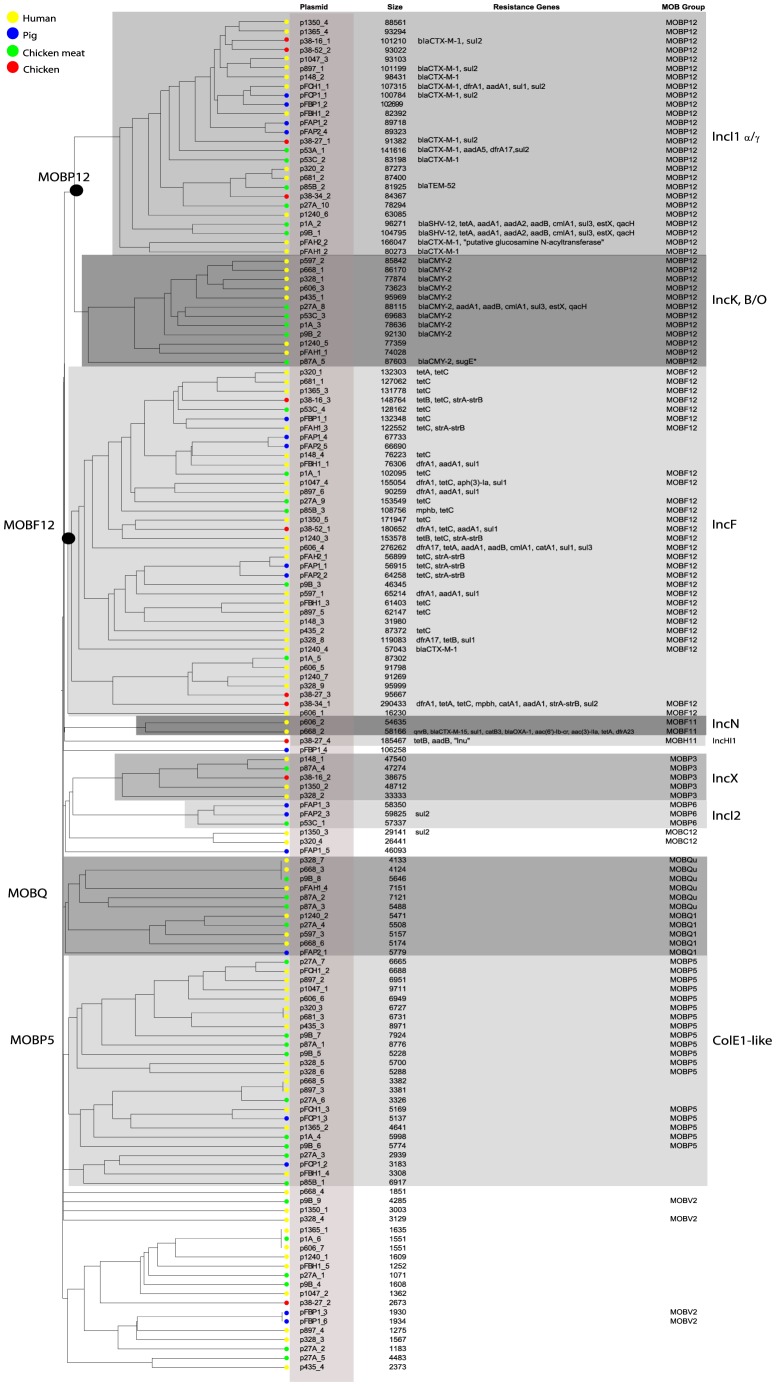
Figure 4. Hierarchical clustering dendrogram of reconstructed plasmids contained in the collection of 32 sequenced E. coli strains.
The dendrogram was constructed as explained in Methods. Reconstructed plasmids are indicated with colored bullets according to isolation source. The dendrogram construction automatically grouped plasmids into Inc families, which are shown by background colours. Mob types are also indicated. Additional columns show plasmid sizes, resistance genes and MOB subfamilies.
Figure 5
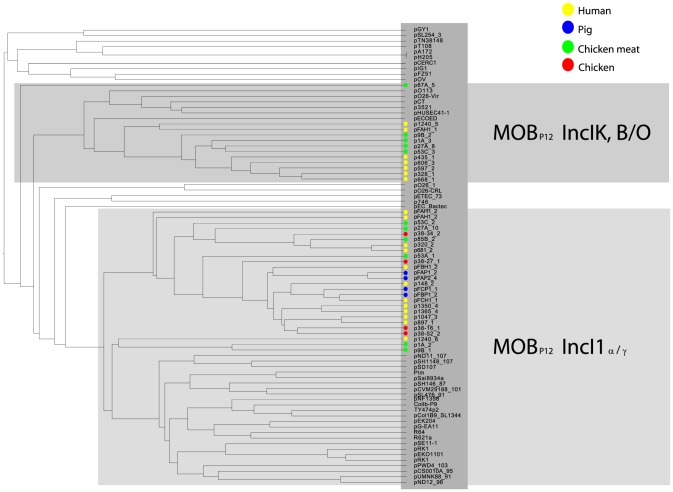
Figure 5. Hierarchical clustering dendrogram of reconstructed IncI1 and IncK plasmids contained in the collection of 32 sequenced E. coli strains together with relevant and similar reference plasmids.
The dendrogram was constructed as explained in Methods. Reconstructed plasmids are indicated with colored bullets according to isolation source. All other (reference) plasmids were taken from public sequence repositories.
Figure 6
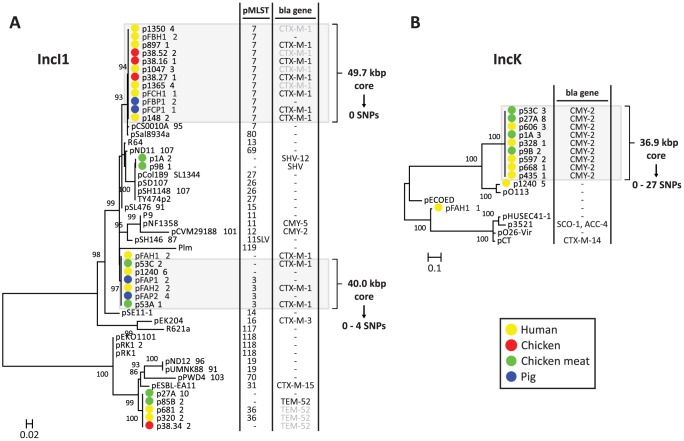
Figure 6. Phylogeny of reconstructed IncI1 and IncK plasmids and their closest relatives.
Phylogenetic tree of IncI1 plasmids built from 763 variable positions present in an 8.6 kbp alignment, representing 8 core proteins (S3 Table) (A). Phylogenetic tree of IncK plasmids built from 2724 variable positions present in a 19.9 kbp alignment, representing 27 core proteins (S3 Table) (B). Bootstrap support was implemented by running 1000 bootstrap replicates. Reconstructed plasmids are indicated with coloured bullets according to isolation source (plasmid names include associated strain names, followed by a unique plasmid identifier). All other plasmids were taken from public sequence repositories. Plasmid STs (for IncI1 only) and encoded β-lactamases (with the exception of TEM-1, which does not provide resistance to third generation cephalosporins) are indicated to the right of the trees. 11SLV indicates a single locus variant of ST11. pMLST negative means that the reconstructed plasmid lacks one or more pMLST loci. Bla genes in light grey were not connected to the reconstructed plasmid, but should be located on this plasmid according to typing data. Light grey panels indicate potential epidemic bla CTX-M-1- and bla CMY-2-carrying plasmids. Core genome analysis of these plasmid subsets revealed virtually identical backbones of up to 50 kbp.

Comment in

References

    1. De Kraker MEA, Davey PG, Grundmann H on behalf of the BURDEN study group (2011) Mortality and Hospital Stay Associated with Resistant Staphylococcus aureus and Escherichia coli Bacteremia: Estimating the Burden of Antibiotic Resistance in Europe. PLoS Med 8: e1001104 10.1371/journal.pmed.1001104 - DOI - PMC - PubMed
    1. Mauldin PD, Salgado CD, Hansen IS, Durup DT, Bosso JA (2010) Attributable Hospital Cost and Length of Stay Associated with Health Care-Associated Infections Caused by Antibiotic-Resistant Gram-Negative Bacteria. Antimicrob Agents Chemother 54: 109–115 10.1128/AAC.01041-09 - DOI - PMC - PubMed
    1. Coque TM, Baquero F, Cantón R (2008) Increasing prevalence of ESBL-producing Enterobacteriaceae in Europe. Euro Surveill 13: pii: 19044. - PubMed
    1. Hawkey PM, Jones AM (2009) The changing epidemiology of resistance. J Antimicrob Chemother 64: i3–i10 10.1093/jac/dkp256 - DOI - PubMed
    1. Dubois V, Barbeyrac BD, Rogues A-M, Arpin C, Coulange L, et al. (2010) CTX-M-producing Escherichia coli in a maternity ward: a likely community importation and evidence of mother-to-neonate transmission. J Antimicrob Chemother 65: 1368–1371 10.1093/jac/dkq153 - DOI - PubMed

Publication types