


Pharmacodynamics of long-acting folic acid-receptor targeted ritonavir-boosted atazanavir nanoformulations
- PMID: 25522973
- PMCID: PMC4272445
- DOI: 10.1016/j.biomaterials.2014.11.012
Pharmacodynamics of long-acting folic acid-receptor targeted ritonavir-boosted atazanavir nanoformulations
Abstract
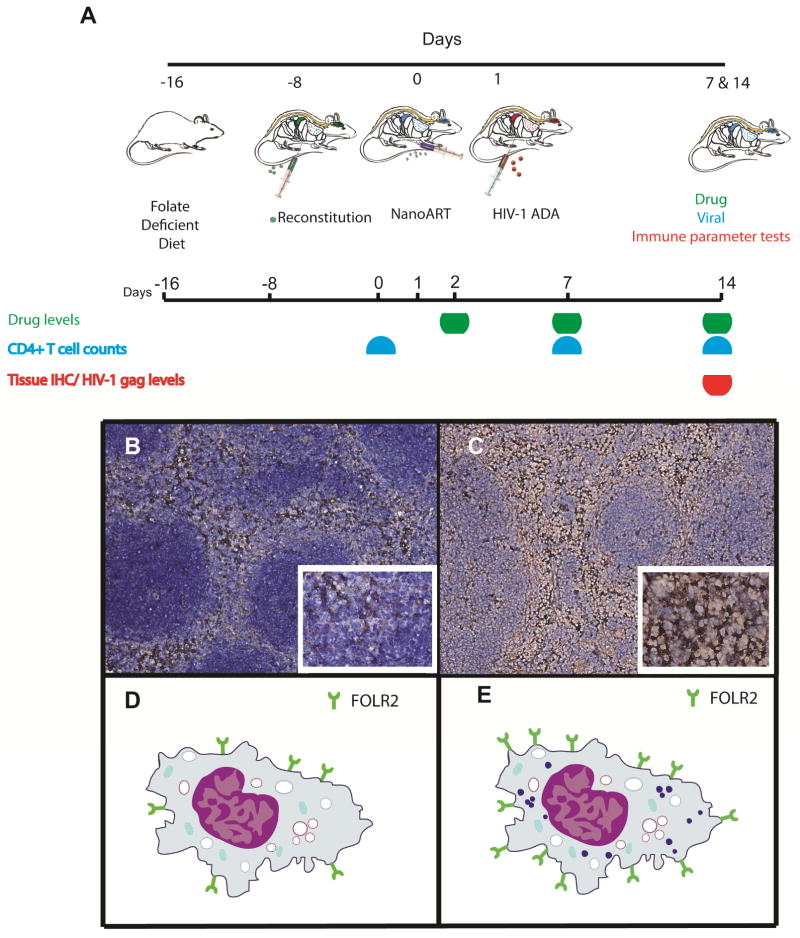
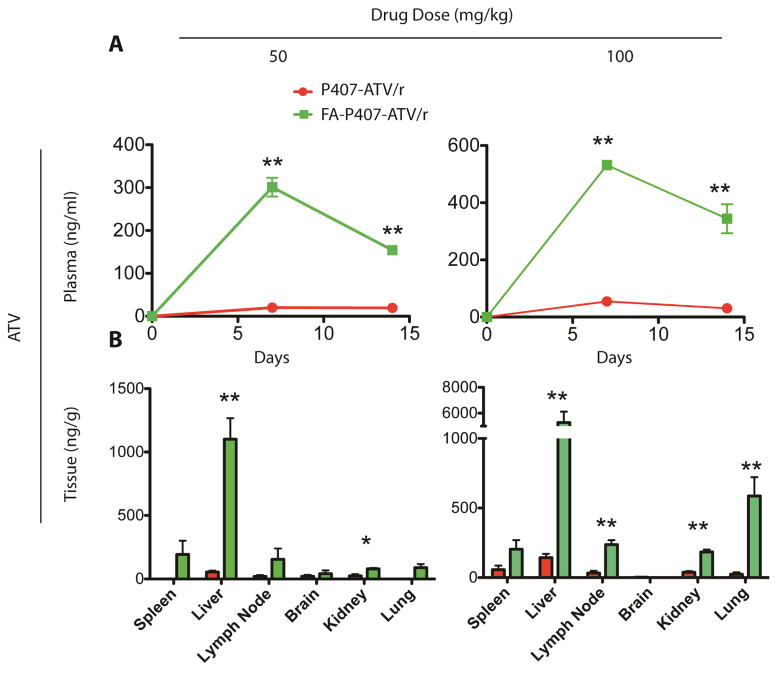
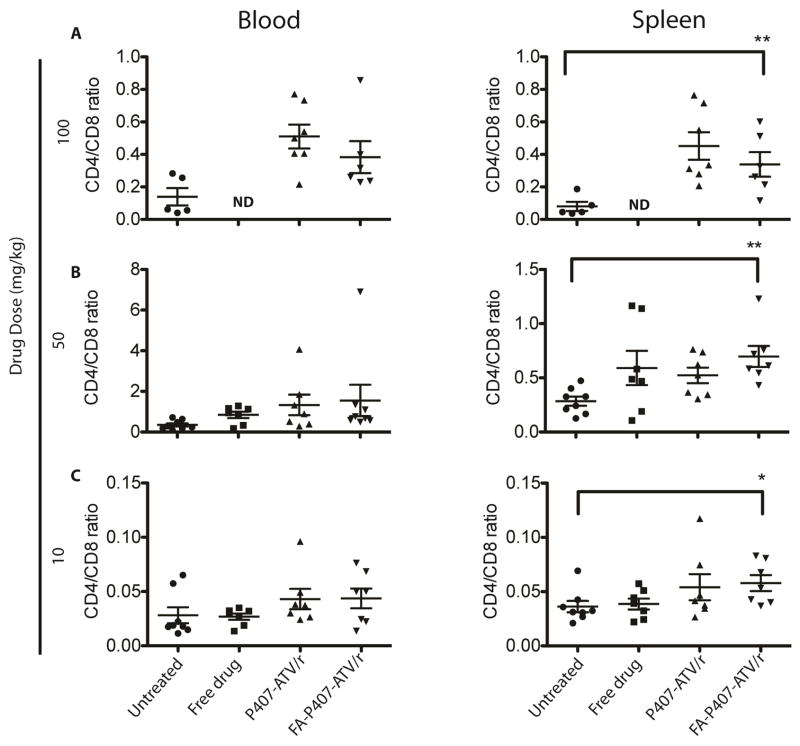
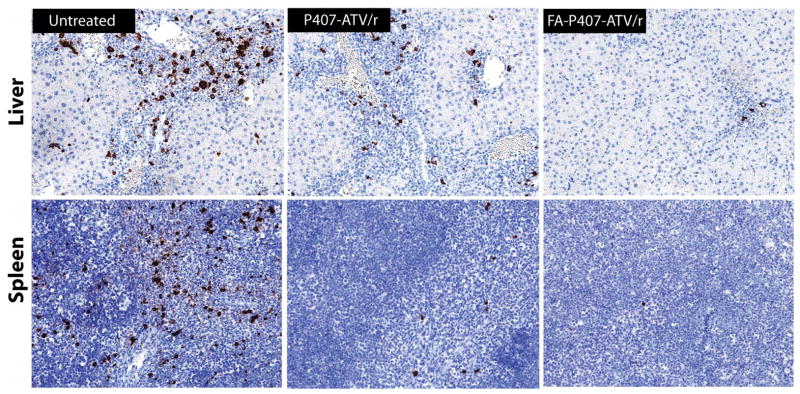
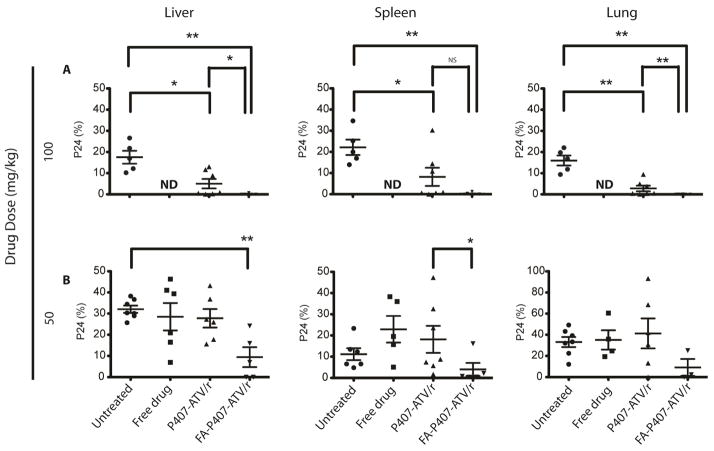
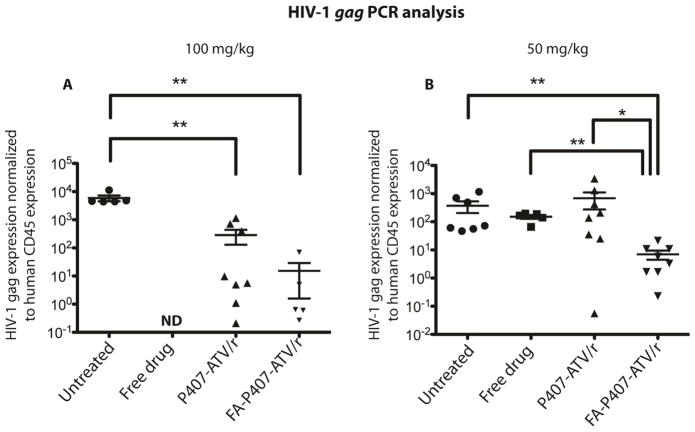
Long-acting nanoformulated antiretroviral therapy (nanoART) that targets monocyte-macrophages could improve the drug's half-life and protein-binding capacities while facilitating cell and tissue depots. To this end, ART nanoparticles that target the folic acid (FA) receptor and permit cell-based drug depots were examined using pharmacokinetic and pharmacodynamic (PD) tests. FA receptor-targeted poloxamer 407 nanocrystals, containing ritonavir-boosted atazanavir (ATV/r), significantly increased drug bioavailability and PD by five and 100 times, respectively. Drug particles administered to human peripheral blood lymphocyte reconstituted NOD.Cg-Prkdc(scid)Il2rg(tm1Wjl)/SzJ mice and infected with HIV-1ADA led to ATV/r drug concentrations that paralleled FA receptor beta staining in both the macrophage-rich parafollicular areas of spleen and lymph nodes. Drug levels were higher in these tissues than what could be achieved by either native drug or untargeted nanoART particles. The data also mirrored potent reductions in viral loads, tissue viral RNA and numbers of HIV-1p24+ cells in infected and treated animals. We conclude that FA-P407 coating of ART nanoparticles readily facilitates drug carriage and antiretroviral responses.
Keywords: Folic acid receptor; Human immunodeficiency virus type one; Long-acting nanoformulated antiretroviral therapy; Non-obese diabetic severe combined immunodeficient mice; Pharmacodynamics; Pharmacokinetics.
Copyright © 2014 The Authors. Published by Elsevier Ltd.. All rights reserved.
Figures
References
-
- Dolgin E. Long-acting HIV drugs advanced to overcome adherence challenge. Nature medicine. 2014;20:323–4. - PubMed
-
- Bangsberg DR, Hecht FM, Charlebois ED, Zolopa AR, Holodniy M, Sheiner L, et al. Adherence to protease inhibitors, HIV-1 viral load, and development of drug resistance in an indigent population. Aids. 2000;14:357–66. - PubMed
-
- Fogarty L, Roter D, Larson S, Burke J, Gillespie J, Levy R. Patient adherence to HIV medication regimens: a review of published and abstract reports. Patient education and counseling. 2002;46:93–108. - PubMed
-
- Puigventos F, Riera M, Delibes C, Penaranda M, de la Fuente L, Boronat A. Adherence to antiretroviral drug therapy. A systematic review. Medicina clinica. 2002;119:130–7. - PubMed
Publication types
MeSH terms
Substances
Grants and funding
- R01 NS036126/NS/NINDS NIH HHS/United States
- P01 NS043985/NS/NINDS NIH HHS/United States
- R21 DA041018/DA/NIDA NIH HHS/United States
- P01 DA028555/DA/NIDA NIH HHS/United States
- P30 MH062261/MH/NIMH NIH HHS/United States
- P01 NS031492/NS/NINDS NIH HHS/United States
- P01 NS31492/NS/NINDS NIH HHS/United States
- P01 DA026146/DA/NIDA NIH HHS/United States
- 2R01 NS034239/NS/NINDS NIH HHS/United States
- Intramural NIH HHS/United States
- P01 MH64570/MH/NIMH NIH HHS/United States
- P01 MH064570/MH/NIMH NIH HHS/United States
- R01 MH104147/MH/NIMH NIH HHS/United States
- R37 NS036126/NS/NINDS NIH HHS/United States
- R01 AG043540/AG/NIA NIH HHS/United States
- R01 NS034239/NS/NINDS NIH HHS/United States
- P01 NS43985/NS/NINDS NIH HHS/United States
- R24 OD018546/OD/NIH HHS/United States
- R01 NS36126/NS/NINDS NIH HHS/United States
LinkOut - more resources
Full Text Sources
Other Literature Sources
Research Materials
