


Matrix-induced autologous chondrocyte implantation for the treatment of chondral defects of the knees in Chinese patients
- PMID: 25525334
- PMCID: PMC4266264
- DOI: 10.2147/DDDT.S71356
Matrix-induced autologous chondrocyte implantation for the treatment of chondral defects of the knees in Chinese patients
Abstract
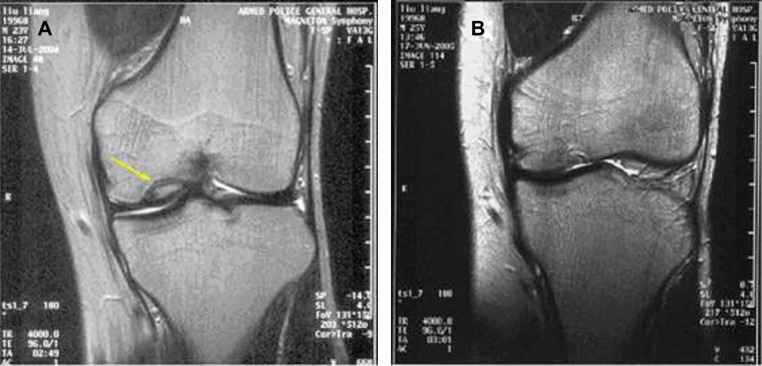
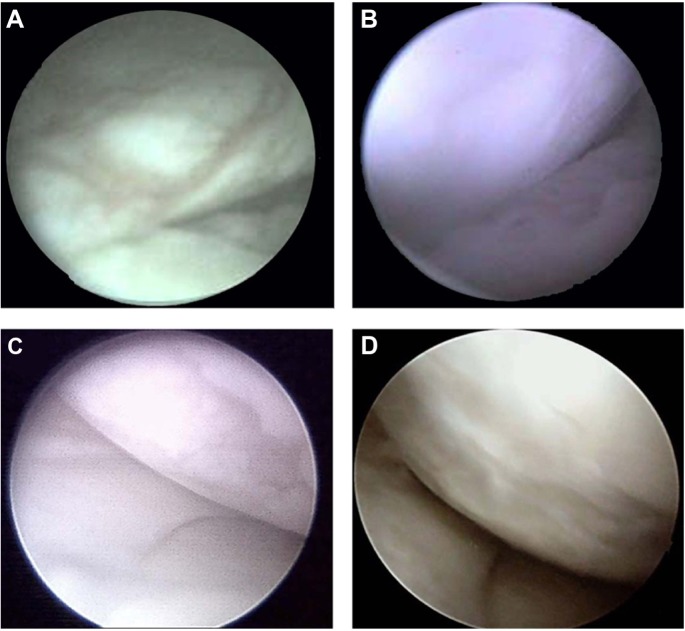
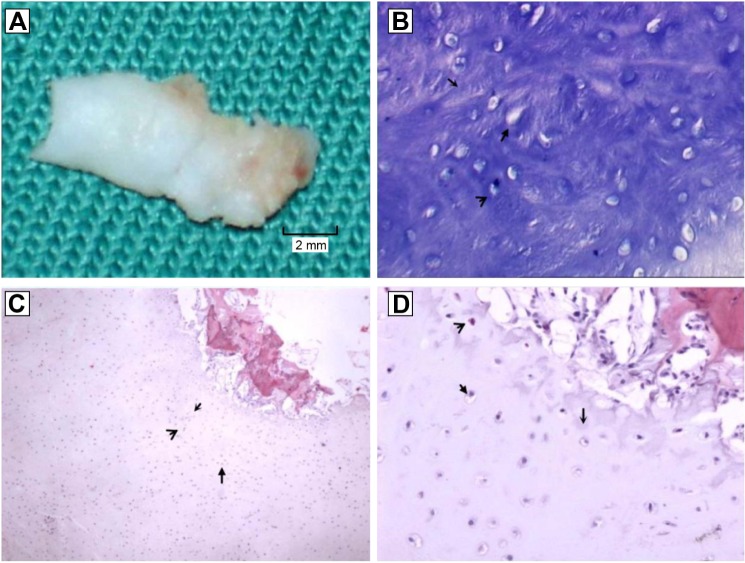
Articular cartilage injury is the most common type of damage seen in clinical orthopedic practice. The matrix-induced autologous chondrocyte implant (MACI) was developed to repair articular cartilage with an advance on the autologous chondrocyte implant procedure. This study aimed to evaluate whether MACI is a safe and efficacious cartilage repair treatment for patients with knee cartilage lesions. The primary outcomes were the Knee Injury and Osteoarthritis Outcome Score (KOOS) domains and magnetic resonance imaging (MRI) results, compared between baseline and postoperative months 3, 6, 12, and 24. A total of 15 patients (20 knees), with an average age of 33.9 years, had a mean defect size of 4.01 cm(2). By 6-month follow-up, KOOS results demonstrated significant improvements in symptoms and knee-related quality of life. MRI showed significant improvements in four individual graft scoring parameters at 24 months postoperatively. At 24 months, 90% of MACI grafts had filled completely and 10% had good-to-excellent filling of the chondral defect. Most (95%) of the MACI grafts were isointense and 5% were slightly hyperintense. Histologic evaluation at 15 and 24 months showed predominantly hyaline cartilage in newly generated tissue. There were no postoperative complications in any patients and no adverse events related to the MACI operation. This 2-year study has confirmed that MACI is safe and effective with the advantages of a simple technique and significant clinical improvements. Further functional and mechanistic studies with longer follow-up are needed to validate the efficacy and safety of MACI in patients with articular cartilage injuries.
Keywords: KOOS; Knee Injury and Osteoarthritis Outcome Score; MRI; articular cartilage lesion; magnetic resonance imaging.
Figures
References
-
- Marcacci M, Filardo G, Kon E. Treatment of cartilage lesions: what works and why? Injury. 2013;44(Suppl 1):S11–S15. - PubMed
-
- Moran CJ, Pascual-Garrido C, Chubinskaya S, et al. Restoration of articular cartilage. J Bone Joint Surg Am. 2014;96(4):336–344. - PubMed
-
- Davis AM, MacKay C. Osteoarthritis year in review: outcome of rehabilitation. Osteoarthritis Cartilage. 2013;21(10):1414–1424. - PubMed
-
- Behery O, Siston RA, Harris JD, Flanigan DC. Treatment of cartilage defects of the knee: expanding on the existing algorithm. Clin J Sport Med. 2014;24(1):21–30. - PubMed
-
- Buckwalter JA, Hunziker EB. Orthopaedics. Healing of bones, cartilages, tendons, and ligaments: a new era. Lancet. 1996;348(Suppl 2):sII18. - PubMed
MeSH terms
LinkOut - more resources
Full Text Sources
Other Literature Sources
Medical
