


BRAFV600E immunopositive melanomas show low frequency of heterogeneity and association with epithelioid tumor cells: a STROBE-compliant article
- PMID: 25526463
- PMCID: PMC4603111
- DOI: 10.1097/MD.0000000000000285
BRAFV600E immunopositive melanomas show low frequency of heterogeneity and association with epithelioid tumor cells: a STROBE-compliant article
Erratum in
- Medicine (Baltimore). 2015 Apr;94(14):DOI: 10.1097/01.md.0000464339.19779.8f
Abstract
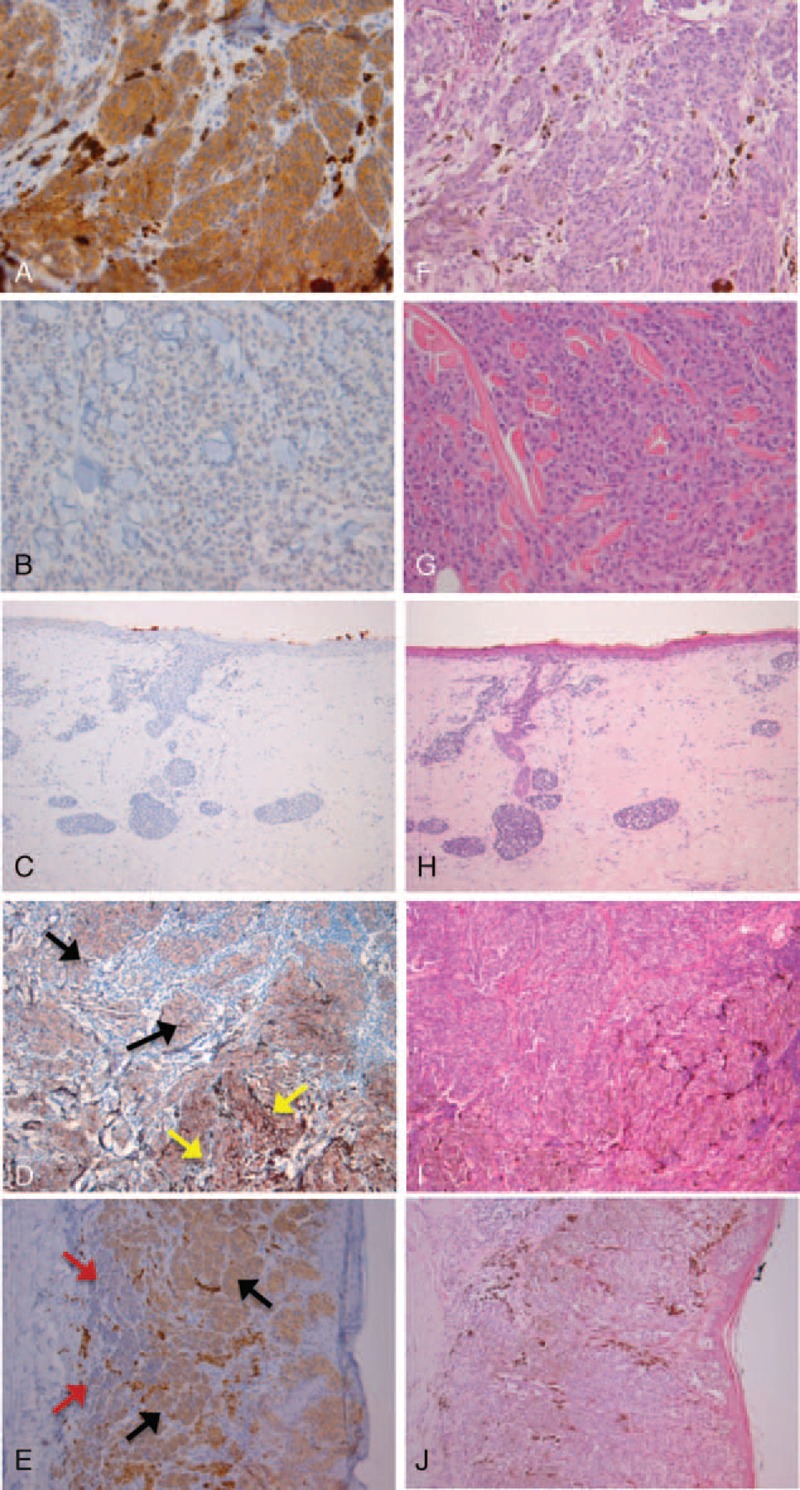
Treatment of BRAFV600E-mutant melanoma by small molecule inhibitors that target BRAFV600E or MEK kinases is increasingly used in clinical practice and significantly improve patient outcome. However, patients eventually become resistant and therapeutic improvement is required. Molecular diversity within individual tumors (intratumor heterogeneity) and between tumors within a single patient (intrapatient heterogeneity) poses a significant challenge to precision medicine. Using immunohistochemistry, we determined the extent of BRAFV600E intratumor and intrapatient heterogeneity and the influence of morphological heterogeneity in a large series of 171 melanomas of 81 patients. The BRAFV600E mutation rate found in our melanoma series is 44%, with none of 22 (0%) melanoma in situ, 23 of 56 (41%) primary tumors, 28 of 59 (48%) regional metastases, and 24 of 34 (71%) distant metastases harboring the mutation. In general, a diffuse homogeneous immunostaining was seen, even in tumors consisting of more than one cell type, that is, epithelioid, spindle, and/or small cell types. Nevertheless, BRAFV600E-mutant melanomas more often had a purely epithelioid cell population (P=0.063), that is more evident among distant metastases (P=0.014). Only two of 75 (3%) mutated specimens (one primary and one metastasis) displayed heterogeneous BRAFV600E expression. The primary tumor was also morphologically heterogeneous and exclusively displayed BRAFV600E in the epithelioid component, confirming an association between BRAFV600E and epithelioid cells. Twenty-eight of 30 patients (93%) had concordant BRAFV600E mutation status between their tumors. Taken together, BRAFV600E intratumor and intrapatient heterogeneity in melanoma is diminutive, nevertheless, the identified exceptions will have important implications for the clinical management of this disease.
Conflict of interest statement
The authors have no conflicts of interest to disclose.
Figures
References
-
- van den Hurk K, Niessen HE, Veeck J, et al. Genetics and epigenetics of cutaneous malignant melanoma: a concert out of tune. Biochim Biophy Acta 2012; 1826:89–102. - PubMed
-
- Flaherty KT, Hodi FS, Fisher DE. From genes to drugs: targeted strategies for melanoma. Nat Rev Cancer 2012; 12:349–361. - PubMed
-
- Davies H, Bignell GR, Cox C, et al. Mutations of the BRAF gene in human cancer. Nature 2002; 417:949–954. - PubMed
-
- Curtin JA, Fridlyand J, Kageshita T, et al. Distinct sets of genetic alterations in melanoma. N Engl J Med 2005; 353:2135–2147. - PubMed
-
- Cohen C, Zavala-Pompa A, Sequeira JH, et al. Mitogen-actived protein kinase activation is an early event in melanoma progression. Clin Cancer Res 2002; 8:3728–3733. - PubMed
Publication types
MeSH terms
Substances
LinkOut - more resources
Full Text Sources
Other Literature Sources
Medical
Research Materials
