. 2014 Dec 19;9(12):e114905.
doi: 10.1371/journal.pone.0114905. eCollection 2014.

Non-microtubular localizations of microtubule-associated protein 6 (MAP6)

Affiliations

Non-microtubular localizations of microtubule-associated protein 6 (MAP6)

Sylvie Gory-Fauré et al. PLoS One. .

Abstract

MAP6 proteins (MAP6s), which include MAP6-N (also called Stable Tubule Only Polypeptide, or STOP) and MAP6d1 (MAP6 domain-containing protein 1, also called STOP-Like protein 21 kD, or SL21), bind to and stabilize microtubules. MAP6 deletion in mice severely alters integrated brain functions and is associated with synaptic defects, suggesting that MAP6s may also have alternative cellular roles. MAP6s reportedly associate with the Golgi apparatus through palmitoylation of their N-terminal domain, and specific isoforms have been shown to bind actin. Here, we use heterologous systems to investigate several biochemical properties of MAP6 proteins. We demonstrate that the three N-terminal cysteines of MAP6d1 are palmitoylated by a subset of DHHC-type palmitoylating enzymes. Analysis of the subcellular localization of palmitoylated MAP6d1, including electron microscopic analysis, reveals possible localization to the Golgi and the plasma membrane but no association with the endoplasmic reticulum. Moreover, we observed localization of MAP6d1 to mitochondria, which requires the N-terminus of the protein but does not require palmitoylation. We show that endogenous MAP6d1 localized at mitochondria in mature mice neurons as well as at the outer membrane and in the intermembrane space of purified mouse mitochondria. Last, we found that MAP6d1 can multimerize via a microtubule-binding module. Interestingly, most of these properties of MAP6d1 are shared by MAP6-N. Together, these results describe several properties of MAP6 proteins, including their intercellular localization and multimerization activity, which may be relevant to neuronal differentiation and synaptic functions.


Conflict of interest statement

Competing Interests: AA and ED are « Commissariat à l'énergie atomique et aux energies alternatives » employees. This does not alter the authors' adherence to all the PLOS ONE policies on sharing data and materials. The other authors declare they do not have competing interests.

Figures

Figure 1
Figure 1. MAP6d1 is palmitoylated on the N-terminal domain.
A, Schematic representation of MAP6d1 constructs. B, NIH/3T3 cells overexpressing MAP6d1 (MAP6d1-CCC) or a MAP6d1 mutant (MAP6d1-GGG) tagged with myc were labeled with [3H]-palmitate. The cells were treated with 100 µM 2-bromopalmitate (Bromo-Pal) or vehicle for 3 h. After immunoprecipitation with anti-myc antibody, proteins were separated by SDS-PAGE and subjected either to autoradiography ([3H]-palmitate) or to immunoblotting (MAP6d1 mAb SLF10). C, Palmitoyl acyltransferase (DHHC) activities on MAP6d1. Each plasmid encoding a DHHC was transfected with the MAP6d1-myc plasmid into HEK-293 cells. After metabolic labeling with [3H]-palmitate, proteins were separated by SDS-PAGE followed by autoradiography (upper panel) and immunoblotting, using an anti-myc antibody to detect MAP6d1 (lower panel). DHHC proteins that enhance MAP6d1 palmitoylation are marked with an asterisk. D,MAP6d1 is palmitoylated on Cys 5, 10 and 11 residues. NIH/3T3 cells were transfected with a plasmid encoding MAP6d1-myc (MAP6d1-CCC) or mutant forms in which one, two or three cysteines were replaced with glycine: MAP6d1-GCC-myc, MAP6d1-CGC-Myc, MAP6d1-CCG-Myc, MAP6d1-GGC-Myc, MAP6d1-GCG-Myc, MAP6d1-CGG-Myc, and MAP6d1-GGG-Myc. Cell extracts were processed as in B. Mutating all 3 MAP6d1 cysteines (MAP6d1-GGG) abolished palmitoylation. E, MAP6d1 protein palmitoylation in vivo: cultured mouse hippocampal neurons (28 days of DIV) were labeled with [3H]-palmitate. MAP6d1 proteins were immunoprecipitated from total cell lysates with MAP6d1 antibody (mAb SLF10). Immunoprecipitated proteins were separated by SDS-PAGE and subjected to autoradiography ([3H]-palmitate) IB: immunoblot, IP: immunoprecipitation, Bromo-Pal: 2-bromopalmitate.
Figure 2
Figure 2. MAP6d1 can localize to the plasma membrane and mitochondria.
AC, NIH/3T3 cells transfected with a MAP6d1-myc encoding plasmid were fixed with PFA-sucrose and immunolabeled for MAP6d1 (mAb anti-myc). Localization at microtubules (A), Golgi (B), plasma membrane (B, arrow), mitochondria (C) can be observed. DE, NIH/3T3 cells were transfected with a plasmid encoding MAP6d1-myc and fluorescent markers for the plasma membrane (D) or mitochondria (E). After fixation and immunolabeling MAP6d1 (mAb anti-myc), cells were analyzed by confocal. MAP6d1 co-localizes with the plasma membrane marker pEYFP-Mem (D) and the mitochondria marker pDsRed2-Mito (E). Bars, 10 µm.
Figure 3
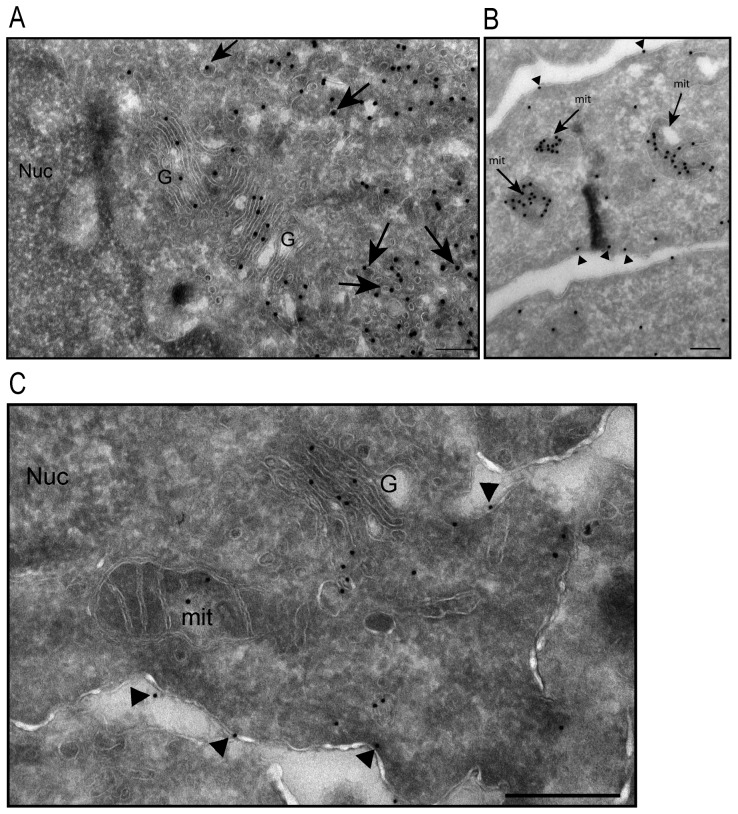
Figure 3. Analysis of MAP6d1 localization by electron microscopy.
AB, NIH/3T3 cells were transfected with a MAP6d1-myc encoding plasmid and analyzed by electron microscopy. Cryosections were labeled with immuno-gold (mAb anti-myc). MAP6d1 was observed at the Golgi apparatus and in vesicles that are frequently clustered in the cytoplasm (A, arrows). MAP6d1 also localized to the plasma membrane (B, arrowheads) and within mitochondria (B, arrows). C, hippocampal neurons were transfected with a plasmid encoding MAP6d1-GFP and immuno-gold localization was performed using an anti-GFP antibody. Localization at the Golgi, mitochondria and plasma membrane (arrowheads) can be observed. No gold particles were found in the nucleus. Bars, 200 nm. G: Golgi apparatus; Nuc: nucleus; ER: endoplasmic reticulum.
Figure 4
Figure 4. MAP6d1-GGG localizes to the mitochondria but not to the plasma membrane.
A, NIH/3T3 cells transfected with a plasmid encoding MAP6d1-GGG-myc and GM130 (Golgi marker) antibodies. No colocalization was observed. BC, NIH/3T3 cells were transfected with plasmids encoding MAP6d1-GGG-myc and fluorescent markers for the plasma membrane (B) or mitochondria (C). After fixation and immunolabeling for MAP6d1-GGG, the cells were analyzed by confocal microscopy. B, No co-localization of MAP6d1-GGG and the plasma membrane marker was observed. C, Co-localization of MAP6d1-GGG and the mitochondrial marker. DE, NIH/3T3 cells transfected with plasmids encoding MAP6d1[1–36]-CCC-myc or MAP6d1[1–36]-GGG-myc and fluorescent markers for mitochondria. Both the MAP6d1[1–36]-CCC (D) and MAP6d1[1–36]-GGG (E) fragments co-localize with the mitochondrial marker. Note that images (AE) correspond to a single focal plane through organelle under study and thus these focal planes do not reflect the whole localization of MAP6d1. Bars, 10 µm for AD and 5 µm for E.
Figure 5
Figure 5. Analysis of MAP6d1-GGG localization by electron microscopy.
AC, NIH/3T3 cells were transfected with a plasmid encoding MAP6d1-GGG-myc and immuno-gold labeled. Analysis by electron microscopy indicated that MAP6d1-GGG did not associate with the Golgi apparatus (A,C) or the plasma membrane (B, arrowheads). In contrast, MAP6d1-GGG was observed within mitochondria (A). In addition, strong labeling was observed in electron-dense protein aggregates (arrows, BC) that were not associated with vesicles. G: Golgi apparatus; Nuc: nucleus; mit: mitochondria. Bars, 200 nm.
Figure 6
Figure 6. Endogenous MAP6d1 is present in mitochondria.
A, Proteins from brain homogenate, cytosol, pellet and purified mitochondria (10 µg) were separated by SDS-PAGE and immunoblotted using MAP6d1 and control antibodies against Giantin, catalase, calnexin, VDAC, Tom 20 and Cytochrome C. B, Immunoblot analysis of mitochondrial extract after Proteinase K accessibility test. PrK, Proteinase K; Tx-100, Triton X-100. OPA1 is a mitochondrial intermembrane space protein anchored to the inner membrane (MIM); Tom20 is a mitochondrial outer-membrane protein (MOM); SLP2 is a mitochondrial matrix protein (matrix). MAP6d1 was localized at the outer membrane and in the intermembrane space. C, Hippocampal neurons after 14 days of DIV were labeled with anti-MAP6d1 (SLF10) and anti-Tom20 to stain mitochondria. Localization of MAP6d1 at mitochondria can be observed (arrow). Note that these images correspond to a single focal plane. Bar: 10 µm.
Figure 7
Figure 7. MAP6d1 can multimerize.
A, COS-7 cells overexpressing MAP6d1-GFP and MAP6d1-myc were lysed. Proteins were immunoprecipitated with antibodies against either GFP or myc, separated by SDS-PAGE and immunoblotted with each antibody. In the control experiments, COS-7 cells over-expressing either MAP6d1-myc or MAP6d1-GFP were lysed, and protein was immunoprecipitated with anti-GFP or anti-myc antibodies, respectively. B, MAP6d1 multimerization does not require cysteines. COS-7 cells overexpressing MAP6d1-GFP and MAP6d1-GGG-myc were lysed, and the proteins were immunoprecipitated as in A. Both proteins are present in the immunoprecipitate. C, Two-hybrid experiments to test the interactions between MAP6d1 and itself, MAP6-E or lamin. MAP6d1 interacts with itself and with MAP6-E. D, MAP6d1 multimerization requires the Mn3 module. COS-7 cells overexpressing MAP6d1-GFP and MAP6d1-ΔMn3-myc were lysed, and proteins were immunoprecipitated as in A. No co-immunoprecipitation was observed between MAP6d1 and MAP6d1-ΔMn3. E, NIH/3T3 cells were transfected with a plasmid encoding MAP6d1-GGG-ΔMn3-myc, and cryosections were labeled using an anti-myc antibody and immuno-gold. MAP6d1-GGG-ΔMn3 is not concentrated on the Golgi apparatus but is dispersed throughout the cytoplasm. Mitochondria are still heavily labeled, but no protein aggregates were observed. F, NIH/3T3 cells were transfected with a plasmid encoding the mutant MAP6d1-ΔMn3-myc and analysed as in E. MAP6d1-ΔMn3 associates with the Golgi, the plasma membrane (arrowheads) and cytoplasmic vesicles (arrows). G: Golgi apparatus; mit: mitochondria. Bars, 200 nm.
Figure 8
Figure 8. MAP6-N is palmitoylated on the N-terminal domain.
A, NIH/3T3 cells overexpressing MAP6-N or the MAP6-N mutant lacking the 19 N-terminal aa (MAP6-N-Δ2-19) were labeled with [3H]-palmitate. MAP6 proteins were immunoprecipitated from total cell lysate with mAb 175 antibodies. Immunoprecipitated proteins were separated by SDS-PAGE and subjected to autoradiography ([3H]-palmitate) and to immunoblotting (23N antibody). B, Palmitoyl acyltransferase (DHHC) activities on MAP6-N. Experiments were performed as described in Fig. 1C. C, Cultured mouse hippocampal neurons (28 days of DIV) were labeled with [3H]-palmitate. MAP6 proteins were immunoprecipitated from total cell lysate with mAb 175 antibodies. Immunoprecipitated proteins were separated by SDS-PAGE and subjected to autoradiography ([3H]-palmitate) and to immunoblotting (23N antibody). No-antibody controls were tested by immunoprecipitation.
Figure 9
Figure 9. Subcellular localization of MAP6-N.
A, NIH/3T3 cells were transfected with plasmids encoding MAP6-N-myc and fluorescent markers for Golgi or mitochondria. After fixation and immunolabeling of MAP6-N (mAb anti-myc), the cells were analyzed by confocal microscopy. A, Co-localization of MAP6-N with the Golgi marker and partial co-localization with the mitochondria marker. (B, C) NIH/3T3 cells overexpressing the myc-tagged MAP6-N fragment corresponding to residues 1 to 41 without (B) or with mutation of the cysteines 5, 10 and 11 (C). After fixation and immunolabeling the MAP6-N fragments (mAb anti-myc), cells were analyzed by confocal microscopy. The MAP6–-CCC fragment localized with both the Golgi and the mitochondria markers, whereas the MAP6–-GGG fragment only localized to the mitochondria. Bars, 10 µm. D, MAP6d1 is present in purified mitochondria fractions from brain. Mitochondrial localization of MAP6-N was analysed as described in Fig. 6.
Figure 10
Figure 10. Schematic representation of MAP6d1 protein.
MAP6d1 domains involved in association with the Golgi, plasma membrane, mitochondria and calmodulin are shown. Also shown is the Mn3 domain, which is involved in microtubule binding and multimerization.

References

    1. Desai A, Mitchison TJ (1997) Microtubule polymerization dynamics. Annu Rev Cell Dev Biol 13:83–117. - PubMed
    1. Mitchison T, Kirschner M (1984) Dynamic instability of microtubule growth. Nature 312:237–242. - PubMed
    1. Job D, Margolis RL (1984) Isolation from bovine brain of a superstable microtubule subpopulation with microtubule seeding activity. Biochemistry 23:3025–3031. - PubMed
    1. Baas PW, Slaughter T, Brown A, Black MM (1991) Microtubule dynamics in axons and dendrites. J Neurosci Res 30:134–153. - PubMed
    1. Gory-Faure S, Windscheid V, Bosc C, Peris L, Proietto D, et al. (2006) STOP-like protein 21 is a novel member of the STOP family, revealing a Golgi localization of STOP proteins. J Biol Chem 281:28387–28396. - PubMed

Publication types

Substances

LinkOut - more resources