Meta-Analysis
. 2014 Dec 20:14:307.
doi: 10.1186/s12887-014-0307-2.

Immunization interventions to interrupt hepatitis B virus mother-to-child transmission: a meta-analysis of randomized controlled trials

Affiliations
Meta-Analysis

Immunization interventions to interrupt hepatitis B virus mother-to-child transmission: a meta-analysis of randomized controlled trials

Hui Jin et al. BMC Pediatr. .

Abstract

Background: This study aimed to determine the clinical efficacy of various immune interventions on mother-to-child transmission (MTCT) of hepatitis B virus (HBV).

Methods: We retrieved different immune strategies on how to prevent MTCT reported in the literature from Chinese and English electronic databases from the viewpoint of intrauterine and extrauterine prevention. Relative risk (RR) and 95% confidence interval (CI) methods were used.

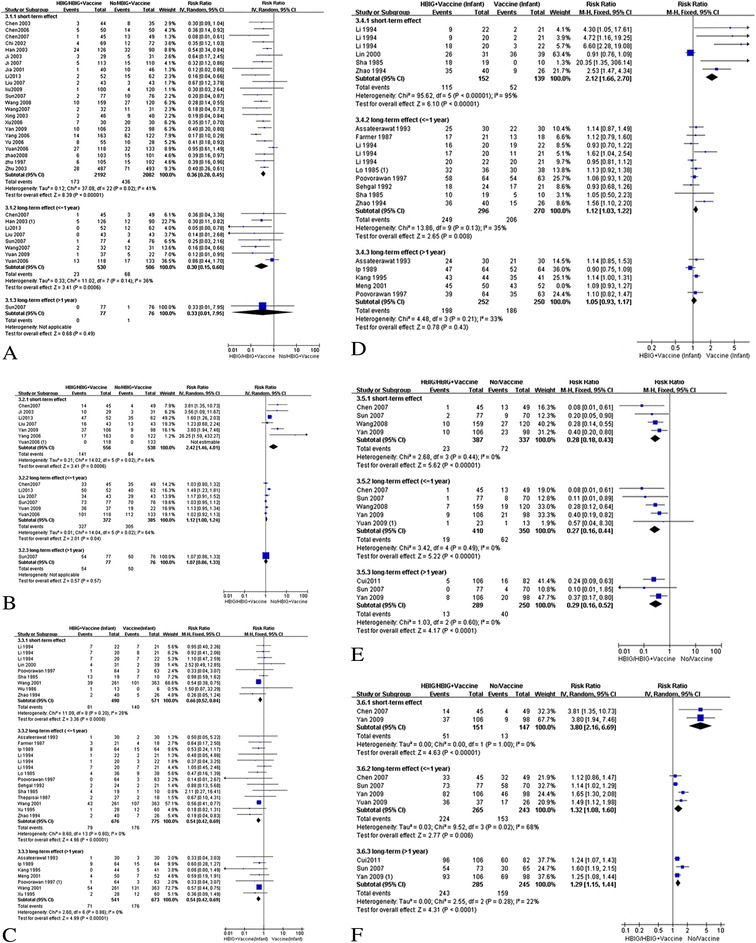
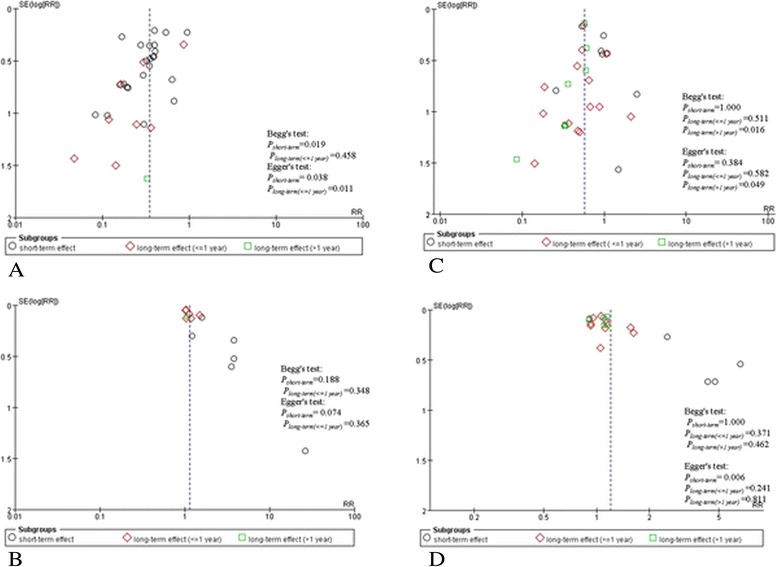
Results: Twenty-five articles on intrauterine prevention and 16 on extrauterine prevention were included in the analysis. Intrauterine prevention could reduce infants' HBV infection rate (RR = 0.36, 95% CI: 0.28-0.45) and increase their anti-hepatitis B surface-positive rate (RR = 2.42, 95% CI: 1.46-4.01) at birth. Compared with passive immunization, passive-active immunization could reduce infants' HBV infection rate (RR = 0.66, 95% CI: 0.52-0.84) at birth, even at more than 12 months of age (RR = 0.54, 95% CI: 0.42-0.69). Subgroup analysis demonstrated similar results except for pregnant women who were hepatitis B surface antigen-positive. Funnel plots and Egger's tests showed publication bias mainly in intrauterine prevention not in extrauterine one.

Conclusions: The long-term protective effect of pregnant women injected with hepatitis B immunoglobulin during pregnancy should be further validated by large-scale randomized trials. Newborns of pregnant women who carried HBV should undergo a passive-active immunization strategy.


Figures
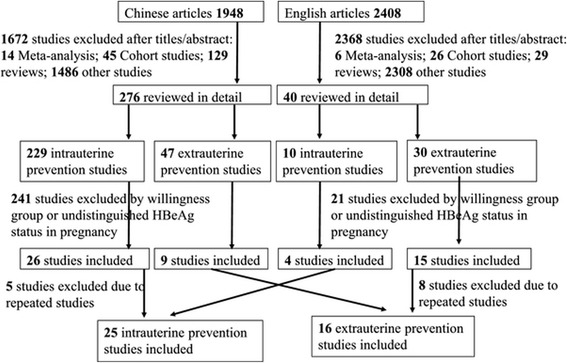
Figure 1
Figure 1
Flow chart of included studies.
Figure 2
Figure 2
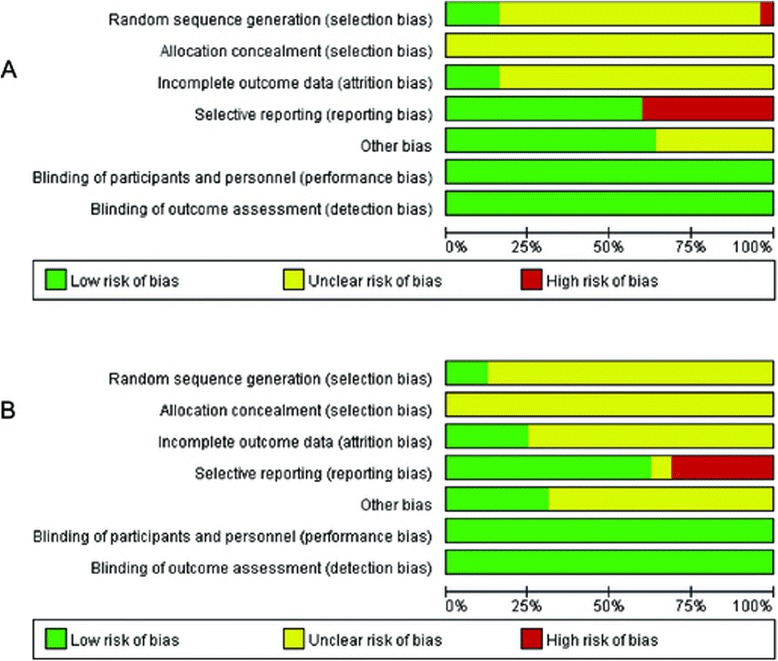
Risk of bias graph of included studies about intrauterine and extrauterine prevention. A. Intrauterine prevention. B. Extrauterine prevention.
Figure 3
Figure 3
Forest plot of HBV infection rates or the anti-HBs positive rate. (A) Forest plot of HBV infection rates of infants born to mothers with HBsAg and/or HBeAg positive for intrauterine and extrauterine prevention (mother: HBIG/infants: HBIG + vaccine vs mother: none/infants: HBUG + vaccine). (B) Forest plot of the anti-HBs positive rate of infants born to mothers with HBsAg and/or HBeAg positive for intrauterine and extrauterine prevention (mother: HBIG/infants: HBIG + vaccine vs mother: none/infants: HBUG + vaccine). (C) Forest plots of the HBV infection rate of infants born to mothers with HBsAg and/or HBeAg positive in extrauterine prevention. (D) Forest plot of the anti-HBs positive rate of infants born to mothers with HBsAg and/or HBeAg positive in extrauterine prevention. (E) Forest plot of the HBV infection positive rate of infants born to mothers with HBsAg and/or HBeAg positive for intrauterine and extrauterine prevention (mother: HBIG/infants: HBIG + vaccine vs mother: none/infants: vaccine). (F) Forest plot of the anti-HBs rate of infants born to mothers with HBsAg and/or HBeAg positive for intrauterine and extrauterine prevention (mother: HBIG/infants: HBIG + vaccine vs mother: none/infants: vaccine).
Figure 4
Figure 4
Funnel plot of HBV infection rate or anti-HBs positive rate. (A) Funnel plot of HBV infection rate of infants born to mothers with HBsAg and/or HBeAg positive for intrauterine and extrauterine prevention. (B) Funnel plot of the anti-HBs–positive rate of infants born to mothers with HBsAg and/or HBeAg positive for intrauterine and extrauterine prevention. (C) Funnel plot of HBV infection rate of infants born to mothers with HBsAg and/or HBeAg positive for intrauterine and/or extrauterine prevention. (D) Funnel plot of the anti-HBs–positive rate of infants born to mothers with HBsAg and/or HBeAg positive for intrauterine and/or extrauterine prevention.

References

    1. Gambarin-Gelwan M. Hepatitis B in pregnancy. Clin Liver Dis. 2007;11:945–963. doi: 10.1016/j.cld.2007.08.004. - DOI - PubMed
    1. Stevens CE, Toy PT, Tong MJ, Taylor PE, Vyas GN, Nair PV. Perinatal hepatitis B virus transmission in the United States. Prevention by passive-active immunization. JAMA. 1985;253:1740–1745. doi: 10.1001/jama.1985.03350360066020. - DOI - PubMed
    1. Hyams KC. Risks of chronicity following acute hepatitis B virus infection: a review. Clin Infect Dis. 1995;20:992–1000. doi: 10.1093/clinids/20.4.992. - DOI - PubMed
    1. Beasley RP. Rocks along the road to the control of HBV and HCC. Ann Epidemiol. 2009;9:231–234. doi: 10.1016/j.annepidem.2009.01.017. - DOI - PubMed
    1. Lee C, Gong Y, Brok J, Boxall EH, Gluud C. Effect of hepatitis B immunisation in newborn infants of mothers positive for hepatitis B surface antigen: systematic review and meta-analysis. BMJ. 2006;332:328–336. doi: 10.1136/bmj.38719.435833.7C. - DOI - PMC - PubMed

Publication types

MeSH terms

Substances