TRKing down an old oncogene in a new era of targeted therapy
- PMID: 25527197
- PMCID: PMC4293234
- DOI: 10.1158/2159-8290.CD-14-0765
TRKing down an old oncogene in a new era of targeted therapy
Abstract
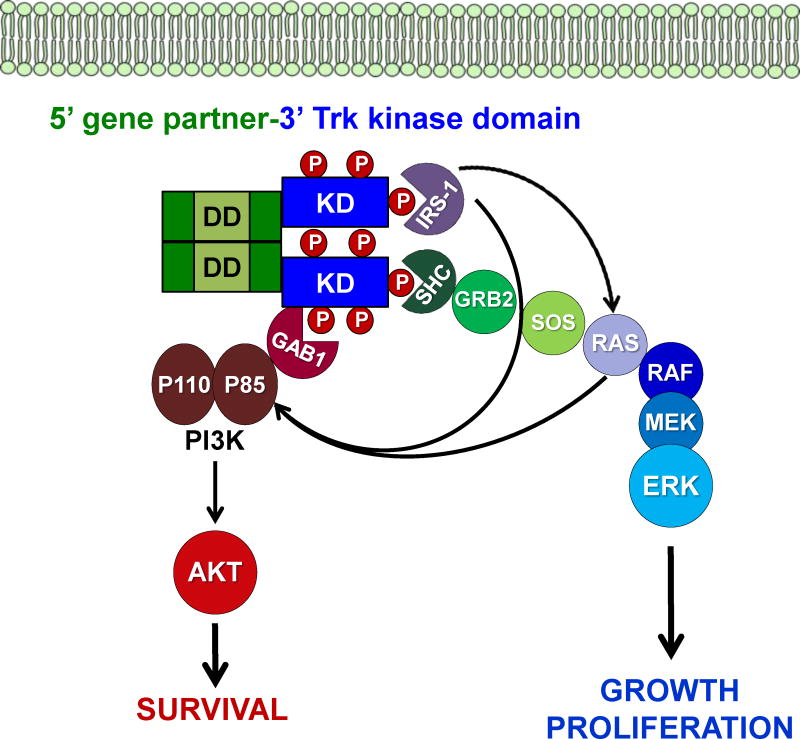
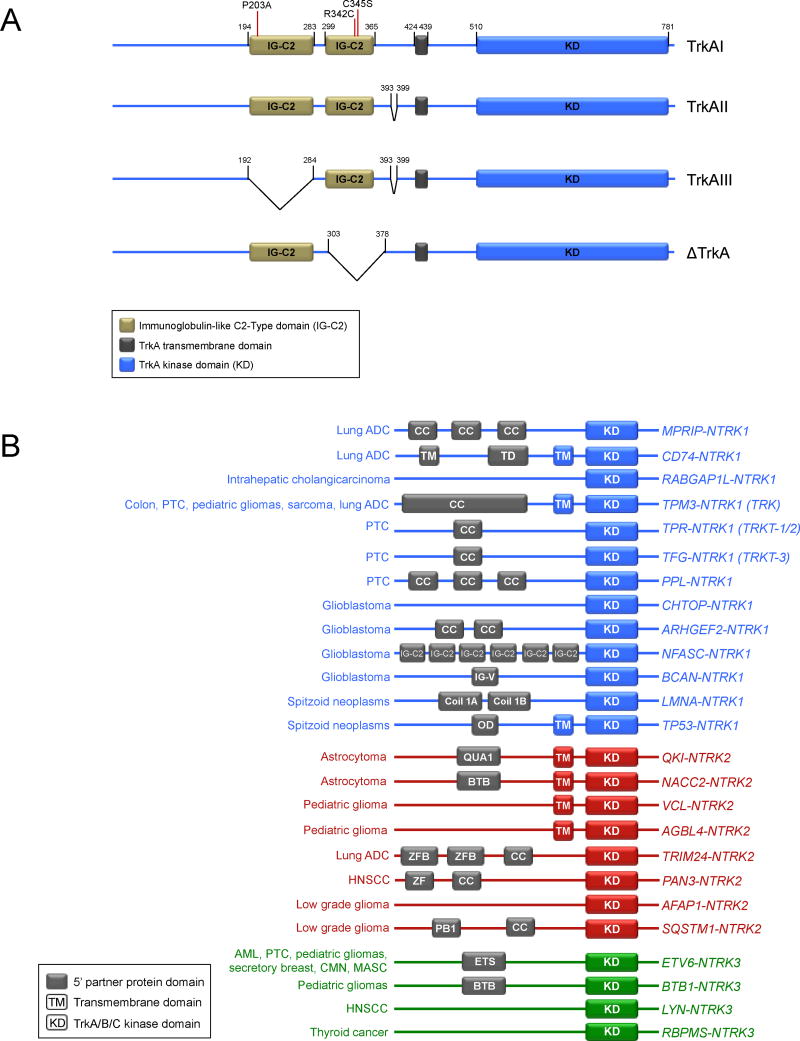
The use of high-throughput next-generation sequencing techniques in multiple tumor types during the last few years has identified NTRK1, 2, and 3 gene rearrangements encoding novel oncogenic fusions in 19 different tumor types to date. These recent developments have led us to revisit an old oncogene, Trk (originally identified as OncD), which encodes the TPM3-NTRK1 gene fusion and was one of the first transforming chromosomal rearrangements identified 32 years ago. However, no drug has yet been approved by the FDA for cancers harboring this oncogene. This review will discuss the biology of the TRK family of receptors, their role in human cancer, the types of oncogenic alterations, and drugs that are currently in development for this family of oncogene targets.
Significance: Precision oncology approaches have accelerated recently due to advancements in our ability to detect oncogenic mutations in tumor samples. Oncogenic alterations, most commonly gene fusions, have now been detected for the genes encoding the TRKA, TRKB, and TRKC receptor tyrosine kinases across multiple tumor types. The scientific rationale for the targeting of the TRK oncogene family will be discussed here.
©2014 American Association for Cancer Research.
Figures
References
-
- Pao W, Girard N. New driver mutations in non-small-cell lung cancer. Lancet Oncol. 2011;12:175–80. - PubMed
-
- Mok TS, Wu YL, Thongprasert S, Yang CH, Chu DT, Saijo N, et al. Gefitinib or carboplatin-paclitaxel in pulmonary adenocarcinoma. The New England journal of medicine. 2009;361:947–57. - PubMed
-
- Shaw AT, Kim DW, Nakagawa K, Seto T, Crino L, Ahn MJ, et al. Crizotinib versus chemotherapy in advanced ALK-positive lung cancer. N Engl J Med. 2013;368:2385–94. - PubMed
-
- Soda M, Choi YL, Enomoto M, Takada S, Yamashita Y, Ishikawa S, et al. Identification of the transforming EML4-ALK fusion gene in non-small-cell lung cancer. Nature. 2007;448:561–6. - PubMed
Publication types
MeSH terms
Substances
Grants and funding
LinkOut - more resources
Full Text Sources
Other Literature Sources
Medical
Molecular Biology Databases
Miscellaneous