


Coping with physical and psychological symptoms: a qualitative study of advanced lung cancer patients and their family caregivers
- PMID: 25527242
- PMCID: PMC4449810
- DOI: 10.1007/s00520-014-2566-8
Coping with physical and psychological symptoms: a qualitative study of advanced lung cancer patients and their family caregivers
Abstract
Purpose: Advanced lung cancer patients have high rates of multiple physical and psychological symptoms, and many of their family caregivers experience significant distress. However, little is known about strategies that these patients and their family caregivers employ to cope with physical and psychological symptoms. This study aimed to identify strategies for coping with various physical and psychological symptoms among advanced, symptomatic lung cancer patients and their primary family caregivers.
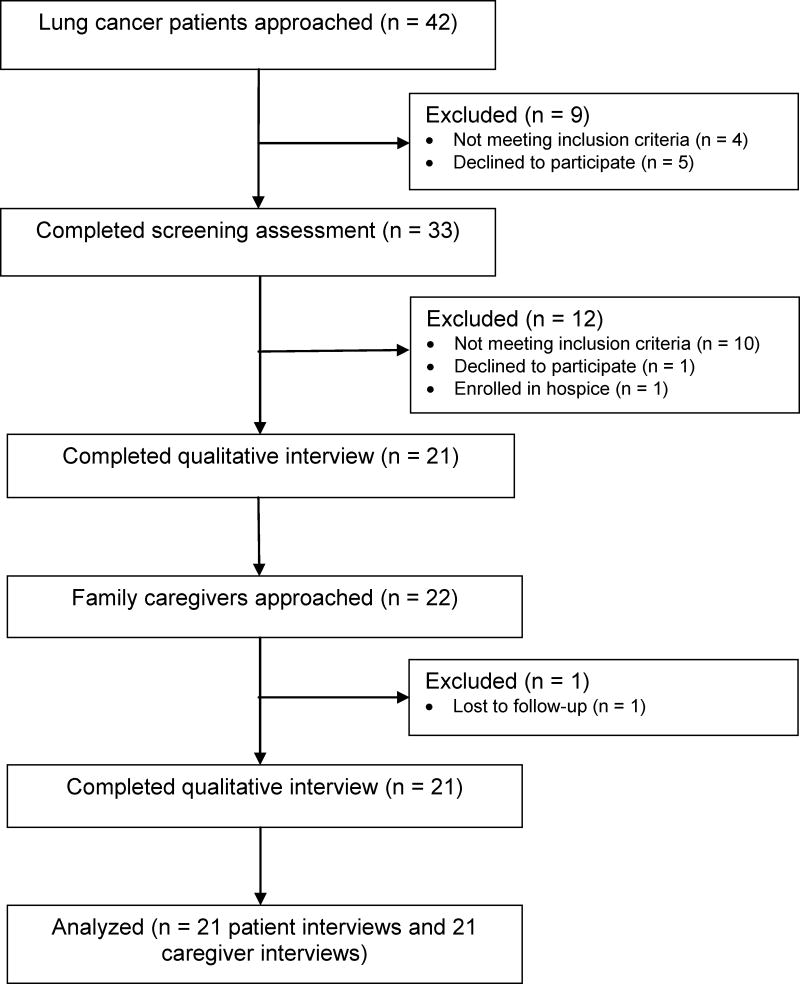
Methods: Patients identified their primary family caregiver. Individual semi-structured qualitative interviews were conducted with 21 advanced, symptomatic lung cancer patients and primary family caregivers. Thematic analysis of interview data was framed by stress and coping theory.
Results: Patients and caregivers reported maintaining a normal routine and turning to family and friends for support with symptom management, which often varied in its effectiveness. Whereas support from health-care professionals and complementary and alternative medicine were viewed favorably, reactions to Internet and in-person support groups were mixed due to the tragic nature of participants' stories. Several cognitive coping strategies were frequently reported (i.e., changing expectations, maintaining positivity, and avoiding illness-related thoughts) as well as religious coping strategies.
Conclusions: Results suggest that advanced lung cancer patients and caregivers may be more receptive to cognitive and religious approaches to symptom management and less receptive to peer support. Interventions should address the perceived effectiveness of support from family and friends.
Conflict of interest statement
References
-
- Jemal A, Bray F, Center MM, Ferlay J, Ward E, Forman D. Global cancer statistics. CA Cancer J Clin. 2011;61:69–90. - PubMed
-
- American Cancer Society. Cancer facts and figures 2014. American Cancer Society; Atlanta, GA: 2014.
-
- Kurtz ME, Kurtz JC, Stommel M, Given CW, Given B. Predictors of depressive symptomatology of geriatric patients with lung cancer-a longitudinal analysis. Psychooncology. 2002;11:12–22. - PubMed
-
- Rolke HB, Bakke PS, Gallefoss F. Health related quality of life, mood disorders and coping abilities in an unselected sample of patients with primary lung cancer. Respir Med. 2008;102:1460–1467. - PubMed
Publication types
MeSH terms
Grants and funding
LinkOut - more resources
Full Text Sources
Other Literature Sources
Medical
