


Thinking ahead--the need for early Advance Care Planning for people on haemodialysis: A qualitative interview study
- PMID: 25527527
- PMCID: PMC4404401
- DOI: 10.1177/0269216314560209
Thinking ahead--the need for early Advance Care Planning for people on haemodialysis: A qualitative interview study
Abstract
Background: There is a need to improve end-of-life care for people with end-stage kidney disease, particularly due to the increasingly elderly, frail and co-morbid end-stage kidney disease population. Timely, sensitive and individualised Advance Care Planning discussions are acceptable and beneficial for people with end-stage kidney disease and can help foster realistic hopes and goals.
Aim: To explore the experiences of people with end-stage kidney disease regarding starting haemodialysis, its impact on quality of life and their preferences for future care and to explore the Advance Care Planning needs of this population and the timing of this support.
Study design: Semi-structured qualitative interview study of people receiving haemodialysis. Interviews were analysed using thematic analysis. Recruitment ceased once data saturation was achieved.
Setting/participants: A total of 20 patients at two UK National Health Service hospitals, purposively sampled by age, time on haemodialysis and symptom burden.
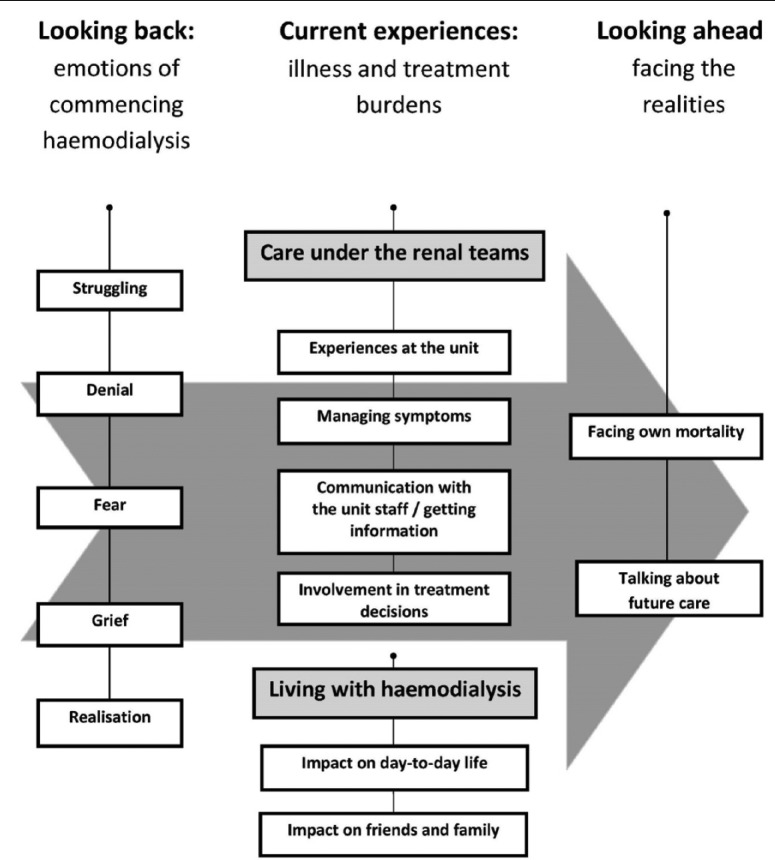
Results: Themes emerged around: Looking Back, emotions of commencing haemodialysis; Current Experiences, illness and treatment burdens; and Looking Ahead, facing the realities. Challenges throughout the trajectory included getting information, communicating with staff and the 'conveyor belt' culture of haemodialysis units. Participants reported a lack of opportunity to discuss their future, particularly if their health deteriorated, and variable involvement in treatment decisions. However, discussion of these sensitive issues was more acceptable to some than others.
Conclusion: Renal patients have considerable unmet Advance Care Planning needs. There is a need to normalise discussions about preferences and priorities in renal and haemodialysis units earlier in the disease trajectory. However, an individualised approach is essential - one size does not fit all.
Keywords: Advance Care Planning; End-stage kidney disease; decision making; haemodialysis; preferences; priorities.
© The Author(s) 2014.
Conflict of interest statement
Figures
References
-
- UK Renal Registry. UK Renal Registry report. Bristol: UK Renal Registry, 2010.
-
- UK Renal Registry. UK Renal Registry fifteenth annual report. Bristol: UK Renal Registry, 2012.
-
- USRDS. USRDS 2011 annual data report: atlas of chronic kidney disease and end-stage renal disease in the United States. Bethesda, MD: National Institutes of Health (NIH), National Institute of Diabetes and Digestive and Kidney Diseases, 2011.
-
- USRDS. The USRDS 1994 annual data report. Bethesda, MD: US Renal Data System, 1994. - PubMed
-
- UK Renal Registry. UK Renal Registry report. Bristol: UK Renal Registry, 2006.
MeSH terms
LinkOut - more resources
Full Text Sources
Other Literature Sources
Medical
