


Synchronised approach for intrauterine insemination in subfertile couples
- PMID: 25528596
- PMCID: PMC11182568
- DOI: 10.1002/14651858.CD006942.pub3
Synchronised approach for intrauterine insemination in subfertile couples
Update in
-
Synchronised approach for intrauterine insemination in subfertile couples.Cochrane Database Syst Rev. 2025 Sep 23;9(9):CD006942. doi: 10.1002/14651858.CD006942.pub4. Cochrane Database Syst Rev. 2025. PMID: 40985294
Abstract
Background: In many countries intrauterine insemination (IUI) is the treatment of first choice for a subfertile couple when the infertility work up reveals an ovulatory cycle, at least one open Fallopian tube and sufficient spermatozoa. The final goal of this treatment is to achieve a pregnancy and deliver a healthy (singleton) live birth. The probability of conceiving with IUI depends on various factors including age of the couple, type of subfertility, ovarian stimulation and the timing of insemination. IUI should logically be performed around the moment of ovulation. Since spermatozoa and oocytes have only limited survival time correct timing of the insemination is essential. As it is not known which technique of timing for IUI results in the best treatment outcome, we compared different techniques for timing IUI and different time intervals.
Objectives: To evaluate the effectiveness of different synchronisation methods in natural and stimulated cycles for IUI in subfertile couples.
Search methods: We searched for all publications which described randomised controlled trials of the timing of IUI. We searched the Cochrane Menstrual Disorders and Subfertility Group Specialised Register, Cochrane Central Register of Controlled Trials (CENTRAL) (1966 to October 2014), EMBASE (1974 to October 2014), MEDLINE (1966 to October 2014) and PsycINFO (inception to October 2014) electronic databases and prospective trial registers. Furthermore, we checked the reference lists of all obtained studies and performed a handsearch of conference abstracts.
Selection criteria: Randomised controlled trials (RCTs) comparing different timing methods for IUI were included. The following interventions were evaluated: detection of luteinising hormone (LH) in urine or blood, single test; human chorionic gonadotropin (hCG) administration; combination of LH detection and hCG administration; basal body temperature chart; ultrasound detection of ovulation; gonadotropin-releasing hormone (GnRH) agonist administration; or other timing methods.
Data collection and analysis: Two review authors independently selected the trials, extracted the data and assessed study risk of bias. We performed statistical analyses in accordance with the guidelines for statistical analysis developed by The Cochrane Collaboration. The overall quality of the evidence was assessed using GRADE methods.
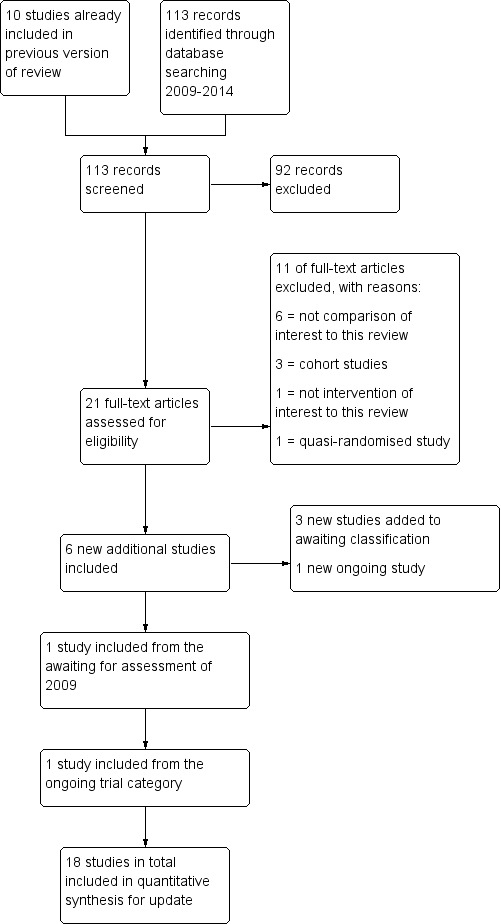
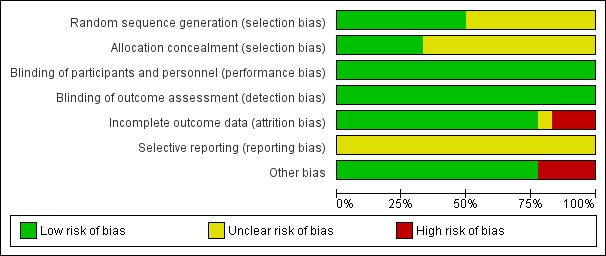
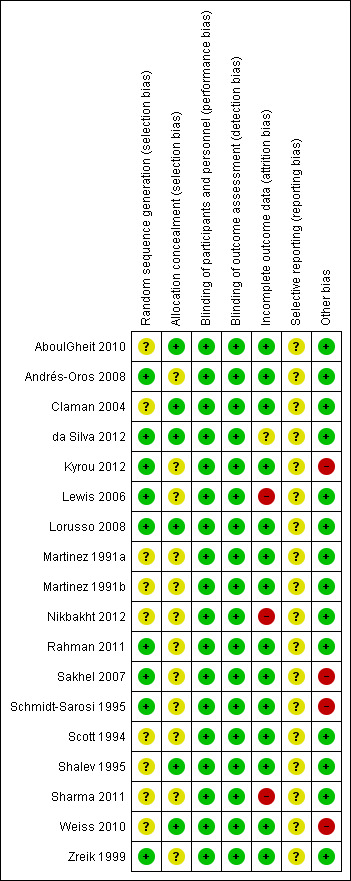
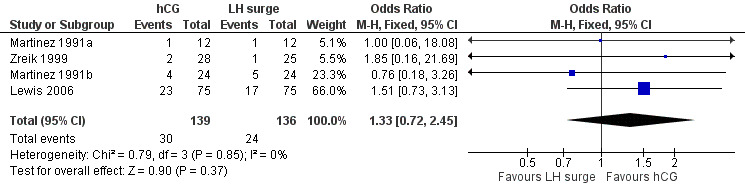
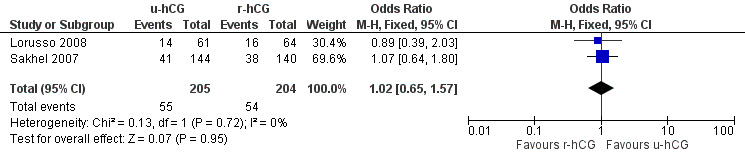
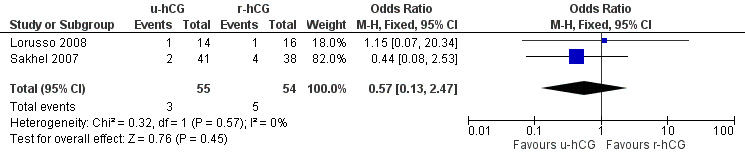
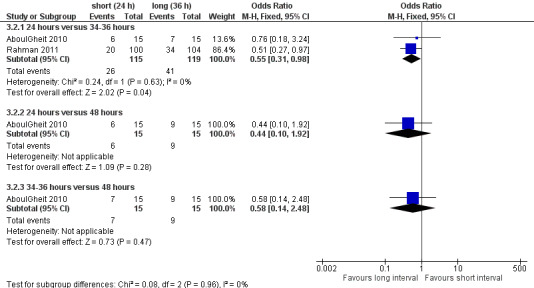
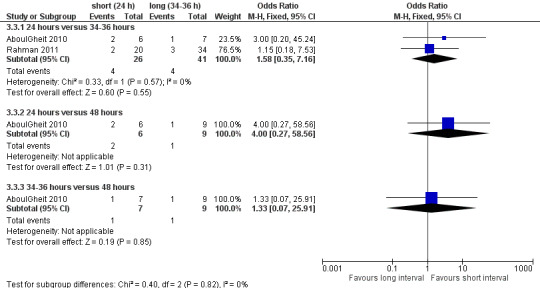
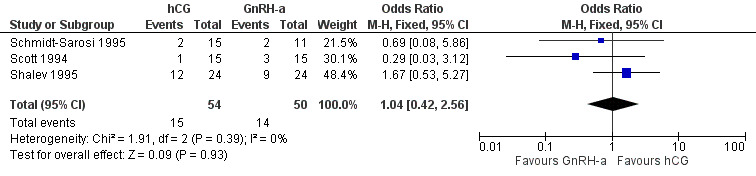
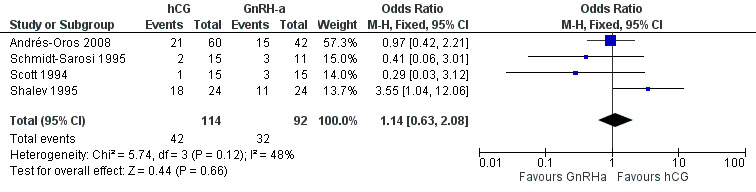
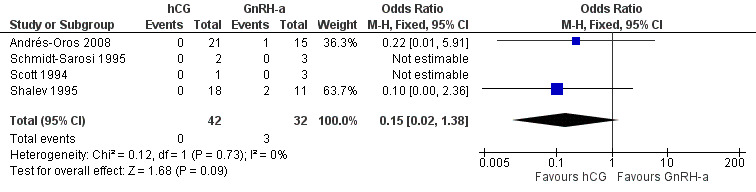
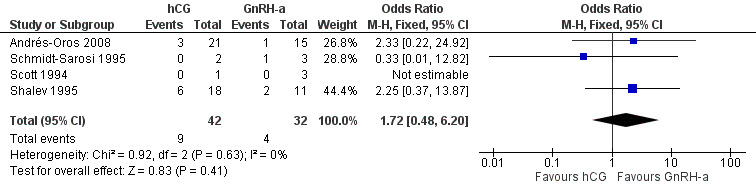
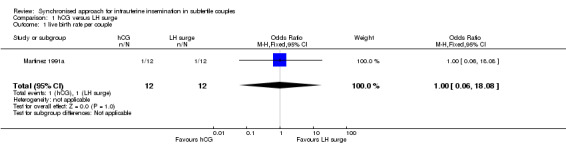
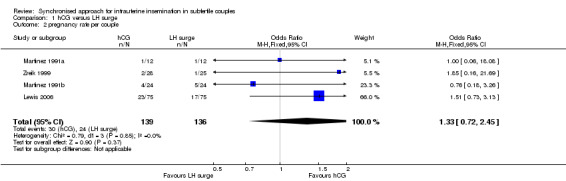
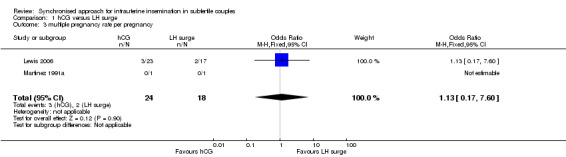
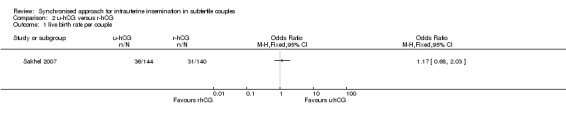
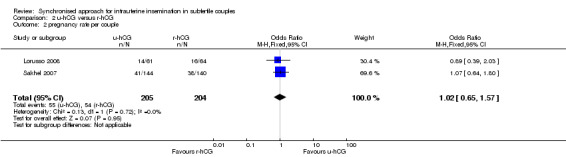
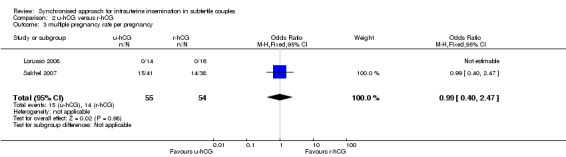
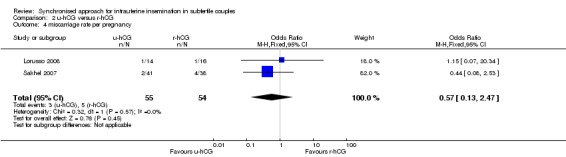
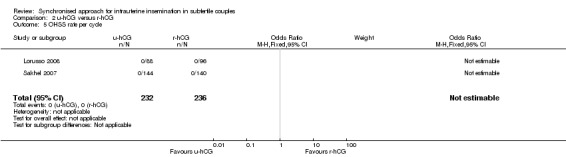
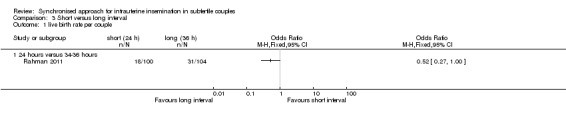
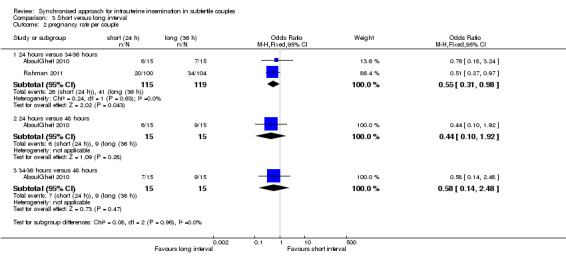
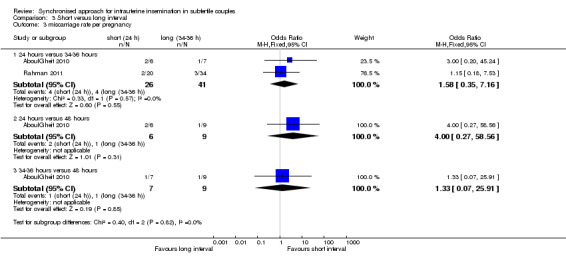
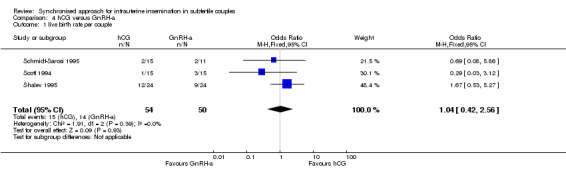
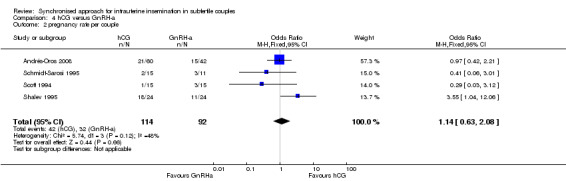
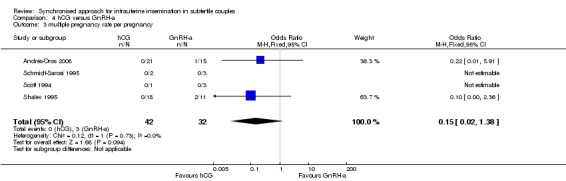
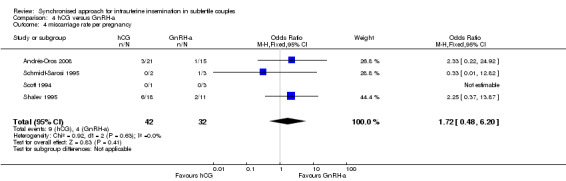
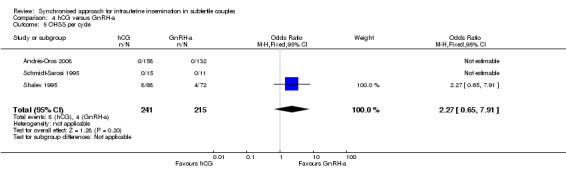
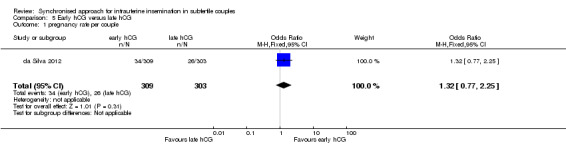
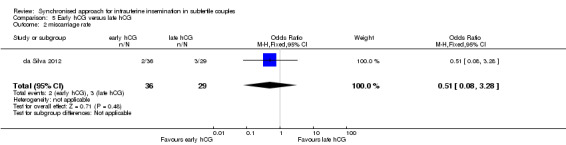
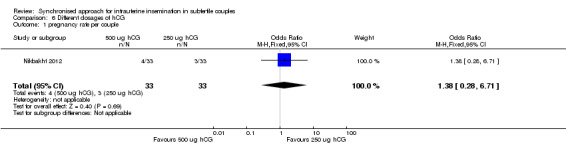
Main results: Eighteen RCTs were included in the review, of which 14 were included in the meta-analyses (in total 2279 couples). The evidence was current to October 2013. The quality of the evidence was low or very low for most comparisons . The main limitations in the evidence were failure to describe study methods, serious imprecision and attrition bias.Ten RCTs compared different methods of timing for IUI. We found no evidence of a difference in live birth rates between hCG injection versus LH surge (odds ratio (OR) 1.0, 95% confidence interval (CI) 0.06 to 18, 1 RCT, 24 women, very low quality evidence), urinary hCG versus recombinant hCG (OR 1.17, 95% CI 0.68 to 2.03, 1 RCT, 284 women, low quality evidence) or hCG versus GnRH agonist (OR 1.04, 95% CI 0.42 to 2.6, 3 RCTS, 104 women, I(2) = 0%, low quality evidence).Two RCTs compared the optimum time interval from hCG injection to IUI, comparing different time frames that ranged from 24 hours to 48 hours. Only one of these studies reported live birth rates, and found no difference between the groups (OR 0.52, 95% CI 0.27 to 1.00, 1 RCT, 204 couples). One study compared early versus late hCG administration and one study compared different dosages of hCG, but neither reported the primary outcome of live birth.We found no evidence of a difference between any of the groups in rates of pregnancy or adverse events (multiple pregnancy, miscarriage, ovarian hyperstimulation syndrome (OHSS)). However, most of these data were very low quality.
Authors' conclusions: There is insufficient evidence to determine whether there is any difference in safety and effectiveness between different methods of synchronization of ovulation and insemination. More research is needed.
Conflict of interest statement
None known for any of the review authors.
Figures
Update of
-
Synchronised approach for intrauterine insemination in subfertile couples.Cochrane Database Syst Rev. 2010 Apr 14;(4):CD006942. doi: 10.1002/14651858.CD006942.pub2. Cochrane Database Syst Rev. 2010. Update in: Cochrane Database Syst Rev. 2014 Dec 21;(12):CD006942. doi: 10.1002/14651858.CD006942.pub3. PMID: 20393953 Updated.
References
References to studies included in this review
AboulGheit 2010 {published data only}
-
- AboulGheit S. Pregnancy rates following three different timings of intrauterine insemination for women with unexplained infertility: A randomised controlled trial. Middle East Fertility Society Journal 2010;15:265‐8.
Andrés‐Oros 2008 {published and unpublished data}
-
- Andrés Orós P, Lamarca Ballestero M, García Aguirre S, Ballesteros Moffa ME, Conte Martín P, Navarro Martín R, Duque Gallo JA. Triggering ovulation in intrauterine insemination cycles with gonadotropin releasing hormone agonist (GnRHa) versus human chorionic gonadotropphin (hCG) [Inducción de la ovulación en ciclos de inseminación intrauterina con análogos de la GnRH (a‐GnRH) versus hormona coriogonadotrópica humana (hCG)]. Revista Iberoamericana de Fertilidad 2008;25(4):223‐8.
Claman 2004 {published and unpublished data}
-
- Claman P, Wilkie V, Collins D. Timing intrauterine insemination either 33 or 39 hours after administration of human chorionic gonadotropin yields the same pregnancy rates as after superovulation therapy. Fertility and Sterility 2004;82(1):13‐6. - PubMed
da Silva 2012 {published data only}
-
- Silva ALB, Arbo E, Fanchin R. Early versus late hCG administration to trigger ovulation in mild stimulated IUI cycles: a randomized clinical trial. European Journal of Obstetrics & Gynecology and Reproductive Biology 2012;164:156‐60. - PubMed
Kyrou 2012 {published data only}
-
- Kyrou D, Kolibianakis EM, Fatemi HM, Grimbizis GF, Theodoridis TD, Camus M, et al. Spontaneous triggering of ovulation versus HCG administration in patients undergoing IUI: a prospective randomized study. Reproductive BioMedicine Online 2012;25(3):278‐83. - PubMed
-
- Kyrou D, Riva A, Verpoest W, Fatemi HM, Tournaye H, Devroey P. What is the optimal moment for IUI in natural cycles? Human chorionic gonadotropin or luteinizing monitoring? Preliminary results of a randomized study.. Fertility and Sterility 2010;94 Suppl 1:170 Abstract no. P‐265.
Lewis 2006 {published data only}
-
- Lewis V, Queenan J, Hoeger K, Stevens J, Guzick GS. Clomiphene citrate monitoring for intrauterine insemination timing: a randomized trial. Fertility and Sterility 2006;85(2):401‐6. - PubMed
Lorusso 2008 {published data only}
-
- Lorusso F, Palmisano M, Serrati G, Bassi E, Lamanna G, Vacca M, Depalo R. Intrauterine insemination with recombinant or urinary human chorionic gonadotropin: A prospective randomized trial. Gynecological Endocrinology 2008;24(11):644‐8. - PubMed
Martinez 1991a {published and unpublished data}
-
- Martinez AR, Bernardus RE, Voorhorst FJ, Vermeiden JP, Schoemaker J. Pregnancy rates after timed intercourse or intrauterine insemination after human menopausal gonadotropin stimulation of normal ovulatory cycles: a controlled study. Fertility and Sterility 1991;55(2):258‐65. - PubMed
Martinez 1991b {published and unpublished data}
-
- Martinez AR, Bernardus RE, Voorhorst FJ, Vermeiden JP, Schoemaker J. A controlled study of human chorionic gonadotrophin induced ovulation versus urinary luteinizing hormone surge for timing of intrauterine insemination. Human Reproduction 1991;6(9):1247‐51. - PubMed
Nikbakht 2012 {published data only}
-
- Nikbakht R, Hemadi M. Comparison of two doses of recombinant Human Chorionic Gonadotropin (rhCG) during ovulation induction in intrauterine insemination cycles: a prospective randomized clinical trial. International Journal of Pharmacology 2012;8(4):259‐64.
Rahman 2011 {published data only}
-
- Rahman SM, Karmakar D, Malhotra N, Kumar S. Timing of intrauterine insemination: an attempt to unravel the enigma. Archives of Gynecology and Obstetrics 2011;284:1023‐7. - PubMed
Sakhel 2007 {published and unpublished data}
-
- Sakhel K, Khedr M, Schwark S, Ashraf M, Fakih MH, Abuzeid M. Comparison of urinary and recombinant hCG during ovulation induction in IUI cycles: a prospective randomized clinical trial. Fertility and Sterility 2007;87(6):1357‐62. - PubMed
Schmidt‐Sarosi 1995 {published data only}
-
- Schmidt‐Sarosi C, Kaplan DR, Sarosi P, Essig MN, Licciardi FL, Keltz M, Levitz M. Ovulation triggering in clomiphene citrate‐stimulated cycles: human chorionic gonadotropin versus a gonadotropin releasing hormone agonist. Journal of Assisted Reproduction and Genetics 1995;12(3):167‐74. - PubMed
Scott 1994 {published and unpublished data}
-
- Scott RT, Bailey SA, Kost ER, Neal GS, Hofmann GE, Illions EH. Comparison of leuprolide acetate and human chorionic gonadotropin for the induction of ovulation in clomiphene citrate‐stimulated cycles. Fertility and Sterility 1994;61(5):872‐9. - PubMed
Shalev 1995 {published and unpublished data}
-
- Shalev E, Geslevich Y, Matilsky M, Ben‐Ami M. Induction of pre‐ovulatory gonadotrophin surge with gonadotrophin‐releasing hormone agonist compared to pre‐ovulatory injection of human chorionic gonadotrophins for ovulation induction in intrauterine insemination treatment cycles. Human Reproduction 1995;10(9):2244‐7. - PubMed
Sharma 2011 {published data only}
-
- Sharma S, Goswami S, Goswami SK, Ghosh S, Chattopadhyay R, Sarkar A, Chakravarty BN. Efficacy of GnRH agonist vs hCG as ovulation trigger in IUI cycle: a prospective randomised study. Human Reproduction 2011;26 Suppl 1:i 306. Abstract P‐476.
Weiss 2010 {published and unpublished data}
-
- Weiss A, Geslevich Y, Beck R, Lavie M, Ayeli V, Shalev E. Optimal timing of intra‐uterine insemination for controlled ovarian stimulation utilizing gonadotropins with GnRH antagonists. Human Reproduction 2010;25(6 Suppl 1):i45‐6. Abstract O‐116.
Zreik 1999 {published data only}
-
- Zreik TG, García Velasco JA, Habboosh MS, Olive DL, Arici A. Prospective, randomized crossover study to evaluate the benefit of human chorionic gonadotropin‐timed versus urinary luteinizing hormone‐timed intrauterine insemination in clomiphene citrate‐stimulated treatment cycles. Fertility and Sterility 1999;71(6):1070‐4. - PubMed
References to studies excluded from this review
Agarwal 1995 {published data only}
-
- Agarwal SK, Buyalos RP. Corpus luteum function and pregnancy rates with clomiphene citrate therapy: Comparison of human chorionic gonadotrophin‐induced versus spontaneous ovulation. Human Reproduction 1995;10(2):328‐31. - PubMed
Arici 1994 {published data only}
-
- Arici A, Byrd W, Bradsha K, Kutteh WH, Marshburn P, Carr BR. Evaluation of clomiphene citrate and human chorionic gonadotropin treatment: a prospective, randomized, crossover study during intrauterine insemination cycles. Fertility and Sterility 1994;61(2):314‐8. - PubMed
Baroni 2001 {published data only}
-
- Baroni E, Ragni G, Guermandi E, Riccaboni A, Arnoldi M, Scarduelli C, Crosignani PG. Timing of intrauterine insemination: the use of GnRH antagonist versus ovulation detection kit in FSH‐stimulated cycles. Human Reproduction 2001;16 Suppl 1:138.
Barratt 1989 {published data only}
-
- Barratt CL, Cooke S, Chauhan M, Cooke ID. A prospective randomized controlled trial comparing urinary luteinizing hormone dipsticks and basal body temperature charts with time donor insemination. Fertility and Sterility 1989;52(3):394‐7. - PubMed
Casadei 2006 {published data only}
-
- Casadei L, Zamaro V, Calcagni M, Ticconi C, Dorrucci M, Piccione E. Homologous intrauterine insemination in controlled ovarian hyperstimulation cycles: A comparison among three different regimes. European Journal of Obstetrics & Gynecology and Reproductive Biology 2006;129:155‐61. - PubMed
Cedrin‐Durnerin 1993 {published data only}
-
- Cedrin‐Durnerin I, Attalah M, Martin B, Fillion C, Tanguy M, Bellais E, et al. Timing of intra‐uterine insemination after induction of ovulation with hCG: randomised study [Programmation de la date de l'insemination intra‐uterine apres declenchement de l'ovulation par hCG. Etude randomisee]. Contraception Fertilite Sexualite 1993;21(5):431.
Check 1994 {published data only}
-
- Check JH, Peymer M, Zaccardo M. Evaluation of whether using hCG to stimulate oocyte release helps or decreases pregnancy rates following intrauterine insemination. Gynecologic and Obstetric Investigation 1994;38(1):57‐9. - PubMed
Claman 2000 {published data only}
-
- Claman P, Wilkie V, Collins D. A short (335 h) compared with a long (395 h) interval between hCG injection and intrauterine insemination after superovulation therapy. Human Reproduction 2000;15:6‐7.
Claman 2004a {published data only}
-
- Claman P, Wilkie V, Collins D. Timing intrauterine insemination either 33 or 39 hours after hCG yields the same pregnancy rates after super‐ovulation therapy. A prospective randomized trial. The 20th Annual Meeting of the European Society of Human Reproduction and Embryology. 2004:i113‐4.
Claraz 1989 {published data only}
-
- Claraz E, Frobert C, Bremond A, Cottinet D. Significance of HCG injection for ovulation induction and of ovulation prediction factors in the practice of artificial insemination using donor sperm. A randomized study. Journal de Gynecologie, Obstetrique et Biologie de la Reproduction 1989;18(8):1049‐54. - PubMed
Costa Franco 2006 {published data only}
-
- Costa Franco AC, Pongiluppi Herbst M. Analyses from variables involved in the intrauterine insemination process in a human reproduction clinic. Jornal Brasileiro de Reproducao Assistida 2006;10(1):22‐4.
Diaz 2003a {published data only}
-
- Diaz I, Guillen A, Pacheco A, Requena A, García‐Velasco JA. Comparison of hormonal profile at final oocyte maturation with GnRH agonist vs hCG in IVI cycles: preliminary study. Revista Iberoamericana de Fertilidad y Reproduccion Humana 2003;20(3):157‐61.
Diaz 2003b {published data only}
-
- Diaz I, Guillen A, Pacheco A, Requena A, Simon C, García Velasco J. Final oocyte maturation with GnRH agonist versus hCG in intrauterine insemination. Human Reproduction 2003;18 Suppl 1:134‐5.
Diaz 2008 {published data only}
-
- Diaz I, Guillen A, Pacheco A, Requena A, Garcia‐Velasco JA. Endocrine modifications associated with final oocyte maturation with gonadotropin‐releasing hormone agonists vs. human chorionic gonadotropin in women undergoing intrauterine insemination. The Journal of Reproductive Medicine 2008;53(1):33‐9. - PubMed
Egbase 2003 {published data only}
-
- Egbase P, Grudzinskas J, Al Sharhan M, Ashkenani L. HCG or GnRH agonist to trigger ovulation in GnRH antagonist‐treated intrauterine insemination cycles: a prospective randomized study. Human Reproduction 2002;17(Abstract book 1):2.
Federman 1990 {published data only}
-
- Federman CA, Demesic DA, Boone WR, Shapiro SS. Relative efficiency of therapeutic donor insemination using a luteinizing hormone monitor. Fertility and Sterility 1990;54(3):489‐92. - PubMed
Fischer 1993 {published data only}
-
- Fischer R, Nakajima S, Gibson M, Brumsted J. Ovulation after intravenous and intramuscular human chorionic gonadotropin. Fertility and Sterility 1993;60:418‐22. - PubMed
Fondop 2005 {published data only}
-
- Fondop JJ, Ventura B, Romoscanu I, Ibecheole V, Stalberg A, Ziegler D. MiniHCG in mild COH responders for limiting multiple pregnancies. The 21st Annual Meeting of the European Society of Human Reproduction and Embryology. 2005:i113.
George 2007 {published data only}
-
- George K, George S, Chandy A, Raju R, Bala S. hCG administration offers no outcome benefit over spontaneous ovulation in anovulatory women treated with clomiphene citrate. Fertility and Sterility 2007;87(4):985‐7. - PubMed
Gerris 1995 {published data only}
-
- Gerris J, Vits A, Joostens M, Royen E. Triggering of ovulation in human menopausal gonadotrophin‐stimulated cycles: comparison between intravenously administered gonadotrophin releasing hormone (100 and 500 ug), GnRH agonist (buserelin 500 ug) and human chorionic gonadotrophin (10000 IU). Human Reproduction 1995;10(1):56‐62. - PubMed
Gerrits 2011 {published data only}
-
- Gerrits MGF, Heuvel MW, Addo S, Mannaerts B, Peeters PAM. Safety, pharmacokinetics and ovulation induction of the first orally administered low molecular weight LH agonist. Basic & Clinical Pharmacology & Toxicology 2011;109 Suppl 1:70.
Ghanem 2011 {published data only}
-
- Ghanem ME, Bakre NI, Emam MA, Al Boghdady LA, Helal AS, Elmetwally AG, Hassan M, et al. The effect of timing of intrauterine insemination in relation to ovulation and the number of inseminations on cycle pregnancy rate in common infertility etiologies. Human Reproduction 2011;26(3):576‐83. - PubMed
Ghazizadeh 2009 {published data only}
-
- Ghazizadeh S, Pourmatroud E, Shariat M, Masomi M, Bagheri M. Study of positive and negative consequences of using GnRH antagonist in intrauterine insemination cycles. International Journal of Fertility and Sterility 2009;3(2):56‐61.
Ghosh Dastidar 2009 {published data only}
-
- Ghosh Dastidar S, Ghosh Dastidar B. The impact of LH supplementation in controlled ovarian stimulation with recombinant FSH and GnRH antagonist in IUI cycle. Human Reproduction 2009;24 Suppl 1:i43. O‐106.
Int rhCG study group 2001 {published data only}
-
- International Recombinant Human Chorionic Gonadotropin Study Group. Induction of ovulation in World Health Organization group II anovulatory women undergoing follicular stimulation with recombinant human follicle‐stimulating hormone: a comparison of recombinant human chorionic gonadotropin (rhCG) and urinary hCG. Fertility and Sterility 2001;75(6):1111‐8. - PubMed
Khattab 2005 {published data only}
-
- Khattab AF, Mustafa FA, Taylor PJ. The use of urine LH detection kits to time intrauterine insemination with donor sperm. Human Reproduction 2005;20(9):2542‐5. - PubMed
Kossoy 1989 {published data only}
-
- Kossoy LR, Hill GA, Parker RA, Rogers BJ, Dalglish CS, Herbert GM 3rd, Wentz AC. Luteinizing hormone and ovulation timing in a therapeutic donor insemination program using frozen semen. American Journal of Obstetrics and Gynecology 1989;160(5 part 1):1169‐72. - PubMed
Kotecki 2005 {published data only}
-
- Kotecki JA, Dzik A, Freitas GC, Soares JB, Bahamondes LG, Cavagna M. Comparison of Five different ovarian stimulation protocols for intrauterine insemination. A prospective randomized trial. 61st Annual Meeting of the American Society for Reproductive Medicine 2005;84 Suppl 1:93‐4.
Lewis 2002 {published data only}
-
- Lewis V, Guzick D. Clomiphene and intrauterine insemination (IUI) ‐ what is the best way to time insemination?. Fertility and Sterility 2002;78 Suppl 1(3):154.
Lewis 2003 {published and unpublished data}
-
- Lewis V, Guzick D. Is administration of hCG in a clomiphene cycle cost effective?. 59th Annual Meeting of the American Society for Reproductive Medicine 2003;80 Suppl 3:213.
Martinez 1994 {published data only}
-
- Martinez AR, Bernardus RE, Vermeiden JPW, Schoemaker J. Time schedules of intrauterine insemination after urinary luteinizing hormone surge detection and pregnancy results. Gynecological Endocrinology 1994;8(1):1‐5. - PubMed
Meherji 2004 {published data only}
-
- Meherji PK. Intrauterine insemination in the management of infertility. Indian Journal of Medical Research 2004;120(6):507‐9. - PubMed
Nulsen 1993 {published data only}
-
- Nulsen JC, Walsh S, Dumez S, Metzger DA. A randomized and longitudinal study of human menopausal gonadotropin with intrauterine insemination in the treatment of infertility. Obstetrics and Gynecology 1993;82(5):780‐6. - PubMed
Odem 1991 {published data only}
-
- Odem RR, Durso NM, Long CA, Pineda JA, Strickler RC, Gast MJ. Therapeutic donor insemination: a prospective randomized study of scheduling methods. Fertility and Sterility 1991;55(5):976‐82. - PubMed
Panchal 2009 {published data only}
Papageorgiou 1995 {published data only}
-
- Papageorgiou GA, Papageorgiou A, Zafrakas MA. Intrauterine insemination and mild ovarian hyperstimulation as a treatment for male subfertility. Human Reproduction 1995;Abstract book 2, 11th Annual Meeting of ESHRE, Hamburg:85.
Pierson 2002 {published and unpublished data}
-
- Pierson R, Olatunbosun F, Baerwald A, Moustier B, Saunders H, Loumaye E. Recombinant human luteinizing hormone for triggering follicular rupture: a dose finding study in ovulation induction. Fertility and Sterility 2002;78(3):56.
Pirard 2005 {published data only}
-
- Pirard C, Donnez J, Loumaye E. GnRH agonist as novel luteal support: results of a randomized, parallel group, feasibility study using intranasal administration of buserelin. Human Reproduction 2005;20:1798‐804. - PubMed
Propst 2007 {published data only}
-
- Propst AM, Thoppil JJ, Groll JM, Frattarelli JL, Robinson RD, Retzloff MG. Pre‐ovulatory vs ovulatory intrauterine insemination in controlled ovarian hyperstimulation cycles. Fertility and Sterility 2007;88 Suppl 1:172‐3.
Propst 2012 {published data only}
-
- Propst AM, Thoppil JJ, Groll JM, Frattarelli JL, Robinson RD, Retzloff MG. A single pre‐ovulatory IUI at 12 hours after hCG trigger is comparable to a traditional IUI at 36 hours. Fertility and Sterility 2012;3 Suppl:S85‐6.
Ragni 1999 {published data only}
-
- Ragni G, Maggioni P, Guermandi E, Testa A, Baroni E, Colombo M, Crosignani PG. Efficacy of double intrauterine insemination in controlled ovarian hyperstimulation cycles. Fertility and Sterility 1999;72(4):619‐22. - PubMed
Ramon 2009 {published data only}
-
- Ramon O, Matorras R, Corcostegui B, Meabe A, Burgos J, Exposito A, Crisol L. Ultrasound‐guided artificial insemination: a randomized controlled trial. Human Reproduction 2009;24(5):1080‐4. - PubMed
Ramon 2009a {published data only}
-
- Ramon O, Matorras R, Corcostegui B, Meabe A, Burgos J, Exposito A, Crisol L. Ultrasound guided artificial insemination: a randomized controlled trial. Human Reproduction 2009;24 Suppl 1:i45. O‐114 . - PubMed
Robinson 1992 {published data only}
-
- Robinson JN, Lockwood GM, Dalton JD, Franklin PA, Farr MM, Barlow DH. A randomized prospective study to assess the effect of the use of home urinary luteinizing hormone detection on the efficiency of donor insemination. Human Reproduction 1992;7(1):63‐5. - PubMed
Romeu 1997a {published data only}
-
- Romeu A, Monzo A, Diez E, Peiro T, Fernandez P. Triggering ovulation for intrauterine insemination using a GnRH analog or HCG in highly purified FSH‐stimulated cycles. Acta Obstetricia et Gynecologica Scandinavica 1997;76 Suppl:74.
Romeu 1997b {published data only}
Sakhel 2004 {published data only}
-
- Sakhel K, Khedr M, Schwark S, Ashraf M, Fakih MH, Abuzeid M. Comparison between urinary and recombinant hCG during ovulation induction in IUI cycles: a prospective randomized clinical trial. 60th Annual Meeting of the American Society for Reproductive Medicine 2004;82 Suppl 2:238.
Scarpellini 1991 {published data only}
-
- Scarpellini F, Lufino R, Benvenuto P, Scarpellini L, Sbracia M. Efficacy of biochemical vs biological monitoring during the "timing" of the chorionic gonadotropin administration in FSH and HMG stimulated cycles. Acta Europaea Fertilitatis 1991;22(6):329‐32. - PubMed
Shanis 1995 {published data only}
-
- Shanis BS, Check JH. Efficacy of gonadotropin‐releasing hormone agonists to induce ovulation following low‐dose human menopausal gonadotropin stimulation. Recent Progress in Hormone Research 1995;50:483‐6. - PubMed
Silverberg 1991 {published data only}
-
- Silverberg KM, Johnson JV, Olive DL, Schenken RS. A prospective randomized trial to determine the optimal timing of intrauterine insemination following hCG administration after controlled ovarian hyperstimulation. Fertility and Sterility 1991;54:100. - PubMed
Tavaniotou 2003 {published data only}
-
- Tavaniotou A, Devroey P. Effect of human chorionic gonadotropin on luteal luteinizing hormone concentration in natural cycles. Fertility and Sterility 2003;80(3):654‐5. - PubMed
Tonguc 2010 {published data only}
-
- Tonguc E, Var T, Onalan G, Altinbas S, Tokmak A, Karakas N, Gulerman C. Comparison of the effectiveness of single versus double intrauterine insemination with three different timing regimes. Fertility and Sterility 2010;94(4):1267‐70. - PubMed
Wang 2001 {published data only}
-
- Wang C, Horng S, Chang C, Huang H, Wang H, Soong Y. Delayed HCG injection and earlier insemination can improve the outcome of IUI ‐ a novel and simplified protocol. 17th World Congress on Fertility and Sterility 2001;Abstract book:189.
Wang 2006 {published data only}
-
- Wang CW, Horng SG, Chen CK, Wang HS, Huang HY, Soong YK. Delayed timing of human chorionic gonadotropin injection in combination with earlier insemination can improve the outcome of intrauterine insemination. Human Reproduction 2006;21 Suppl:i119.
References to studies awaiting assessment
Aydin 2013 {published data only}
-
- Aydin Y, Hassa H, Oge T, Tokgoz Y. A randomized study of simultaneous hCG administration with intrauterine insemination in stimulated cycles. European Journal of Obstetrics & Gynecology and Reproductive Biology 2013;170:444‐8. - PubMed
Blockeel 2014 {unpublished data only}
-
- Blockeel C, Knez J, Polyzos NP, Vos M, Camus M, Tournaye H. Should an intrauterine insemination with donor semen be performed 1 or 2 days after the spontaneous LH rise? A prospective RCT. Human Reproduction 2014;29(4):697‐703. - PubMed
-
- Blockeel C, Polyzos N, Ermini B, Riva A, Stoop D, Tournaye H, Devroey P. Timing of IUI 24 or 48 hours after spontaneous LH peak. ClinicalTrials.gov June 29, 2012.
Dehghani 2014 {published data only}
-
- Dehghani‐Firouzabai R, Aflatoonian A, Davar R, Farid‐Mojtahedi M. A comparison of pregnancy rate before and after the administration of HCG in intrauterine insemination. Archives of Gynecology and Obstetrics 2014;29(2):429‐32. - PubMed
Mostafa 2014 {published data only}
-
- Mostafa MS, Huseiny AM, Soliman BS, Mohammed MM. Effect of postponing hCG injection after intrauterine insemination on pregnancy rate. Middle East Fertility Society Journal 2014;19(3):183‐6.
References to ongoing studies
OVO R&D 2012 {unpublished data only}
-
- Combining Urinary Luteinizing hormone Testing with ultrasound monitoring in intrauterine insemination cycles. Ongoing study January 2011. - PubMed
Additional references
Andersen 1995
-
- Andersen AG, Als‐Nielsen B, Hornnes PJ, Franch Andersen L. Time interval from human chorionic gonadotrophin (HCG) injection to follicular rupture. Human Reproduction 1995;10(12):3202‐5. - PubMed
Cantineau 2007
-
- Cantineau AE, Cohlen BJ, Dutch IUI Study Group. The prevalence and influence of luteinizing hormone surges in stimulated cycles combined with intrauterine insemination during a prospective cohort study. Fertility and Sterility 2007; Vol. 88, issue 1:107‐12. - PubMed
Cohlen 1998
-
- Cohlen BJ, Velde ER, Kooij RJ, Looman CW, Habbema JD. Controlled ovarian hyperstimulation and intrauterine insemination for treating male subfertility: a controlled study. Human Reproduction 1998;13(6):1553‐8. - PubMed
Cooper 2010
-
- Cooper TG, Noonan E, von Eckardstein S, Auger J, Baker HW, Behre HM, et al. World Health Organization reference values for human semen characteristics. Human Reproduction Update 2010;16(3):231‐45. - PubMed
Higgins 2011
-
- Higgins JPT, Green S (editors). Cochrane Handbook for Systematic Reviews of Interventions Version 5.1.0 [updated March 2011]. The Cochrane Collaboration, 2011. Available from www.cochrane‐handbook.org.
Kosmas 2006
-
- Kosmas IP, Tatsioni A, Fatemi HM, Kolibianakis EM, Tournaye H, Devroey P. Human chorionic gonadotropin administration vs. luteinizing monitoring for intrauterine insemination timing, after administration of clomiphene citrate: a meta‐analysis. Fertility and Sterility 2006;13:607‐12. - PubMed
Kruger 1993
-
- Kruger TF, Du Toit TC, Franken DR, Acosta AA, Oehninger SC, Menkveld R, et al. A new computerized method of reading sperm morphology (strict criteria) is as efficient as technician reading. Fertility and Sterility 1993;59(1):202‐9. - PubMed
Miller 1996
-
- Miller PB, Soules MR. The usefulness of a urinary LH kit for ovulation prediction during menstrual cycles of normal women. Obstetrics and Gynecology 1996;87:13‐7. - PubMed
Steures 2006
-
- Steures P, Steeg JW, Hompes PG, Habbema JD, Eijkemans MJ, Broekmans FJ, et al. Collaborative Effort on the Clinical Evaluation in Reproductive Medicine. Intrauterine insemination with controlled ovarian hyperstimulation versus expectant management for couples with unexplained subfertility and an intermediate prognosis: a randomised clinical trial. Lancet 2006;15(368 (9531)):216‐21. - PubMed
WHO 1980
-
- World Health Organization. Temporal relationships between ovulation and defined changes in the concentration of plasma estradiol‐17 beta, luteinizing hormone, follicle‐stimulating hormone, and progesterone. American Journal of Obstetrics and Gynecology 1980;138(4):383‐90. - PubMed
WHO 1987
-
- World Health Organization. Laboratory Manual for SemenAnalysis and Sperm Cervical Mucus Interaction, revised edition. London/New York: Cambridge University Press, 1987.
WHO 1992
-
- World Health Organization. WHO laboratory manual for the examination of human semen and sperm cervical mucus interaction. Cambridge: Cambridge University Press, 1992.
WHO 2010
-
- World Health Organisation. WHO manual for the examination and processing of human semen. Geneva: World Health Organisation, 2010.
Publication types
MeSH terms
Substances
LinkOut - more resources
Full Text Sources
Other Literature Sources
Medical
