


Impulsive traits and unplanned suicide attempts predict exaggerated prefrontal response to angry faces in the elderly
- PMID: 25529800
- PMCID: PMC4528975
- DOI: 10.1016/j.jagp.2014.10.004
Impulsive traits and unplanned suicide attempts predict exaggerated prefrontal response to angry faces in the elderly
Abstract
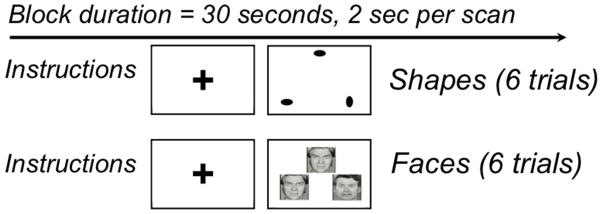
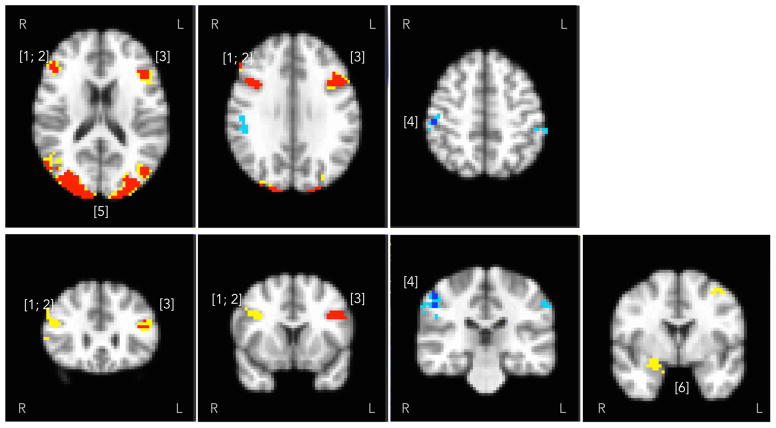
Objective: Abnormal responses to social stimuli are seen in people vulnerable to suicidal behavior, indicating possible disruptions in the neural circuitry mediating the interpretation of socioemotional cues. These disruptions have not been empirically related to psychological and cognitive pathways to suicide. In the present study of older suicide attempters, we examined neural responses to emotional faces and their relationship to impulsivity, one of the components of the suicidal diathesis.
Methods: Using functional magnetic resonance imaging, we recorded neurohemodynamic responses to angry faces in a carefully characterized sample of 18 depressed elderly with history of suicide attempts, 13 depressed nonsuicidal patients, and 18 healthy individuals, all aged 60+. Impulsivity was assessed with the Social Problem Solving Inventory Impulsivity/Carelessness Style subscale and Barratt Impulsiveness Scale. The Suicide Intent Scale planning subscale was used to describe the degree of planning associated with the most lethal attempt.
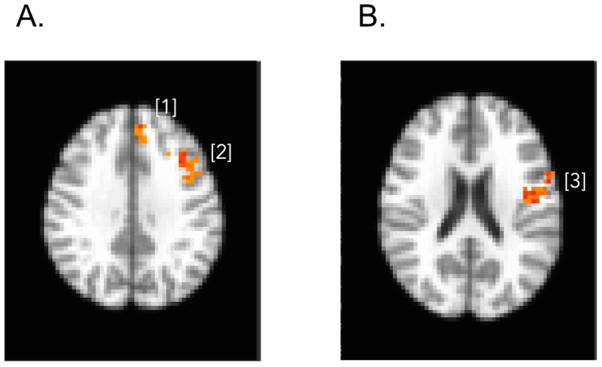
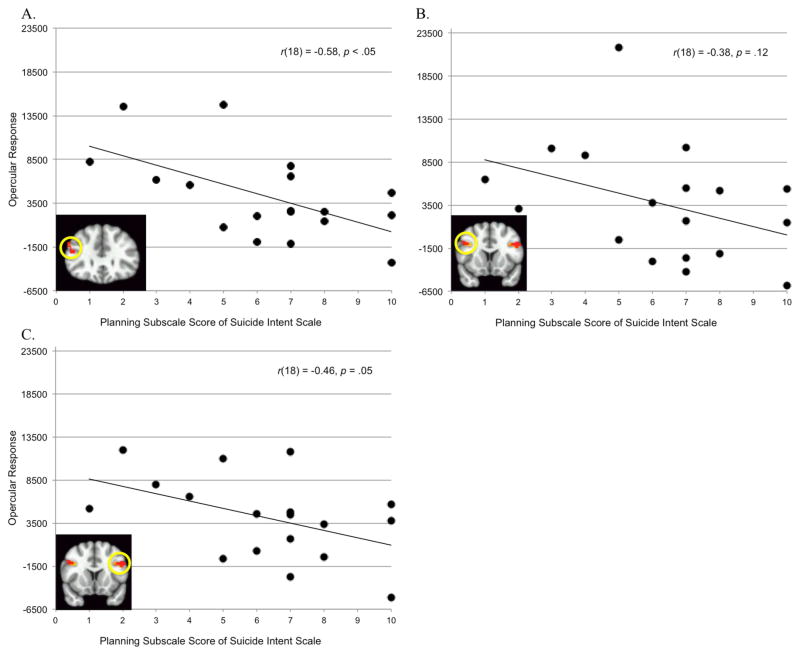
Results: Depression and history of attempted suicide were not associated with neural responses to angry faces, failing to replicate earlier studies. Higher impulsivity, however, predicted exaggerated responses to angry faces in fronto-opercular and dorsomedial prefrontal cortex (pcorr <0.05). Poorly planned suicide attempts also predicted increased fronto-opercular responses. Results were robust to effects of medication exposure, comorbid anxiety and addiction, severity of depression, burden of physical illness, and possible brain injury from suicide attempts.
Conclusion: Impulsive traits and history of unplanned suicide attempts partly explain the heterogeneity in neural responses to angry faces in depressed elderly. Displays of social emotion command excessive cortical processing in impulsive suicide attempters.
Keywords: Aging; impulsivity; neuroimaging; prefrontal cortex; social threat; suicide.
Copyright © 2015 American Association for Geriatric Psychiatry. Published by Elsevier Inc. All rights reserved.
Figures
References
Publication types
MeSH terms
Grants and funding
- P30 AG024827/AG/NIA NIH HHS/United States
- UL1 TR000005/TR/NCATS NIH HHS/United States
- P30 MH090333/MH/NIMH NIH HHS/United States
- P60MD000207/MD/NIMHD NIH HHS/United States
- UL1 RR024153/RR/NCRR NIH HHS/United States
- K23 MH070471/MH/NIMH NIH HHS/United States
- T32 MH019986/MH/NIMH NIH HHS/United States
- UL1TR000005/TR/NCATS NIH HHS/United States
- K23MH086620/MH/NIMH NIH HHS/United States
- K23MH070471/MH/NIMH NIH HHS/United States
- P30MH90333/MH/NIMH NIH HHS/United States
- R01 MH085288/MH/NIMH NIH HHS/United States
- R01 MH076079/MH/NIMH NIH HHS/United States
- R01 MH083660/MH/NIMH NIH HHS/United States
- R01 MH100095/MH/NIMH NIH HHS/United States
- UL1RR024153/RR/NCRR NIH HHS/United States
- P60 MD000207/MD/NIMHD NIH HHS/United States
- K01 MH097091/MH/NIMH NIH HHS/United States
- R01 MH085651/MH/NIMH NIH HHS/United States
- K23 MH086620/MH/NIMH NIH HHS/United States
- R01 HL114016/HL/NHLBI NIH HHS/United States
- 5R01MH085651/MH/NIMH NIH HHS/United States
- R01 MH091448/MH/NIMH NIH HHS/United States
- R34 MH096997/MH/NIMH NIH HHS/United States
LinkOut - more resources
Full Text Sources
Other Literature Sources
Medical
