


Perceived barriers to smoking cessation in selected vulnerable groups: a systematic review of the qualitative and quantitative literature
- PMID: 25534212
- PMCID: PMC4275698
- DOI: 10.1136/bmjopen-2014-006414
Perceived barriers to smoking cessation in selected vulnerable groups: a systematic review of the qualitative and quantitative literature
Abstract
Objectives: To identify barriers that are common and unique to six selected vulnerable groups: low socioeconomic status; Indigenous; mental illness and substance abuse; homeless; prisoners; and at-risk youth.
Design: A systematic review was carried out to identify the perceived barriers to smoking cessation within six vulnerable groups.
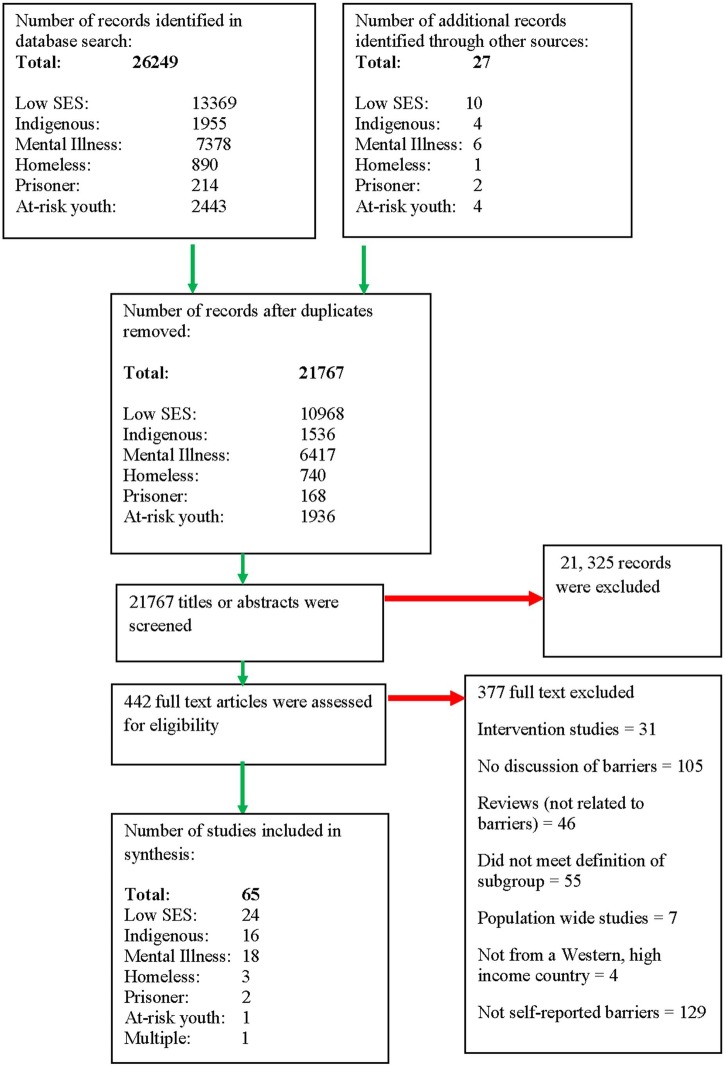
Data sources: MEDLINE, EMBASE, CINAHL and PsycInfo were searched using keywords and MeSH terms from each database's inception published prior to March 2014.
Study selection: Studies that provided either qualitative or quantitative (ie, longitudinal, cross-sectional or cohort surveys) descriptions of self-reported perceived barriers to quitting smoking in one of the six aforementioned vulnerable groups were included.
Data extraction: Two authors independently assessed studies for inclusion and extracted data.
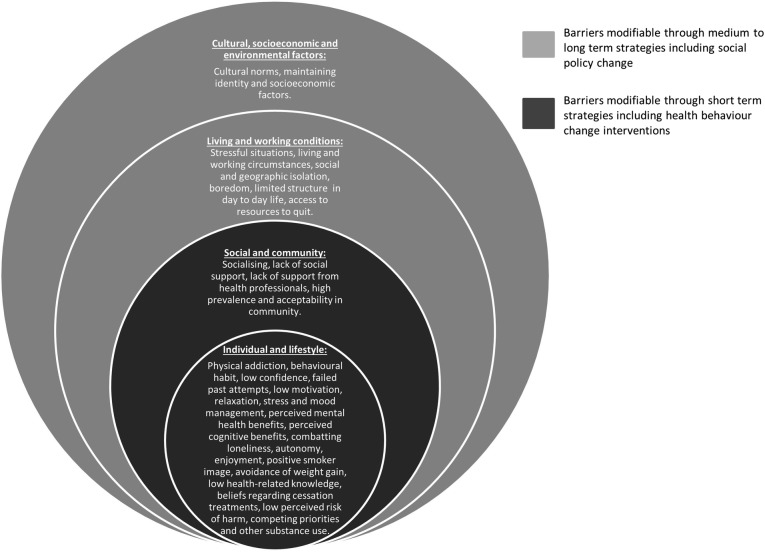
Results: 65 eligible papers were identified: 24 with low socioeconomic groups, 16 with Indigenous groups, 18 involving people with a mental illness, 3 with homeless groups, 2 involving prisoners and 1 involving at-risk youth. One study identified was carried out with participants who were homeless and addicted to alcohol and/or other drugs. Barriers common to all vulnerable groups included: smoking for stress management, lack of support from health and other service providers, and the high prevalence and acceptability of smoking in vulnerable communities. Unique barriers were identified for people with a mental illness (eg, maintenance of mental health), Indigenous groups (eg, cultural and historical norms), prisoners (eg, living conditions), people who are homeless (eg, competing priorities) and at-risk youth (eg, high accessibility of tobacco).
Conclusions: Vulnerable groups experience common barriers to smoking cessation, in addition to barriers that are unique to specific vulnerable groups. Individual-level, community-level and social network-level interventions are priority areas for future smoking cessation interventions within vulnerable groups.
Trial registration number: A protocol for this review has been registered with PROSPERO International Prospective Register of Systematic Reviews (Identifier: CRD42013005761).
Keywords: barriers; disadvantage; review; smoking cessation; vulnerable populations.
Published by the BMJ Publishing Group Limited. For permission to use (where not already granted under a licence) please go to http://group.bmj.com/group/rights-licensing/permissions.
Figures
References
-
- World Health Organization (WHO). WHO report on the Global Tobacco Epidemic Geneva, 2008.
-
- Australian Institute of Health and Welfare (AIHW). 2010 National Drug Strategy Household Survey: detailed findings. Canberra, 2010. Contract No.: Cat. no. PHE145.
-
- Australian Institute of Health and Welfare. The health and welfare of Australia's Aboriginal and Torres Strait Islander people, an overview 2011. Canberra, 2011. Contract No.: Cat. no. IHW 42.
-
- Centers for Disease Control Prevention (CDCP). Current cigarette smoking among adults—United States, 2011. MMWR Morb Mortal Wkly Rep 2012;61:889–4. - PubMed
-
- Statistics Canada. Canadian Community Health Survey 2000/01. Ottawa: Statistics Canada, 2001.
Publication types
MeSH terms
LinkOut - more resources
Full Text Sources
Other Literature Sources
Medical
