


Limits to compensatory adaptation and the persistence of antibiotic resistance in pathogenic bacteria
- PMID: 25535278
- PMCID: PMC4323496
- DOI: 10.1093/emph/eou032
Limits to compensatory adaptation and the persistence of antibiotic resistance in pathogenic bacteria
Abstract
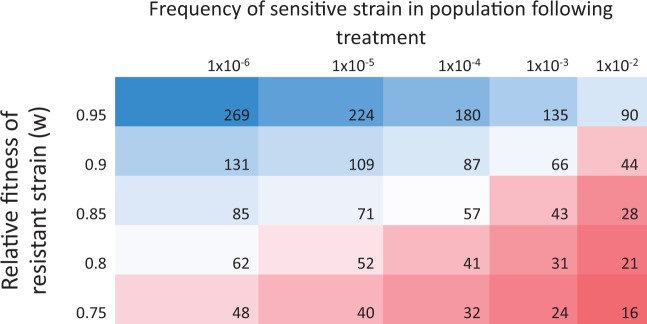
Antibiotic resistance carries a fitness cost that could potentially limit the spread of resistance in bacterial pathogens. In spite of this cost, a large number of experimental evolution studies have found that resistance is stably maintained in the absence of antibiotics as a result of compensatory evolution. Clinical studies, on the other hand, have found that resistance in pathogen populations usually declines after antibiotic use is stopped, suggesting that compensatory adaptation is not effective in vivo. In this article, we argue that this disagreement arises because there are limits to compensatory adaptation in nature that are not captured by the design of current laboratory selection experiments. First, clinical treatment fails to eradicate antibiotic-sensitive strains, and competition between sensitive and resistant strains leads to the rapid loss of resistance following treatment. Second, laboratory studies overestimate the efficacy of compensatory adaptation in nature by failing to capture costs associated with compensatory mutations. Taken together, these ideas can potentially reconcile evolutionary theory with the clinical dynamics of antibiotic resistance and guide the development of strategies for containing resistance in clinical pathogens.
Keywords: antibiotic resistance, fitness cost; clinical microbiology; compensatory adaptation; experimental evolution.
© The Author(s) 2014. Published by Oxford University Press on behalf of the Foundation for Evolution, Medicine, and Public Health.
Figures
References
-
- Andersson DI. The biological cost of mutational antibiotic resistance: any practical conclusions? Curr Opin Microbiol. 2006;9:461–5. - PubMed
-
- Andersson DI, Hughes D. Antibiotic resistance and its cost: is it possible to reverse resistance? Nat Rev Microbiol. 2010;8:260–71. - PubMed
-
- Baltrus DA. Exploring the costs of horizontal gene transfer. Trends Ecol Evol. 2013;28:489–95. - PubMed
-
- MacLean RC, Hall AR, Perron GG, et al. The population genetics of antibiotic resistance: integrating molecular mechanisms and treatment contexts. Nat Rev Genet. 2010;11:405–14. - PubMed
Publication types
Grants and funding
LinkOut - more resources
Full Text Sources
Other Literature Sources
