Acute illness is associated with suppression of the growth hormone axis in Zimbabwean infants
- PMID: 25535308
- PMCID: PMC4347356
- DOI: 10.4269/ajtmh.14-0448
Acute illness is associated with suppression of the growth hormone axis in Zimbabwean infants
Abstract
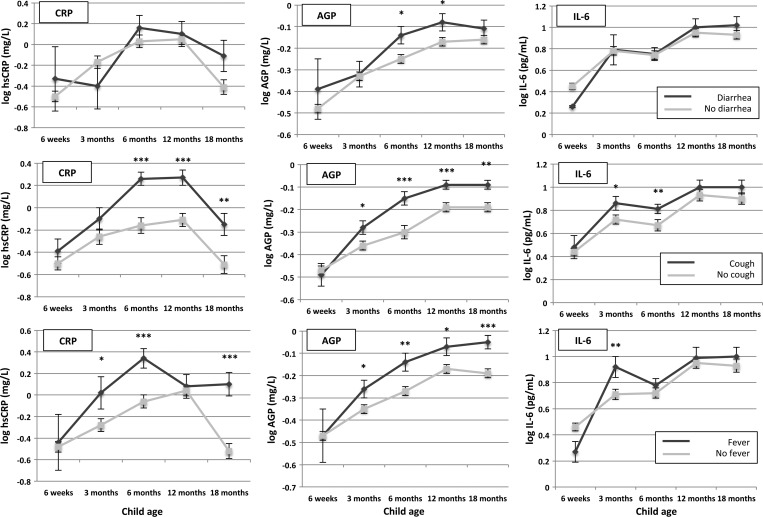
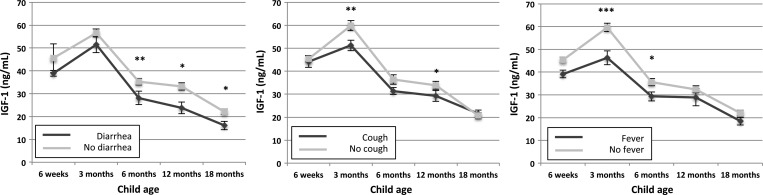
Frequent infections contribute to childhood stunting in developing countries but the causal pathways are uncertain. We tested the hypothesis that intercurrent illnesses suppress the growth hormone axis through reductions in insulin-like growth factor 1 (IGF-1). In a birth cohort of 202 HIV-unexposed Zimbabwean infants, we analyzed data on 7-day illness recall and measured plasma interleukin-6, C-reactive protein, alpha-1-acid glycoprotein, and IGF-1 by enzyme-linked immunosorbent assay, at age 6 weeks, and then 3, 6, 12, and 18 months. Children with recent acute illness had lower IGF-1 concentrations than healthy children and IGF-1 correlated inversely (P < 0.05) with inflammatory biomarkers at most time points between 3 and 18 months. Using path analysis, we showed that cough and fever had a predominantly indirect effect on suppressing IGF-1, through the acute-phase response, whereas diarrhea had a predominantly direct effect on IGF-1. Acute illness may therefore impact the growth hormone axis through both direct and indirect pathways.
© The American Society of Tropical Medicine and Hygiene.
Figures

References
-
- Victora CG, de Onis M, Hallal PC, Blössner M, Shrimpton R. Worldwide timing of growth faltering: revisiting implications for interventions. Pediatrics. 2010;125:e473–e480. - PubMed
-
- Victora CG. Nutrition in early life: a global priority. Lancet. 2009;374:1123–1125. - PubMed
-
- Mata LJ, Kronmal RA, Garcia B, Butler W, Urrutia JJ, Murillo S. Breast-feeding, weaning and the diarrheal syndrome in a Guatemalan Indian village. Ciba Found Symp. 1976;42:311–338. - PubMed
Publication types
MeSH terms
Substances
Grants and funding
LinkOut - more resources
Full Text Sources
Other Literature Sources
Medical
Research Materials
Miscellaneous