Overview of the coagulation system
- PMID: 25535411
- PMCID: PMC4260295
- DOI: 10.4103/0019-5049.144643
Overview of the coagulation system
Abstract
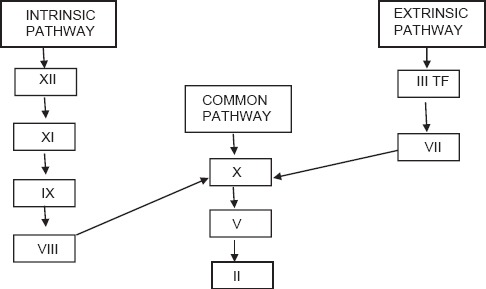
Coagulation is a dynamic process and the understanding of the blood coagulation system has evolved over the recent years in anaesthetic practice. Although the traditional classification of the coagulation system into extrinsic and intrinsic pathway is still valid, the newer insights into coagulation provide more authentic description of the same. Normal coagulation pathway represents a balance between the pro coagulant pathway that is responsible for clot formation and the mechanisms that inhibit the same beyond the injury site. Imbalance of the coagulation system may occur in the perioperative period or during critical illness, which may be secondary to numerous factors leading to a tendency of either thrombosis or bleeding. A systematic search of literature on PubMed with MeSH terms 'coagulation system, haemostasis and anaesthesia revealed twenty eight related clinical trials and review articles in last 10 years. Since the balance of the coagulation system may tilt towards bleeding and thrombosis in many situations, it is mandatory for the clinicians to understand physiologic basis of haemostasis in order to diagnose and manage the abnormalities of the coagulation process and to interpret the diagnostic tests done for the same.
Keywords: Anaesthesia; Coagulation system; haemostasis.
Conflict of interest statement
Figures
References
-
- Achneck HE, Sileshi B, Parikh A, Milano CA, Welsby IJ, Lawson JH. Pathophysiology of bleeding and clotting in the cardiac surgery patient: from vascular endothelium to circulatory assist device surface. Circulation. 2010;122:2068–77. - PubMed
-
- Thornton P, Douglas J. Coagulation in pregnancy. Best Pract Res Clin Obstet Gynaecol. 2010;24:339–52. - PubMed
-
- Bombeli T, Spahn DR. Updates in perioperative coagulation: Physiology and management of thromboembolism and haemorrhage. Br J Anaesth. 2004;93:275–87. - PubMed
Publication types
LinkOut - more resources
Full Text Sources
Other Literature Sources
Medical