. 2014 Dec 23:3:e05352.
doi: 10.7554/eLife.05352.

Corticothalamic phase synchrony and cross-frequency coupling predict human memory formation

Affiliations

Corticothalamic phase synchrony and cross-frequency coupling predict human memory formation

Catherine M Sweeney-Reed et al. Elife. .

Abstract

The anterior thalamic nucleus (ATN) is thought to play an important role in a brain network involving the hippocampus and neocortex, which enables human memories to be formed. However, its small size and location deep within the brain have impeded direct investigation in humans with non-invasive techniques. Here we provide direct evidence for a functional role for the ATN in memory formation from rare simultaneous human intrathalamic and scalp electroencephalogram (EEG) recordings from eight volunteering patients receiving intrathalamic electrodes implanted for the treatment of epilepsy, demonstrating real-time communication between neocortex and ATN during successful memory encoding. Neocortical-ATN theta oscillatory phase synchrony of local field potentials and neocortical-theta-to-ATN-gamma cross-frequency coupling during presentation of complex photographic scenes predicted later memory for the scenes, demonstrating a key role for the ATN in human memory encoding.

Keywords: cross-frequency coupling; human; memory; neuroscience; synchrony; thalamus.


Conflict of interest statement

The authors declare that no competing interests exist.

Figures
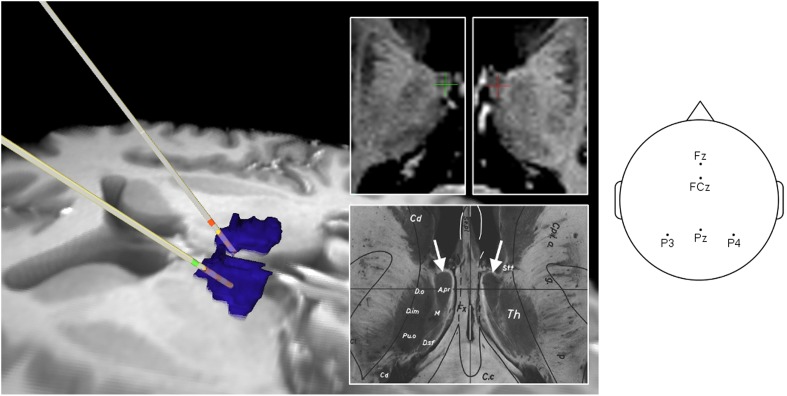
Figure 1.
Figure 1.. Intracranial electrode location in Participant 1.
Left: Reconstruction of intrathalamic contact location using intraoperative X-ray image coordinates, superimposed on preoperative MRI scan. Dorsomedial thalamic nucleus (DMTN): blue (localized using masks from Wake Forest University Pick Atlas [http://fmri.wfubmc.edu/software/PickAtlas (Maldjian et al., 2003)] warped into participant's brain space). Anterior thalamic nucleus (ATN) contacts: green (left), red (right). Middle: Most superficial contacts (upper panel) clearly lie in the ATN, by reference to Schaltenbrand atlas (Schaltenbrand and Wahren, 1977) (lower panel: A. pr. = nucleus anterior principalis). Right: Scalp electrode locations for this participant. DOI:http://dx.doi.org/10.7554/eLife.05352.003
Figure 2.
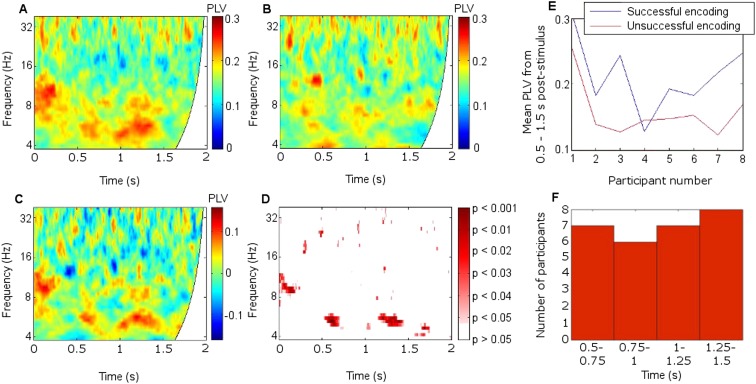
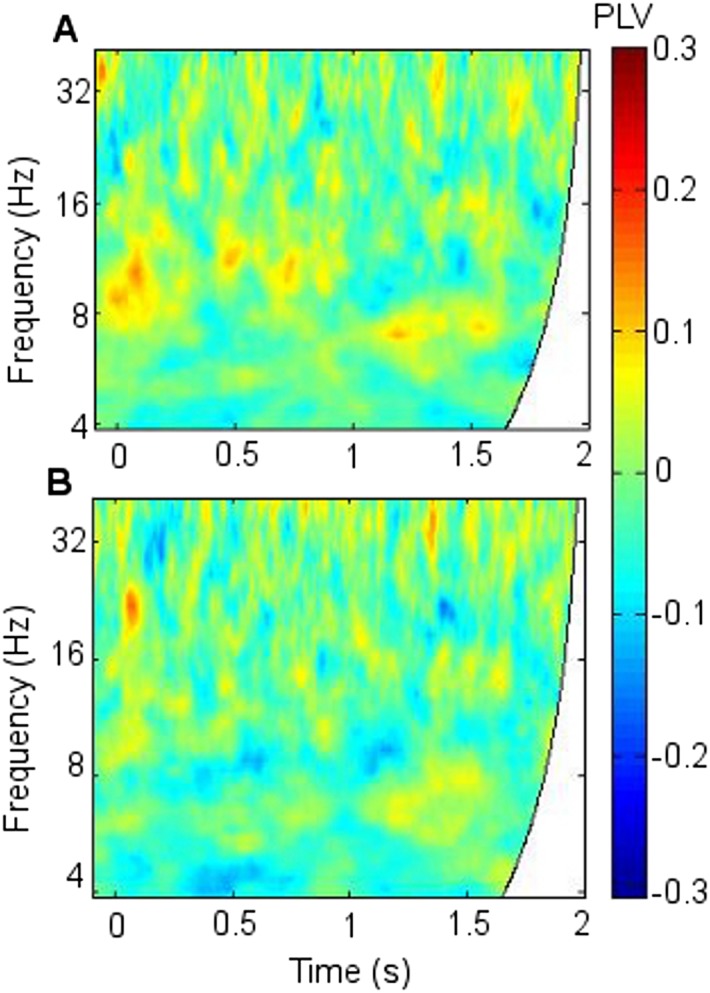
Figure 2.. Frontal-right anterior thalamic nucleus (RATN) phase synchrony.
PLV = phase-locking value. (A) Successful encoding. (B) Unsuccessful encoding. (C) Successful minus unsuccessful encoding. (D) Permutation tests: Successful minus unsuccessful encoding. (E) Mean theta (5.2 Hz) PLVs for successful encoding and unsuccessful encoding averaged from 0.5 to 1.5 s for the eight individual participants. (F) Number of participants showing greater theta synchrony during successful compared with unsuccessful encoding in four sub-time-windows from 0.5 to 1.5 s. DOI:http://dx.doi.org/10.7554/eLife.05352.005
Figure 2—figure supplement 1.
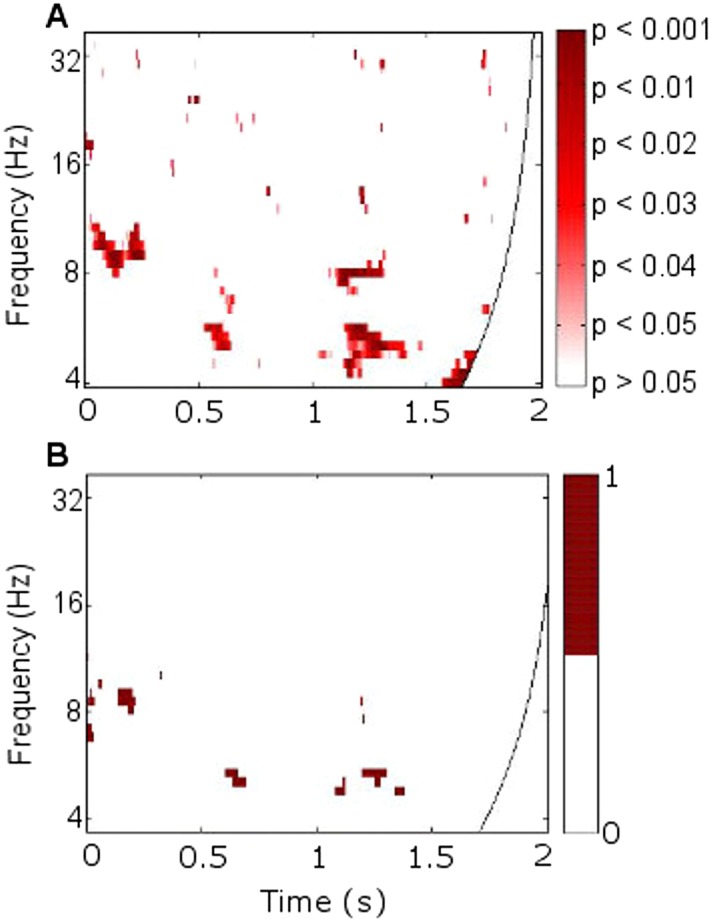
Figure 2—figure supplement 1.. Significance of phase synchrony between frontal neocortex and right anterior thalamic nucleus (RATN).
(A) Statistical significance (uncorrected) of the difference between phase-locking values (PLVs) during successful vs unsuccessful encoding using paired T-tests. The pattern of significance in early upper theta and alpha from 0 to 0.2 s (T = 5.6, p = 0.00085) and theta from 0.5 to 1.5 s (T = 9.9, p = 0.000022) resembles that detected by permutation testing (see Figure 2D). The second theta cluster in the later time window was significant on cluster-size permutation testing (p = 0.016). (B) The time-frequency of PLVs that differed significantly between successful and unsuccessful encoding after false discovery rate correction of the permutation-test results shown in Figure 2D, which yielded p = 0.0019 for significance at criterion p = 0.05. 1 = significant after correction. 0 = not significant after correction. DOI:http://dx.doi.org/10.7554/eLife.05352.006
Figure 2—figure supplement 2.
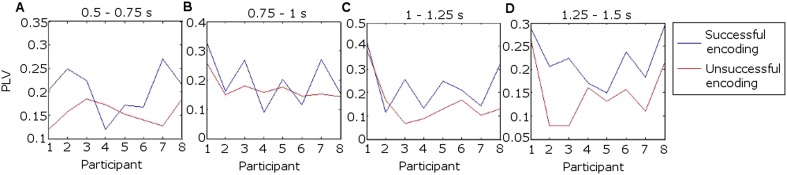
Figure 2—figure supplement 2.. Mean theta (5.2 Hz) phase-locking value (PLV) between frontal neocortex and right anterior thalamic nucleus (RATN) over four consecutive time windows from 0.5 to 1.5 s.
(A) Theta synchrony was greater during successful than during unsuccessful encoding in seven of eight participants. (B) Synchrony was greater during successful encoding in six of eight participants. (C) Synchrony was greater during successful encoding in seven of eight participants. (D) Synchrony was greater during successful encoding in all eight participants. (Participant 4 showed greater synchrony during successful encoding from 1 to 1.5 s, but the overall difference as shown in Figure 2E was absent due to lesser synchrony from 0.5 to 1 s, as shown in Figure 2F). DOI:http://dx.doi.org/10.7554/eLife.05352.007
Figure 2—figure supplement 3.
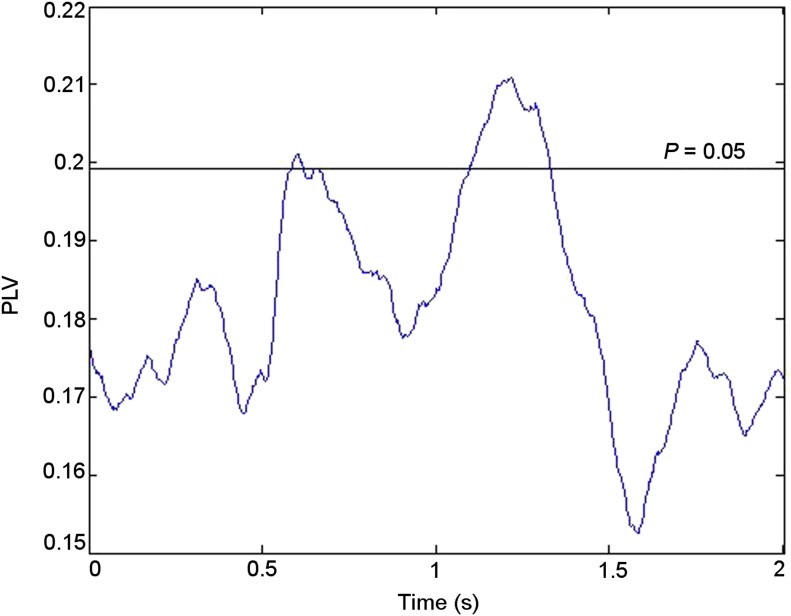
Figure 2—figure supplement 3.. Time course of theta phase synchrony.
Group mean theta (4–8 Hz) phase-locking values (PLVs) during successful memory formation. Synchrony was significant (criterion p = 0.05) compared with phase-scattered surrogate data in two episodes between 0.5 and 1.5 s post-stimulus. DOI:http://dx.doi.org/10.7554/eLife.05352.008
Figure 2—figure supplement 4.
Figure 2—figure supplement 4.. Frontothalamic synchrony involving other thalamic nuclei.
Average difference in phase synchrony during successful compared with unsuccessful encoding. (A) Phase-locking values (PLVs) between frontal neocortex and right dorsomedial thalamic nucleus (DMTN; seven participants: one participant had no DMTN contact). (B) PLVs between frontal neocortex and left anterior thalamic nucleus (ATN). Significant synchrony patterns (Figure 2—figure supplement 1) were observed only in the right ATN. DOI:http://dx.doi.org/10.7554/eLife.05352.009
Figure 2—figure supplement 5.
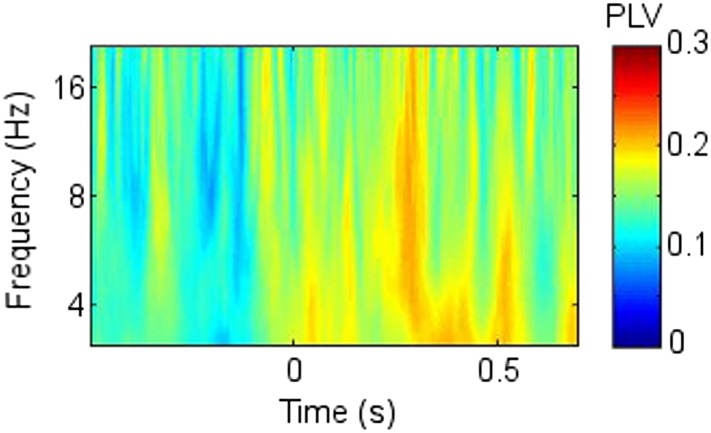
Figure 2—figure supplement 5.. Synchrony using 1-cycle wavelets to enhance time resolution.
PLV = phase-locking value. Average phase synchrony between frontal neocortex and right anterior thalamic nucleus (RATN) for all eight participants during successful encoding. The early upper theta and alpha synchrony (Figure 2—figure supplement 1) was post-stimulus. DOI:http://dx.doi.org/10.7554/eLife.05352.010
Figure 2—figure supplement 6.
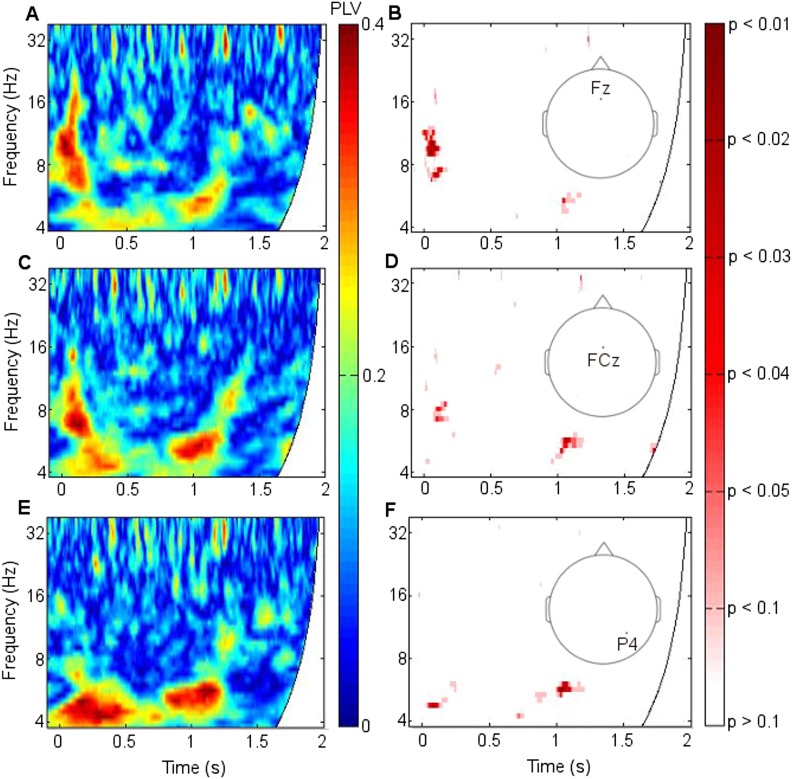
Figure 2—figure supplement 6.. Corticothalamic phase synchrony in Participant 1.
PLV = phase-locking value. Left: Phase synchrony between frontal and parietal neocortex and right anterior thalamic nucleus (RATN) during successful encoding. Right: Significance of difference in synchrony between successful and unsuccessful encoding (uncorrected p values), calculated using permutation tests. (A) Synchrony with Fz (frontal neocortex). (B) Significance of difference for Fz (early p = 0.008; late p = 0.035). (C) Synchrony for FCz (frontocentral neocortex). (D) Significance of difference for FCz (early: p = 0.037; late p = 0.018). (E) Synchrony with P4 (right parietal neocortex). (F) Significance of difference for P4 (early: p = 0.019; late: p = 0.008). DOI:http://dx.doi.org/10.7554/eLife.05352.011
Figure 2—figure supplement 7.
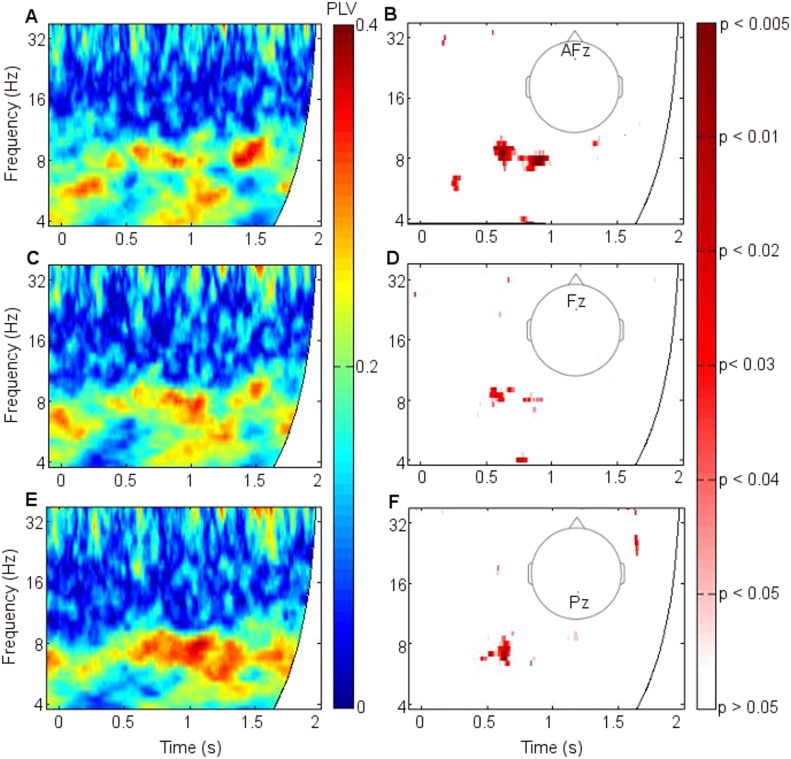
Figure 2—figure supplement 7.. Corticothalamic phase synchrony in Participant 2.
PLV = phase-locking value. Left: Phase synchrony between frontal and parietal neocortex and right anterior thalamic nucleus (RATN) during successful encoding. Right: Significance of difference in synchrony between successful and unsuccessful encoding (uncorrected p values), calculated using permutation tests. (A) Synchrony with AFz (anterior frontal neocortex). (B) Significance of difference for AFz (early: p = 0.025; late: p = 0.004). (C) Synchrony with Fz (frontal neocortex). (D) Significance of difference for Fz (early: p = 0.046; late: p = 0.019). (E) Synchrony with Pz (central parietal neocortex). (F) Significance of difference for Pz (early: p = 0.046; late: p = 0.007). DOI:http://dx.doi.org/10.7554/eLife.05352.012
Figure 2—figure supplement 8.
Figure 2—figure supplement 8.. Power difference between successful and unsuccessful encoding.
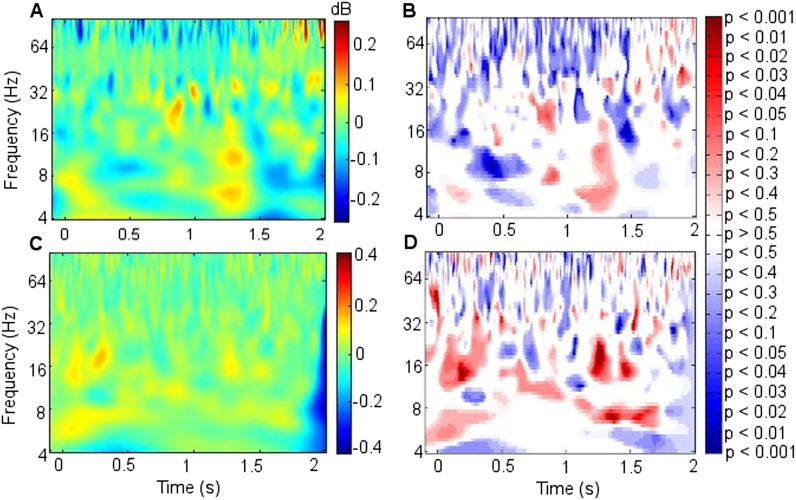
Power during successful minus unsuccessful encoding, and significance of the difference (uncorrected p values) between mean power spectra calculated using paired T-tests. (A) Mean frontal theta power during successful minus during unsuccessful encoding. (B) Frontal theta power was somewhat greater during successful than during unsuccessful encoding in the time-window in which theta phase synchrony significantly differed (0.5–1.5 s post-stimulus), but the difference was not significant (T = 1.90, p = 0.10). (C) Mean right anterior thalamic nucleus (RATN) theta power during successful minus during unsuccessful encoding. (D) RATN theta power differed significantly (T = 4.01, p = 0.0051) only briefly and at the end of the time-window in which theta phase synchrony significantly differed (0.5–1.5 s post-stimulus). The absence of frontal and RATN theta power differences at the time that memory-related frontal-RATN theta synchrony occurred confirms that this synchrony reflected timing rather than amplitude information. DOI:http://dx.doi.org/10.7554/eLife.05352.013
Figure 2—figure supplement 9.
Figure 2—figure supplement 9.. Synchrony with differing cortical sites.
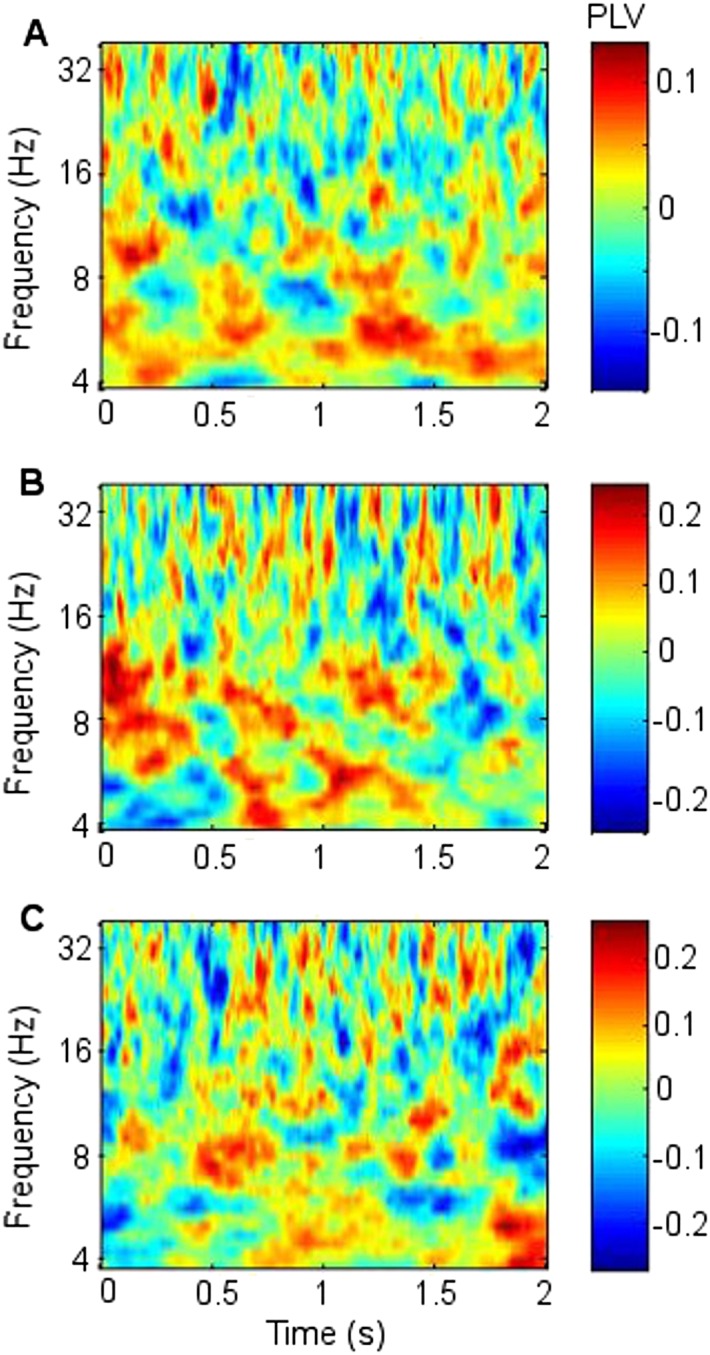
The mean difference between frontal-right anterior thalamic nucleus phase-locking values (PLVs) during successful minus during unsuccessful encoding across participants. (A) Across the six participants with electrodes at Fpz. (B) Across the two participants with electrodes at AFz and Fz. (C) Across the two participants with electrodes at Pz. DOI:http://dx.doi.org/10.7554/eLife.05352.014
Figure 3.
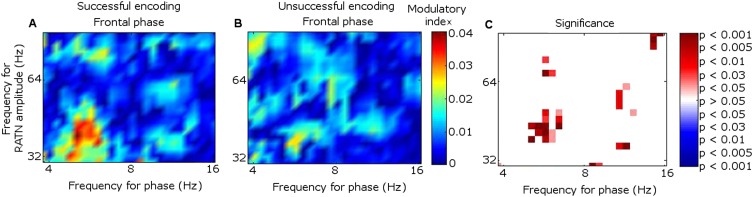
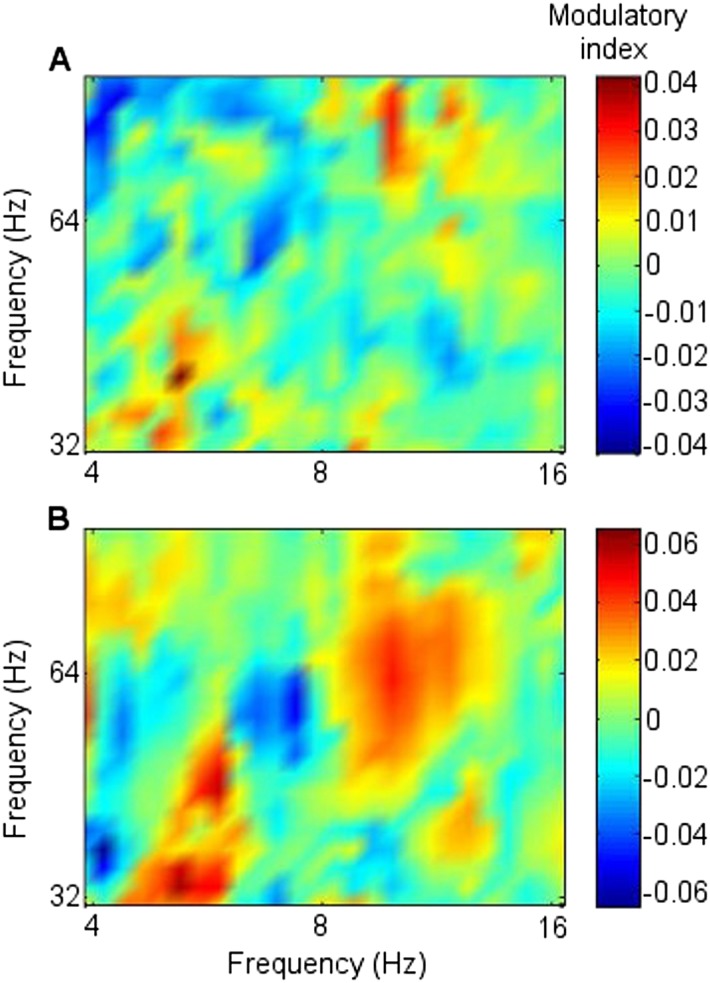
Figure 3.. Frontal-right anterior thalamic nucleus (RATN) cross-frequency coupling (CFC).
(A) Successful encoding. (B) Unsuccessful encoding. (C) Paired T-tests: Successful minus unsuccessful encoding. DOI:http://dx.doi.org/10.7554/eLife.05352.015
Figure 3—figure supplement 1.
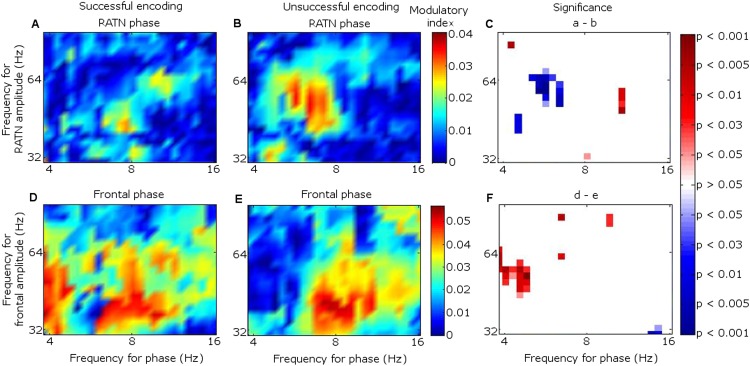
Figure 3—figure supplement 1.. Cross-frequency coupling (CFC) within right anterior thalamic nucleus (RATN) and within frontal neocortex.
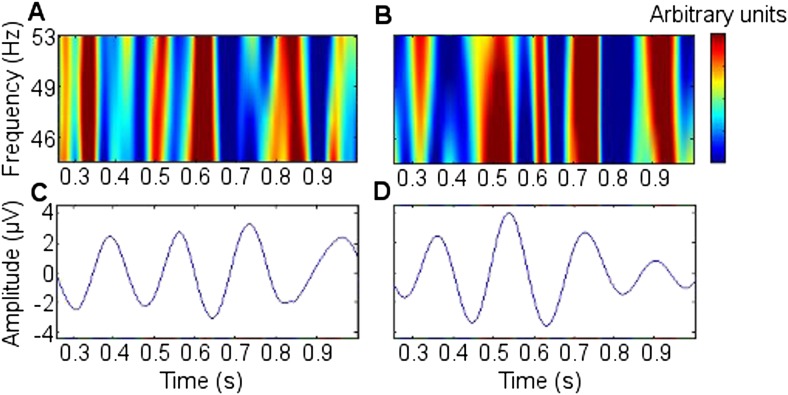
(A) Successful encoding: within-RATN coupling. (B) Unsuccessful encoding: within-RATN coupling over wider gamma range. (C) Successful minus unsuccessful encoding: paired TT-tests (TT): T = 3.6, p = 0.0086 (uncorrected p values), on which a cluster-size permutation test (CSPT) was performed (CSPT: p = 0.045; observed contiguous cluster 15 pixels; criterial cluster 14 pixels for overall p = 0.05). Note: the blue portion of the scale indicates significantly greater coupling during unsuccessful than successful encoding at higher gamma frequencies. (D) Successful encoding: greater within-frontal lower-frequency-theta to gamma coupling (trough-to-peak); higher-frequency-theta to gamma coupling (peak to peak). (E) Unsuccessful encoding: higher-frequency-theta to gamma coupling (peak-to-peak). (F) Successful minus unsuccessful encoding: TT: T = 3.6, p = 0.0087 (uncorrected p values), on which CSPT was performed (CSPT: p = 0.017; observed contiguous cluster 19 pixels; criterial cluster 11 pixels for overall p = 0.05). Note: the red portion of the scale indicates significantly greater coupling during successful than unsuccessful encoding. DOI:http://dx.doi.org/10.7554/eLife.05352.016
Figure 3—figure supplement 2.
Figure 3—figure supplement 2.. Cross frequency coupling (CFC) during successful encoding in Participant 7.
All epochs are aligned to the first theta trough in the 0.5–1.5 s window, rendering time arbitrary, because the first theta trough in the window occurred at a different time point for each epoch. The power time series of each epoch was normalized to allow inter-frequency comparison. (A and B) Right anterior thalamic nucleus (RATN) gamma power. (C) Frontal theta troughs coupled with RATN gamma peaks. (D) RATN theta peaks coupled with RATN gamma peaks. DOI:http://dx.doi.org/10.7554/eLife.05352.017
Figure 3—figure supplement 3.
Figure 3—figure supplement 3.. Cross-frequency coupling (CFC) with differing frontal cortical sites.
The mean difference between fronto-RATN theta-gamma CFC during successful minus during unsuccessful encoding across participants. (A) Across the six participants with electrodes at Fpz. (B) Across the two participants with electrodes at AFz and Fz. DOI:http://dx.doi.org/10.7554/eLife.05352.018
Figure 4.
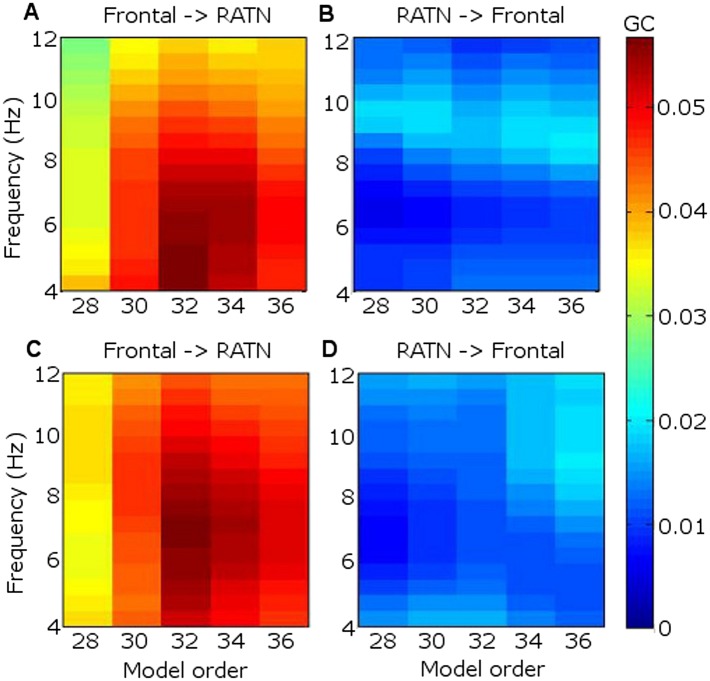
Figure 4.. Granger causality (GC) in the theta frequency range.
(A) During successful encoding, frontal theta activity predicted right anterior thalamic nucleus (RATN) activity, peaking at model order 32, corresponding with a 63 ms phase lag (i.e., one third of a theta cycle). (B) During successful encoding, RATN activity was significantly (paired T-tests: T = 3.2, p = 0.014) less predictive of frontal activity. (C) During unsuccessful encoding, frontal theta activity predicted RATN activity. (D) During unsuccessful encoding, RATN was significantly (paired T-tests: T = 3.0, p = 0.018) less predictive of frontal activity. DOI:http://dx.doi.org/10.7554/eLife.05352.019

References

    1. Aggleton JP. Multiple anatomical systems embedded within the primate medial temporal lobe: implications for hippocampal function. Neuroscience and Biobehavioral Reviews. 2012;36:1579–1596. doi: 10.1016/j.neubiorev.2011.09.005. - DOI - PubMed
    1. Aggleton JP, O'Mara SM, Vann SD, Wright NF, Tsanov M, Erichsen JT. Hippocampal-anterior thalamic pathways for memory: uncovering a network of direct and indirect actions. The European Journal of Neuroscience. 2010;31:2292–2307. doi: 10.1111/j.1460-9568.2010.07251.x. - DOI - PMC - PubMed
    1. Anderson KL, Rajagovindan R, Ghacibeh GA, Meador KJ, Ding M. Theta oscillations mediate interaction between prefrontal cortex and medial temporal lobe in human memory. Cerebral Cortex. 2010;20:1604–1612. doi: 10.1093/cercor/bhp223. - DOI - PubMed
    1. Axmacher N, Henseler MM, Jensen O, Weinreich I, Elger CE, Fell J. Cross-frequency coupling supports multi-item working memory in the human hippocampus. Proceedings of the National Academy of Sciences of USA. 2010;107:3228–3233. doi: 10.1073/pnas.0911531107. - DOI - PMC - PubMed
    1. Benchenane K, Peyrache A, Khamassi M, Tierney PL, Gioanni Y, Battaglia FP, Wiener SI. Coherent theta oscillations and reorganization of spike timing in the hippocampal-prefrontal network upon learning. Neuron. 2010;66:921–936. doi: 10.1016/j.neuron.2010.05.013. - DOI - PubMed

Publication types