Developmental mechanism of the periodic membrane skeleton in axons
- PMID: 25535840
- PMCID: PMC4337613
- DOI: 10.7554/eLife.04581
Developmental mechanism of the periodic membrane skeleton in axons
Abstract
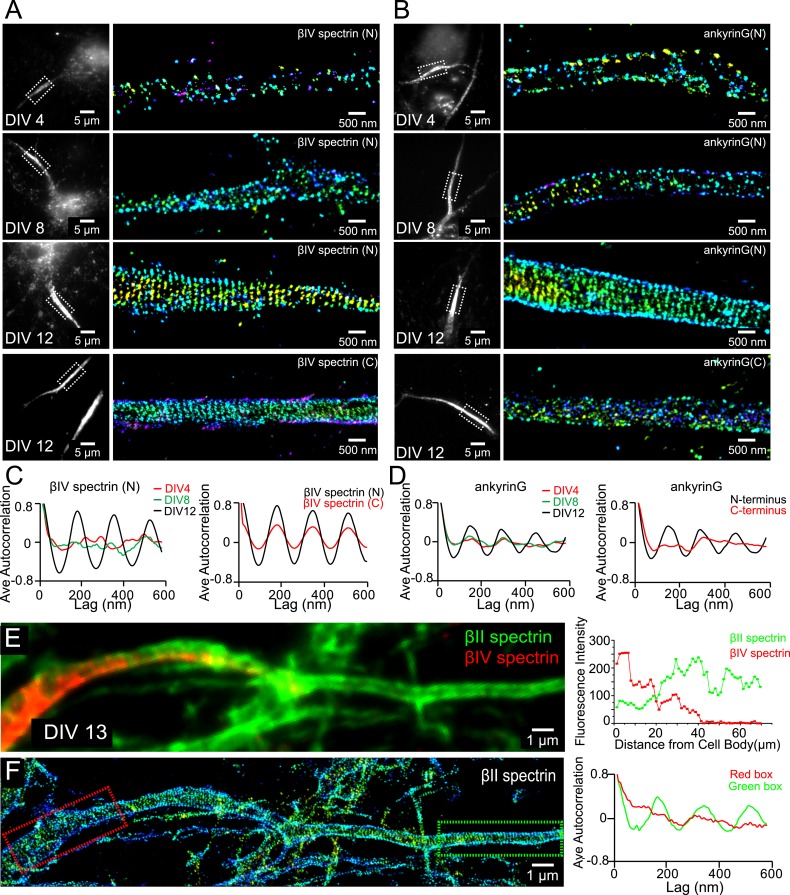
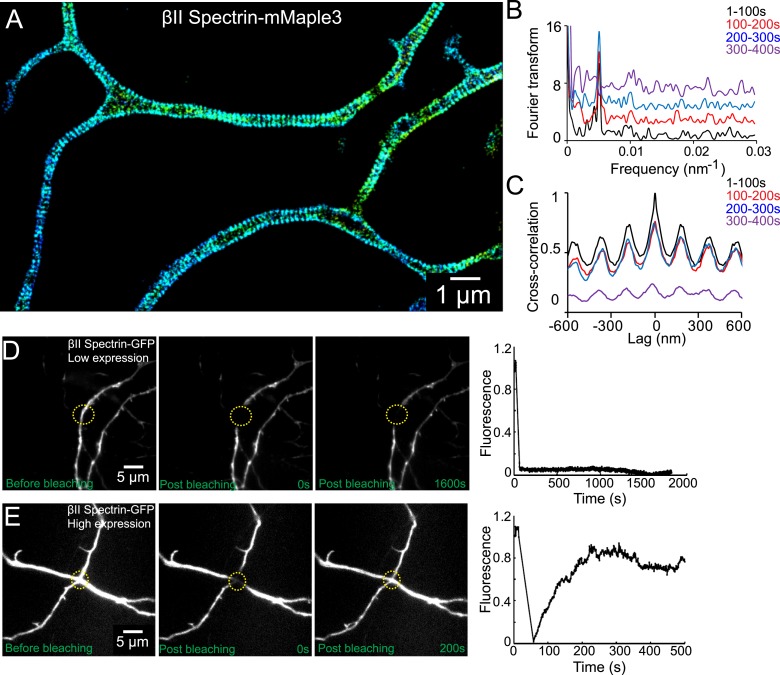
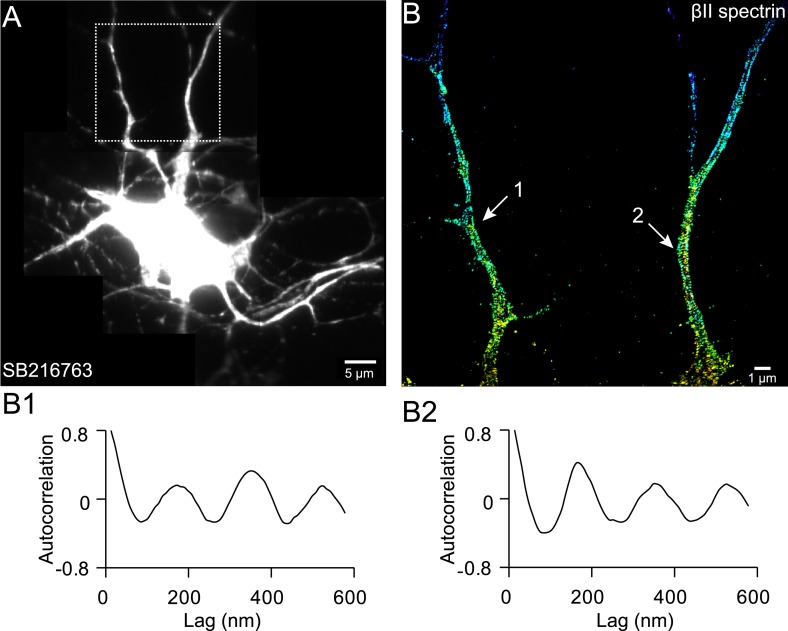
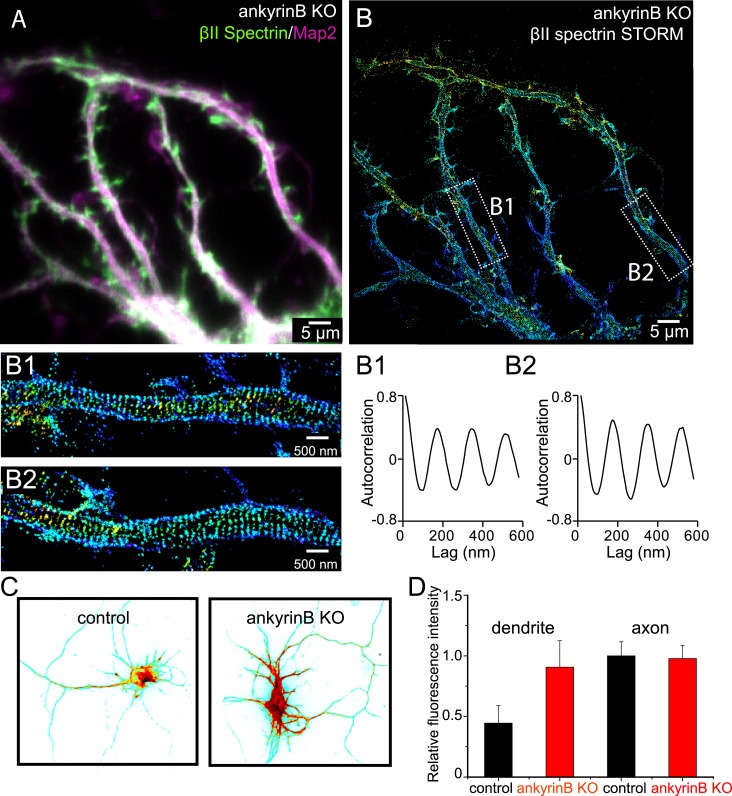
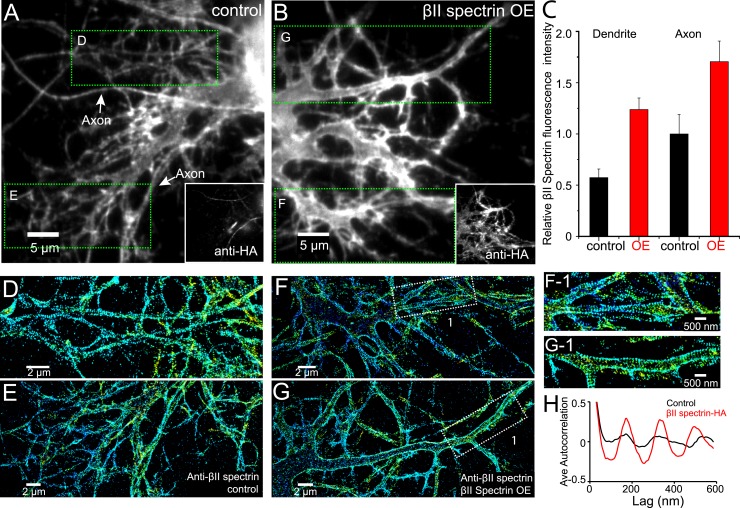
Actin, spectrin, and associated molecules form a periodic sub-membrane lattice structure in axons. How this membrane skeleton is developed and why it preferentially forms in axons are unknown. Here, we studied the developmental mechanism of this lattice structure. We found that this structure emerged early during axon development and propagated from proximal regions to distal ends of axons. Components of the axon initial segment were recruited to the lattice late during development. Formation of the lattice was regulated by the local concentration of βII spectrin, which is higher in axons than in dendrites. Increasing the dendritic concentration of βII spectrin by overexpression or by knocking out ankyrin B induced the formation of the periodic structure in dendrites, demonstrating that the spectrin concentration is a key determinant in the preferential development of this structure in axons and that ankyrin B is critical for the polarized distribution of βII spectrin in neurites.
Keywords: STORM; actin; ankyrin; axon; cell biology; mouse; neuroscience; rat; spectrin; super-resolution.
Conflict of interest statement
XZ: Reviewing editor,
The other authors declare that no competing interests exist.
Figures










References
Publication types
MeSH terms
Substances
Grants and funding
LinkOut - more resources
Full Text Sources
Other Literature Sources
Research Materials