Autophagy: an emerging therapeutic target in vascular diseases
- PMID: 25537552
- PMCID: PMC4403086
- DOI: 10.1111/bph.13052
Autophagy: an emerging therapeutic target in vascular diseases
Abstract
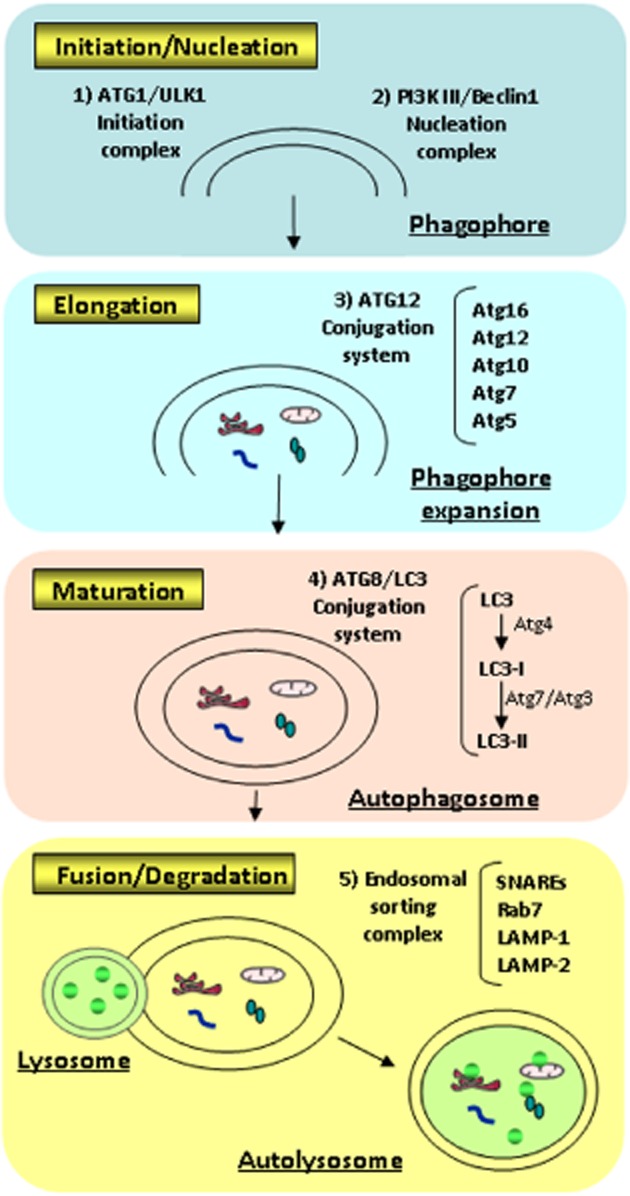
Autophagy is a cellular catabolic process responsible for the destruction of long-lived proteins and organelles via lysosome-dependent pathway. This process is of great importance in maintaining cellular homeostasis, and deregulated autophagy has been implicated in the pathogenesis of a wide range of diseases. A growing body of evidence suggests that autophagy can be activated in vascular disorders such as atherosclerosis. Autophagy occurs under basal conditions and mediates homeostatic functions in cells but in the setting of pathological states up-regulated autophagy can exert both protective and detrimental functions. Therefore, the precise role of autophagy and its relationship with the progression of the disease need to be clarified. This review highlights recent findings regarding autophagy activity in vascular cells and its potential contribution to vascular disorders with a focus on atherogenesis. Finally, whether the manipulation of autophagy represents a new therapeutic approach to treat or prevent vascular diseases is also discussed.
© 2014 The British Pharmacological Society.
Figures
References
-
- Basso MD, Nambi P, Adelman SJ. Effect of sirolimus on the cholesterol content of aortic arch in ApoE knockout mice. Transplant Proc. 2003;35:3136–3138. - PubMed
Publication types
MeSH terms
Substances
LinkOut - more resources
Full Text Sources
Other Literature Sources
Medical