


Aspiration pneumonia after concurrent chemoradiotherapy for head and neck cancer
- PMID: 25537836
- PMCID: PMC4774546
- DOI: 10.1002/cncr.29207
Aspiration pneumonia after concurrent chemoradiotherapy for head and neck cancer
Abstract
Background: Aspiration pneumonia represents an under-reported complication of chemoradiotherapy in patient with head and neck cancer. The objective of the current study was to evaluate the incidence, risk factors, and mortality of aspiration pneumonia in a large cohort of patients with head and neck cancer who received concurrent chemoradiotherapy.
Methods: Patients who had head and neck cancer diagnosed between 2000 and 2009 were identified from the Surveillance, Epidemiology, and End Results-Medicare database. Aspiration pneumonia was identified from Medicare billing claims. The cumulative incidence, risk factors, and survival after aspiration pneumonia were estimated and compared with a noncancer population.
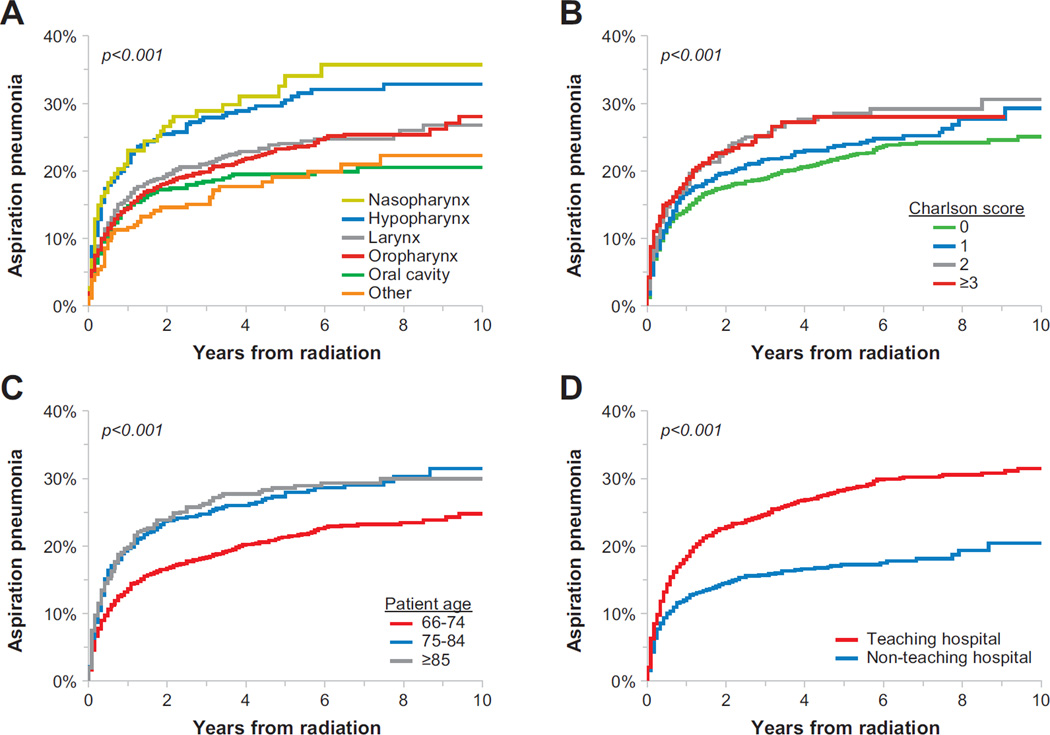
Results: Of 3513 patients with head and neck cancer, 801 developed aspiration pneumonia at a median of 5 months after initiating treatment. The 1-year and 5-year cumulative incidence of aspiration pneumonia was 15.8% and 23.8%, respectively, for patients with head and neck cancer and 3.6% and 8.7%, respectively, for noncancer controls. Among the patients with cancer, multivariate analysis identified independent risk factors (P < .05) for aspiration pneumonia, including hypopharyngeal and nasopharyngeal tumors, male gender, older age, increased comorbidity, no surgery before radiation, and care received at a teaching hospital. Among the patients with cancer who experienced aspiration pneumonia, 674 (84%) were hospitalized; and, of these, 301 (45%) were admitted to an intensive care unit. The 30-day mortality rate after hospitalization for aspiration pneumonia was 32.5%. Aspiration pneumonia was associated with a 42% increased risk of death (hazard ratio, 1.42; P < .001) after controlling for confounders.
Conclusions: The current results indicated that nearly 25% of elderly patients will develop aspiration pneumonia within 5 years after receiving chemoradiotherapy for head and neck cancer. A better understanding of mitigating factors will help identify patients who are at risk for this potentially lethal complication.
Keywords: End Results Program; Epidemiology; Medicare; Surveillance; aspiration pneumonia; chemoradiotherapy; head and neck neoplasms.
© 2014 American Cancer Society.
Figures


References
-
- Francis DO, Weymuller EA, Jr, Parvathaneni U, Merati AL, Yueh B. Dysphagia, stricture, and pneumonia in head and neck cancer patients: does treatment modality matter? Ann Otol Rhinol Laryngol. 2010;119:391–397. - PubMed
-
- Marik PE. Aspiration pneumonitis and aspiration pneumonia. N Engl J Med. 2001;344:665–671. - PubMed
-
- Smith RV, Kotz T, Beitler JJ, Wadler S. Long-term swallowing problems after organ preservation therapy with concomitant radiation therapy and intravenous hydroxyurea: initial results. Arch Otolaryngol Head Neck Surg. 2000;126:384–389. - PubMed
-
- Langerman A, Maccracken E, Kasza K, Haraf DJ, Vokes EE, Stenson KM. Aspiration in chemoradiated patients with head and neck cancer. Arch Otolaryngol Head Neck Surg. 2007;133:1289–1295. - PubMed
Publication types
MeSH terms
Grants and funding
LinkOut - more resources
Full Text Sources
Other Literature Sources
Medical
