


A Regulatory Network Involving β-Catenin, e-Cadherin, PI3k/Akt, and Slug Balances Self-Renewal and Differentiation of Human Pluripotent Stem Cells In Response to Wnt Signaling
- PMID: 25538040
- PMCID: PMC5297972
- DOI: 10.1002/stem.1944
A Regulatory Network Involving β-Catenin, e-Cadherin, PI3k/Akt, and Slug Balances Self-Renewal and Differentiation of Human Pluripotent Stem Cells In Response to Wnt Signaling
Abstract
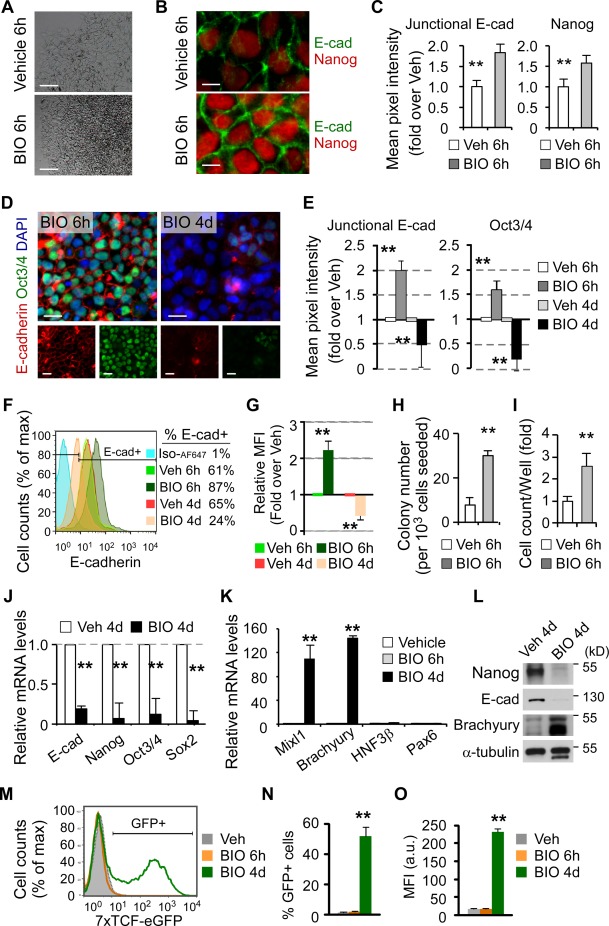
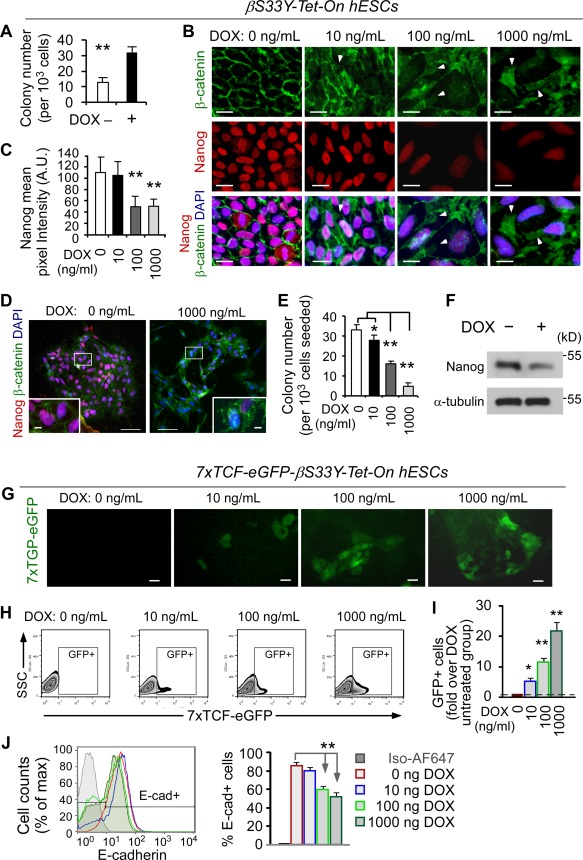
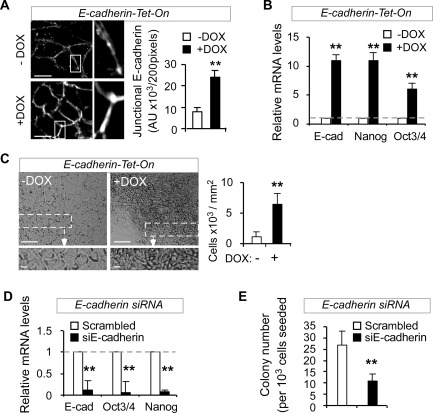
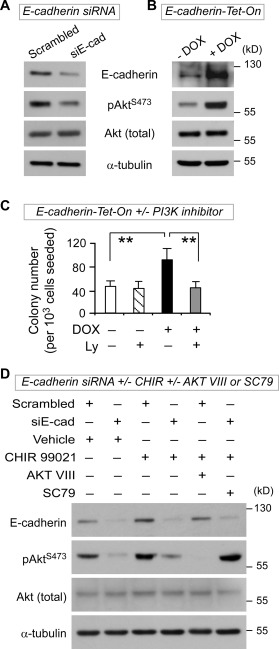
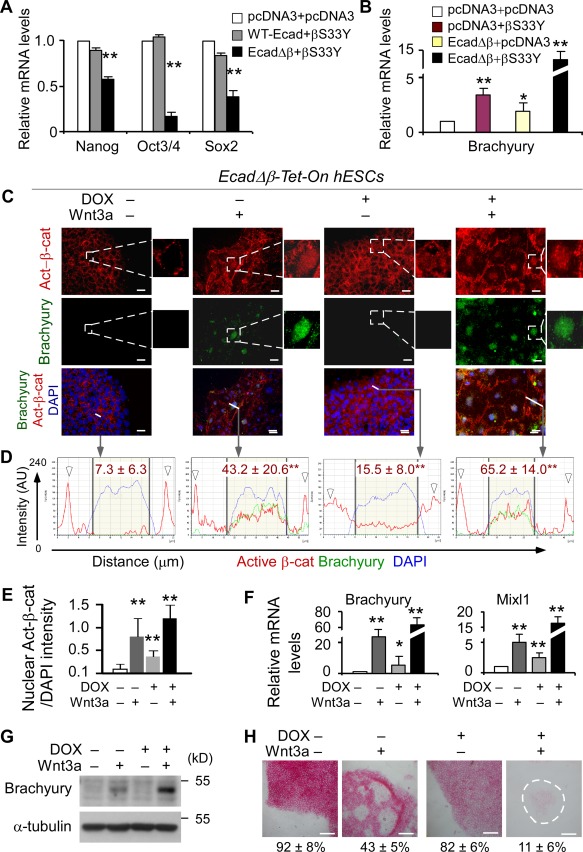
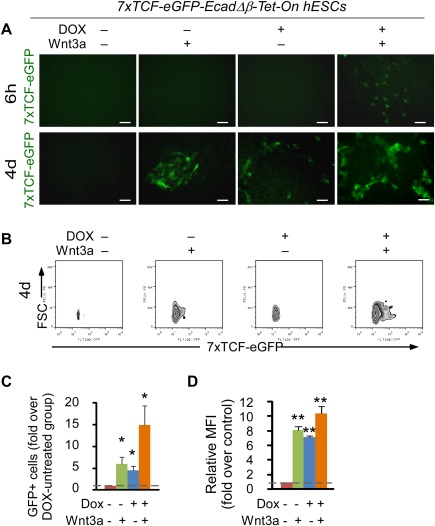
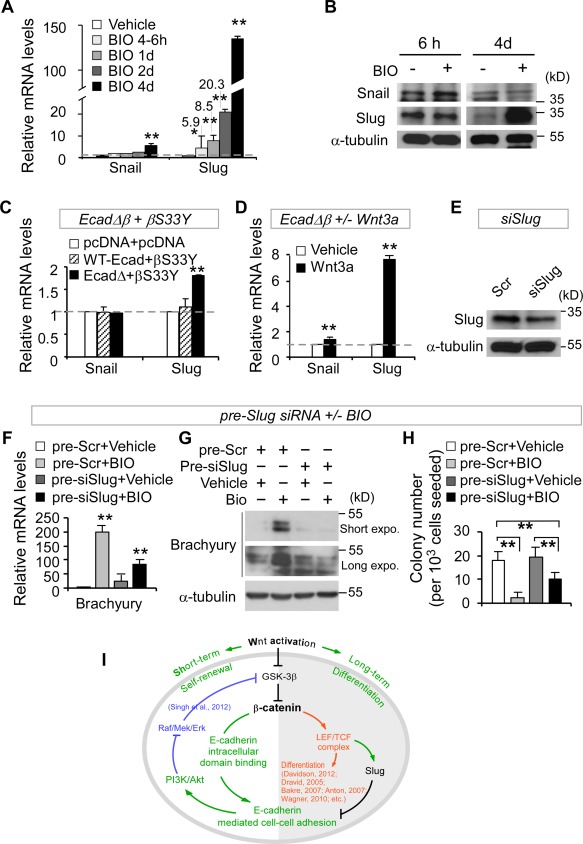
The mechanisms underlying disparate roles of the canonical Wnt signaling pathway in maintaining self-renewal or inducing differentiation and lineage specification in embryonic stem cells (ESCs) are not clear. In this study, we provide the first demonstration that self-renewal versus differentiation of human ESCs (hESCs) in response to Wnt signaling is predominantly determined by a two-layer regulatory circuit involving β-catenin, E-cadherin, PI3K/Akt, and Slug in a time-dependent manner. Short-term upregulation of β-catenin does not lead to the activation of T-cell factor (TCF)-eGFP Wnt reporter in hESCs. Instead, it enhances E-cadherin expression on the cell membrane, thereby enhancing hESC self-renewal through E-cadherin-associated PI3K/Akt signaling. Conversely, long-term Wnt activation or loss of E-cadherin intracellular β-catenin binding domain induces TCF-eGFP activity and promotes hESC differentiation through β-catenin-induced upregulation of Slug. Enhanced expression of Slug leads to a further reduction of E-cadherin that serves as a β-catenin "sink" sequestering free cytoplasmic β-catenin. The formation of such a framework reinforces hESCs to switch from a state of temporal self-renewal associated with short-term Wnt/β-catenin activation to definitive differentiation. Stem Cells 2015;33:1419-1433.
Keywords: Differentiation; E-cadherin; Human embryonic stem cell; Self-renewal; Slug; Wnt; β-Catenin.
© 2015 AlphaMed Press.
Figures
References
-
- Sato N, Meijer L, Skaltsounis L et al. Maintenance of pluripotency in human and mouse embryonic stem cells through activation of Wnt signaling by a pharmacological GSK‐3‐specific inhibitor. Nat Med 2004;10:55–63. - PubMed
-
- Singla DK, Schneider DJ, LeWinter MM et al. wnt3a but not wnt11 supports self‐renewal of embryonic stem cells. Biochem Biophys Res Commun 2006;345:789–795. - PubMed
-
- Miki T, Yasuda SY, Kahn M. Wnt/beta‐catenin signaling in embryonic stem cell self‐renewal and somatic cell reprogramming. Stem Cell Rev 2011;7:836–846. - PubMed
Publication types
MeSH terms
Substances
Grants and funding
LinkOut - more resources
Full Text Sources
Other Literature Sources
Molecular Biology Databases
Research Materials
