


Effect of Low-fat Milk Consumption Compared to Apple Juice and Water on the Energy Intake Among 10-12-Year-Old Obese Boys: A Three-way Cross-over Clinical Trial
- PMID: 25538836
- PMCID: PMC4274547
Effect of Low-fat Milk Consumption Compared to Apple Juice and Water on the Energy Intake Among 10-12-Year-Old Obese Boys: A Three-way Cross-over Clinical Trial
Abstract
Background: Appetite lowering characteristics of dairy have attracted scientists to look for its effect on energy intake particularly among children. In the present study, we tried to assess the effect of low-fat milk on total and short-term energy intake among obese boys in a randomized three-way cross-over clinical trial.
Methods: A total of 34 obese 10-12-year-old boys were randomized to consume three beverages (low-fat milk, apple juice, or water) with a fixed energy breakfast for two consecutive days, 1 week apart. Ad libitum lunch was provided for subjects 5 h later. The energy intake from breakfast till lunch and total energy intake on intervention days, and 2 days after intervention were compared. Generalized linear model repeated measures procedure in which test beverages were considered as repeated factors.
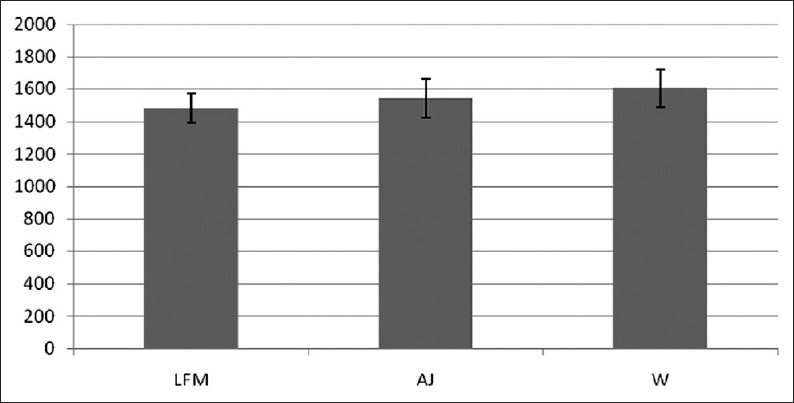
Results: Energy intake from breakfast till lunch was lower when low-fat milk consumption was included in the breakfast compared with water and apple juice (adjusted mean ± standard error: Low-fat milk = 1484.33 ± 15.30 Kcal, apple juice = 1543.39 ± 20.70 Kcal, water = 1606.6 ± 19.94 Kcal; P < 0.05). The energy intake on a day before interventions, total energy intake on intervention days, and 2 days after intervention was not statistically different between intervention periods (P > 0.05).
Conclusions: One serving of low-fat milk might affect the energy intake in a short-term period. The possible effect of frequent consumption of dairy products on long-term energy intake among children is needed to be examined.
Keywords: Apple juice; children; energy intake; low-fat milk; obesity.
Conflict of interest statement
Figures
References
-
- Lob-Corzilius T. Overweight and obesity in childhood – a special challenge for public health. Int J Hyg Environ Health. 2007;210:585–9. - PubMed
-
- de Onis M, Blössner M, Borghi E. Global prevalence and trends of overweight and obesity among preschool children. Am J Clin Nutr. 2010;92:1257–64. - PubMed
-
- Kelishadi R, Ardalan G, Gheiratmand R, Majdzadeh R, Hosseini M, Gouya MM, et al. Thinness, overweight and obesity in a national sample of Iranian children and adolescents: CASPIAN Study. Child Care Health Dev. 2008;34:44–54. - PubMed
-
- Kelsey MM, Zaepfel A, Bjornstad P, Nadeau KJ. Age-related consequences of childhood obesity. Gerontology. 2014;60:222–8. - PubMed
LinkOut - more resources
Full Text Sources