


Oxytocin reduces cocaine seeking and reverses chronic cocaine-induced changes in glutamate receptor function
- PMID: 25539504
- PMCID: PMC4368863
- DOI: 10.1093/ijnp/pyu009
Oxytocin reduces cocaine seeking and reverses chronic cocaine-induced changes in glutamate receptor function
Erratum in
-
Erratum.Int J Neuropsychopharmacol. 2016 Apr 27;19(10):pyw031. doi: 10.1093/ijnp/pyw031. Int J Neuropsychopharmacol. 2016. PMID: 27207904 Free PMC article. No abstract available.
Abstract
Background: Oxytocin, a neurohypophyseal neuropeptide, is a potential mediator and regulator of drug addiction. However, the cellular mechanisms of oxytocin in drug seeking remain unknown.
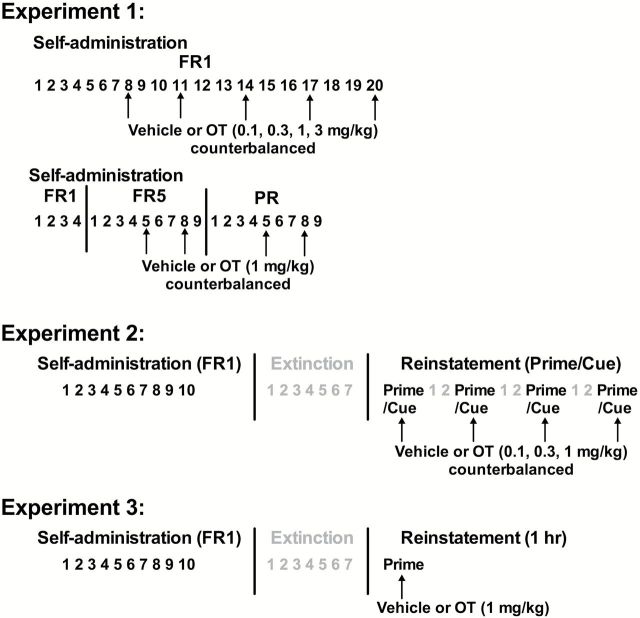
Methods: In the present study, we used a self-administration/reinstatement model to study the effects of oxytocin on cocaine seeking and its potential interaction with glutamate function at the receptor level.
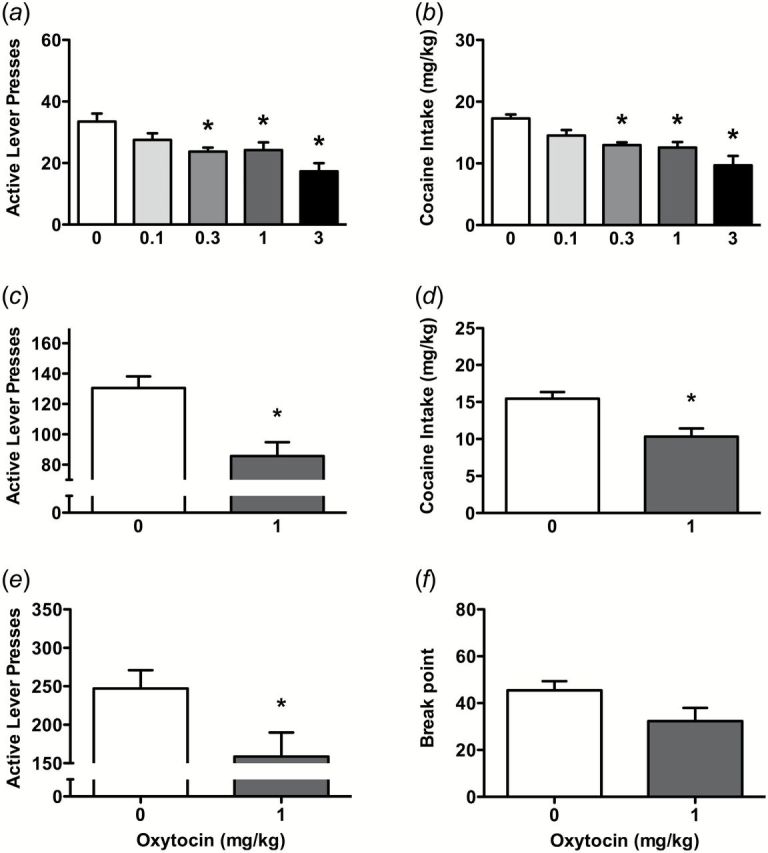
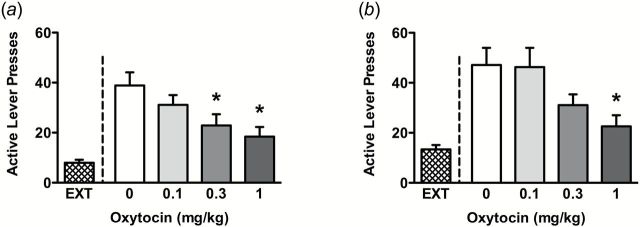
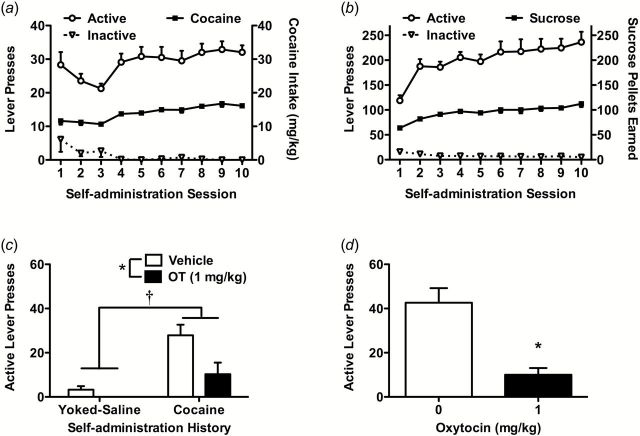
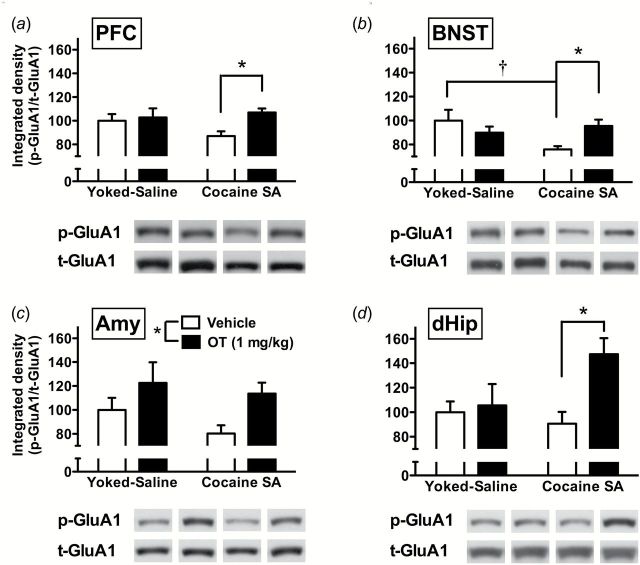
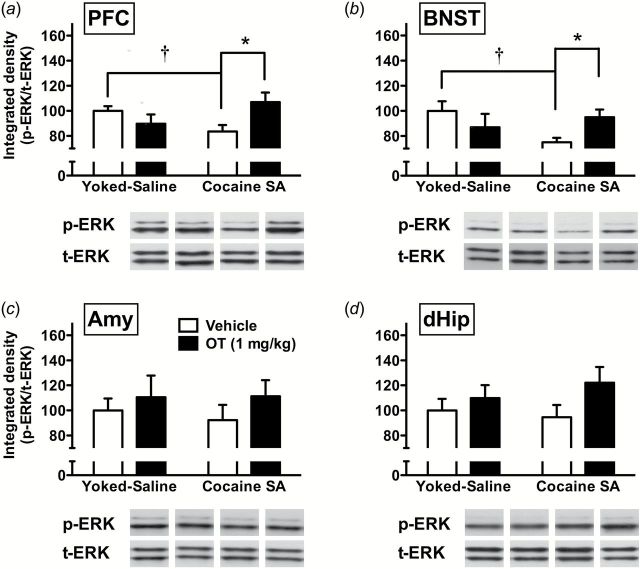
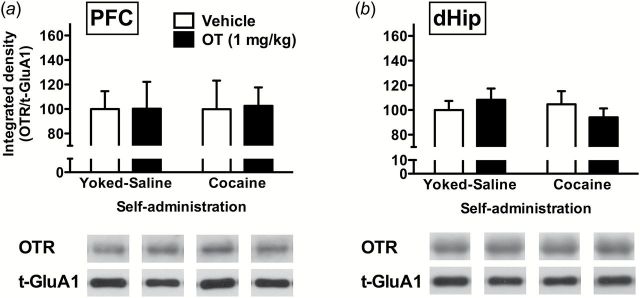
Results: Systemic oxytocin dose-dependently reduced cocaine self-administration during various schedules of reinforcement, including fixed ratio 1, fixed ratio 5, and progressive ratio. Oxytocin also attenuated reinstatement to cocaine seeking induced by cocaine prime or conditioned cues. Western-blot analysis indicated that oxytocin increased phosphorylation of the α-amino-3-hydroxy-5-methyl-4-isoxazolepropionic acid-type glutamate receptor GluA1 subunit at the Ser 845 site with or without accompanying increases in phosphorylation of extracellular signal-regulated kinase, in several brain regions, including the prefrontal cortex, bed nucleus of the stria terminalis, amygdala, and dorsal hippocampus. Immunoprecipitation of oxytocin receptor and GluA1 subunit receptors further demonstrated a physical interaction between these 2 receptors, although the interaction was not influenced by chronic cocaine or oxytocin treatment. Oxytocin also attenuated sucrose seeking in a GluA1- or extracellular-signal-regulated kinase-independent manner.
Conclusions: These findings suggest that oxytocin mediates cocaine seeking through interacting with glutamate receptor systems via second messenger cascades in mesocorticolimbic regions.
Keywords: cocaine; glutamate receptor; oxytocin; reinstatement; self-administration..
© The Author 2014. Published by Oxford University Press. All rights reserved. For Permissions, please e-mail: journals.permissions@oup.com.
Figures
References
-
- Ahmed SH, Koob GF. (1998). Transition from moderate to excessive drug intake: change in hedonic set point. Science 282:298–300. - PubMed
-
- Anderson SM, Famous KR, Sadri-Vakili G, Kumaresan V, Schmidt HD, Bass CE, Terwilliger EF, Cha JH, Pierce RC. (2008). CaMKII: a biochemical bridge linking accumbens dopamine and glutamate systems in cocaine seeking. Nat Neurosci 11:344–353. - PubMed
-
- Ayar A, Ozcan M, Alcin E, Serhatlioglu I, Ozcan S, Kutlu S, Kelestimur H. (2014). Oxytocin activates calcium signaling in rat sensory neurons through a protein kinase C-dependent mechanism. J Physiol Biochem 70:43–48. - PubMed
-
- Bachtell RK, Choi KH, Simmons DL, Falcon E, Monteggia LM, Neve RL, Self DW. (2008). Role of GluR1 expression in nucleus accumbens neurons in cocaine sensitization and cocaine-seeking behavior. Eur J Neurosci 27:2229–2240. - PubMed
Publication types
MeSH terms
Substances
Grants and funding
LinkOut - more resources
Full Text Sources
Other Literature Sources
Medical
