


Hyperopia: a meta-analysis of prevalence and a review of associated factors among school-aged children
- PMID: 25539893
- PMCID: PMC4391667
- DOI: 10.1186/1471-2415-14-163
Hyperopia: a meta-analysis of prevalence and a review of associated factors among school-aged children
Abstract
Background: Studies show great variability in the prevalence of hyperopia among children. This study aimed to synthesize the existing knowledge about hyperopia prevalence and its associated factors in school children and to explore the reasons for this variability.
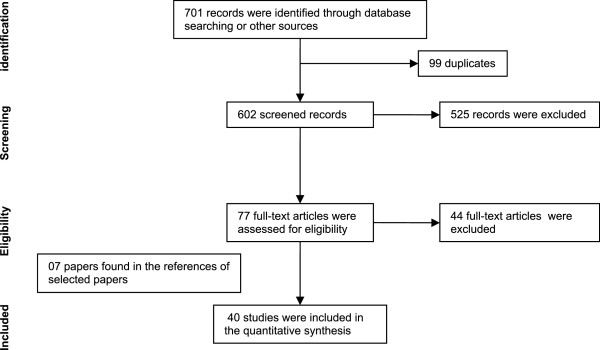
Methods: This systematic review followed PRISMA guidelines. Searching several international databases, the review included population- or school-based studies assessing hyperopia through cycloplegic autorefraction or cycloplegic retinoscopy. Meta-analysis of hyperopia prevalence was performed following MOOSE guidelines and using the random effects model.
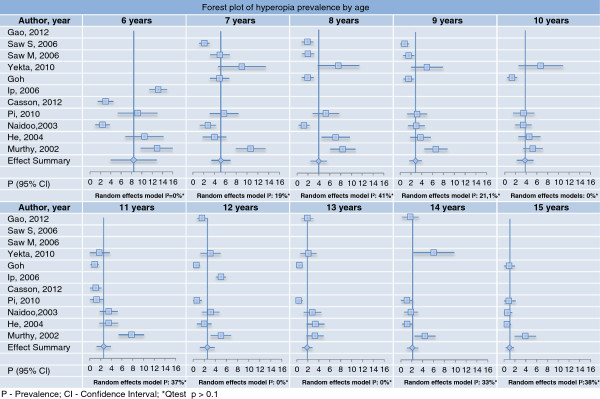
Results: The review included 40 cross-sectional studies. The prevalence of hyperopia ranged from 8.4% at age six, 2-3% from 9 to 14 years and approximately 1% at 15 years. With regard to associated factors, age has an inverse association with hyperopia. The frequency of hyperopia is higher among White children and those who live in rural areas. There is no consensus about the association between hyperopia and gender, family income and parental schooling.
Conclusion: Future studies should use standardized methods to classify hyperopia and sufficient sample size when evaluating age-specific prevalence. Furthermore, it is necessary to deepen the understanding about the interactions among hyperopic refractive error and accommodative and binocular functions as a way of identifying groups of hyperopic children at risk of developing visual, academic and even cognitive function sequelae.
Figures
References
-
- Klein AP, Suktitipat B, Duggal P, Lee KE, Klein R, Bailey-Wilson JE, Klein BE. Heritability analysis of spherical equivalent, axial length, corneal curvature, and anterior chamber depth in the Beaver Dam Eye Study. Arch Ophthalmol. 2009;127(5):649–655. doi: 10.1001/archophthalmol.2009.61. - DOI - PMC - PubMed
Pre-publication history
-
- The pre-publication history for this paper can be accessed here: http://www.biomedcentral.com/1471-2415/14/163/prepub
Publication types
MeSH terms
LinkOut - more resources
Full Text Sources
Other Literature Sources
Medical
