Adverse events in patients with return emergency department visits
- PMID: 25540424
- PMCID: PMC4316869
- DOI: 10.1136/bmjqs-2014-003194
Adverse events in patients with return emergency department visits
Abstract
Objectives: This study describes the proportion of emergency department (ED) returns within 7 days due to adverse events, defined as adverse outcomes related to healthcare received.
Design: Prospective cohort study.
Setting: We used an electronically triggered adverse event surveillance system at a tertiary care ED from May to June 2010 to examine ED returns within 7 days of index visit.
Participants: One of three trained nurses determined whether the visit was related to index emergency care. For such records, one of three trained emergency physicians conducted adverse event determinations.
Main outcome measure: We determined adverse event type and severity and analysed the data with descriptive statistics, χ(2) tests and logistic regression.
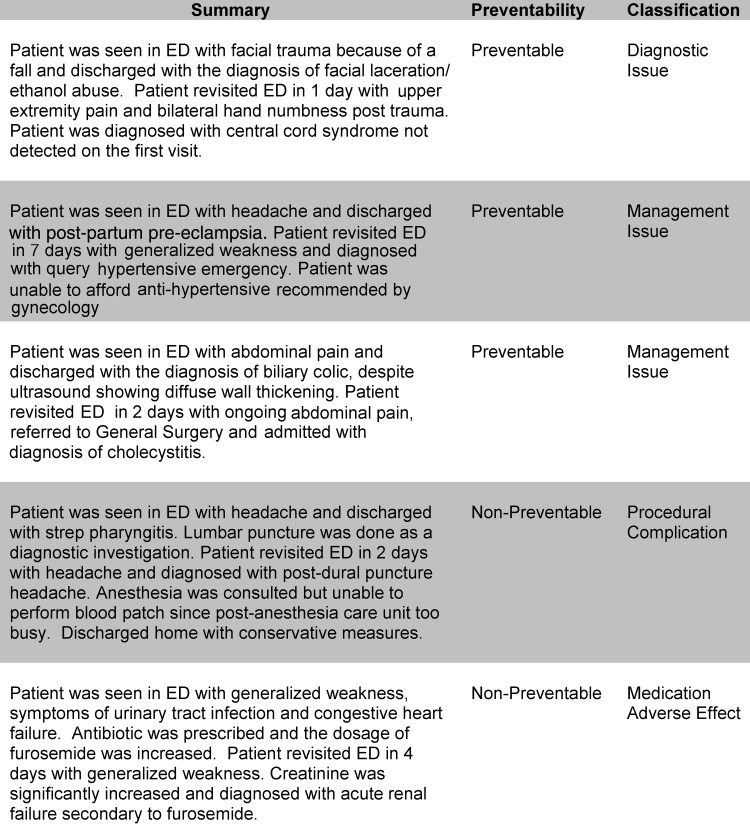
Results: Of 13,495 index ED visits, 923 (6.8%) were followed by ED returns within 7 days. The median age of all patients was 47 years and 52.8% were women. After nursing review, 211 cases required physician review. Of these, 53 visits were adverse events (positive predictive value (PPV)=5.7%, 95% CI 4.4% to 7.4%) and 30 (56.6%) were preventable. Common adverse event types involved management, diagnostic or medication issues. We observed one potentially preventable death and 58.5% of adverse events resulting in transient disability. The PPV of a modified trigger with a cut-off of return within 72 h, resulting in admission was 11.9% (95% CI 6.8% to 18.9%).
Conclusions: Our electronic trigger efficiently identified adverse events among 12% of patients with ED returns within 72 h, requiring hospital admission. Given the high degree of preventability of the identified adverse events, this trigger also holds promise as a performance measurement tool.
Keywords: Emergency department; Patient safety; Quality improvement.
Published by the BMJ Publishing Group Limited. For permission to use (where not already granted under a licence) please go to http://group.bmj.com/group/rights-licensing/permissions.
Figures

References
-
- Friedman SM, Provan D, Moore S, et al. Errors, near misses and adverse events in the emergency department: what can patients tell us? CJEM 2008;10:421–7. - PubMed
Publication types
MeSH terms
LinkOut - more resources
Full Text Sources
Other Literature Sources
Molecular Biology Databases