


Quantifying frontal plane knee motion during single limb squats: reliability and validity of 2-dimensional measures
- PMID: 25540705
- PMCID: PMC4275194
Quantifying frontal plane knee motion during single limb squats: reliability and validity of 2-dimensional measures
Abstract
Background: Clinical assessment of lower limb kinematics during dynamic tasks may identify individuals who demonstrate abnormal movement patterns that may lead to etiology of exacerbation of knee conditions such as patellofemoral joint (PFJt) pain.
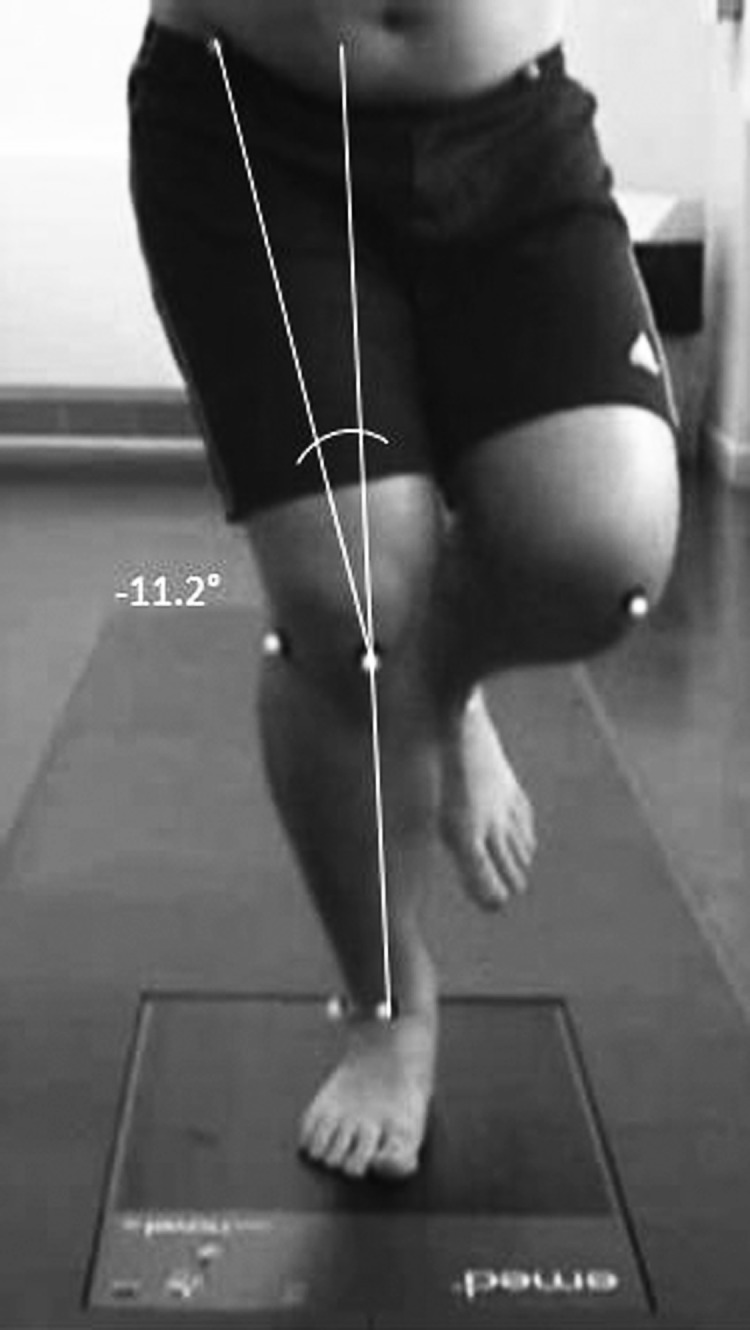
Purpose: The purpose of this study was to determine the reliability, validity and associated measurement error of a clinically appropriate two-dimensional (2-D) procedure of quantifying frontal plane knee alignment during single limb squats.
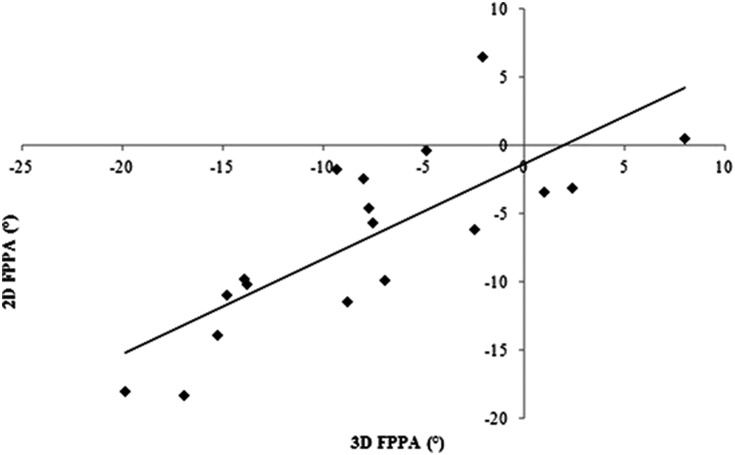
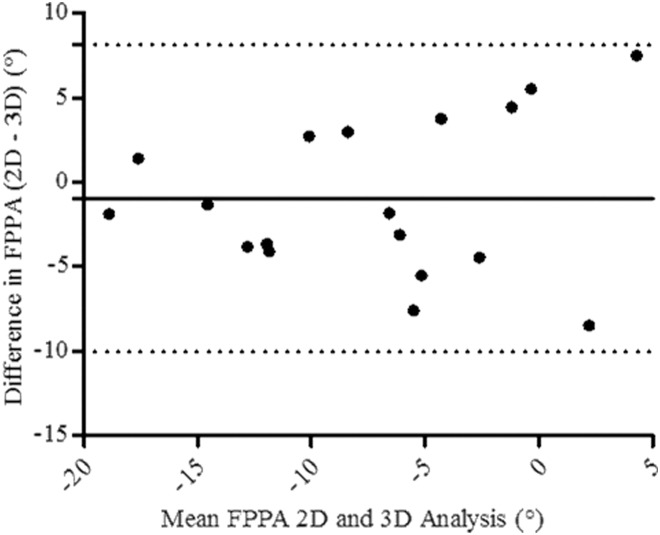
Methods: Nine female and nine male recreationally active subjects with no history of PFJt pain had frontal plane limb alignment assessed using three-dimensional (3-D) motion analysis and digital video cameras (2-D analysis) while performing single limb squats. The association between 2-D and 3-D measures was quantified using Pearson's product correlation coefficients. Intraclass correlation coefficients (ICCs) were determined for within- and between-session reliability of 2-D data and standard error of measurement (SEM) was used to establish measurement error.
Results: Frontal plane limb alignment assessed with 2-D analysis demonstrated good correlation compared with 3-D methods (r = 0.64 to 0.78, p < 0.001). Within-session (0.86) and between-session ICCs (0.74) demonstrated good reliability for 2-D measures and SEM scores ranged from 2° to 4°.
Conclusion: 2-D measures have good consistency and may provide a valid measure of lower limb alignment when compared to existing 3-D methods.
Clinical relevance: Assessment of lower limb kinematics using 2-D methods may be an accurate and clinically useful alternative to 3-D motion analysis when identifying individuals who demonstrate abnormal movement patterns associated with PFJt pain.
Level of evidence: 2b.
Keywords: Patellofemoral joint pain; dynamic knee valgus; functional tasks.
Figures
References
-
- Dierks TA Manal KT Hamill J, et al. Proximal and distal influences on hip and knee kinematics in runners with patellofemoral pain during a prolonged run. J Ortho Sports Phys Ther. 2008; 38:448‐456. - PubMed
-
- Herrington L Knee valgus angle during single leg squat and landing in patellofemoral pain patients and controls. Knee. 2014; 21:514‐517. - PubMed
-
- Crossley K Zhang W Schache A, et al. Performance on single limb squat task indicates hip muscle function. Am J Sports Med. 2011; 39:866‐873. - PubMed
-
- Willson JD Davis I Utility of the frontal plane projection angle in females with patellofemoral pain. J Ortho Sports Phys Ther. 2008b; 36:606‐615. - PubMed
LinkOut - more resources
Full Text Sources
Research Materials