


Training finger individuation with a mechatronic-virtual reality system leads to improved fine motor control post-stroke
- PMID: 25542201
- PMCID: PMC4292811
- DOI: 10.1186/1743-0003-11-171
Training finger individuation with a mechatronic-virtual reality system leads to improved fine motor control post-stroke
Abstract
Background: Dexterous manipulation of the hand, one of the features of human motor control, is often compromised after stroke, to the detriment of basic functions. Despite the importance of independent movement of the digits to activities of daily living, relatively few studies have assessed the impact of specifically targeting individuated movements of the digits on hand rehabilitation. The purpose of this study was to investigate the impact of such finger individuation training, by means of a novel mechatronic-virtual reality system, on fine motor control after stroke.
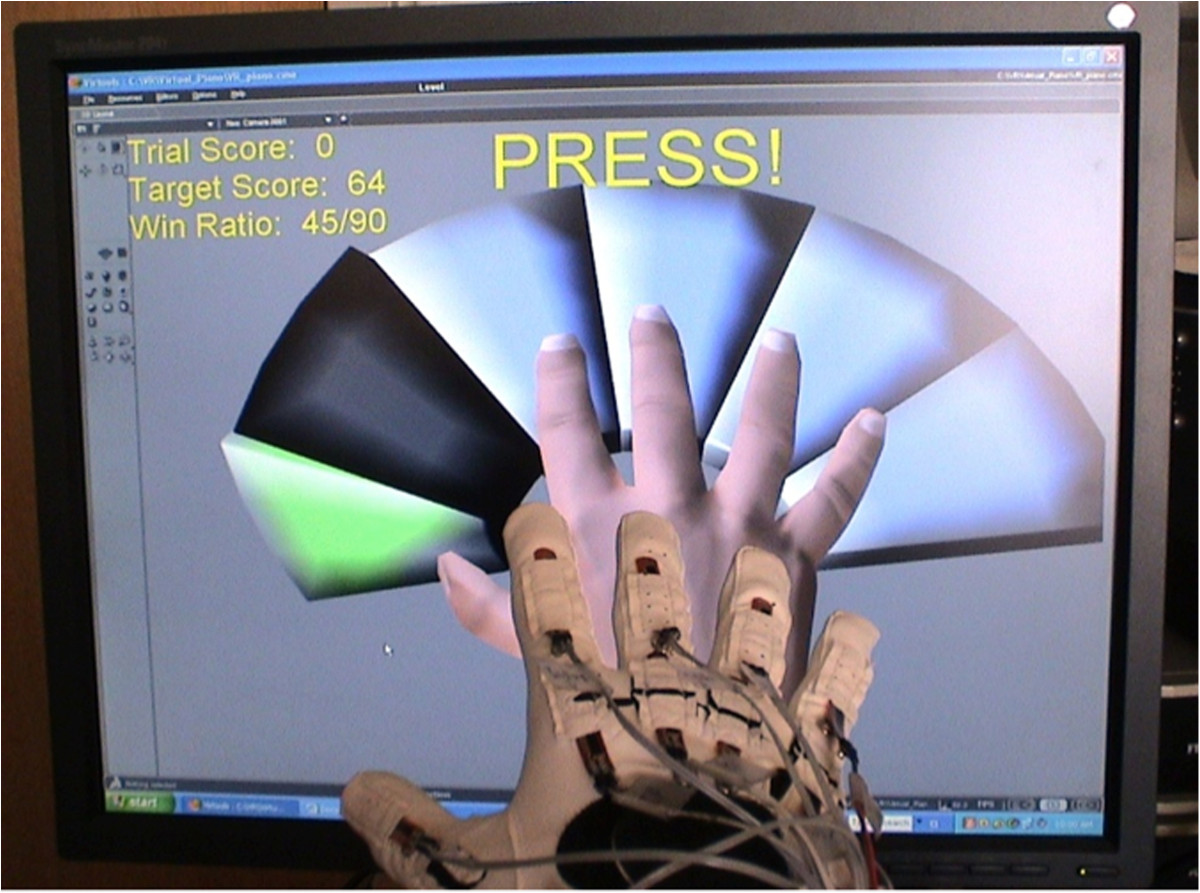
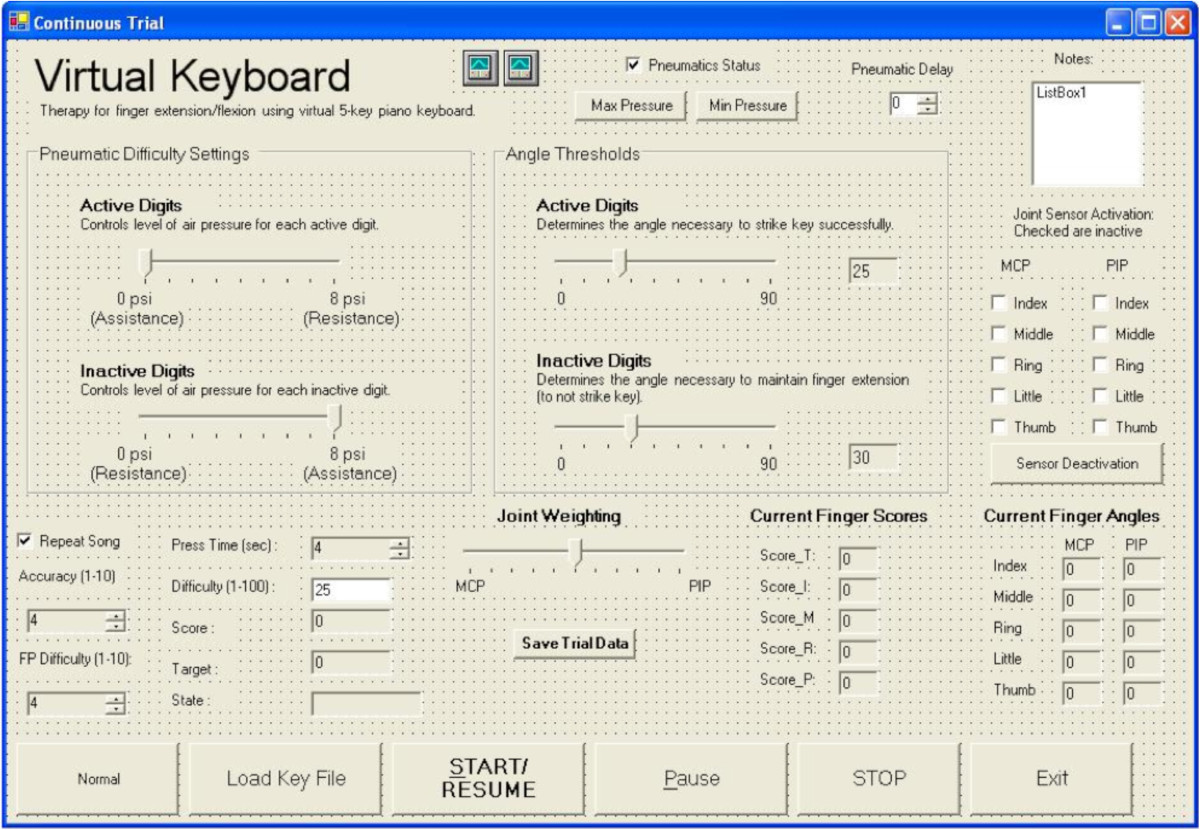
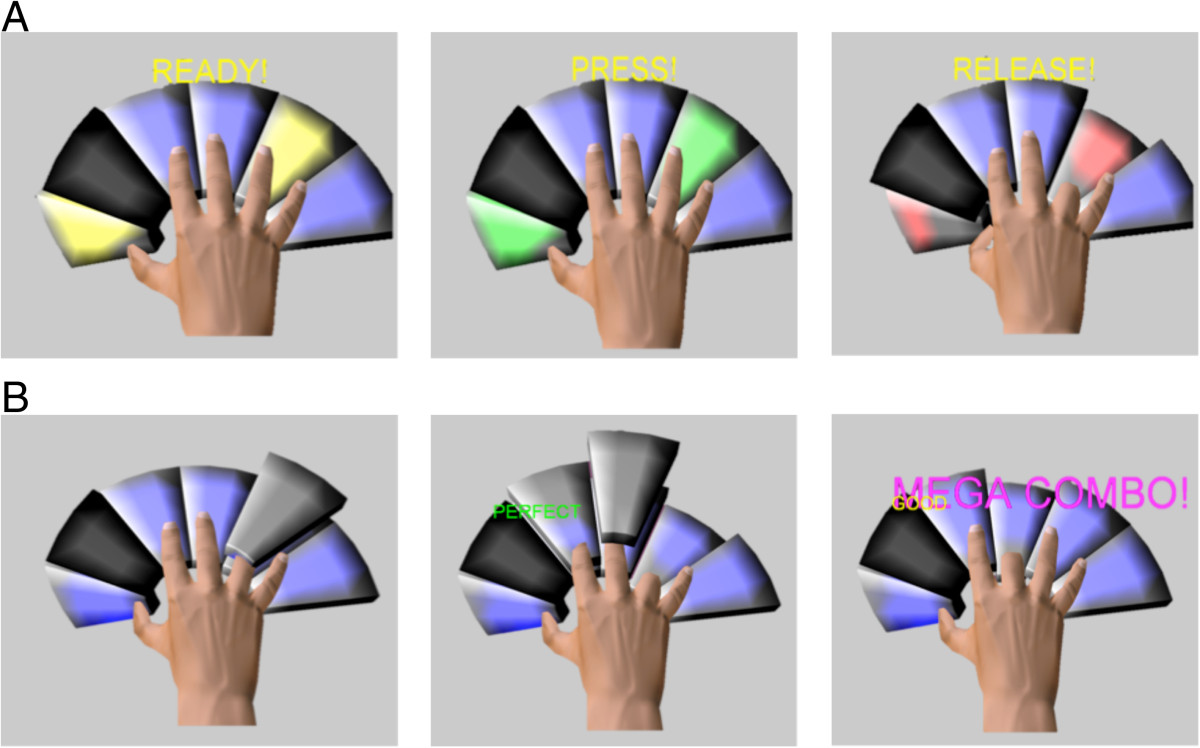
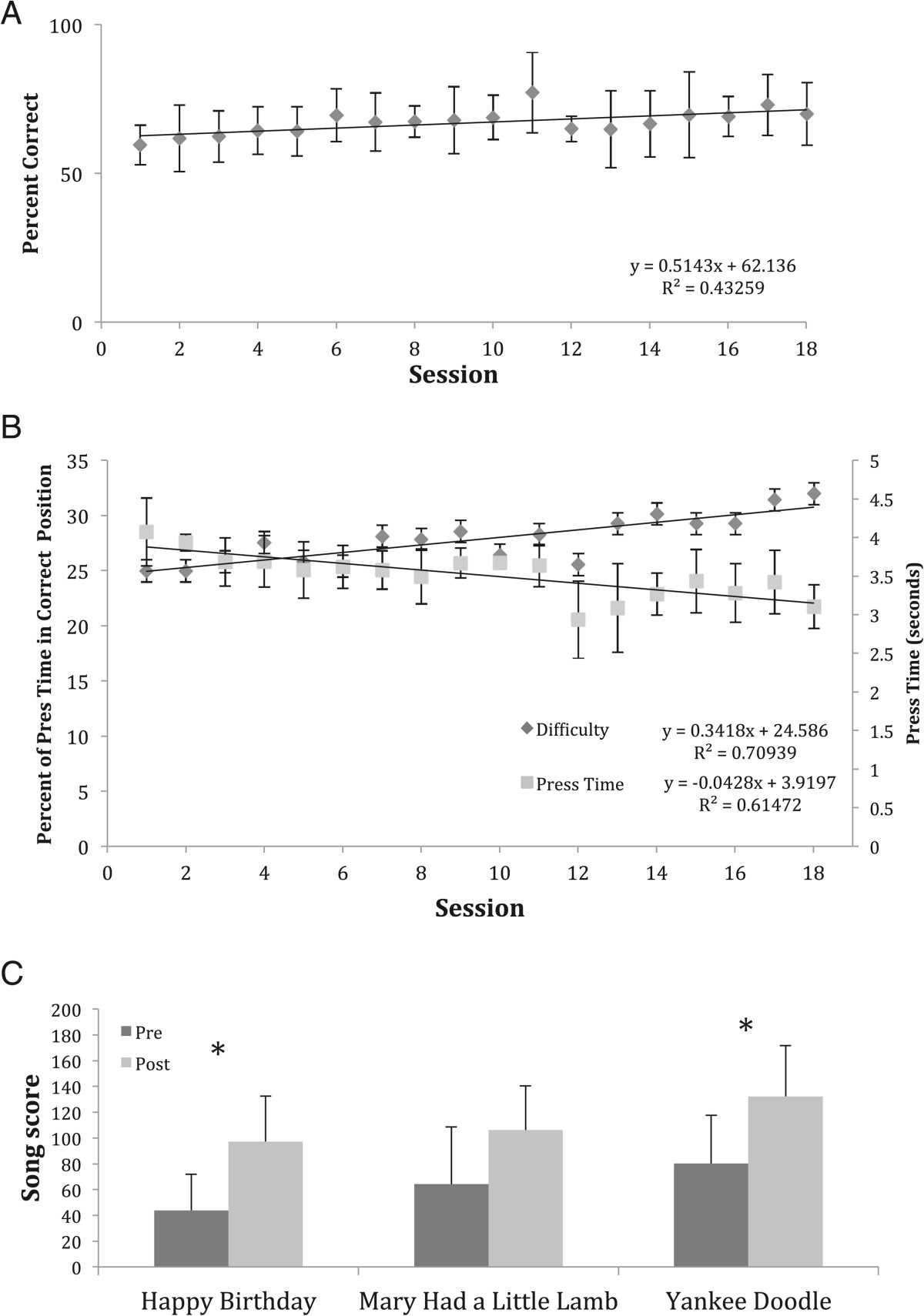
Methods: An actuated virtual keypad (AVK) system was developed in which the impaired hand controls a virtual hand playing a set of keys. Creation of individuated digit movements is assisted by a pneumatically actuated glove, the PneuGlove. A study examining efficacy of the AVK system was subsequently performed. Participants had chronic, moderate hand impairment resulting from a single stroke incurred at least 6 months prior. Each subject underwent 18 hour-long sessions of extensive therapy (3x per week for 6 weeks) targeted at finger individuation. Subjects were randomly divided into two groups: the first group (Keypad: N = 7) utilized the AVK system while the other group (OT: N = 7) received a similarly intensive dose of occupational therapy; both groups worked directly with a licensed occupational therapist. Outcome measures such as the Jebsen-Taylor Hand Function Test (JTHFT), Action research Arm Test (ARAT), Fugl-Meyer Upper Extremity Motor Assessment/Hand subcomponent (FMUE/FMH), grip and pinch strengths were collected at baseline, post-treatment and one-month post-treatment.
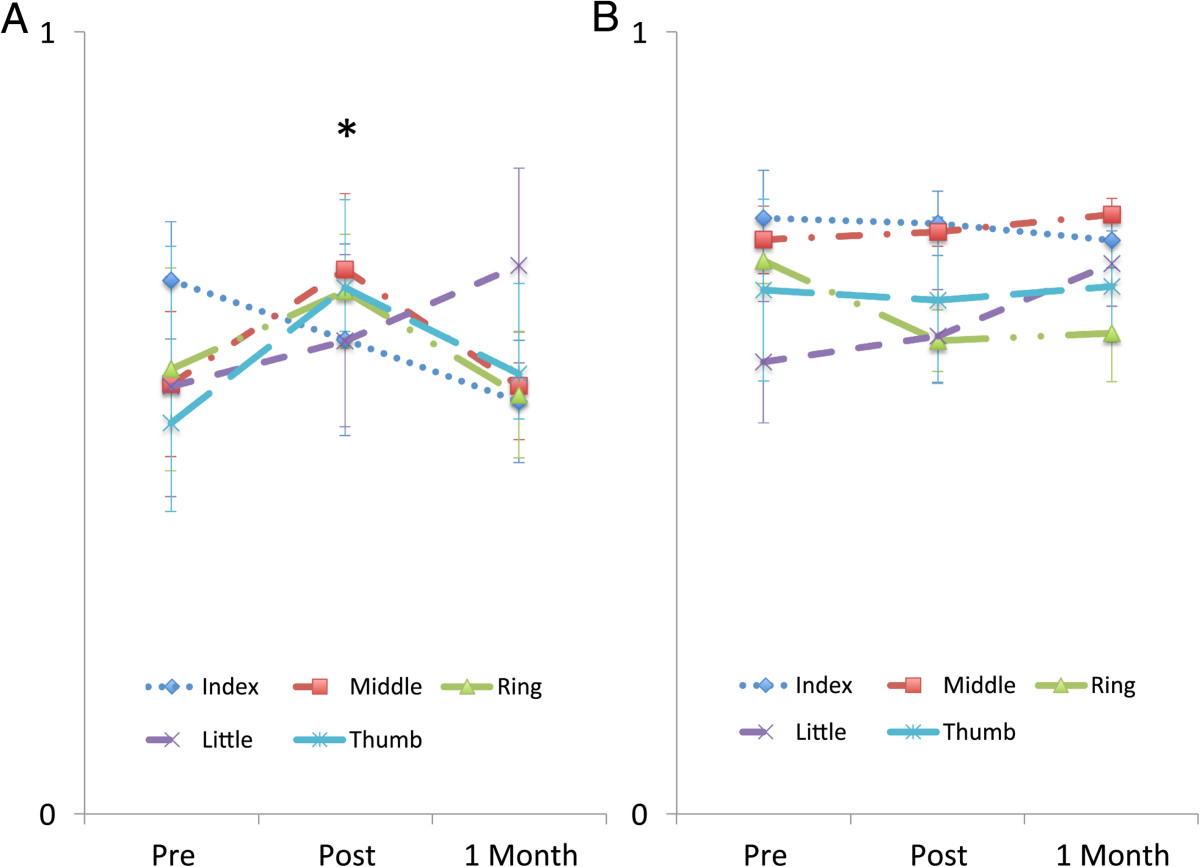
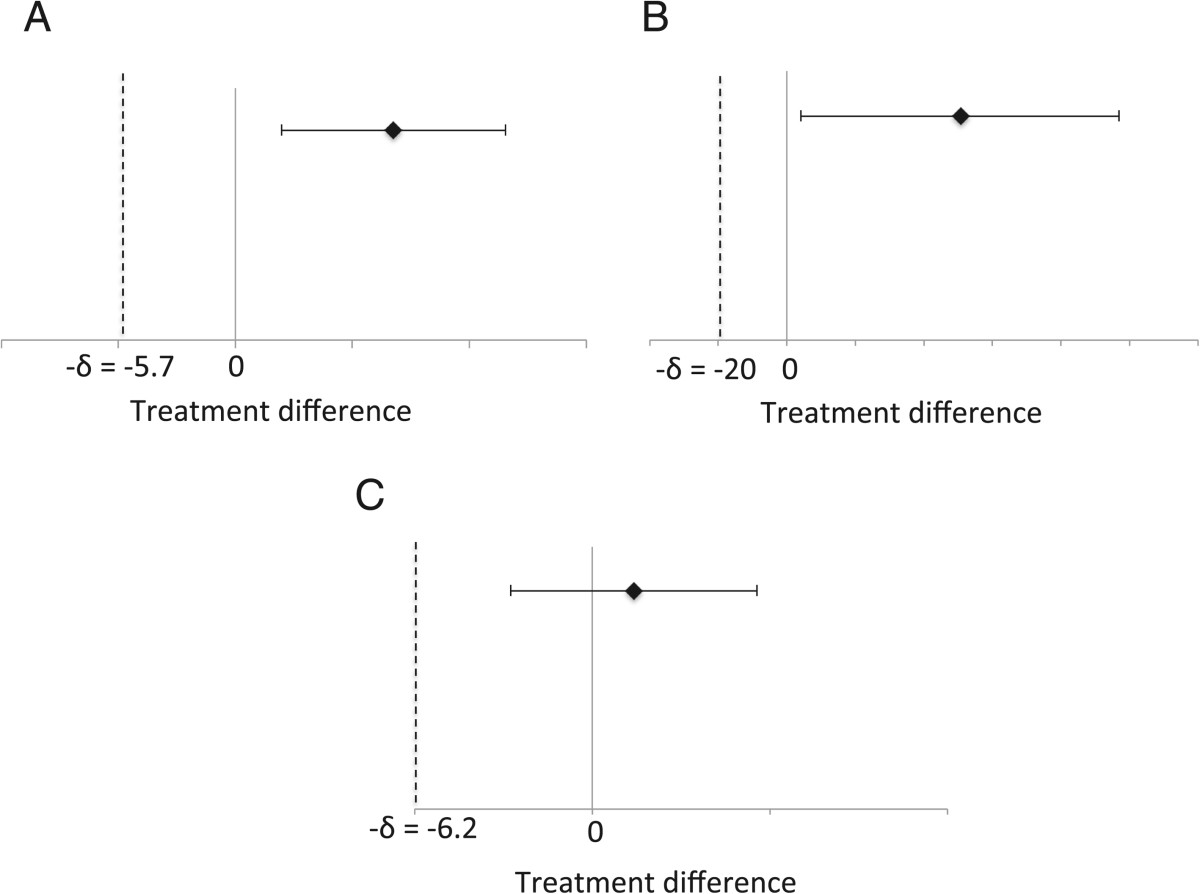
Results: While both groups exhibited some signs of change after the training sessions, only the Keypad group displayed statistically significant improvement both for measures of impairment (FMH: p = 0.048) and measures of task performance (JTHFT: p = 0.021). Additionally, the finger individuation index - a measure of finger independence - improved only for the Keypad group after training (p = 0.05) in the subset (Keypad: N = 4; OT: N = 5) of these participants for which it was measured.
Conclusions: Actively assisted individuation therapy comprised of non task-specific modalities, such as can be achieved with virtual platforms like the AVK described here, may prove to be valuable clinical tools for increasing the effectiveness and efficiency of therapy following stroke.
Figures
References
-
- Schieber MH. Individuated finger movements of rhesus monkeys: a means of quantifying the independence of the digits. J Neurophysiol. 1991;65(6):1381–1391. - PubMed
-
- Penfield W, Boldrey E. Somatic motor and sensory representation in the cerebral cortex of man as studied by electrical stimulation. Brain. 1937;60:389–443. doi: 10.1093/brain/60.4.389. - DOI
-
- Porter R, Lemon R. Corticospinal function and voluntary movement. Monographs of the Physiological Society. Oxford; New York: Clarendon Press; Oxford University Press; 1993. p. 428.
Publication types
MeSH terms
Grants and funding
LinkOut - more resources
Full Text Sources
Other Literature Sources
Medical
