Review
. 2015 Apr:33:74-81.
doi: 10.1016/j.ceb.2014.12.003. Epub 2014 Dec 23.

The mitochondrial unfolded protein response—synchronizing genomes

Affiliations
Review

The mitochondrial unfolded protein response—synchronizing genomes

Virginija Jovaisaite et al. Curr Opin Cell Biol. 2015 Apr.

Abstract

Maintenance of the mitochondrial proteome is performed primarily by chaperones, which fold and assemble proteins, and by proteases, which degrade excess damaged proteins. Upon various types of mitochondrial stress, triggered genetically or pharmacologically, dysfunction of the proteome is sensed and communicated to the nucleus, where an extensive transcriptional program, aimed to repair the damage, is activated. This feedback loop, termed the mitochondrial unfolded protein response (UPR(mt)), synchronizes the activity of the mitochondrial and nuclear genomes and as such ensures the quality of the mitochondrial proteome. Here we review the recent advances in the UPR(mt) field and discuss its induction, signaling, communication with the other mitochondrial and major cellular regulatory pathways, as well as its potential implications on health and lifespan.


Figures

Figure 1
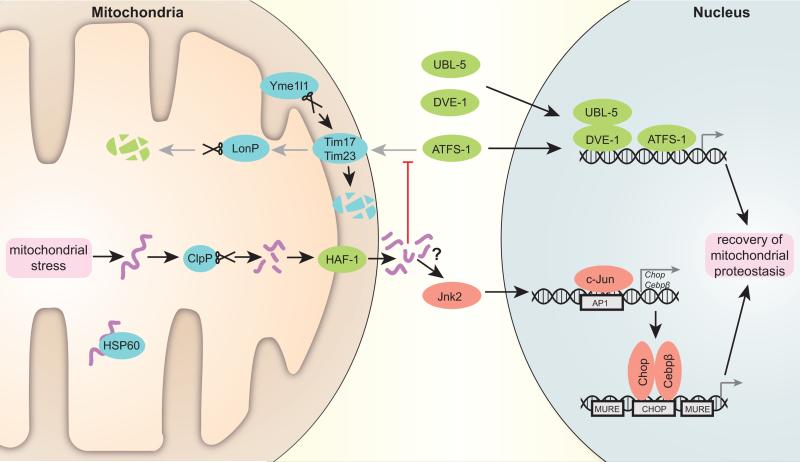
Figure 1. Scheme depicting the transcriptional regulation of the UPRmt
Accumulating unfolded proteins, unassisted by chaperone Hsp60 in stressed mitochondria, are digested by the protease Clpp. The resulting peptides are transported through the double mitochondrial membrane into the cytosol. These peptides presumably stop mitochondrial import, which is also negatively affected by specific degradation of Tim17 component of the translocation pore by protease Yme1l1. As a result, C. elegans transcription factor ATFS-1, which in normal conditions is translocated to mitochondria and degraded by protease LonP, moves into the nucleus together with UBL-5 and DVE-1 to activate a reparative transcriptional program. In mammals, Jnk2 triggers c-Jun binding to AP1 sites, leading to the activation of Chop and Cebpβ transcription. Subsequently, Chop and Cebpβ dimers bind to CHOP sites flanked by MUREs and induce UPRmt target gene transcription. Proteins characterized in C. elegans are marked in green, fly and mammalian system proteins in red and proteins conserved in all the systems are noted in blue (mouse nomenclature is used).
Figure 2
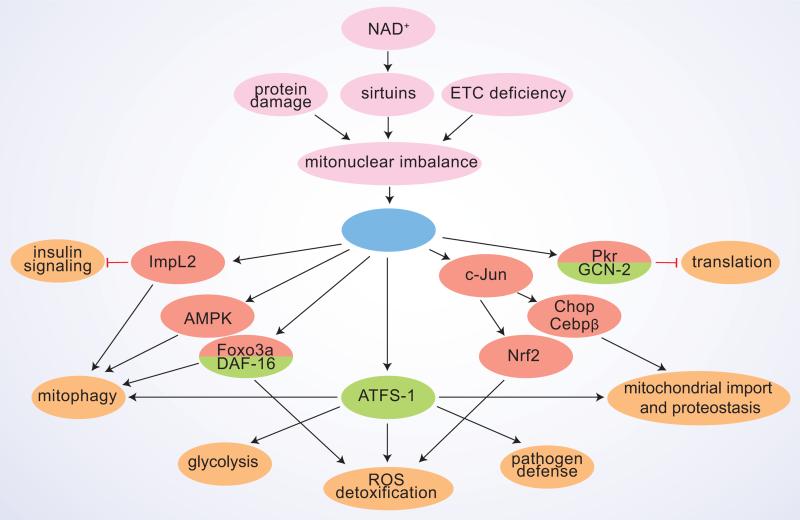
Figure 2. The pleiotropic effects of UPRmt
A scheme summarizing the principle UPRmt sensor/activator signals and the downstream interacting pathways, with their respective cellular effects. Proteins characterized in the fly and/or mammalian systems are marked in red and those studied in C. elegans in green.

References

    1. Dillin A, Gottschling DE, Nystrom T. The good and the bad of being connected: the integrons of aging. Curr Opin Cell Biol. 2014;26:107–112. - PMC - PubMed
    1. Houtkooper RH, Williams RW, Auwerx J. Metabolic networks of longevity. Cell. 2010;142:9–14. - PMC - PubMed
    1. Andreux PA, Houtkooper RH, Auwerx J. Pharmacological approaches to restore mitochondrial function. Nat Rev Drug Discov. 2013;12:465–483. - PMC - PubMed
    1. Nunnari J, Suomalainen A. Mitochondria: in sickness and in health. Cell. 2012;148:1145–1159. - PMC - PubMed
    1. Jensen MB, Jasper H. Mitochondrial Proteostasis in the Control of Aging and Longevity. Cell Metab. 2014;20:214–225. - PMC - PubMed

Publication types