Molecular mechanism of aggravation of hypertensive organ damages by short-term blood pressure variability
- PMID: 25544288
- PMCID: PMC4428492
- DOI: 10.2174/1573402111666141217112655
Molecular mechanism of aggravation of hypertensive organ damages by short-term blood pressure variability
Abstract
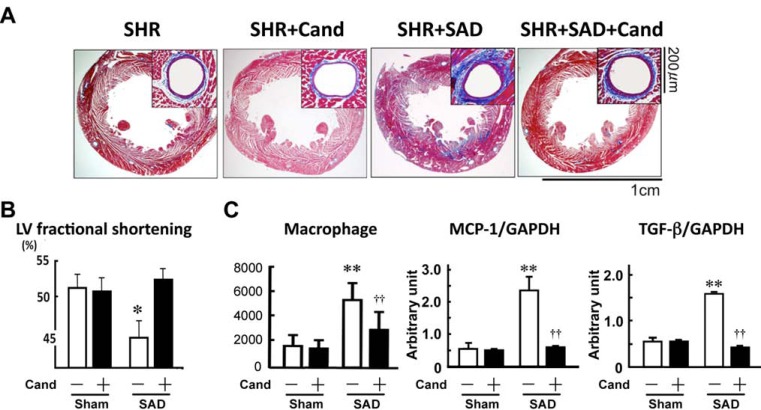
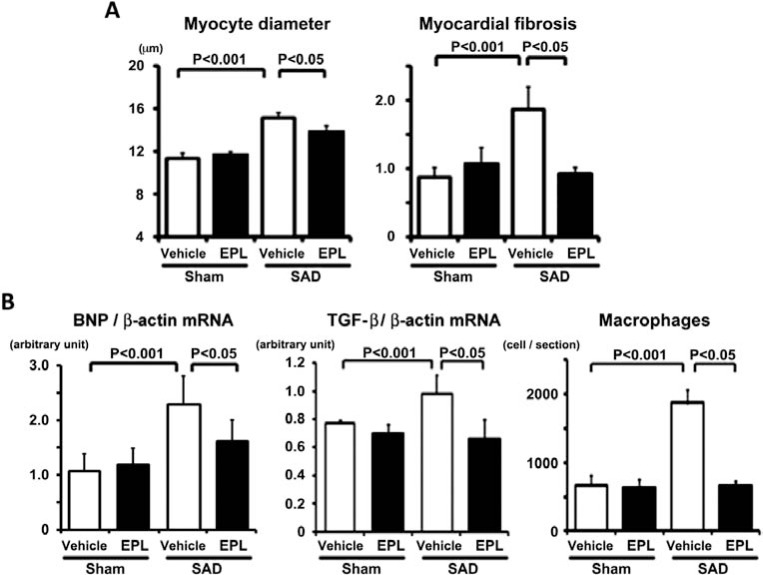
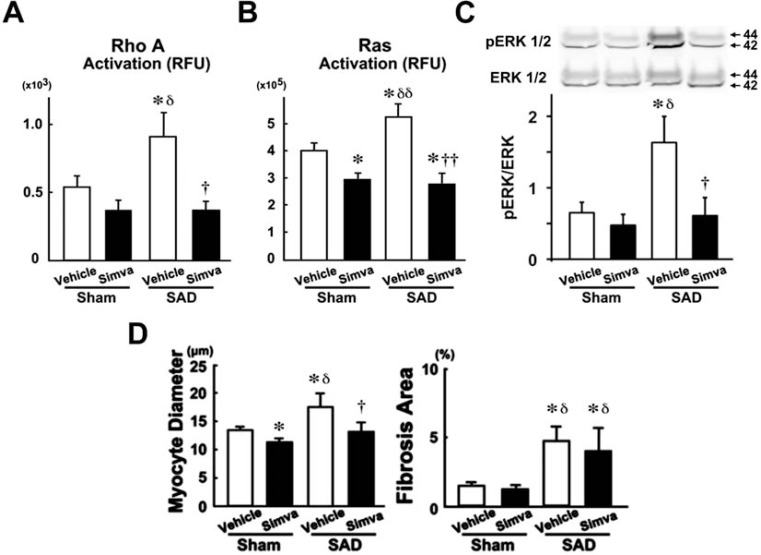
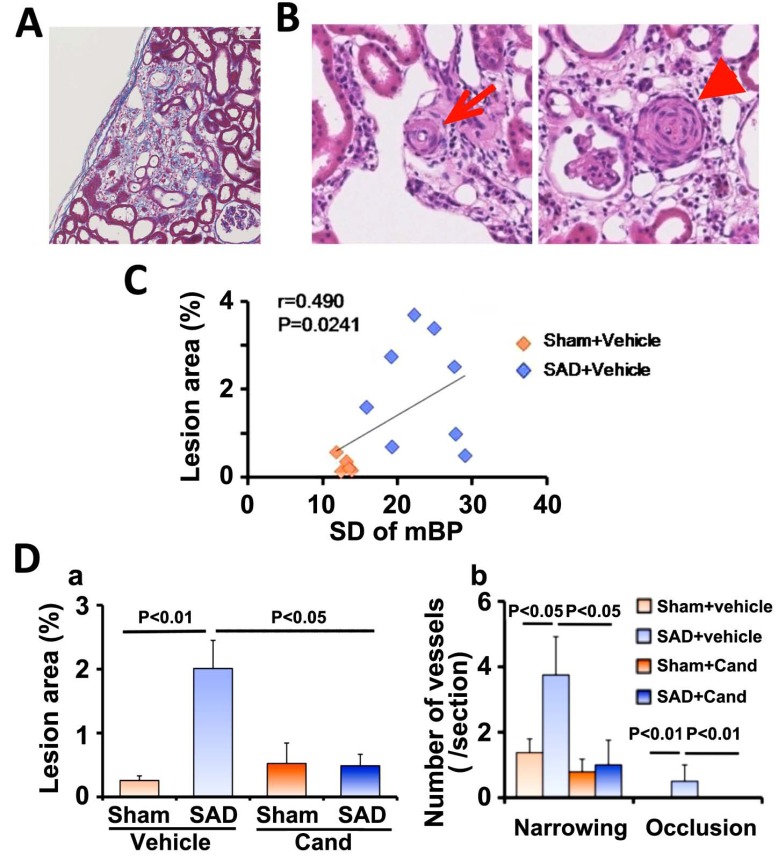
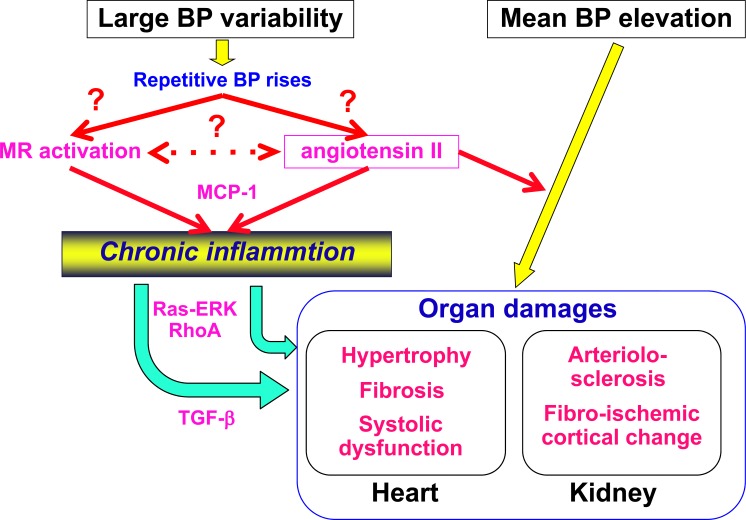
There is increasing evidence that not only the elevation of systolic and diastolic blood pressure (BP) but also the increase in BP variability (or fluctuation) are associated with hypertensive organ damages and the morbidity and mortality of cerebrovascular and cardiovascular events. However, the molecular mechanism whereby the increase in BP variability aggravates hypertensive organ damages remains unknown. Thus, we created a rat chronic model of a combination of hypertension and large BP variability by performing bilateral sino-aortic denervation in spontaneously hypertensive rat. A series of our studies using this model revealed that large BP variability induces chronic myocardial inflammation by activating local angiotensin II and mineralocorticoid receptor systems and thereby aggravates cardiac hypertrophy and myocardial fibrosis, leading to systolic dysfunction, in hypertensive hearts. In addition, large BP variability induces the aggravation of arteriolosclerotic changes and ischemic cortical fibrosis in hypertensive kidney via local angiotensin II system.
Figures
References
-
- Mancia G., Fagard R., Narkiewicz K., Redon J., Zanchetti A., Böhm M., Christiaens T., Cifkova R., De Backer G., Dominiczak A., Galderisi M., Grobbee D.E., Jaarsma T., Kirchhof P., Kjeldsen S.E., Laurent S., Manolis A.J., Nilsson P.M., Ruilope L.M., Schmieder R.E., Sirnes P.A., Sleight P., Viigimaa M., Waeber B., Zannad F., Redon J., Dominiczak A., Narkiewicz K., Nilsson P.M., Burnier M., Viigimaa M., Ambrosioni E., Caufield M., Coca A., Olsen M.H., Schmieder R.E., Tsioufis C., van de Borne P., Zamorano J.L., Achenbach S., Baumgartner H., Bax J.J., Bueno H., Dean V., Deaton C., Erol C., Fagard R., Ferrari R., Hasdai D., Hoes A.W., Kirchhof P., Knuuti J., Kolh P., Lancellotti P., Linhart A., Nihoyannopoulos P., Piepoli M.F., Ponikowski P., Sirnes P.A., Tamargo J.L., Tendera M., Torbicki A., Wijns W., Windecker S., Clement D.L., Coca A., Gillebert T.C., Tendera M., Rosei E.A., Ambrosioni E., Anker S.D., Bauersachs J., Hitij J.B., Caulfield M., De Buyzere M., De Geest S., Derumeaux G.A., Erdine S., Farsang C., Funck-Brentano C., Gerc V., Germano G., Gielen S., Haller H., Hoes A.W., Jordan J., Kahan T., Komajda M., Lovic D., Mahrholdt H., Olsen M.H., Ostergren J., Parati G., Perk J., Polonia J., Popescu B.A., Reiner Z., Rydén L., Sirenko Y., Stanton A., Struijker-Boudier H., Tsioufis C., van de Borne P., Vlachopoulos C., Volpe M., Wood D.A. 2013 ESH/ESC guidelines for the management of arterial hypertension: the Task Force for the Management of Arterial Hypertension of the European Society of Hypertension (ESH) and of the European Society of Cardiology (ESC). Eur. Heart J. 2013;34(28):2159–2219. doi: 10.1093/eurheartj/eht151. - DOI - PubMed
-
- James P.A., Oparil S., Carter B.L., Cushman W.C., Dennison-Himmelfarb C., Handler J., Lackland D.T., LeFevre M.L., MacKenzie T.D., Ogedegbe O., Smith S.C., Jr, Svetkey L.P., Taler S.J., Townsend R.R., Wright J.T., Jr, Narva A.S., Ortiz E. 2014 evidence-based guideline for the management of high blood pressure in adults: report from the panel members appointed to the Eighth Joint National Committee (JNC 8) JAMA. 2014;311(5):507–520. doi: 10.1001/jama.2013.284427. - DOI - PubMed
-
- Shimamoto K., Ando K., Fujita T., Hasebe N., Higaki J., Horiuchi M., Imai Y., Imaizumi T., Ishimitsu T., Ito M., Ito S., Itoh H., Iwao H., Kai H., Kario K., Kashihara N., Kawano Y., Kim-Mitsuyama S., Kimura G., Kohara K., Komuro I., Kumagai H., Matsuura H., Miura K., Morishita R., Naruse M., Node K., Ohya Y., Rakugi H., Saito I., Saitoh S., Shimada K., Shimosawa T., Suzuki H., Tamura K., Tanahashi N., Tsuchihashi T., Uchiyama M., Ueda S., Umemura S., Japanese Society of Hypertension Committee for Guidelines for the Management of Hypertension The Japanese Society of Hypertension Guidelines for the Management of Hypertension (JSH 2014). Hypertens. Res. 2014;37(4):253–390. doi: 10.1038/hr.2014.20. - DOI - PubMed
-
- Pickering T.G. Variability of blood pressure. Blood Press. Monit. 1998;3(3):141–145. - PubMed
Publication types
MeSH terms
Substances
LinkOut - more resources
Full Text Sources
Other Literature Sources
Medical