


Race, ethnicity, and socioeconomic status in research on child health
- PMID: 25548336
- PMCID: PMC9923597
- DOI: 10.1542/peds.2014-3109
Race, ethnicity, and socioeconomic status in research on child health
Abstract
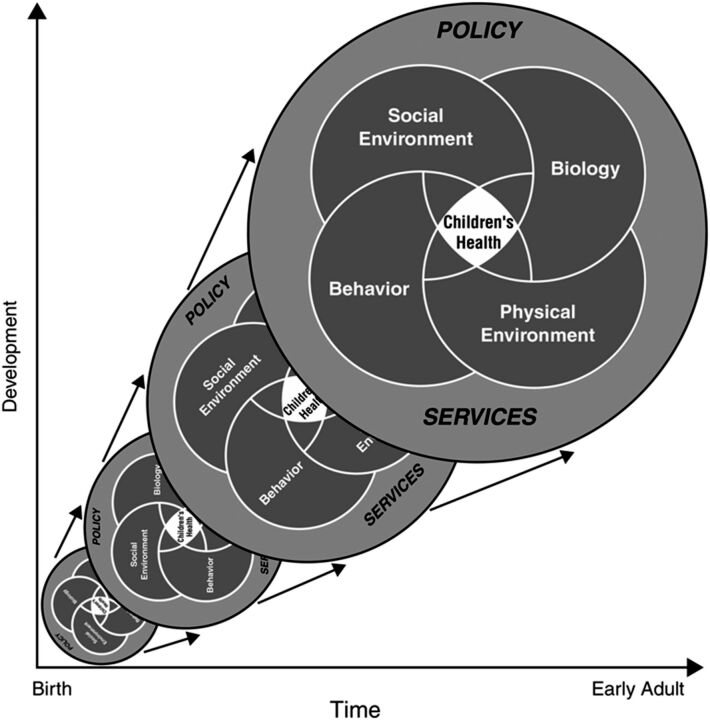
An extensive literature documents the existence of pervasive and persistent child health, development, and health care disparities by race, ethnicity, and socioeconomic status (SES). Disparities experienced during childhood can result in a wide variety of health and health care outcomes, including adult morbidity and mortality, indicating that it is crucial to examine the influence of disparities across the life course. Studies often collect data on the race, ethnicity, and SES of research participants to be used as covariates or explanatory factors. In the past, these variables have often been assumed to exert their effects through individual or genetically determined biologic mechanisms. However, it is now widely accepted that these variables have important social dimensions that influence health. SES, a multidimensional construct, interacts with and confounds analyses of race and ethnicity. Because SES, race, and ethnicity are often difficult to measure accurately, leading to the potential for misattribution of causality, thoughtful consideration should be given to appropriate measurement, analysis, and interpretation of such factors. Scientists who study child and adolescent health and development should understand the multiple measures used to assess race, ethnicity, and SES, including their validity and shortcomings and potential confounding of race and ethnicity with SES. The American Academy of Pediatrics (AAP) recommends that research on eliminating health and health care disparities related to race, ethnicity, and SES be a priority. Data on race, ethnicity, and SES should be collected in research on child health to improve their definitions and increase understanding of how these factors and their complex interrelationships affect child health. Furthermore, the AAP believes that researchers should consider both biological and social mechanisms of action of race, ethnicity, and SES as they relate to the aims and hypothesis of the specific area of investigation. It is important to measure these variables, but it is not sufficient to use these variables alone as explanatory for differences in disease, morbidity, and outcomes without attention to the social and biologic influences they have on health throughout the life course. The AAP recommends more research, both in the United States and internationally, on measures of race, ethnicity, and SES and how these complex constructs affect health care and health outcomes throughout the life course.
Keywords: acculturation; discrimination; ethnicity; health disparities; health equity; poverty; race; research; socioeconomic status.
Copyright © 2015 by the American Academy of Pediatrics.
Figures
References
-
- US Census Bureau. Most children younger than age 1 are minorities, Census Bureau reports [press release]. Washington, DC: US Census Bureau; May 17, 2012. Available at: www.census.gov/newsroom/releases/archives/population/cb12-90.html. Accessed March 14, 2013
-
- Federal Interagency Forum on Child and Family Statistics. America’s children in brief: key national indicators of well-being, 2013. Demographic background. Available at: www.childstats.gov/americaschildren/demo.asp. Accessed July 5, 2014
-
- Chau M, Thampi K, Wight VR. Basic facts about low-income children, 2009, children under age 18. New York, NY: National Center for Children in Poverty; October 2010. Available at: www.nccp.org/publications/pub_975.html. Accessed March 12, 2013
-
- Child Trends. Parental education. May 2013. Available at: www.childtrendsdata.org. Accessed May 27, 2014
-
- Seith D, Isakson E. Who are America’s poor children? Examining health disparities among children in the United States. New York, NY: National Center for Children in Poverty; January 2011. Available at: www.nccp.org/publications/pub_1001.html. Accessed March 14, 2013
MeSH terms
Grants and funding
LinkOut - more resources
Full Text Sources
Other Literature Sources
Medical
Miscellaneous
