


Effectiveness of Palivizumab in Preventing RSV Hospitalization in High Risk Children: A Real-World Perspective
- PMID: 25548575
- PMCID: PMC4274815
- DOI: 10.1155/2014/571609
Effectiveness of Palivizumab in Preventing RSV Hospitalization in High Risk Children: A Real-World Perspective
Abstract
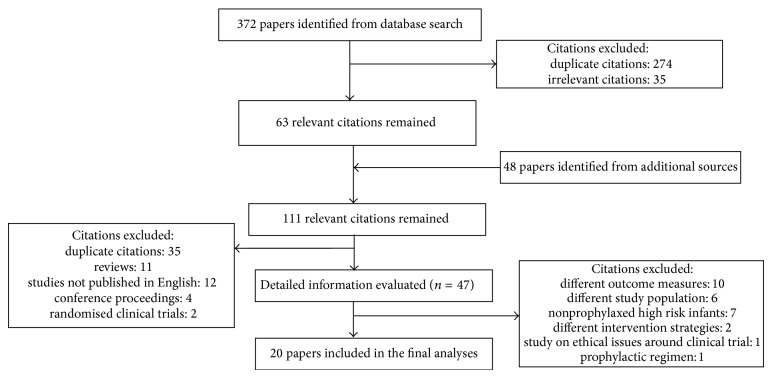
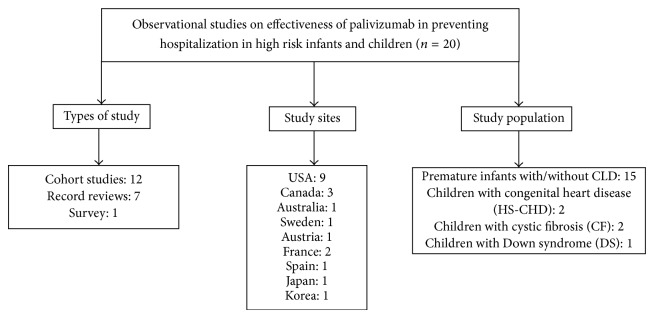
Infection with respiratory syncytial virus (RSV) is one of the major causes globally of childhood respiratory morbidity and hospitalization. Palivizumab, a humanized monoclonal antibody, has been recommended for high risk infants to prevent severe RSV-associated respiratory illness. This recommendation is based on evidence of efficacy when used under clinical trial conditions. However the real-world effectiveness of palivizumab outside of clinical trials among different patient populations is not well established. We performed a systematic review focusing on postlicensure observational studies of the protective effect of palivizumab prophylaxis for reducing RSV-associated hospitalizations in infants and children at high risk of severe infection. We searched studies published in English between 1 January 1999 and August 2013 and identified 420 articles, of which 20 met the inclusion criteria. This review supports the recommended use of palivizumab for reducing RSV-associated hospitalization rates in premature infants born at gestational age < 33 weeks and in children with chronic lung and heart diseases. Data are limited to allow commenting on the protective effect of palivizumab among other high risk children, including those with Down syndrome, cystic fibrosis, and haematological malignancy, indicating further research is warranted in these groups.
Figures
References
-
- Stevens T. P., Sinkin R. A., Hall C. B., Maniscalco W. M., McConnochie K. M. Respiratory syncytial virus and premature infants born at 32 weeks' gestation or earlier: hospitalization and economic implications of prophylaxis. Archives of Pediatrics and Adolescent Medicine. 2000;154(1):55–61. - PubMed
Publication types
LinkOut - more resources
Full Text Sources
Other Literature Sources
Miscellaneous
