


Metabolic effects of resveratrol: addressing the controversies
- PMID: 25548801
- PMCID: PMC6324849
- DOI: 10.1007/s00018-014-1808-8
Metabolic effects of resveratrol: addressing the controversies
Abstract
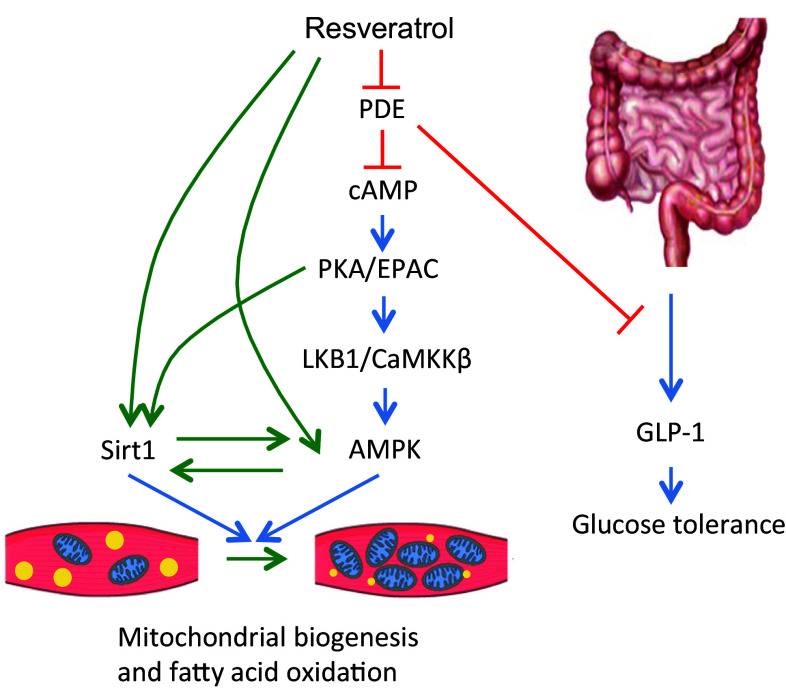
Resveratrol, a polyphenol found in a number of plant-based foods such as red wine, has received a great deal of attention for its diverse array of healthful effects. Beneficial effects of resveratrol are diverse; they include improvement of mitochondrial function, protection against obesity and obesity-related diseases such as type-2 diabetes, suppression of inflammation and cancer cell growth and protection against cardiovascular dysfunction, just to name a few. Investigations into the metabolic effects of resveratrol are furthest along and now include a number of clinical trials, which have yielded mixed results. There are a number of controversies surrounding resveratrol that have not been resolved. Here, we will review these controversies with particular emphasis on its mechanism of metabolic action and how lessons from resveratrol may help develop therapies that harness the effects of resveratrol but without the undesirable properties of resveratrol.
Figures
References
-
- McCay CM, Crowell MF, Maynard LA. The effect of retarded growth upon the length of life span and upon the ultimate body size. J Nutr. 1935;10:63–79. - PubMed
-
- Heilbronn LK, Ravussin E. Calorie restriction and aging: review of the literature and implications for studies in humans. Am J Clin Nutr. 2003;78:361–369. - PubMed
-
- Lin SJ, Defossez PA, Guarente L. Requirement of NAD and SIR2 for life-span extension by calorie restriction in Saccharomyces cerevisiae . Science. 2000;289:2126–2128. - PubMed
-
- Howitz KT, Bitterman KJ, Cohen HY, Lamming DW, Lavu S, Wood JG, Zipkin RE, Chung P, Kisielewski A, Zhang LL, Scherer B, Sinclair DA. Small molecule activators of sirtuins extend Saccharomyces cerevisiae lifespan. Nature. 2003;425:191–196. - PubMed
-
- Jang MS, Cai EN, Udeani GO, Slowing KV, Thomas CF, Beecher CWW, Fong HHS, Farnsworth NR, Kinghorn AD, Mehta RG, Moon RC, Pezzuto JM. Cancer chemopreventive activity of resveratrol, a natural product derived from grapes. Science. 1997;275:218–220. - PubMed
Publication types
MeSH terms
Substances
Grants and funding
LinkOut - more resources
Full Text Sources
Other Literature Sources
Medical
