. 2014 Dec 30;9(12):e116253.
doi: 10.1371/journal.pone.0116253. eCollection 2014.

Involvement of the P2X7 purinergic receptor in colonic motor dysfunction associated with bowel inflammation in rats

Affiliations

Involvement of the P2X7 purinergic receptor in colonic motor dysfunction associated with bowel inflammation in rats

Luca Antonioli et al. PLoS One. .

Abstract

Background and purpose: Recent evidence indicates an involvement of P2X7 purinergic receptor (P2X7R) in the fine tuning of immune functions, as well as in driving enteric neuron apoptosis under intestinal inflammation. However, the participation of this receptor in the regulation of enteric neuromuscular functions remains undetermined. This study was aimed at investigating the role of P2X7Rs in the control of colonic motility in experimental colitis.

Experimental approach: Colitis was induced in rats by 2,4-dinitrobenzenesulfonic acid. P2X7R distribution was examined by immunofluorescence analysis. The effects of A804598 (selective P2X7R antagonist) and BzATP (P2X7R agonist) were tested on contractions of longitudinal smooth muscle evoked by electrical stimulation or by carbachol in the presence of tetrodotoxin.

Key results: P2X7Rs were predominantly located in myenteric neurons, but, in the presence of colitis, their expression increased in the neuromuscular layer. In normal preparations, A804598 elicited a negligible increase in electrically induced contractions, while a significant enhancement was recorded in inflamed tissues. In the presence of Nω-propyl-L-arginine (NPA, neuronal nitric oxide synthase inhibitor) the A804598 effects were lost. P2X7R stimulation with BzATP did not significantly affect electrical-induced contractions in normal colon, while a marked reduction was recorded under inflammation. The inhibitory effect of BzATP was antagonized by A804598, and it was also markedly blunted by NPA. Both P2X7R ligands did not affect carbachol-induced contractions.

Conclusions and implications: The purinergic system contributes to functional neuromuscular changes associated with bowel inflammation via P2X7Rs, which modulate the activity of excitatory cholinergic nerves through a facilitatory control on inhibitory nitrergic pathways.


Conflict of interest statement

Competing Interests: The authors have declared that no competing interests exist.

Figures

Figure 1
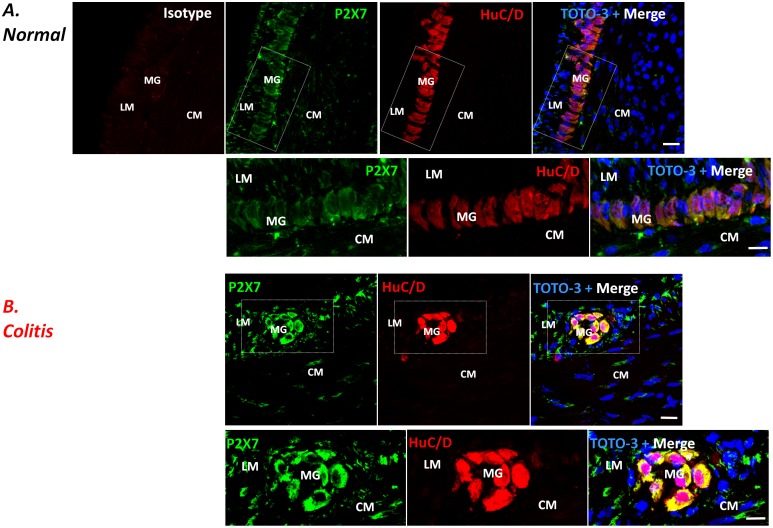
Figure 1. Double-staining immunohistochemistry showing the distribution of P2X7 receptors (green) and the neuronal marker HuC/D (red) in the myenteric plexus of colonic cryosections from control (A; normal) or DNBS-treated (B; colitis) rats.
Nuclei were stained with TOTO-3. Scale bar: 21 µm. Enlarged view of HuC/D+ and P2X7+ cells in the myenteric ganglia of normal and colitis rats from boxed area in overlay (scale bar = 10 µm). LM, longitudinal muscle; CM, circular muscle; MG, myenteric ganglia. Isotype fluorescent image was obtained by labeling with streptavidin conjugated with Alexa Fluor 555 in presence of normal mouse antiserum instead of the primary antibody.
Figure 2
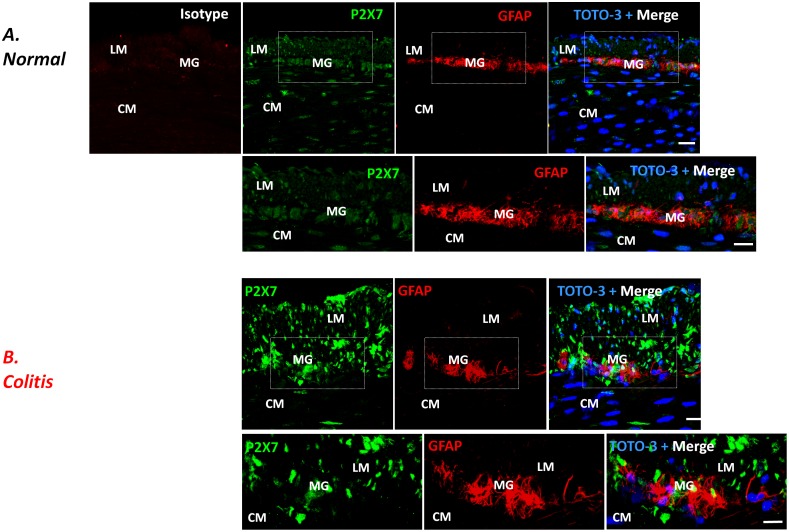
Figure 2. Double immunostaining showing the expression of P2X7 receptors (green) and the glial marker GFAP (red) in myenteric plexus of colonic cryosections from control (A; normal) and DNBS-treated (B; colitis) rats.
Nuclei were stained with TOTO-3. Scale bar: 21 µm. Enlarged view of GFAP+ and P2X7+ cells in the myenteric ganglia of normal and colitis rats from boxed area in overlay (scale bar = 10 µm). LM, longitudinal muscle; CM, circular muscle; MG, myenteric ganglia. Isotype fluorescent image was obtained by labeling with Alexa Fluor 555 conjugated secondary antibody in presence of normal mouse antiserum instead of the primary antibody.
Figure 3
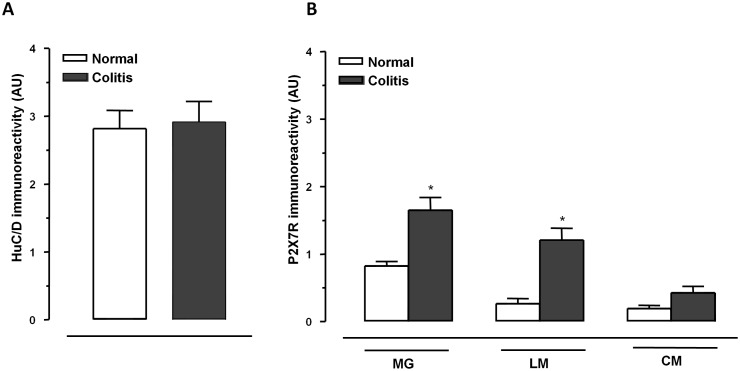
Figure 3. Levels of fluorescence intensity of HuC/D+ neurons (A) or P2X7 receptors+ cells (B), expressed as arbitrary units (AU), in the myenteric ganglia or the colonic neuromuscular layer (MG, myenteric ganglia; LM, longitudinal muscle; CM, circular muscle), either in the absence (normal) or in the presence of colitis, respectively.
*P<0.01 versus colitis.
Figure 4
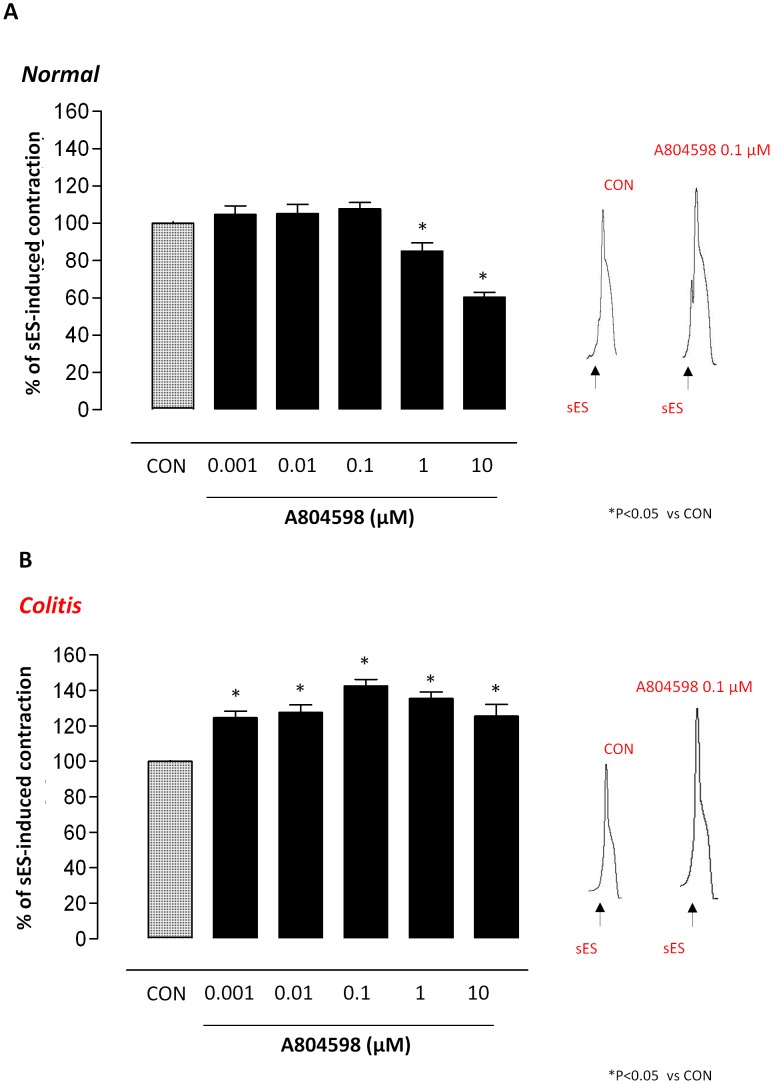
Figure 4. Preparations of longitudinal smooth muscle isolated from normal (A) or DNBS-treated rats (colitis) (B).
Effects of increasing concentrations of A804598 (0.001–10 µM) on contractions evoked by sES (0.5 ms, 10 Hz, 30 mA, 10 s) in preparations maintained in standard Krebs solution. Each column represents the mean±SEM obtained from 6 experiments. *P<0.05, versus control (CON).
Figure 5
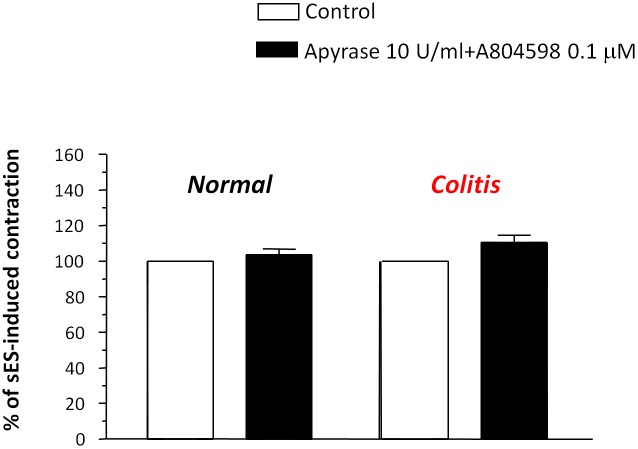
Figure 5. Effects of A804598 (0.01µM) on contractions evoked by sES (0.5 ms, 10 Hz, 30 mA, 10 s) in colonic longitudinal muscle preparations maintained in Krebs solution added with apyrase (10 U/ml).
Each column represents the mean±SEM obtained from 6 experiments. *P<0.05, versus control.
Figure 6
Figure 6
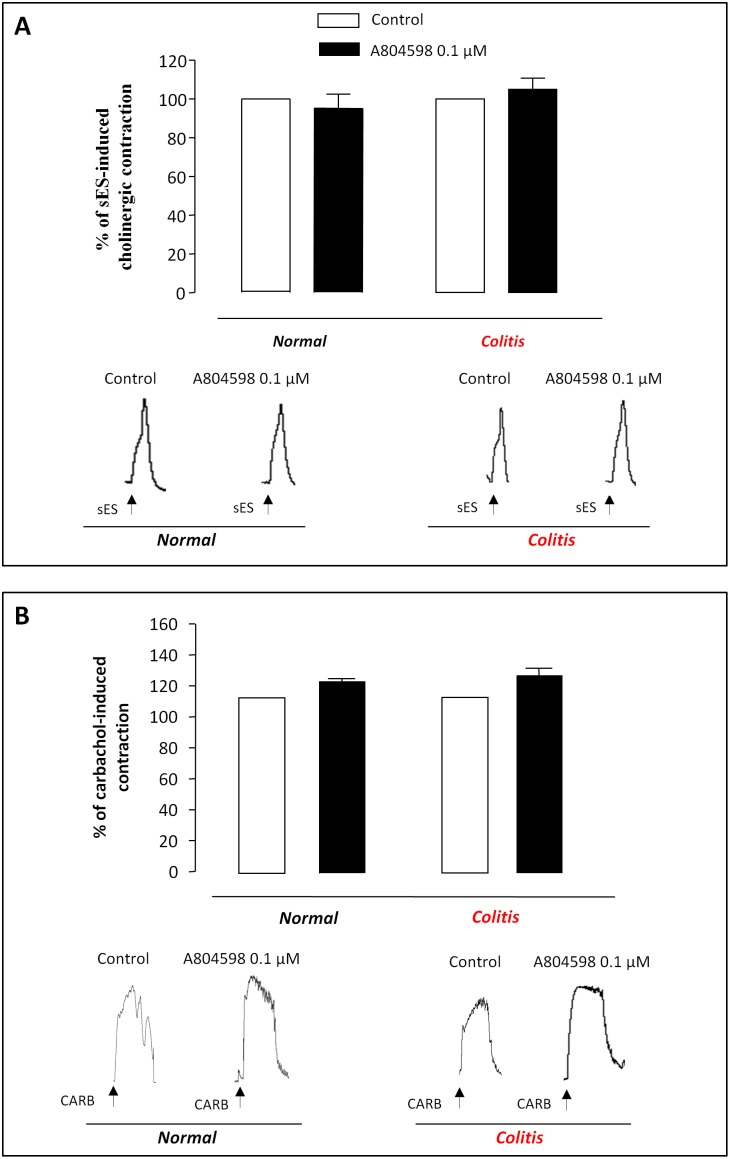
(A) Effects of A804598 (0.01 µM) on cholinergic contractions evoked by sES (0.5 ms, 10 Hz, 30 mA, 10 s) in colonic preparations isolated from normal or inflamed rats (colitis), maintained in Krebs solution containing guanethidine (10 µM), L-732 138 (10 µM), GR-159897 (1 µM), SB-218795 (1 µM) and NPA (0.01 µM). (B) Column graphs showing the effects of A804598 (0.01 µM) on contractions evoked by carbachol (1 µM) in colonic preparations isolated from normal or inflamed rats (colitis) and maintained in Krebs solution containing tetrodotoxin (1 µM). Each column represents the mean±SEM value obtained from 6 experiments. CARB, carbachol. Each column represents the mean±SEM obtained from 6 experiments. *P<0.05, versus control.
Figure 7
Figure 7
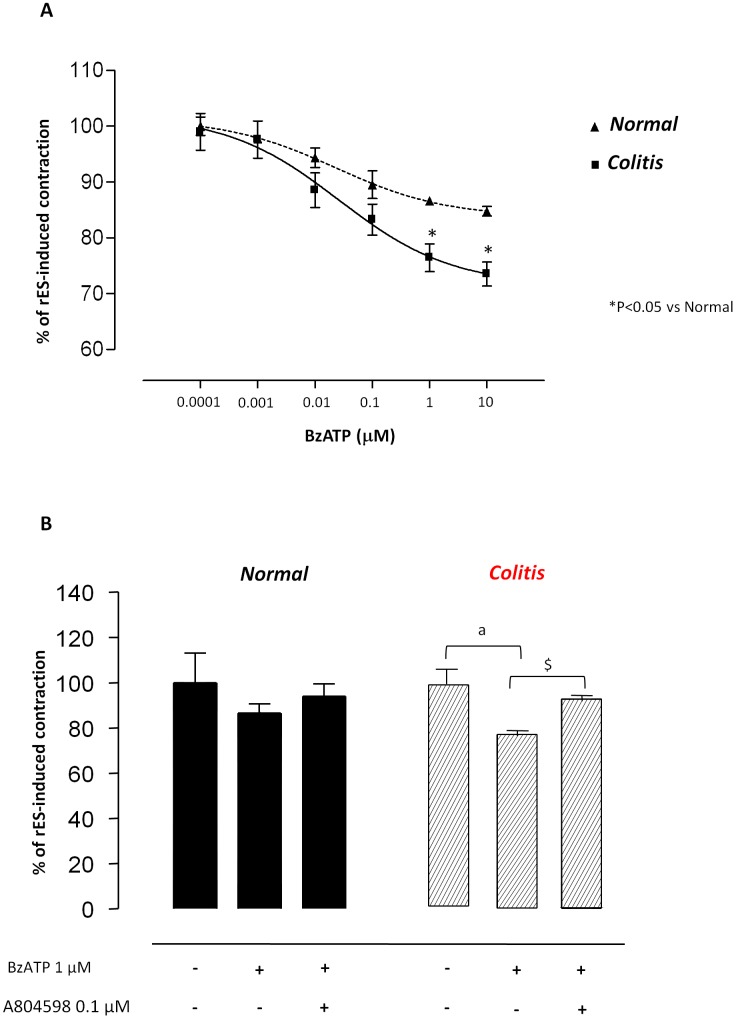
(A) Effects of increasing concentrations of BzATP (0.001–100 µM) on contractions evoked by rES (0.5 ms, 30 mA, 10 Hz, 5 s every 60 s) in colonic preparations maintained in Krebs solution containing guanethidine and NK receptor antagonists. (B) Column graphs showing the effects of BzATP (1 µM) on contractions evoked by sES (0.5 ms, 30 mA, 10 Hz), alone and in combination with A804598 (0.1 µM), in colonic preparations maintained in Krebs solution containing guanethidine and NK receptor antagonists. Each point represents the mean±SEM of eight experiments. *P<0.05, versus control.
Figure 8
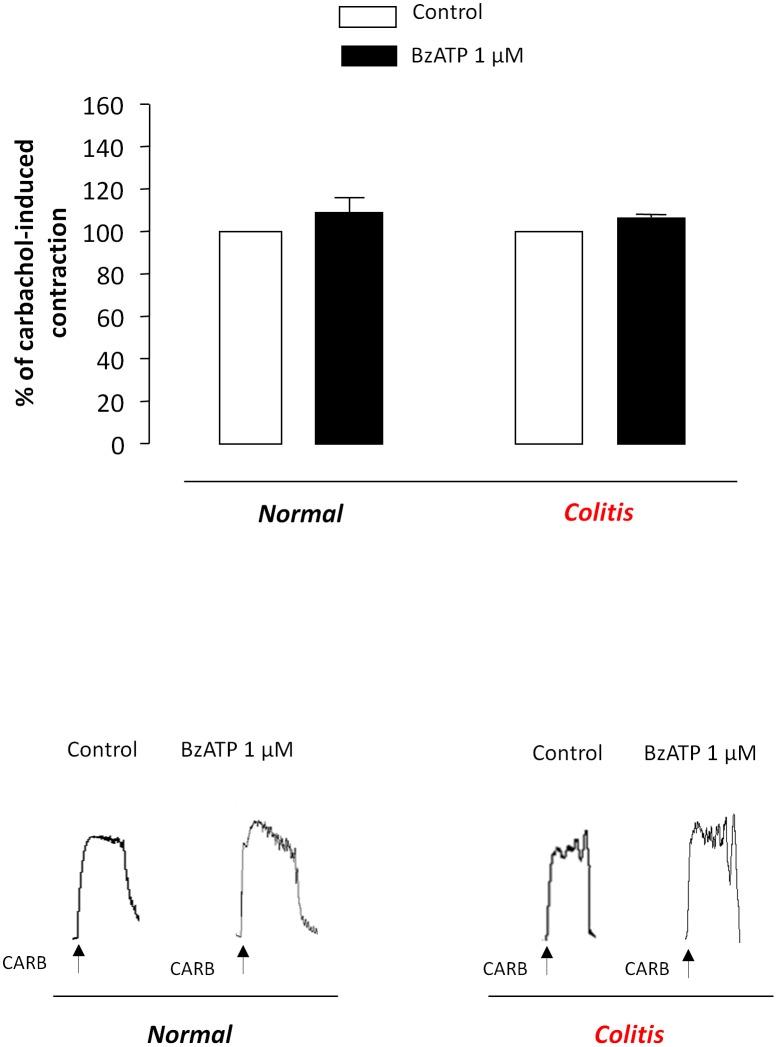
Figure 8. Column graphs showing the effects of BzATP (1 µM) on contractions evoked by carbachol (1 µM) in colonic preparations obtained from normal or inflamed rats (colitis) maintained in Krebs solution containing tetrodotoxin (1 µM).
Each column represents the mean±SEM value obtained from eight experiments. CARB, carbachol.
Figure 9
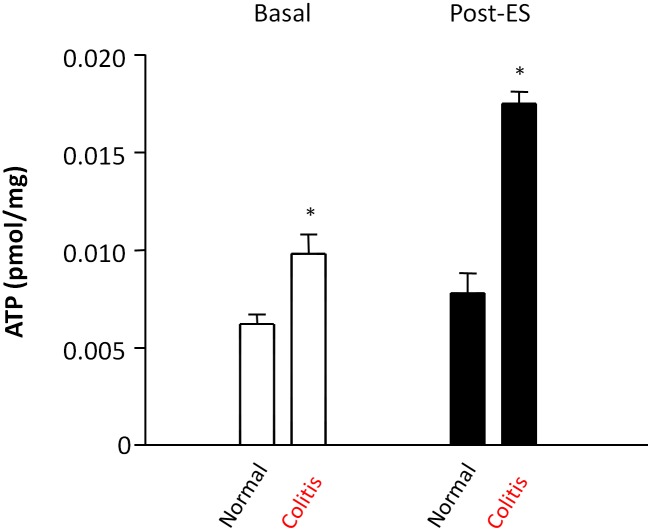
Figure 9. Effect of electrical field stimulation (EFS) on extracellular levels of ATP, expressed in pmol/mg of tissue, immediately before (basal) and after (post-ES) electrical stimulation of colonic longitudinal muscle preparations obtained from normal and inflamed rats.
Each column represents the mean±SEM value obtained from 8 experiments. *P<0.05, versus control (CON).

References

    1. Xu XR, Liu CQ, Feng BS, Liu ZJ (2014) Dysregulation of mucosal immune response in pathogenesis of inflammatory bowel disease. World J Gastroenterol 20:3255–3264. - PMC - PubMed
    1. Lakhan SE, Kirchgessner A (2010) Neuroinflammation in inflammatory bowel disease. J Neuroinflammation 7:37. - PMC - PubMed
    1. Antonioli L, Blandizzi C, Pacher P, Hasko G (2013) Immunity, inflammation and cancer: a leading role for adenosine. Nat Rev Cancer 13:842–857. - PubMed
    1. Antonioli L, Colucci R, Pellegrini C, Giustarini G, Tuccori M, et al. (2013) The role of purinergic pathways in the pathophysiology of gut diseases: pharmacological modulation and potential therapeutic applications. Pharmacol Ther 139:157–188. - PubMed
    1. Antonioli L, Fornai M, Colucci R, Ghisu N, Tuccori M, et al. (2008) Regulation of enteric functions by adenosine: pathophysiological and pharmacological implications. Pharmacol Ther 120:233–253. - PubMed

Publication types

MeSH terms

Substances

LinkOut - more resources