


Effect of cleaning and disinfection of toys on infectious diseases and micro-organisms in daycare nurseries
- PMID: 25549827
- PMCID: PMC7114571
- DOI: 10.1016/j.jhin.2014.10.007
Effect of cleaning and disinfection of toys on infectious diseases and micro-organisms in daycare nurseries
Abstract
Background: The rising number of children in daycare nurseries increases opportunities for the transmission of infectious diseases. Pathogens may be transmitted directly from child to child via sneezing, coughing and touching, or indirectly via the environment. Toys are among the fomites with the highest pathogen load, but their role in disease transmission is unknown.
Aim: To determine if washing and disinfection of toys can reduce sickness absence and microbial pathogen load in the nursery environment.
Methods: Twelve nurseries (caring for 587 children) were randomized to intervention and control groups. The intervention consisted of washing and disinfection of toys and linen every two weeks for three months by a commercial cleaning company. The extent and causes of sickness absence among the children were recorded in both groups before and after introduction of the intervention. Ten sampling points in each nursery were examined for bacteria and respiratory viruses.
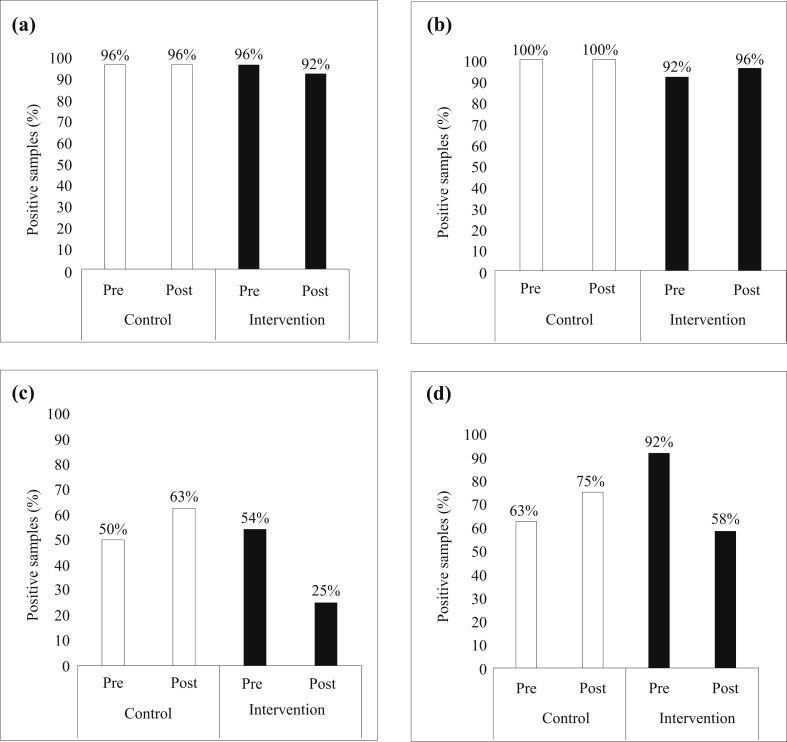
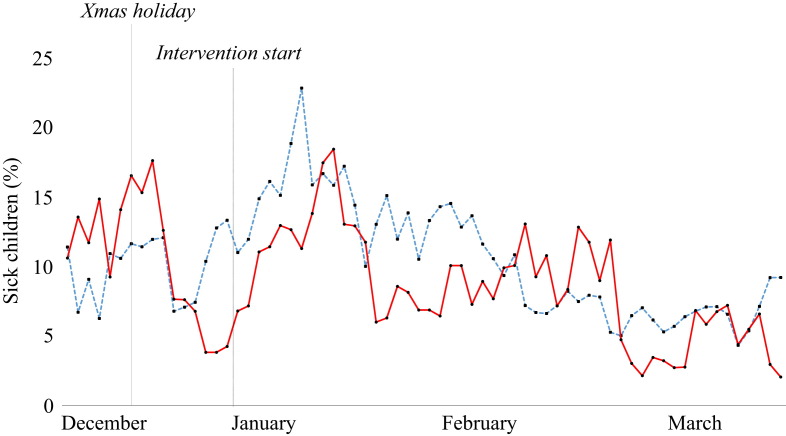
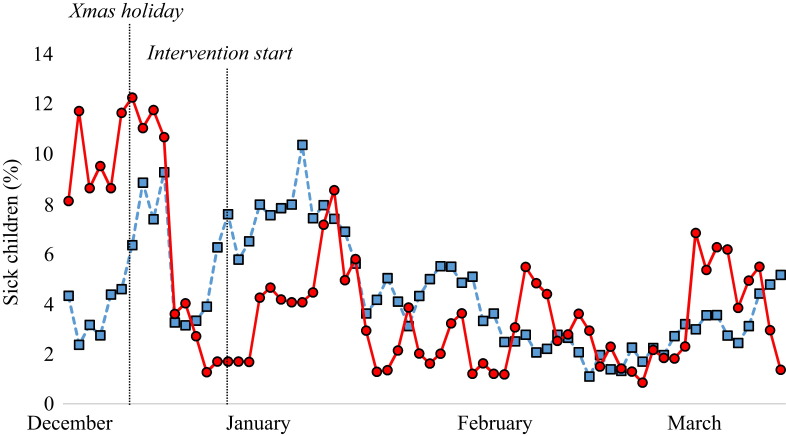
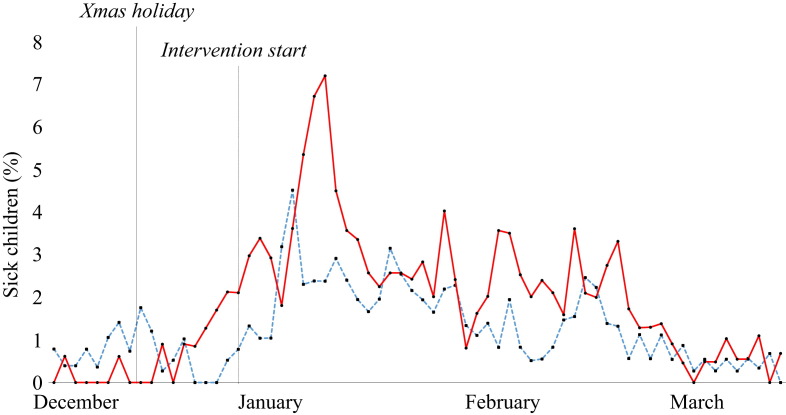
Results: The presence of respiratory virus DNA/RNA was widespread, but very few pathogenic bacteria were found in the environment. The intervention reduced the presence of adenovirus [odds ratio (OR) 2.4, 95% confidence interval (CI) 1.1-5.0], rhinovirus (OR 5.3, 95% CI 2.3-12.4) and respiratory syncytial virus (OR 4.1, 95% CI 1.5-11.2) compared with the control group, but the intervention had no effect on sickness absence or disease patterns in the nurseries.
Conclusion: Although cleaning and disinfection of toys every two weeks can decrease the microbial load in nurseries, it does not appear to reduce sickness absence among nursery children.
Keywords: Bacteria; Child care; Cleaning; Environment; Handwashing; Hygiene; Paediatrics; Toys; Virus.
Copyright © 2014 The Healthcare Infection Society. Published by Elsevier Ltd. All rights reserved.
Figures
References
-
- Denny F.W., Collier A.M., Henderson F.W. Acute respiratory infections in day care. Rev Infect Dis. 1986;8:527–532. - PubMed
-
- Bartlett A.V., Moore M., Gary G.W., Starko K.M., Erben J.J., Meredith B.A. Diarrheal illness among infants and toddlers in day care centers. II. Comparison with day care homes and households. J Pediatr. 1985;107:503–509. - PubMed
-
- Uldall P. Forms of care and children's infections. 1. Occurrence and causal factors. Ugeskr Laeger. 1990;152:2345–2348. - PubMed
-
- Fleming D.W., Cochi S.L., Hightower A.W., Broome C.V. Childhood upper respiratory tract infections: to what degree is incidence affected by day-care attendance? Pediatrics. 1987;79:55–60. - PubMed
Publication types
MeSH terms
LinkOut - more resources
Full Text Sources
Other Literature Sources
Medical
