


Hypertension treatment intensification among stroke survivors with uncontrolled blood pressure
- PMID: 25550374
- PMCID: PMC4308422
- DOI: 10.1161/STROKEAHA.114.007566
Hypertension treatment intensification among stroke survivors with uncontrolled blood pressure
Abstract
Background and purpose: We examined blood pressure 1 year after stroke discharge and its association with treatment intensification.
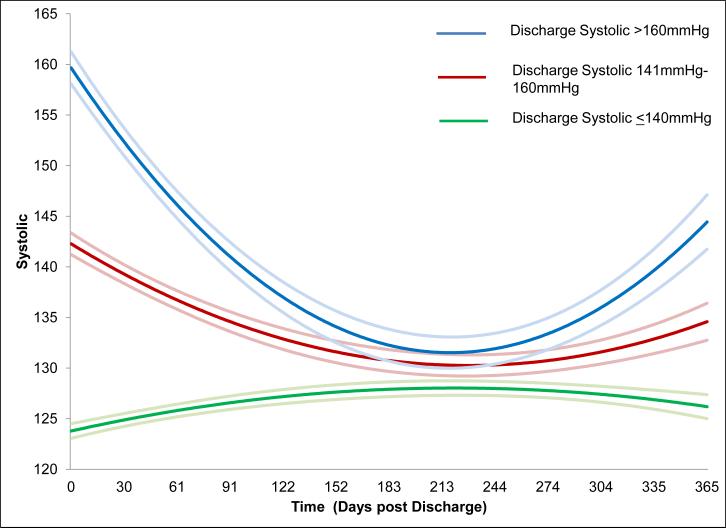
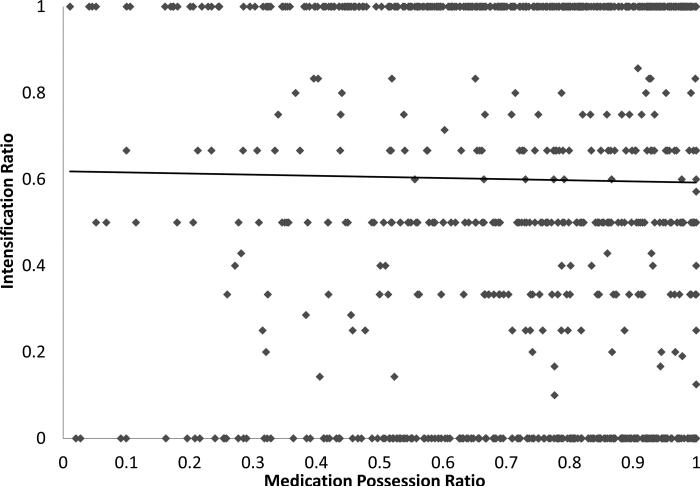
Methods: We examined the systolic blood pressure (SBP) stratified by discharge SBP (≤140, 141-160, or >160 mm Hg) among a national cohort of Veterans discharged after acute ischemic stroke. Hypertension treatment opportunities were defined as outpatient SBP >160 mm Hg or repeated SBPs >140 mm Hg. Treatment intensification was defined as the proportion of treatment opportunities with antihypertensive changes (range, 0%-100%, where 100% indicates that each elevated SBP always resulted in medication change).
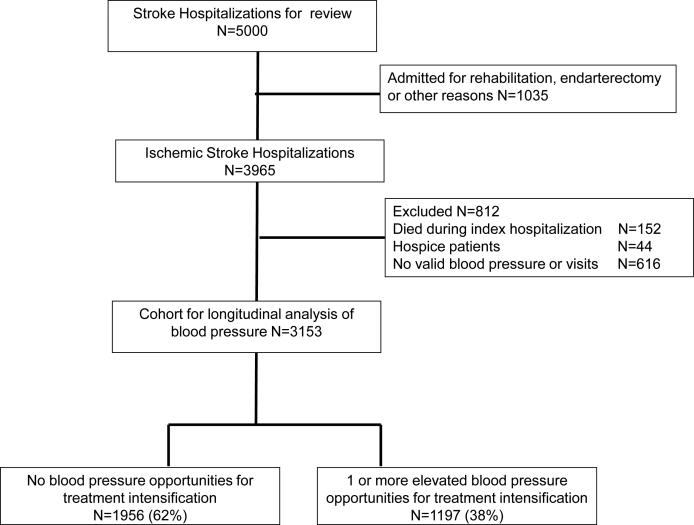
Results: Among 3153 patients with ischemic stroke, 38% had ≥1 elevated outpatient SBP eligible for treatment intensification in the 1 year after stroke. Thirty percent of patients had a discharge SBP ≤140 mm Hg, and an average 1.93 treatment opportunities and treatment intensification occurred in 58% of eligible visits. Forty-seven percent of patients discharged with SBP 141 to160 mm Hg had an average of 2.1 opportunities for intensification and treatment intensification occurred in 60% of visits. Sixty-three percent of the patients discharged with an SBP >160 mm Hg had an average of 2.4 intensification opportunities, and treatment intensification occurred in 65% of visits.
Conclusions: Patients with discharge SBP >160 mm Hg had numerous opportunities to improve hypertension control. Secondary stroke prevention efforts should focus on initiation and review of antihypertensives before acute stroke discharge; management of antihypertensives and titration; and patient medication adherence counseling.
Keywords: health services research; hypertension; medication adherence; secondary prevention.
© 2014 American Heart Association, Inc.
Figures
References
-
- Rashid P, Leonardi-Bee J, Bath P. Blood pressure reduction and secondary prevention of stroke and other vascular events: A systematic review. Stroke. 2003;34:2741–2748. - PubMed
-
- Kannel WB, Wolf PA, McGee DL, Dawber TR, McNamara P, Castelli WP. Systolic blood pressure, arterial rigidity, and risk of stroke. The Framingham study. JAMA. 1981;245:1225–1229. - PubMed
-
- Kernan WN, Ovbiagele B, Black HR, Bravata DM, Chimowitz MI, Ezekowitz MD, et al. Guidelines for the prevention of stroke in patients with stroke and transient ischemic attack: A guideline for healthcare professionals from the American Heart Association/American Stroke Association. Stroke. 2014;45:2160–2236. - PubMed
Publication types
MeSH terms
Substances
Grants and funding
LinkOut - more resources
Full Text Sources
Medical
